








Garage Door Insulation: Kits, R-Values & When to Replace
What a retrofit kit really adds, how to read a door’s R-value honestly, when a new insulated door is the better buy, and two calculators for kits and heat loss.
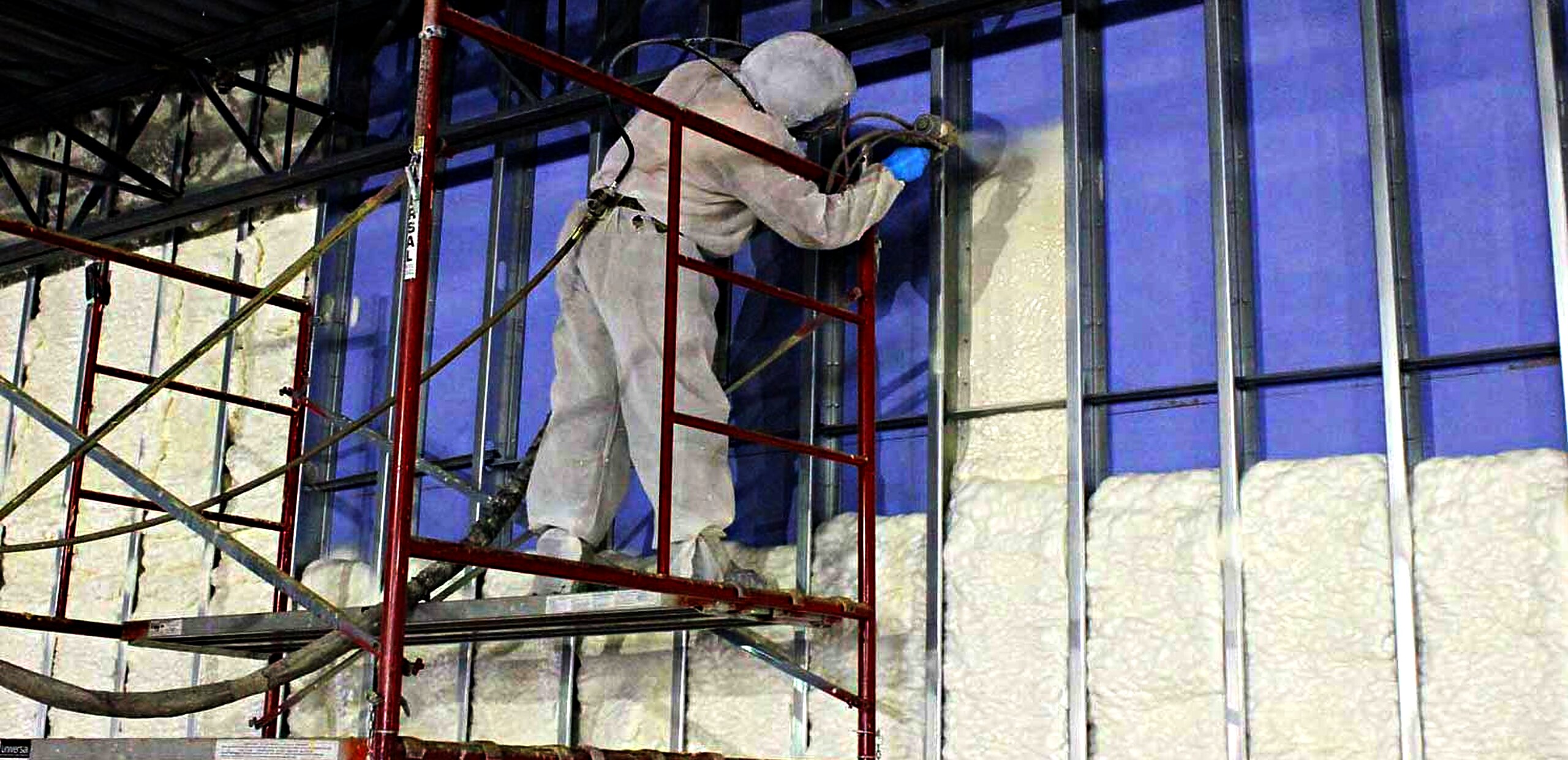
Start a spray foam business
Spray foam for a living.
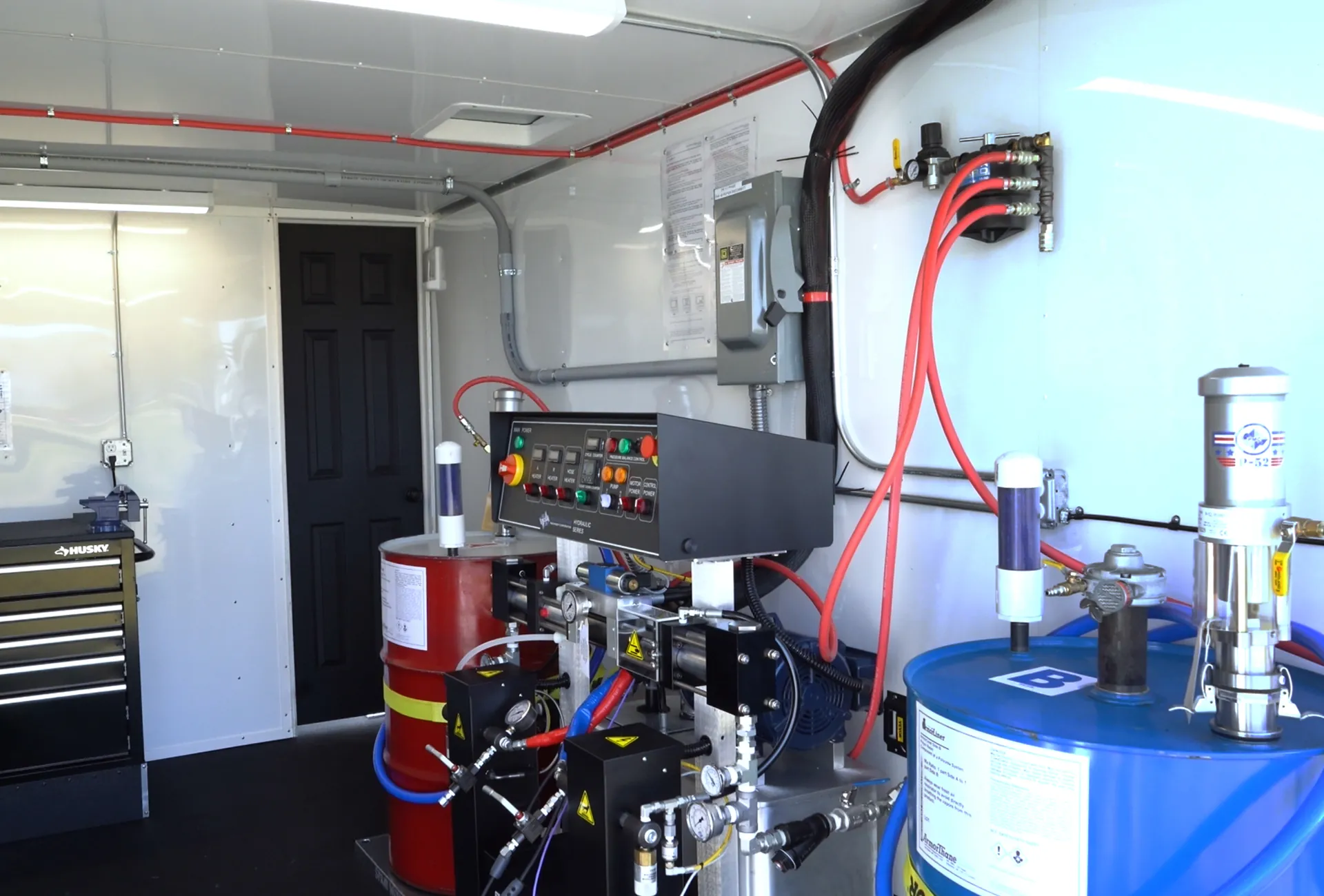
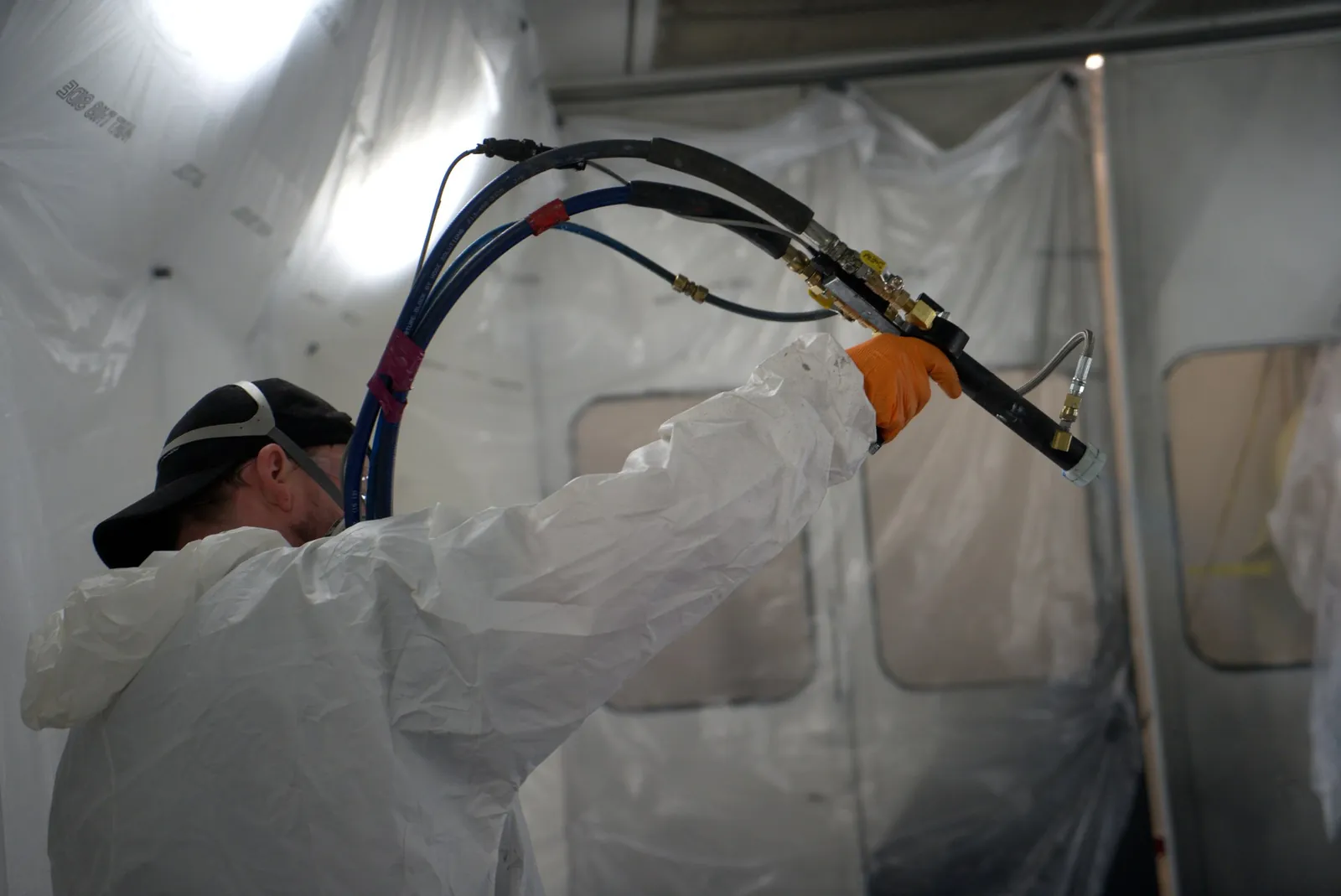
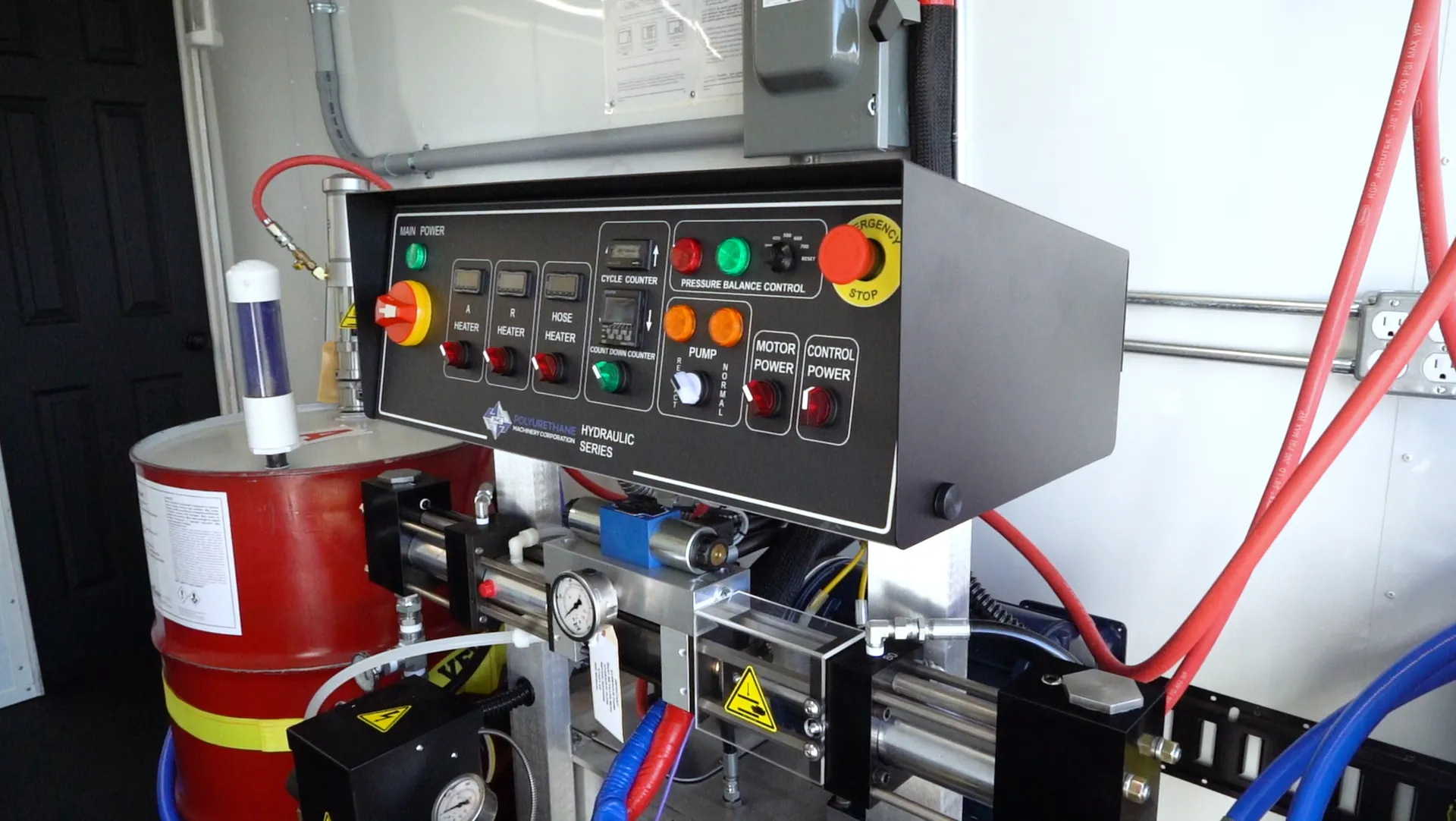
ArmorThane sets you up to do this work, and you own the business. We make the chemistry, build the rigs, train you hands-on and answer the phone when a job gets difficult. You pay no franchise fee and no royalties. It has been that way since 1989.
- $0
- franchise fees or royalties
- 35+
- years in business
- 50+
- countries with applicators
- 24/7
- technical support
Garage door insulation is one of the cheapest garage upgrades there is, and one of the most oversold. A bare steel door is a sheet of metal with an air film on each side, so almost anything you add is a big gain. But the door is one surface, it hangs on springs balanced to its weight, and it leaks air at all four edges. We insulate garages and shops with spray foam every day; this guide covers the door itself: what a kit gets you, how to read a door's R-value, when a new door is the better buy, and two calculators.
For an attached or heated garage with an uninsulated single-layer steel door, a fiberglass or foam-board kit is worth it: it lifts the middle of each panel from about R-0.85 to roughly R-5 to R-9 for well under $200 per single door in materials. Replace the bottom seal and side stops at the same time, because air leaks around the edges often matter as much as the panels. If the door is dented, warped, or you want R-12 or more, buy a factory insulated door instead. Never spray foam onto a sectional door; the added weight throws off the springs and the foam cracks at the joints.
Is garage door insulation worth it?
It depends on what is on the other side of the garage walls and on how you use the space. A standard double door is 16 by 7 feet, or 112 square feet. When that surface is bare steel, it is the weakest part of the garage envelope by a wide margin.
Attached garage, room above
The garage is a buffer between the house and outdoors. Warming it a few degrees helps the shared wall and any bedroom floor above. Insulate the door, but put the real effort into the shared wall, the ceiling and the floor of the room above.
Heated or cooled shop
If you run a heater or mini-split in the garage, the door is losing energy you pay for every hour. This is where the payback math below is real money.
Detached, unheated, open walls
If the walls and ceiling are bare studs and nobody heats the space, insulating only the door changes very little. Do the ceiling and walls first.
An insulated door is also quieter and rattles less in wind. In hot climates a reflective face cuts radiant heat from a sun-baked door, but only with an air space in front of the foil. The Department of Energy credits attic radiant barriers with 5 to 10 percent cooling savings in warm, sunny climates; a door is a far smaller surface, so expect comfort, not a visible line on your power bill.
Garage door insulation options compared
Three ways to add insulation to an existing door, and two kinds of factory insulated door. R-values are center-of-panel figures calculated the door industry's way (insulation plus 0.85 for the air films), so they are the best case. Click a heading to sort.
| Option | Center-of-panel R-value | Thickness | Weight added | Works on | Our take |
|---|---|---|---|---|---|
| Bare single-layer steel (baseline) | R-0.85 | Skin only | None | n/a | Common on older and budget doors |
| Fiberglass batt kit, vinyl faced (e.g. Owens Corning R-8 kit) | About R-8.9 (R-8 + films) | 2.25 in. | Light | Pan doors with a 2 in. or deeper frame | Best R per dollar for a retrofit; held by clips pushed through the batt |
| Rigid foam board kit (EPS, foil or vinyl faced) | About R-4.5 to R-8.4 | 1 to 1.5 in. | Light | Pan doors; cut to fit between stiles | Tidy, rigid, easy to wipe down; a little lower R than fiberglass |
| Reflective bubble / foil kit | R-4 claimed (needs an air space) | Thin, under 1/2 in. | Very light | Any door, including flat-back doors | Mostly a hot-climate radiant product; little help in a cold garage |
| Factory polystyrene door (2-layer, steel + EPS) | About R-5.5 to R-7.5 (varies by model) | 1-5/16 in. foam | 10 to 15 lb more than non-insulated | New door | Entry-level insulated door; check the tested U-factor |
| Factory polyurethane door (3-layer steel sandwich) | Up to R-18.4 | About 1-3/8 to 2 in. | 25 to 40 lb more than non-insulated | New door | The real upgrade for a heated shop: stiffer, quieter, best seal at the joints |
| Spray foam on the door | Not recommended | Varies | Heavy, uneven | None | Unbalances the springs, cracks at section joints, can void the door warranty |
Fiberglass vs foam board vs reflective: which kit?
On a typical steel pan door (hollow back, 2 inch frame around each panel), fiberglass gives the most R-value for the money. Foam board is cleaner and stiffer, the better pick in a workshop where batts get snagged. Reflective bubble is weakest in winter. In Bob Vila's testing every kit read 8 to 10 degrees warmer on the inside face an hour after installation, which says more about how bad a bare panel is than about the kits. On a flat-back door, foam board is the only practical option; use an adhesive rated for foam, since solvent-based glues eat EPS.
Garage door R-value vs U-factor
Garage door R-values are not measured like wall insulation, and that trips up buyers. DASMA, the door industry's trade group, sets the method in Technical Data Sheet 163: the insulation in one section plus a fixed 0.85 for the air films (0.68 still air inside, 0.17 for a 15 mph wind outside). Steel skins count as zero. DASMA's worked example uses polyurethane with a k-factor of 0.12, about R-8.3 per inch, and gets R-16.47 for one section. That is how brochures reach the teens.
Compare new doors by tested U-factor. With a kit, the R-8 on the box describes the batt, not the door; the seams and the gaps at jambs and floor stay as leaky as before unless you fix them.
Garage door insulation kit estimator
Enter your door size and pick a kit type to get the area, what to buy, the resulting center-of-panel R-value and how much heat flow you cut.
What will it take to insulate my door?
Fiberglass kits are figured at 65.75 sq ft each (eight 22 x 54 in. panels) at a $128.47 list price; foam board as 4 x 8 sheets with 15% cutting waste; R-values by the DASMA section method.
Heated garage heat-loss and payback
If you heat the garage, this tells you whether the door is worth the money, using the standard degree-day method. Energy prices default to recent U.S. averages from the Energy Information Administration; change them to match your bill.
What does my garage door cost me to heat?
Annual heat loss = area x 24 x HDD / R. Upgrade costs use Angi 2026 ranges for new doors plus $300 to $500 install, or the fiberglass kit list price. Assumes the garage is held near 65°F.
Treat the saving as an upper bound: the math uses center-of-panel R-values and covers conduction only. Air leaking past a worn bottom seal and loose side stops is not included, and on an older door it can matter as much as the panels.
How to install a garage door insulation kit
The most common fiberglass kit is rated at under an hour per door; budget longer if you also replace seals. Our order of work:
Check the balance before you start
Pull the emergency release, lift the door by hand to waist height and let go. A balanced door stays put. If it drops or rises, have a garage door technician adjust the springs before you add weight; torsion springs can injure you badly.
Fix the air leaks
Replace a flattened bottom seal (match your retainer profile) and set the side and top stops so they lightly touch the closed door. Often the most noticeable improvement.
Clean and measure each panel
Degrease each pan so clips stick. Measure every panel; end panels are often narrower.
Cut and fit
Cut about 1/4 inch oversize so pieces press into the frame. Keep clear of hinges, rollers, struts, the lock bar and the opener bracket.
Fasten
Fiberglass kits use two-piece clips pushed through the batt. Foam board friction-fits or takes foam-safe adhesive. Reflective kits need their specified air space.
Re-check the balance and the opener
Repeat the halfway test, then run the safety-reverse test in your opener manual.
Fire and foam inside a garage
Exposed foam plastic is a fire question. The International Residential Code generally requires foam plastic to be separated from the interior by a thermal barrier such as 1/2 inch gypsum board (IRC R316.4) unless an exception applies. Factory doors are tested as complete products; if you add foam board yourself, use a faced kit sold for garage doors and ask your building official on a permitted remodel. Vinyl-faced fiberglass kits avoid most of the question.
Kit or new insulated garage door?
Angi's 2026 data puts a new insulated door at $1,500 on average, most jobs $1,100 to $4,200. Polystyrene doors run $400 to $1,100 and polyurethane $700 to $1,600 or more, plus $300 to $500 labor. A fiberglass kit for a double door is about $260.
Door is sound, garage is a buffer
Sound steel pan door, attached unheated garage, and you want it a few degrees warmer. A kit plus new seals is the best value.
Heated shop or living space
You heat the garage most of the year or there is a bedroom over it. A polyurethane door seals better at the section joints, which a kit cannot fix.
Door is dented, rusted or racked
Insulating a door near the end of its life is money spent twice. Sections that no longer close tight leak regardless.
Walls and ceiling are bare
Insulate and air-seal walls and ceiling first. The door is one surface of six.
Where spray foam does belong in a garage
We make spray foam, and we would not put it on a moving door. We put it where the garage leaks most and nothing moves: the wall shared with the house, the rim joist, the ceiling under a bonus room and the walls of a heated shop. Closed-cell foam air-seals and insulates in one pass. Our garage insulation guide walks through each surface and the code requirements, and our rim joist insulation page covers a leak that is easy to miss in any garage that adjoins the house. For material choices see closed-cell spray foam and the spray foam R-value guide, and for budgets see spray foam insulation cost.
Bedroom over the garage? Our floor insulation guide covers floors over garages and crawl spaces. Building a shop with living space? See barndominium insulation. The rest of this series covers roof insulation and basement ceiling insulation.
Door done? Seal the rest of the garage properly.
A certified ArmorThane applicator can spray-foam the walls, ceiling and rim joist of your garage or shop, so the insulated door is not the only thing keeping the heat in.
Contractors: become an applicator →
Garage door insulation questions
What is the best insulation for a garage door?
On an existing steel pan door, a vinyl-faced fiberglass kit: about R-8 in 2.25 inches. Foam board is close behind and tougher in a workshop. For a new door, a polyurethane-filled steel door, rated up to R-18.4.
How much does it cost to insulate a garage door?
A fiberglass kit for one door up to 9 feet wide lists for about $128, so a double door is about $260. Angi's broader range for insulating an existing door is $300 to $1,500. A new insulated door averages $1,500 installed.
Does insulating a garage door make a difference in winter?
For the door surface, yes: in Bob Vila's testing, insulated panels read 8 to 10 degrees warmer on the inside face. How much warmer the garage gets depends on the walls, ceiling and air leaks.
Will insulation make my garage door too heavy?
Fiberglass and foam-board kits are light, and most balanced doors handle them. Do the halfway balance test before and after. Never add spray foam, wood or drywall to a door.
What R-value should a garage door have?
For an unheated attached garage, the energy code does not set one, because the garage is outside the home's insulated envelope; the code looks at the wall, ceiling and door between garage and house. For a heated shop, we suggest a new door in the R-12 to R-18 range or an R-8 kit on an existing door, and compare new doors by tested U-factor.
Can I spray foam my garage door?
We would not, and we sell spray foam. It adds uneven weight, cracks at the section joints and leaves exposed foam plastic. Spray foam belongs on the walls, ceiling and rim joist.
Is a reflective garage door insulation kit worth it?
In a hot climate with a sun-facing door, it can help summer comfort if there is an air space in front of the foil. The Department of Energy notes that in cool climates conventional insulation is usually the better buy.
Polystyrene or polyurethane garage door: which is better?
Polyurethane. It is foamed in place between two steel skins, bonds to them, stiffens the door and has roughly twice the R-value per inch of polystyrene. It costs more: $700 to $1,600 or more versus $400 to $1,100 in Angi's 2026 figures.
Sources
- DASMA Technical Data Sheet 163, garage door section R-value calculation: dasma.com/…/TDS163.pdf
- DASMA Technical Data Sheet 196, U-factor on garage doors and the IECC: dasma.com/…/TDS-196.pdf
- Owens Corning garage door insulation kit: owenscorning.com/…/garage-door-insulation-kit
- IDI Distributors, Owens Corning R-8 kit specifications and list price: idi-insulation.com/oc-garage-door-insul-kit-22x54x2-25-r-8
- Clopay Classic Steel insulation options: clopaydoor.com/classic
- Clopay Classic Steel 16 x 7 R-12.9 door listing: homedepot.com/…/204598364
- Angi, insulated garage door cost (2026): angi.com/articles/insulated-garage-door-cost.htm
- Angi, cost to insulate a garage (2026): angi.com/articles/cost-to-insulate-garage.htm
- Bob Vila, garage door insulation kits tested: bobvila.com/articles/best-garage-door-insulation-kit
- Garage Door Handbook, door weight by size and insulation: garagedoorhandbook.com/…/garage-door-weight-chart
- HomeGuide, insulation R-value per inch by material: homeguide.com/costs/basement-insulation-cost
- U.S. Department of Energy, radiant barriers: energy.gov/energysaver/radiant-barriers
- U.S. EIA, residential natural gas prices: eia.gov/dnav/ng/ng_pri_sum_dcu_nus_m.htm
- U.S. EIA, Electricity Monthly Update, retail prices: eia.gov/electricity/monthly/update/end-use.php
- U.S. EIA, heating oil and propane update: eia.gov/petroleum/heatingoilpropane
- U.S. EIA, British thermal units and fuel heat content: eia.gov/energyexplained/units-and-calculators/british-thermal-units.php
- ICC, 2021 International Residential Code, Chapter 3 (R316 foam plastic): codes.iccsafe.org/content/IRC2021P2/chapter-3-building-planning
The door is one surface. Seal the other five.
Homeowners get a certified ArmorThane applicator to spray-foam garage walls, ceilings and rim joists. Contractors can add spray foam to their services with no franchise fee and no royalties.
Start your coatings business with ArmorThane.
Tell us what you want to spray and where you are. An ArmorThane specialist will walk you through the equipment, chemicals, training and startup cost for the work you want to do.
- Equipment package matched to your applications
- Hands-on training and applicator certification
- Technical support once you are spraying
Heating the garage or the room above it? Insulate the whole envelope.
Tell us the garage size, what is above and beside it, and how you use it. We will connect you with a certified applicator for the walls, ceiling and rim joist.
- Garage size and door count
- Attached, detached or room above
- Heated, cooled or unconditioned
- What insulation is there now
More to read on spray foam
Short reads from ArmorThane on Issuu. Tap one to open it right here.


More in Floors & concrete
 Floors & concretePatio Coating
 Floors & concretePolished Concrete vs Epoxy
 Floors & concretePolyaspartic Floor Coating
 Floors & concretePolyaspartic vs Epoxy
 Floors & concretePolyurea Garage Floor
 Floors & concretePolyurea vs Polyaspartic
 Floors & concretePorch Paint: Best Types for Wood & Concrete, Prep and CoverageFloors & concreteSelf Leveling Concrete