



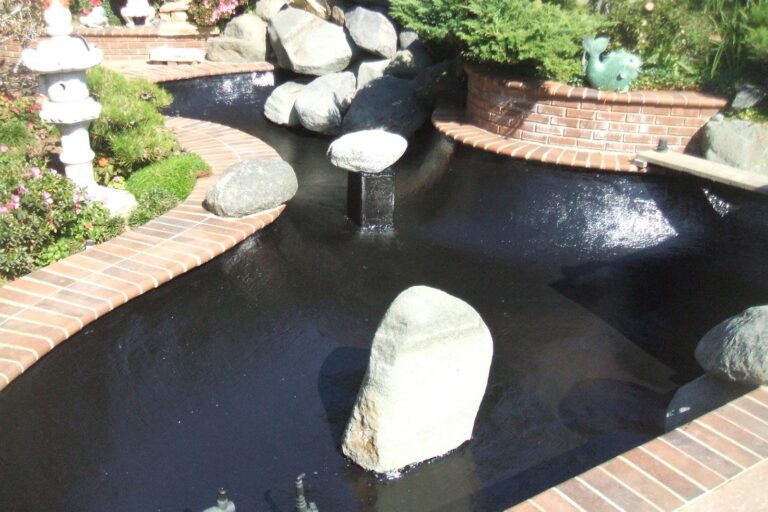

Koi Pond Liner: Best Materials, Size & Cost
EPDM, RPE, HDPE, PVC, concrete and sprayed polyurea compared for koi: what’s fish-safe, what size to buy, what it costs per year, and how to find a leak. From the people who make AquaShield.
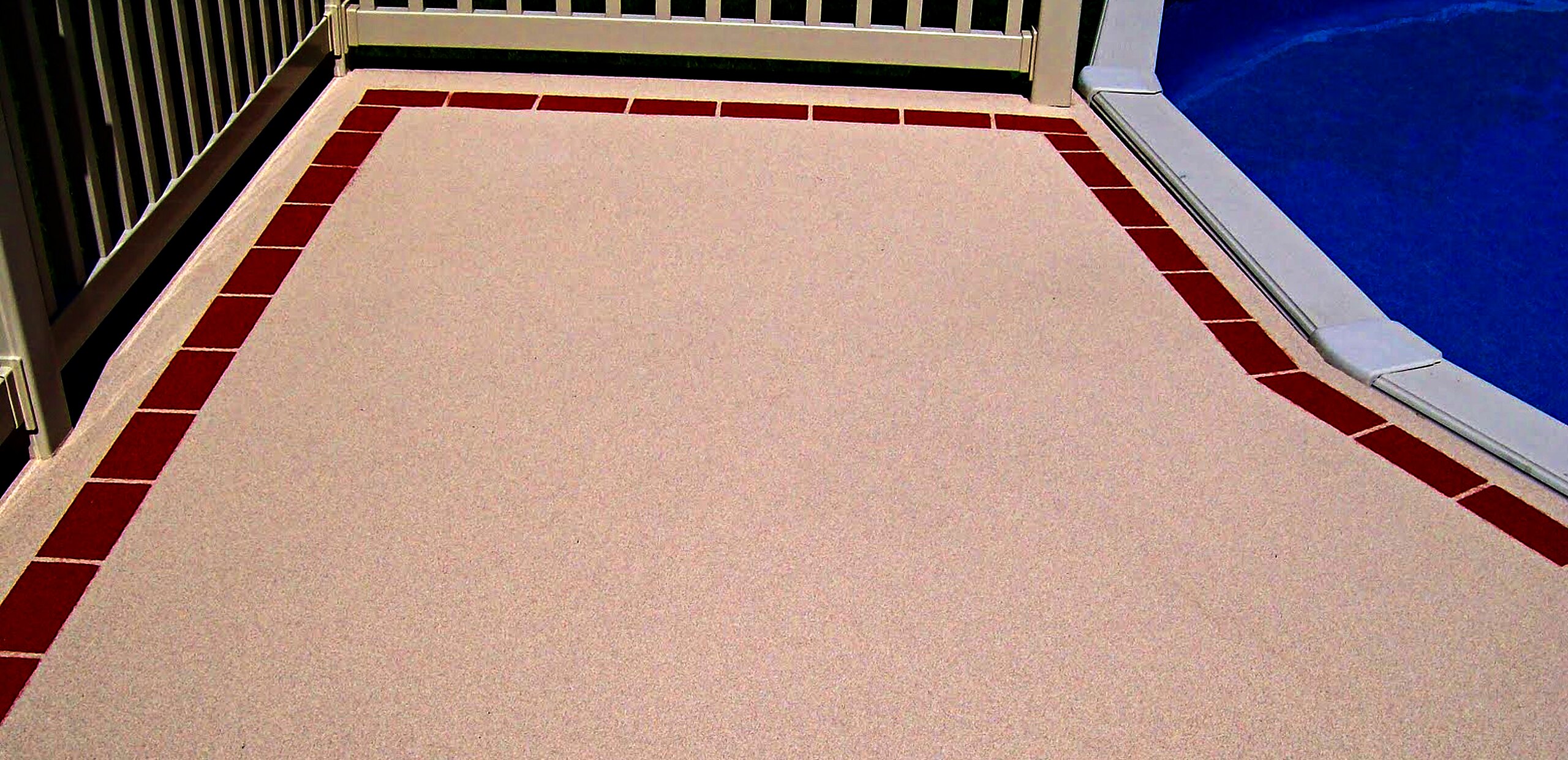
Start a deck and pool coating business
Coat decks and pools for a living.
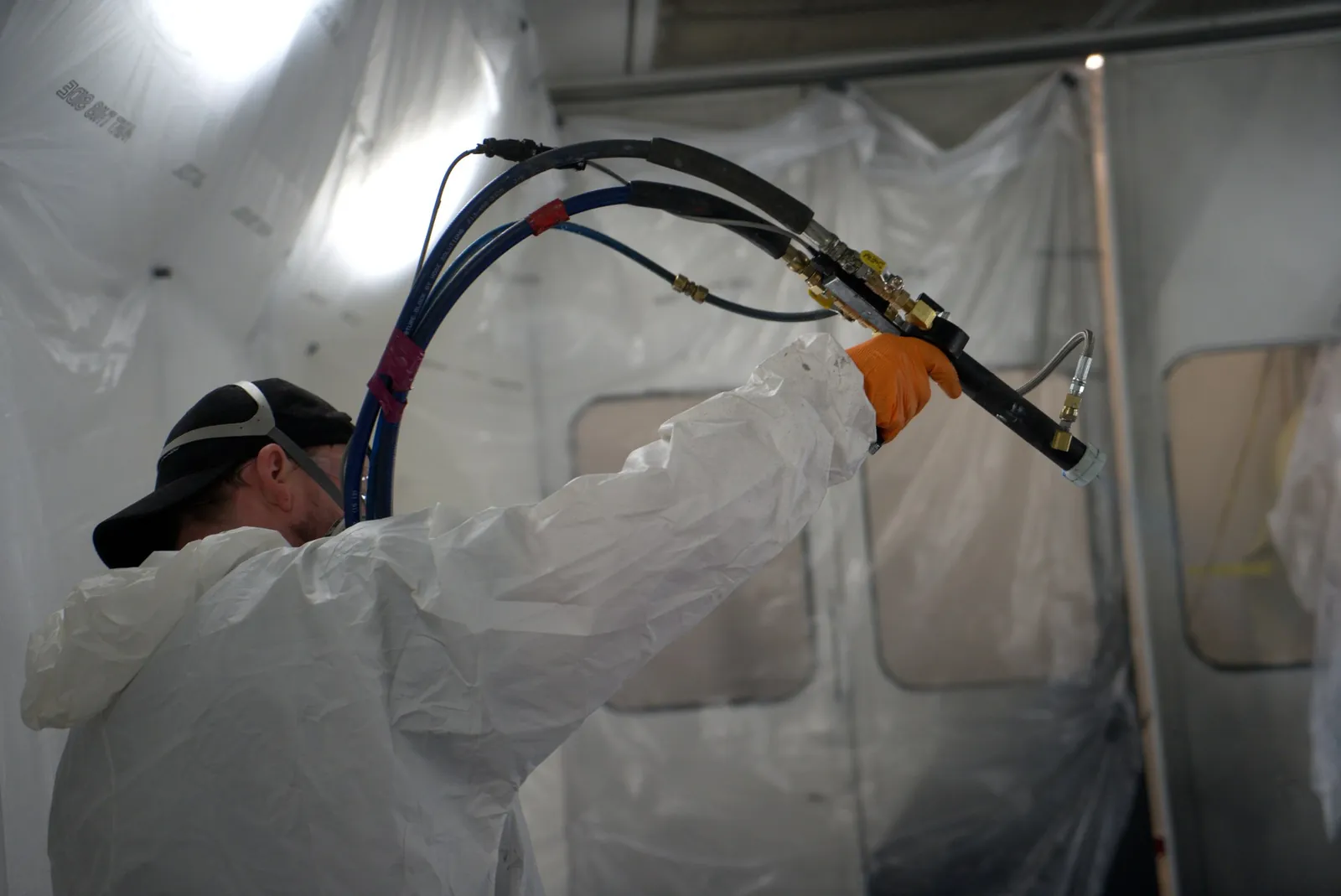
ArmorThane sets you up to do this work, and you own the business. We make the chemistry, build the rigs, train you hands-on and answer the phone when a job gets difficult. You pay no franchise fee and no royalties. It has been that way since 1989.
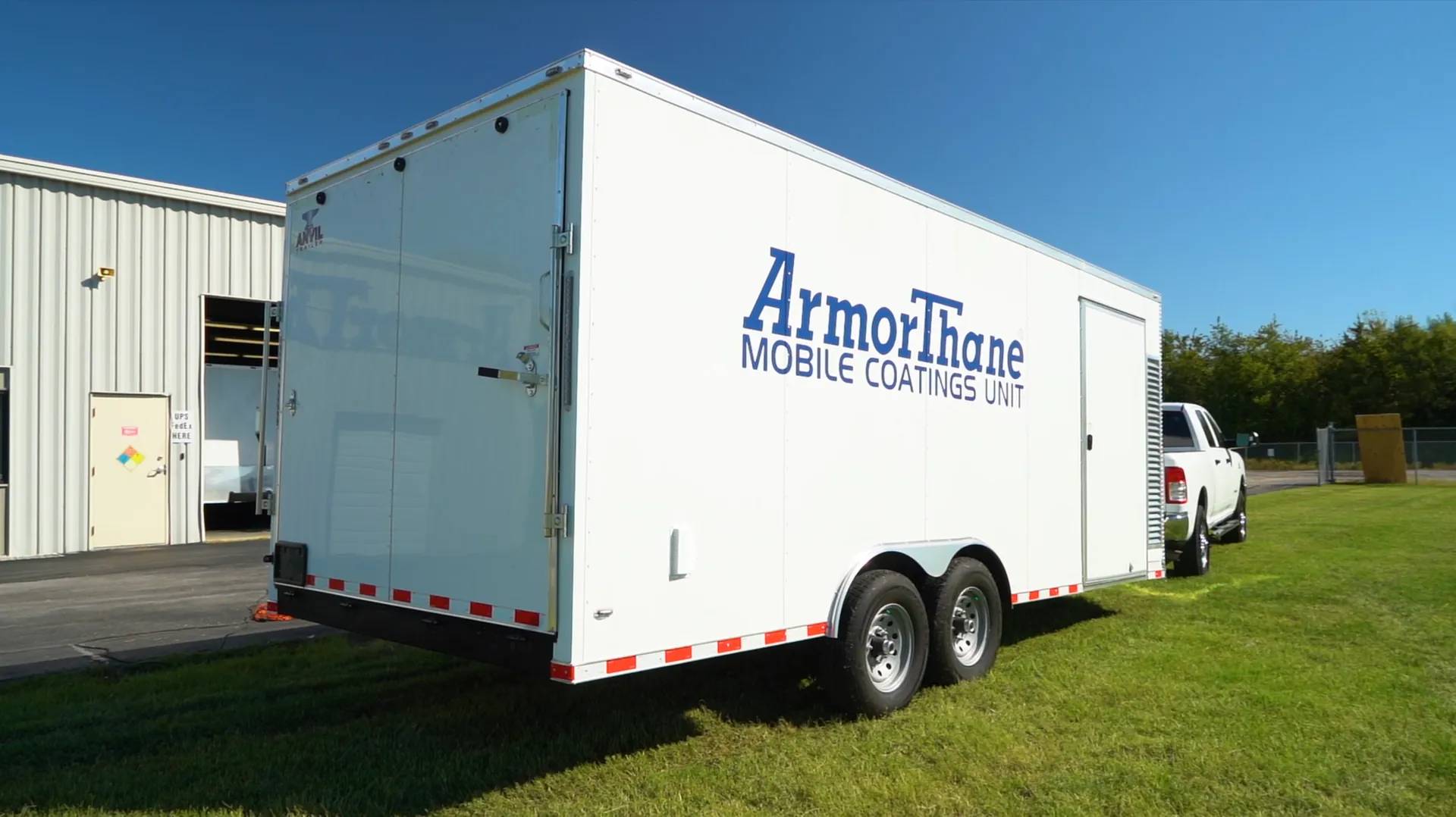
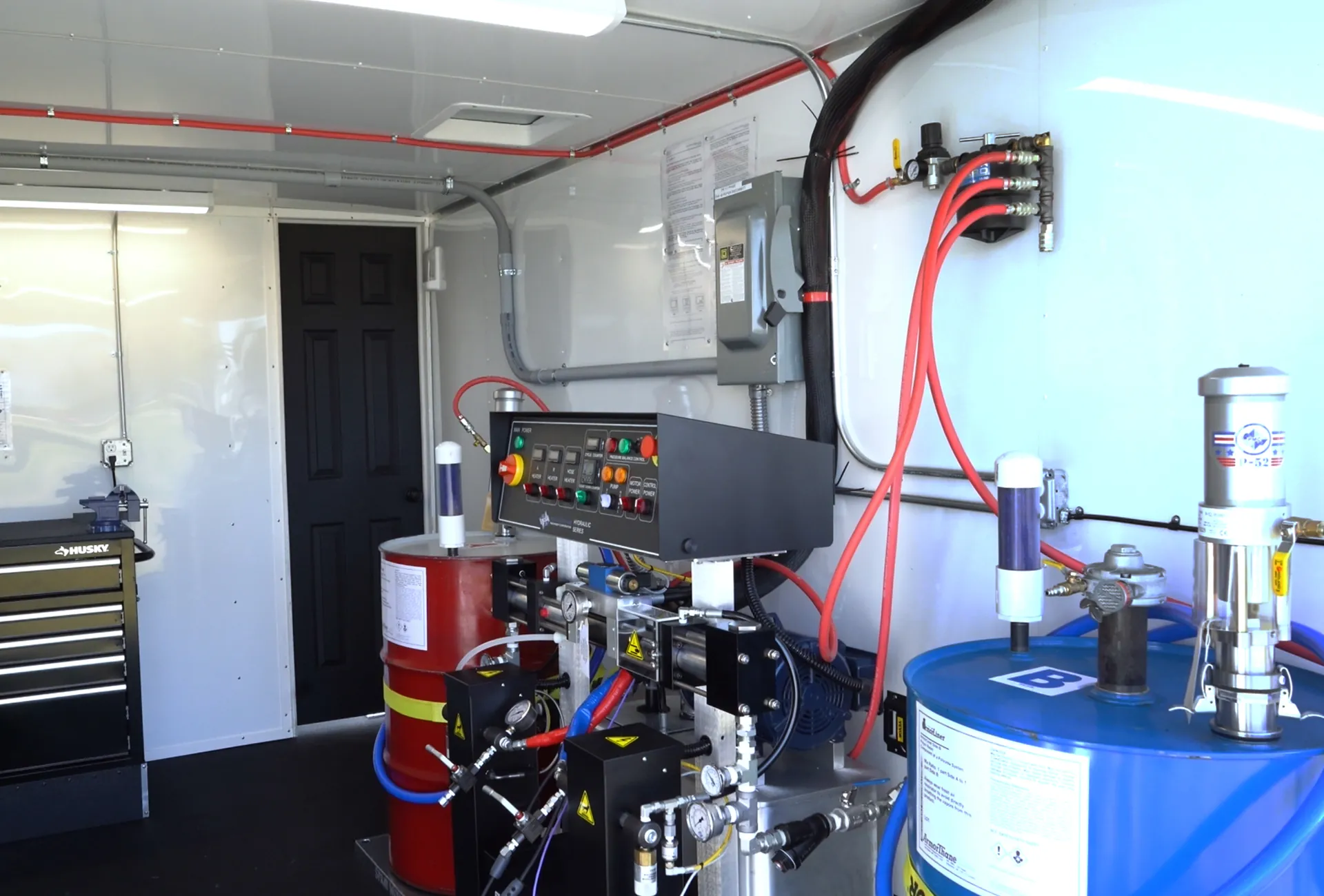
- $0
- franchise fees or royalties
- 35+
- years in business
- 50+
- countries with applicators
- 24/7
- technical support
A koi pond liner has two jobs. Hold thousands of gallons of water for decades, and put nothing into that water that hurts the fish. Most pages ranking for this term are store listings that only cover the first job, and only for the liner they sell.
For most dug koi ponds, use 45-mil pond-grade EPDM rubber over a heavy underlayment. It's flexible, repairable and costs about $0.75–$2.00 per sq ft (HomeGuide). Pick RPE for very large ponds, a box-welded liner for formal raised ponds, and a sprayed, NSF 61 polyurea lining when you have a concrete or block shell, lots of drains and returns, or rockwork. Never use roofing rubber, and skip PVC unless it's sold as fish-grade. Size a sheet at length + 2 × depth + 2 ft. Jump to the size calculator or the liner chooser.
We make spray polyurea in Springfield, Missouri, including AquaShield, a lining approved to ANSI/NSF 61 for contact with drinking water. That's one of the options on this page, and for a lot of koi ponds it's the wrong one. A hole in the ground with a waterfall and a couple of plumbing fittings is EPDM's job, and we'll say so wherever it's true.
What follows is the decision the way a pond builder makes it: what the pond is built from, how many holes you're putting through the liner, how big it is, and what it costs per year of service instead of per roll. Four calculators do the math. Every number is sourced or labeled as ours.
- 1What is the best liner for a koi pond?
- 2Koi pond liner materials compared
- 3Which liner fits your pond? (chooser)
- 4What size liner do I need? (calculator)
- 5Is a pond liner safe for koi?
- 6How thick should a koi pond liner be?
- 7What a koi pond liner costs (per year)
- 8Concrete koi ponds: seal, line or spray?
- 9How to install a koi pond liner
- 10Leaks: find them and fix them (bucket test)
- 11Where sprayed polyurea fits
- 12Koi pond liner FAQ
What is the best liner for a koi pond?
The best koi pond liner is the one that matches how the pond is built. For a pond dug into soil, that's 45-mil fish-safe EPDM: it folds into shelves, handles cold and patches easily. For a concrete, block or formal raised pond with drains and skimmers, a bonded, seamless lining usually lasts longer. The material matters less than the match.
Best liner by situation
| Your pond | Best choice | Runner-up | Why |
|---|---|---|---|
| Dug, naturalistic, shelves, DIY | 45-mil EPDM + underlayment | RPE | Most flexible sheet; folds into shelves and behind waterfall rock; easy to patch |
| Very large (hundreds to thousands of sq ft) | RPE, 36–45 mil | HDPE (covered) | The Pond Guy steers large ponds to RPE; HDPE is cheapest per sq ft but stiff |
| Formal, straight-sided, raised or framed | Box-welded RPP or EIA liner | Sprayed polyurea over block | Factory-welded to your dimensions, so no corner folds; needs support on every side |
| Existing concrete or block shell | Sprayed polyurea (pro) | DIY epoxy, or EPDM laid inside | Bonds to the shell and bridges shrinkage cracks; epoxy needs cured, sound concrete |
| Bottom drains, skimmers, returns, caves | Sprayed polyurea over a rigid shell | EPDM with careful boots | Every penetration and fold in a sheet is a seal someone made by hand |
| Lowest first cost | RPE or HDPE, kept out of the sun | EPDM | $0.30–$0.90 per sq ft vs $0.75–$2.00 for EPDM (HomeGuide) |
| Small preformed tub | Not for koi | – | HomeGuide: "Most are not deep enough for an ideal koi habitat" |
Two things settle most decisions quickly. First, do you have a rigid shell? Coatings need something to stick to; sheets don't. Second, count the holes. A bottom drain, a skimmer, two returns and a waterfall spillway is five places where a sheet liner depends on a clamp ring, a boot or seam tape. Our aquatic coatings guide puts the crossover at about a dozen laps, folds and penetrations: past that, a bonded seamless membrane will usually outlast a sheet.
Koi pond liner materials: EPDM vs RPE vs HDPE vs PVC vs coatings
EPDM rubber is the flexible, forgiving default. RPE and HDPE are cheaper, stiffer polyethylenes that shine on big, simple ponds. PVC is cheap but only fish-safe in fish-grade formulations. Box-welded liners suit formal ponds. Concrete needs a sealer, and sprayed polyurea is a bonded lining for rigid shells. Here's how they line up.
| Material | Typical thickness | Cost per sq ft | Life or warranty | Fish-safety evidence | Best for | Watch out for |
|---|---|---|---|---|---|---|
| EPDM rubber | 45 mil (60 mil sold) | $0.75–$2.00 | 20–30 yr (ChampKoi); 20- and 25-yr warranties (Just Pond Liners, Anjon) | Maker claims: "Certified fish & wildlife safe" (Anjon); pond grade only | Most dug koi ponds | Heavy in big sheets; field seams need tape |
| RPE (reinforced polyethylene) | 20–60 mil; 36–45 for large ponds | $0.40–$0.90 | 20+ yr (ChampKoi); exposed-UV ratings 5, 10 or 20 yr by thickness (BTL) | "Fish & plant safe" (BTL) | Large and very large ponds | Stiffer than EPDM (HomeGuide) |
| HDPE | 30–60 mil | $0.30–$0.60 | 40–50 yr covered, about 10 yr in sun (HomeGuide) | Listed as fish-safe (ChampKoi) | Big, simple, covered basins | "Punctures easily. Not as flexible as rubber" (HomeGuide) |
| PVC | 20–40 mil | $0.30–$0.90 | 10–20 yr (ChampKoi); 20 yr with underlayment (HomeGuide) | Fish-grade only; others may leach phthalates (ChampKoi) | Budget water gardens | HomeGuide: "Not recommended" for koi |
| Box-welded RPP or EIA | 45 mil RPP / 30 mil EIA | Priced per liner (from $182) | 25-yr warranty (seller) | "NSF-61 Certified" materials (seller) | Formal, raised, framed ponds | Must be supported on every side; corner seams |
| Preformed shell | Molded plastic | $0.25–$1.50 | – | – | Small water gardens | Too shallow for koi (HomeGuide) |
| Concrete + sealer | Epoxy at 10 mils or more | $50–$130 installed (concrete) | Shell 50+ yr (HomeGuide); epoxy film 10–20 yr (our class range) | Depends on the sealer; fresh concrete raises pH | Formal ponds, existing shells | 28-day cure; cracks |
| Sprayed polyurea | 100 mils for koi (our spec) | $10–$20 installed | 20–30+ yr class expectation (our aquatic guide) | AquaShield: ANSI/NSF 61 approved for potable water contact | Rigid shells, rockwork, many penetrations | Highest first cost; pro rig; needs a shell |
EPDM rubber: the default for dug koi ponds
EPDM is a synthetic rubber sheet, usually 45 mil thick for ponds. It stays flexible in the cold (ChampKoi lists it at −49°F), drapes into curves and shelves, and patches with primer and tape. Pond-grade EPDM is sold as fish-safe on the maker's word: Anjon's LifeGuard is "Certified fish & wildlife safe" with a 25-year warranty and "no plasticizers," and Just Pond Liners' 45-mil sheet carries a 20-year warranty. It comes in widths from 5 to 50 ft (The Pond Guy), so most backyard koi ponds need one piece. The catch is weight: The Pond Guy says its largest sheets need 1,000+ lb unloading capacity.
RPE and HDPE: cheaper polyethylenes for big ponds
RPE (reinforced polyethylene) is a scrim-reinforced plastic sheet. HomeGuide calls it "more durable and puncture resistant than HDPE" and "stiffer than other flexible liner materials." That stiffness is why it shines in large, simple basins and struggles in tight shelves. BTL rates most of its AquaArmor grades from 30 mil up as 20-year exposed-UV products, its 24-mil as 10 years and its 20-mil as 5. HDPE is cheaper again, $0.30–$0.60 per sq ft, but it's the stiffest option here and HomeGuide says it lasts about 10 years in sun against 40–50 covered. Bury it or cover it.
PVC: cheap, and only fish-safe if it says so
PVC sheets get their flexibility from plasticizers. ChampKoi warns that unspecified PVC may "leach phthalates" and recommends fish-grade formulations only; HomeGuide marks PVC "not recommended" for koi because it's "not always fish safe." Fish-grade PVC is a reasonable budget liner for a water garden. For a koi collection, we'd spend the extra on EPDM or RPE.
Box-welded liners for formal and raised ponds
A box-welded liner is factory heat-welded into a three-dimensional box to your length, width and depth, so it drops into a square frame with no folds. One seller offers them in 45-mil reinforced polypropylene or 30-mil EIA, both listed as "NSF-61 Certified," with a 25-year warranty. Two cautions from the same seller: the liner "cannot be filled with water while freestanding," so the frame has to carry the load on every side, and there are seams at the corners. Water weighs about 62.3 lb per cubic foot (USGS), so a 4-ft-deep raised pond is a structural job.
Preformed shells
Rigid plastic tubs are quick to install and fine for a small water garden. HomeGuide rules them out for koi: "Limited sizes and shapes. Most are not deep enough for an ideal koi habitat."
Concrete plus a sealer
Concrete gives you the crisp edges and permanence of a formal Japanese-style pond, and HomeGuide prices it at $50–$130 per sq ft installed. But concrete is porous, it cracks, and bare concrete isn't a finished lining. It needs a sealer, a liner laid inside, or a sprayed membrane. More in concrete koi ponds.
Sprayed polyurea
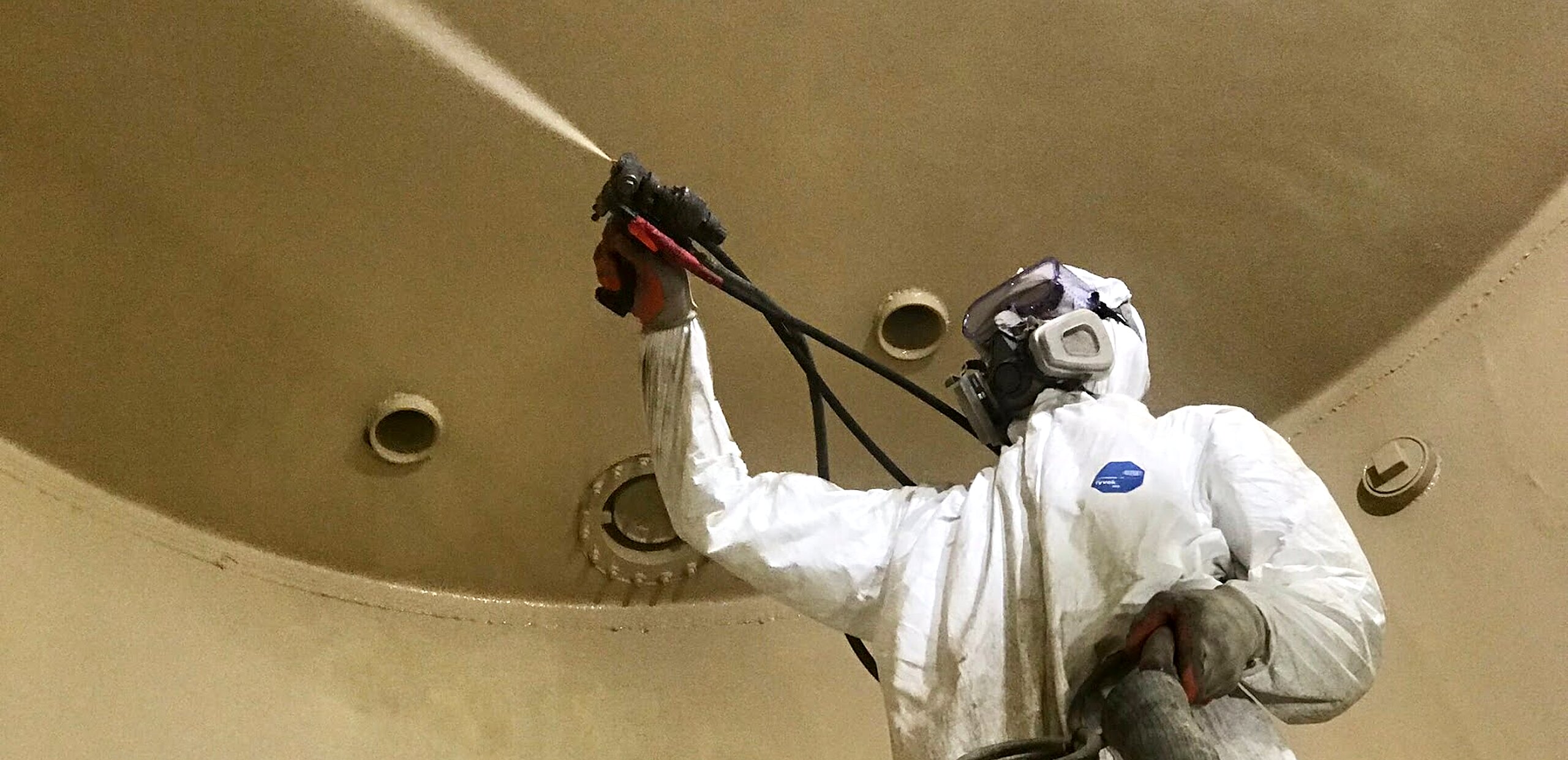
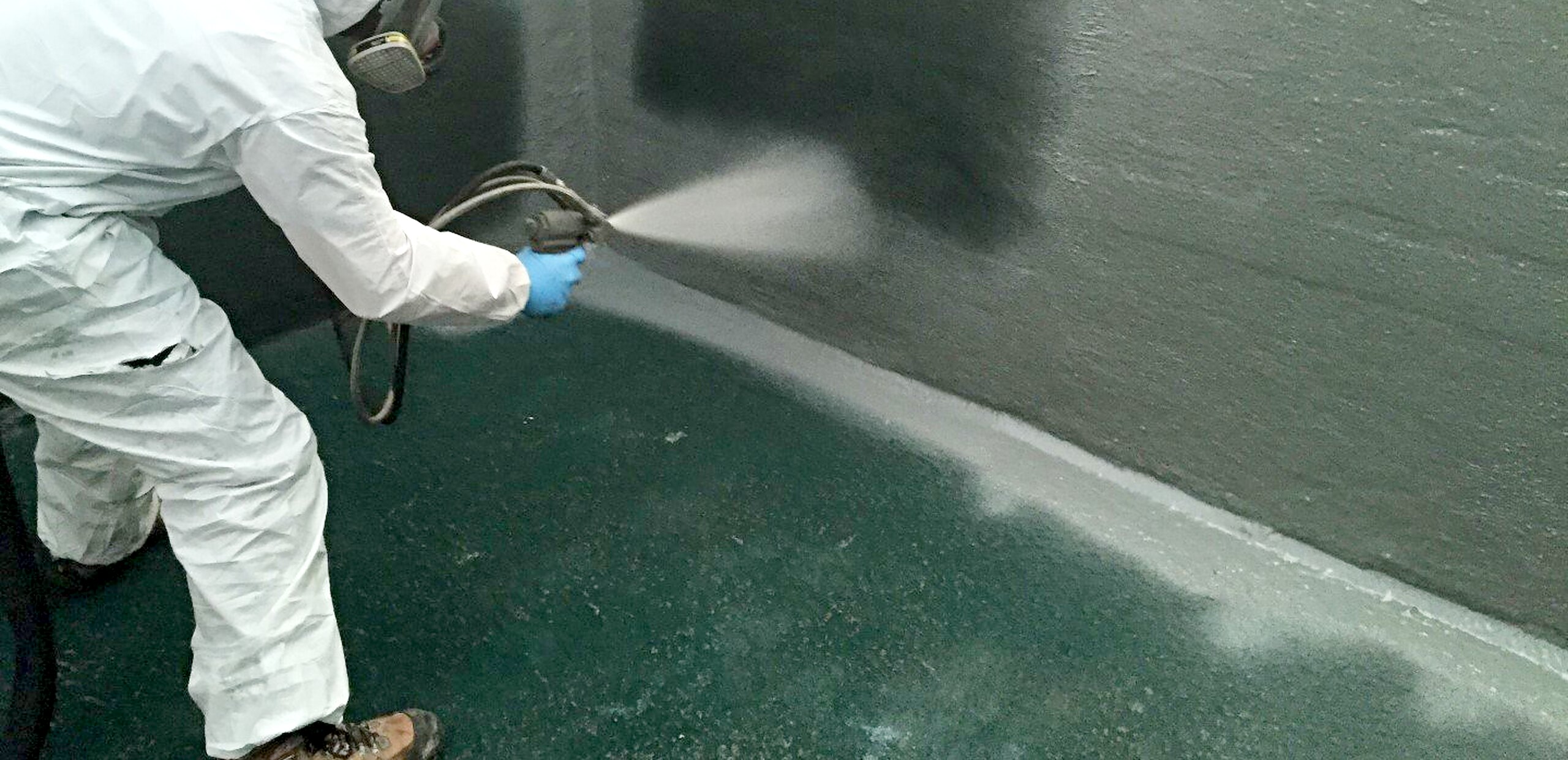
Polyurea is sprayed hot from a plural-component rig onto concrete, block, shotcrete or metal and cures in seconds into one bonded membrane, running over the floor, up the walls, around the drain flange and over the coping. There are no folds or seam tape. It costs the most up front, about $10–$20 per sq ft installed (HomeGuide, 2023), and it needs a rigid shell and a trained crew. It's not a DIY product.
Which koi pond liner is right for your pond?
Answer eight questions and the chooser scores seven options against the facts on this page: how the pond is built, its shape and size, how many penetrations the lining has to seal, and what you care about most. It shows its reasons, so you can disagree with them.
Which liner fits the pond you're building?
Scores are transparent rules, not a sales pitch. EPDM wins a lot of these, and it should.
1. 45-mil EPDM rubber
- + Drapes into a dug hole and over shelves
- + Most flexible option for shelves and curves
- + Tucks behind waterfall rock
- + $0.75–$2.00 per sq ft
2. RPE (reinforced polyethylene)
- + Works in a dug hole; stiffer to fold
- − Stiffer than EPDM (HomeGuide)
- + $0.40–$0.90 per sq ft
3. HDPE
- − Stiff; poor on shelves and curves
- + Lowest price per sq ft ($0.30–$0.60)
4. PVC (fish-grade only)
- − HomeGuide doesn’t recommend PVC for koi: “not always fish safe”
5. Box-welded liner (RPP or EIA)
- − Needs support on every side, so it suits framed or straight walls
- − Box shapes only
6. DIY epoxy over concrete
- − Needs a rigid concrete or block shell
- + Sold as a DIY kit
7. Sprayed polyurea by an applicator
- − Needs a rigid shell (or geotextile over compacted soil) and a pro crew
- + Follows any shape once there is a shell
- + No hidden folds under the stream
- − Not DIY: needs a heated plural-component rig
Scores are our transparent rules applied to the sourced facts on this page, not a lab test. Two options within 10 points are a coin flip; decide on price and who’s installing.
How it works: each option starts from a baseline and gains or loses points for each answer, based on the sources on this page (HomeGuide's koi liner verdicts, maker warranties and UV ratings, The Pond Guy's large-pond advice, Pond Armor's substrate rules, and our aquatic coatings guide). The top four are shown full strength; the rest are dimmed.
What size pond liner do I need?
Take the pond's longest length and widest width, add twice the maximum depth to each, then add overlap for both edges: 1 ft a side is the common rule, so the formula becomes length + 2 × depth + 2 ft. A 12 × 8 ft pond, 4 ft deep, needs a 22 × 18 ft sheet. Koi builders often leave 2 ft a side.
What size liner, how much underlayment, and how many koi?
Measure the longest length, the widest width and the deepest point. Stock EPDM widths run 5 to 50 ft (The Pond Guy).
Cut size = (12 + 2 × 4 + 2 × 1) by (8 + 2 × 4 + 2 × 1) = 22 × 18 ft (396 sq ft). Rounded up to a stock 20-ft width and the next 5 ft of length: 20 × 25 ft (500 sq ft). Roll stock sold by the foot can be cut closer. Volume uses the average depth: 96 sq ft of surface × 3 ft × 7.48 gal/cu ft.
$485–$1,176
- 500 sq ft of 45-mil EPDM at $0.75–$2.00 per sq ft (HomeGuide): $375–$1,000.
- Underlayment: 2 strips of 10-ft-wide roll × 22 ft = 44 ft of roll (440 sq ft) at $0.25–$0.40 per sq ft: $110–$176.
Liner and underlayment only. No excavation, pumps, filtration, rock or labor.
Big enough for koi
- Max depth 4 ft clears our 3-ft minimum (HomeGuide: 3–5 ft by climate).
- 2,154 gal clears our 1,000-gal minimum.
- Koi: 3 by surface area (25 sq ft each, our koi page) or 8 by volume (about 250 gal per adult koi, HomeGuide). Start with the lower number.
- Water weight: about 9.0 tons. That matters for raised and framed ponds.
How we calculated this: cut size = (L + 2D + 2 × overlap) by (W + 2D + 2 × overlap), using max depth. Stock size rounds the short side up to the next stock width and the long side up to the next 5 ft. Gallons = surface area × average depth × 7.48 (oval = 0.785 × L × W; freeform = 0.8 × L × W, our assumption). Koi counts use our 25 sq ft per fish and HomeGuide's 250 gallons per adult koi. Costs use HomeGuide's per-sq-ft ranges. Estimates only.
The formula, with a worked example
A 12 × 8 ft rectangular pond, 4 ft at the deepest point:
- Length: 12 + (2 × 4) + 2 = 22 ft.
- Width: 8 + (2 × 4) + 2 = 18 ft.
- Sheet: 22 × 18 = 396 sq ft. In stock sizes, that's a 20-ft-wide sheet cut 25 ft long.
Retailers disagree on the overlap, which is why the same pond gets different answers online. Play It Koi uses the +2 ft rule (1 ft a side). The Pond Guy adds 1 ft in total, 6 in. a side. ChampKoi calls 12 in. a side "the absolute minimum" and uses 24 in. a side on koi ponds, which turns our example into 24 × 20 ft. More overlap costs a little more liner and buys room for an anchor trench and settling. On a koi pond we'd rather trim than come up short.
Liner size chart for common koi ponds
| Pond (L × W, max depth) | Liner, 1 ft overlap | Liner, 2 ft overlap | Stock size (1 ft) | Gallons | EPDM material |
|---|---|---|---|---|---|
| 8 × 6 ft, 3 ft deep | 16 × 14 ft (224 sq ft) | 18 × 16 ft (288 sq ft) | 15 × 20 ft | 898 | $168–$448 |
| 10 × 8 ft, 3 ft deep | 18 × 16 ft (288 sq ft) | 20 × 18 ft (360 sq ft) | 20 × 20 ft | 1,496 | $216–$576 |
| 12 × 8 ft, 4 ft deep | 22 × 18 ft (396 sq ft) | 24 × 20 ft (480 sq ft) | 20 × 25 ft | 2,154 | $297–$792 |
| 15 × 10 ft, 4 ft deep | 25 × 20 ft (500 sq ft) | 27 × 22 ft (594 sq ft) | 20 × 25 ft | 3,366 | $375–$1,000 |
| 20 × 12 ft, 4 ft deep | 30 × 22 ft (660 sq ft) | 32 × 24 ft (768 sq ft) | 25 × 30 ft | 6,283 | $495–$1,320 |
| 25 × 15 ft, 5 ft deep | 37 × 27 ft (999 sq ft) | 39 × 29 ft (1,131 sq ft) | 30 × 40 ft | 11,220 | $749–$1,998 |
Underlayment: don't skip it
Underlayment is a nonwoven fabric that goes under the liner to stop stones and roots from puncturing it. It's cheap, $0.25–$0.40 per sq ft (HomeGuide), and The Pond Guy sells its polypropylene underlayment in 10-ft-wide rolls, so a wide pond takes two or more strips laid side by side. ChampKoi recommends 8–10 oz per square yard for koi ponds rather than the 4–6 oz sold for garden ponds. Cover the whole sheet footprint, and put a second layer or a rock pad over the liner wherever heavy stone sits on it.
How deep and how big for koi?
Our rule of thumb on building a polyurea koi pond is at least 3 ft deep, about 25 sq ft of pond per koi and no less than 1,000 gallons. HomeGuide puts the minimum at 6 × 8 × 4 ft, the ideal depth at 3–5 ft depending on climate, and about 250 gallons per adult koi. The two stocking rules give different answers, so the calculator shows both. Start with the smaller one.
Is a pond liner safe for koi? Fish-safe vs NSF 61
Pond-grade EPDM, RPE and HDPE sold as fish-safe are the normal choice and are safe on their makers' word. The risks come from the wrong product: roofing rubber, pool liners with biocides, non-fish-grade PVC, fresh concrete and coatings that aren't fully cured. NSF 61 certification is the strongest third-party evidence of inertness, but it's a drinking-water standard, not a fish test.
Pond-grade vs roofing EPDM
Roofing EPDM looks identical and costs less, which is exactly the trap. ChampKoi says ordinary roofing EPDM "is a different compound and may carry additives not intended for fish." Natural Waterscapes goes further: rubber roofing "contains TOXIC anti-algae and anti-fungal components." The Pond Guy warns that pool liners and roofing materials can contain "chemicals to reduce algae or mold that can be harmful to fish." Buy a sheet sold for ponds, and keep the label.
PVC and plasticizers
Flexible PVC depends on plasticizers, and plasticizer migration is the fish-safety concern. Our aquatic coatings guide explains why films that get their stretch from added plasticizer can weep it out over time. If you buy PVC for fish, buy a product labeled fish-grade.
What "fish safe" and NSF 61 actually mean
"Fish safe" isn't a regulated term. It's a maker's statement, and for reputable pond-grade EPDM it's a reasonable one. NSF/ANSI/CAN 61 is different: it's the certification program for drinking water system components (pipe, tank linings, coatings), run by third parties, and it looks at what a material leaches into water people drink. A few pond liners carry it; one box-welded liner seller lists its RPP and EIA materials as "NSF-61 Certified." Our AquaShield polyurea is "ANSI/NSF 61 approved for direct contact with potable water," and AquaSafe is a pure polyurea listed for potable water too. Keep the limit in mind: NSF 61 was written to protect people, not koi. It's the best inertness evidence commonly available, which is why we'd ask for it on any coating going into a koi pond.
Curing, chlorine and the first fill
Rinse, then cycle
No cure time. Fill, check for leaks, dechlorinate city water and let the filter cycle before fish go in.
24 hours minimum
Pond Armor says 24 hours before water or fish, plus 12 more in cool weather, over concrete that has cured 28 days.
Hold, dump, refill
Holiday-test the lining, fill and hold 24–48 hours, dump that water, refill, dechlorinate, then confirm pH, ammonia and nitrite before stocking (our aquatic guide).
How thick should a koi pond liner be?
For EPDM, 45 mil is the koi standard; 60 mil is sold for heavier duty but is a third heavier to handle. RPE runs 20–60 mil, with 36–45 mil the usual pick for large ponds. PVC is sold at 20–40 mil. Coatings are measured differently: at least 10 mils for a DIY pond epoxy, and 100 mils for a sprayed polyurea koi lining.
| Liner | Common thickness | Koi pond pick | Source |
|---|---|---|---|
| EPDM rubber | 45 or 60 mil | 45 mil | The Pond Guy; ChampKoi |
| RPE | 20, 24, 30, 36, 40, 45, 60 mil | 36–45 mil (most BTL grades from 30 mil carry a 20-yr exposed-UV rating) | BTL; The Pond Guy |
| HDPE | 30–60 mil | Thicker grades, kept covered | ChampKoi; HomeGuide |
| PVC | 20–40 mil | Fish-grade only; not our pick for koi | ChampKoi; The Pond Guy |
| Box-welded | 45 mil RPP, 30 mil EIA | Either, framed on every side | Everything Ponds |
| DIY pond epoxy | 10 mils minimum dry film | Two coats on rough concrete | Pond Armor |
| Sprayed polyurea | 60–125 mils by service | 100 mils | ArmorThane aquatic guide |
Thicker isn't automatically better with sheets. A 60-mil EPDM sheet is harder to fold neatly into shelves and corners, and folds are where sheet liners leak. Put the extra money into a heavier underlayment and a rock pad first. With coatings, thickness is the whole spec: thin spots at corners and shoulders are the usual defect, which is why a good applicator measures film build and holiday-tests the finished lining.
How much does a koi pond liner cost? First cost and cost per year
For a 12 × 8 × 4 ft koi pond, pond-grade EPDM and underlayment run roughly $400–$950 in material. A sprayed polyurea lining for the same pond runs about $3,000–$6,000 installed. Per year of service, sheet liners still win by a wide margin on a simple dug pond. The gap narrows as drains, rockwork and repair costs pile up.
| Item | Published cost | Date | Source |
|---|---|---|---|
| EPDM liner, material | $0.75–$2.00 per sq ft | Jan 2024 | HomeGuide |
| RPE liner, material | $0.40–$0.90 per sq ft | Jan 2024 | HomeGuide |
| HDPE liner, material | $0.30–$0.60 per sq ft | Jan 2024 | HomeGuide |
| PVC liner, material | $0.30–$0.90 per sq ft | Apr 2023 | HomeGuide |
| Underlayment | $0.25–$0.40 per sq ft | Jan 2024 | HomeGuide |
| Pond liner projects, installed | $300–$7,400 | Apr 2023 | HomeGuide |
| Polyurea, installed | $10–$20 per sq ft | Apr 2023 | HomeGuide |
| DIY pond epoxy kit | $359.80 per 240 sq ft at 10 mils (≈$1.50 per sq ft) | 2026 | Pond Armor |
| Concrete pond, installed | $50–$130 per sq ft | Jan 2024 | HomeGuide |
| Whole koi pond, installed | $3,500–$17,000 average; 15 × 20 ft $17,000–$36,000 | Jan 2024 | HomeGuide |
| Liner repair | $150–$400+ pro; $30–$100 DIY kit | Apr 2023 | HomeGuide |
What does each lining cost up front, and per year of service?
Sheet liners are priced on the sheet you buy; coatings on the surface they actually cover. Life ranges are sourced and adjustable.
Sheet liners are priced on the cut sheet (22 × 18 ft) plus underlayment; coatings on the wetted surface: floor + walls + a 1-ft lap over the coping. Epoxy is only an option over a sound, cured concrete or block shell; sprayed polyurea needs a rigid shell and an applicator. First costs exclude digging, the shell itself, pumps, filtration and rock. Per-year figures divide first cost by the life shown; they ignore draining, restocking and repair costs, which favor the longer-lived options.
| Option | Area priced | First cost | Life used | Per year |
|---|---|---|---|---|
| 45-mil EPDM | 396 sq ft sheet + underlayment | $396–$950 | 25 yr | $16–$38 |
| RPE | 396 sq ft sheet + underlayment | $257–$515 | 22.5 yr | $11–$23 |
| HDPE | 396 sq ft sheet + underlayment | $218–$396 | 25 yr | $9–$16 |
| PVC (fish-grade) | 396 sq ft sheet + underlayment | $218–$515 | 15 yr | $15–$34 |
| DIY epoxy over concrete | 296 sq ft wetted | $444–$888 | 15 yr | $30–$59 |
| Sprayed polyurea (pro) | 296 sq ft wetted | $2,960–$5,920 | 25 yr | $118–$237 |
How we calculated this: sheet area = (L + 2D + 2 × overlap) × (W + 2D + 2 × overlap), plus the same area of underlayment at $0.25–$0.40. Wetted area = (surface + perimeter × max depth) × (1 + detail) + perimeter × coping lap. Prices: HomeGuide (EPDM, RPE, HDPE, PVC, polyurea installed); Pond Armor kit price for epoxy at 10–20 mils. Lives: EPDM 20–30 yr (ChampKoi, Play It Koi); RPE 20–25 yr (ChampKoi says 20+; the upper value is our assumption); HDPE 10–40 yr (HomeGuide, sun vs covered); PVC 10–20 yr (ChampKoi); epoxy 10–20 yr and polyurea 20–30 yr are the class ranges in our aquatic coatings guide, not product warranties.
How long does a koi pond liner last?
Pond-grade EPDM is commonly quoted at 20–30 years (ChampKoi, Play It Koi) and carries 20- to 25-year warranties from the makers we checked. RPE is rated by thickness: most of BTL's grades from 30 mil up are 20-year exposed-UV products. HDPE lasts 40–50 years buried but about 10 in the sun (HomeGuide), PVC 10–20 years. Our aquatic coatings guide puts properly applied spray polyurea in immersion at 20–30+ years as a class expectation. In every case, sunlight on the exposed edge, sharp stones and careless net work end more liners than old age does.
The per-year view hides one cost the calculator can't see: what a failure costs you. Draining a stocked koi pond, holding the fish, pulling rock and re-lining is a weekend or a contractor bill, and it's the reason builders with complex, drain-heavy ponds pay more up front.
Concrete koi ponds: seal, line or spray?
A concrete pond needs a waterproof, fish-safe surface over it. You have three choices: a DIY pond epoxy brushed or rolled on at 10 mils or more, a flexible liner laid inside the shell, or a sprayed polyurea lining from an applicator. New concrete must cure first, typically 28 days, and fresh concrete raises the water's pH.
New concrete
Pond Armor says standard concrete must cure 28 days (7 for polymer or accelerated mixes) before it's etched and coated. Our aquatic guide notes that fresh concrete and mortar drive pH toward 11 or higher and will kill fish on their own, which is why a bare new shell needs weeks of fill-and-flush cycles. A continuous lining isolates the water from the cement entirely.
Existing concrete that leaks
Freeze-thaw, settling and shrinkage open cracks in old shells. Fix structure first: route and fill moving cracks, repair spalls, and relieve any groundwater pushing in from behind. Then choose:
- DIY epoxy. Pond Armor's Pond Shield covers 240 sq ft at 10 mils per 1.5-gallon kit ($359.80), about $1.50 per sq ft, with two coats on rough surfaces. Good for a sound shell you can dry out.
- A liner inside the shell. Lay underlayment over the old concrete and an EPDM sheet over that. The cheapest fix for a badly cracked shell, at the cost of folds in square corners.
- Sprayed polyurea. Blasted, moisture-tested, coved and reinforced at the drains, then sprayed at about 100 mils and holiday-tested. The most durable and the most expensive.
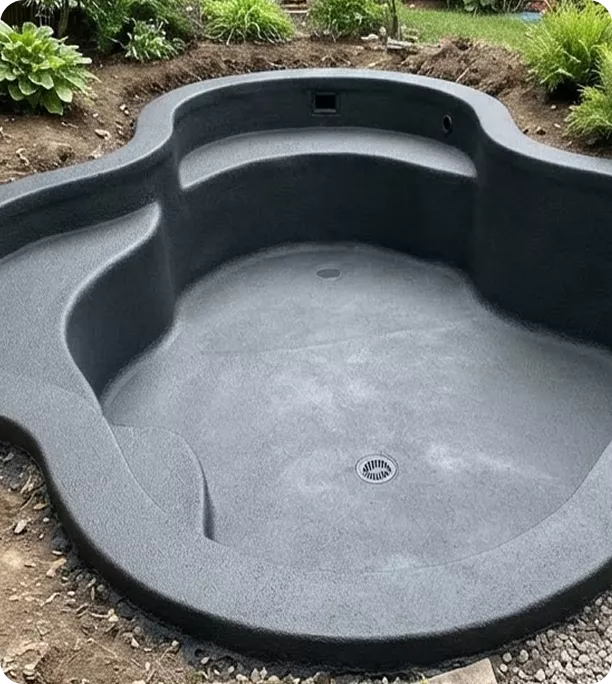
Pool paint is a different product, built for chlorinated water and people, and our aquatic guide warns that solvent-borne grades are a real risk to fish until fully cured. If you're weighing it for a pool, see pool resurfacing costs; for a koi pond, pick a coating made and documented for immersion with fish. The same prep-then-spray approach is how applicators handle concrete fountain rehabilitation.
How to install a koi pond liner
Dig to the final shape, plumb the drains and skimmer, clear every stone and root, lay a heavy underlayment, then set the liner loose in the hole and let the water pull it into place. Pleat the extra material into neat folds rather than stretching it, seal the penetrations, then trim and hide the edges under stone.
Dig and shape
Mark the outline, dig the shelves and the deep zone, and keep the top edge level all the way around; the water will show you every low spot. Sheets need gently sloped walls; a formal vertical wall is a job for a box-welded liner or a shell.
Set the plumbing
Bottom drains and skimmer bodies go in before the liner. Every one of them becomes a clamp-ring or flange seal against the sheet, so place them where you can reach them.
Clear and pad
Pull stones, roots and sharp debris, then cover the whole footprint with underlayment. ChampKoi recommends 8–10 oz fabric for koi ponds.
Warm and place the liner
Unroll EPDM in the sun to relax it (ChampKoi suggests about 30 minutes), then set it in with helpers. Don't drag it over the ground.
Fill slowly and pleat
Start filling and smooth wrinkles as the water rises, gathering the extra into a few large pleats in corners rather than many small ones. Pleat, don't stretch.
Seal the penetrations
Cut openings only when the water is close to the fitting, then make each seal per the fitting maker's instructions. Use the maker's primer and seam tape if panels have to be joined.
Trim, anchor and cover
Leave overlap, lock the edge in a trench or under coping, and cover every exposed inch of liner with stone or soil to keep sun and feet off it.
Cycle before the koi
Dechlorinate, run the filter, and wait until ammonia and nitrite read zero before stocking.
Bottom drains, skimmers and seams
Koi keepers like bottom drains and skimmers for good reason, but each one is a place where a sheet liner relies on a clamp, a gasket and good workmanship. A waterfall adds a spillway seal and often a second sheet under the stream. If your plan has more than a handful of these, get the fittings designed for liner use, keep the folds away from them, and think hard about a rigid shell with a bonded lining instead.
Rocks and gravel on the liner
Stone protects the liner's edge from sun and hides it, but its weight concentrates on small points. Put a second layer of underlayment or a rock pad under heavy boulders; Aquascape sells a heavy-duty rock pad for exactly this. Many koi builders keep the floor bare so waste can reach the bottom drain, and use stone mainly at the edges and shelves.
Koi pond liner leaks: find them and fix them
First prove it's a leak and not evaporation. Set a bucket of pond water in the pond, mark both levels, turn off the pump and any auto-fill, and compare after 24 hours. If the pond drops more than the bucket, you likely have a leak. Repeat with the pump on to tell a liner leak from a waterfall or plumbing leak.
Turn your bucket test into gallons a day
Bucket-test method per Swim University (2026), adapted for ponds. Measure to the nearest ⅛ in. with tape or a marker.
Likely leak Pump off, the pond dropped 0.75 in. and the bucket 0.25 in. in 24 hours. Over 96 sq ft of surface, each inch is 60 gal, so evaporation is about 15 gal a day and the extra loss about 30 gal a day. Run a second 24-hour test with the pump on (Swim University’s method). If only that one loses water, the leak is in the waterfall, stream or plumbing, not the liner. On a sheet liner, the usual suspects are edges that sank below the water line, folds, and the seals at drains, skimmers and returns. On a sprayed lining, check penetrations and any impact damage. Our thresholds (⅛ in. possible, ¼ in. likely) allow for marker and tape error.
How we calculated this: gallons per inch = surface sq ft ÷ 12 × 7.48. Leak = (pond drop − bucket drop) × gallons per inch. The ⅛-in. and ¼-in. thresholds are ours, to allow for measuring error.
Finding the leak
If the leak is in the basin, let the level fall with the pump off. It usually stops at the height of the hole. Walk that line looking at folds, the edge where soil may have settled below the water line, and the seals at the skimmer and returns. If only the pump-on test loses water, look at the stream and waterfall first: low edges, splash-out and a liner that's slumped under a rock are more common than a hole.
Patching an EPDM liner
EPDM repair kits use a primer and a peel-and-stick patch; Just Pond Liners' kit includes two 6 × 6 in. patches. Drop the water below the hole, clean and dry the area, prime past the patch footprint, round the patch corners and roll it down hard. HomeGuide puts DIY kits at $30–$100 and professional liner repair at $150–$400 or more.
Can you paint or coat over a pond liner?
No, not in a way that lasts. Pond Armor says rubber and polyethylene/polypropylene liners "are designed to repel other materials" and long-term adhesion isn't possible. Sprayed polyurea is the same story: the sheet has to come out, and a sprayed lining needs a rigid substrate. If your liner is failing everywhere, replace it, or build a shell and line that.
Sprayed polyurea koi ponds: where they fit and where they don't
Sprayed polyurea earns its price on koi ponds built as a rigid shell (concrete, block, shotcrete or carved foam) with bottom drains, skimmers, caves or a formal coping edge. It doesn't make sense for a simple dug pond you're lining yourself. Buy the EPDM.
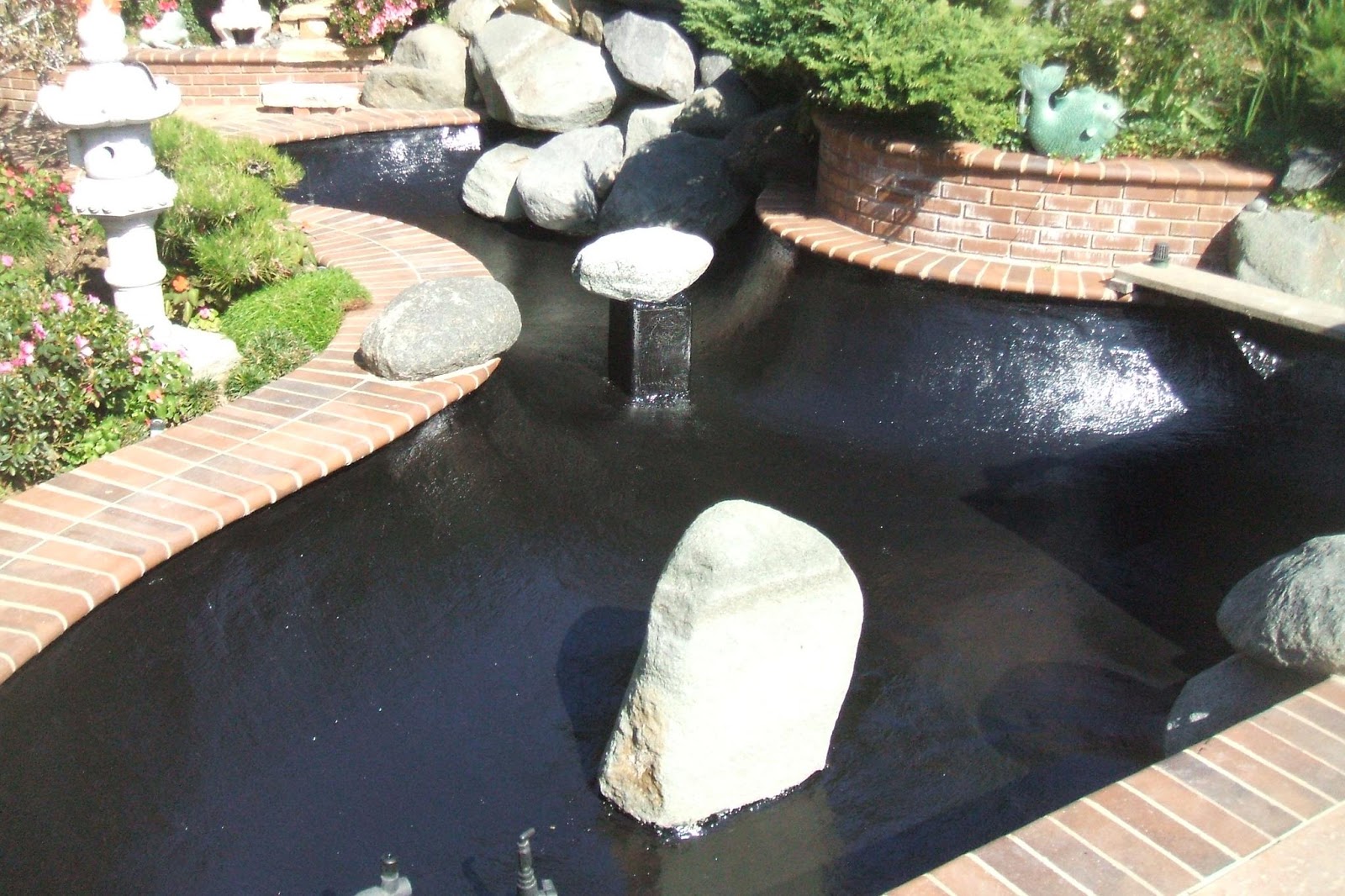
Where it fits, an ArmorThane-certified applicator sprays AquaShield: a 100% solids, flexible, aromatic, two-component polyurea that's ANSI/NSF 61 approved for direct contact with potable water, can be applied down to −20°F, and can be installed with or without reinforcement at transitions. The lining runs continuously over drains and returns, so there's no boot or clamp ring to leak, and damage stays local instead of traveling under a loose sheet. Our aquatic coatings guide has the full spec, a wetted-area and material calculator, and the commissioning sequence; building a polyurea koi pond covers design, and polyurea water features and pools and fountains cover related work.
AquaShield
ANSI/NSF 61 approved for direct potable water contact; meets USDA criteria.
Koi pond spec
Our suggested dry film thickness for koi ponds, verified by measurement and holiday testing.
Cold application
Gel time fast enough to spray down to −20°F, per the AquaShield product page.
Pond builders: add sprayed linings.
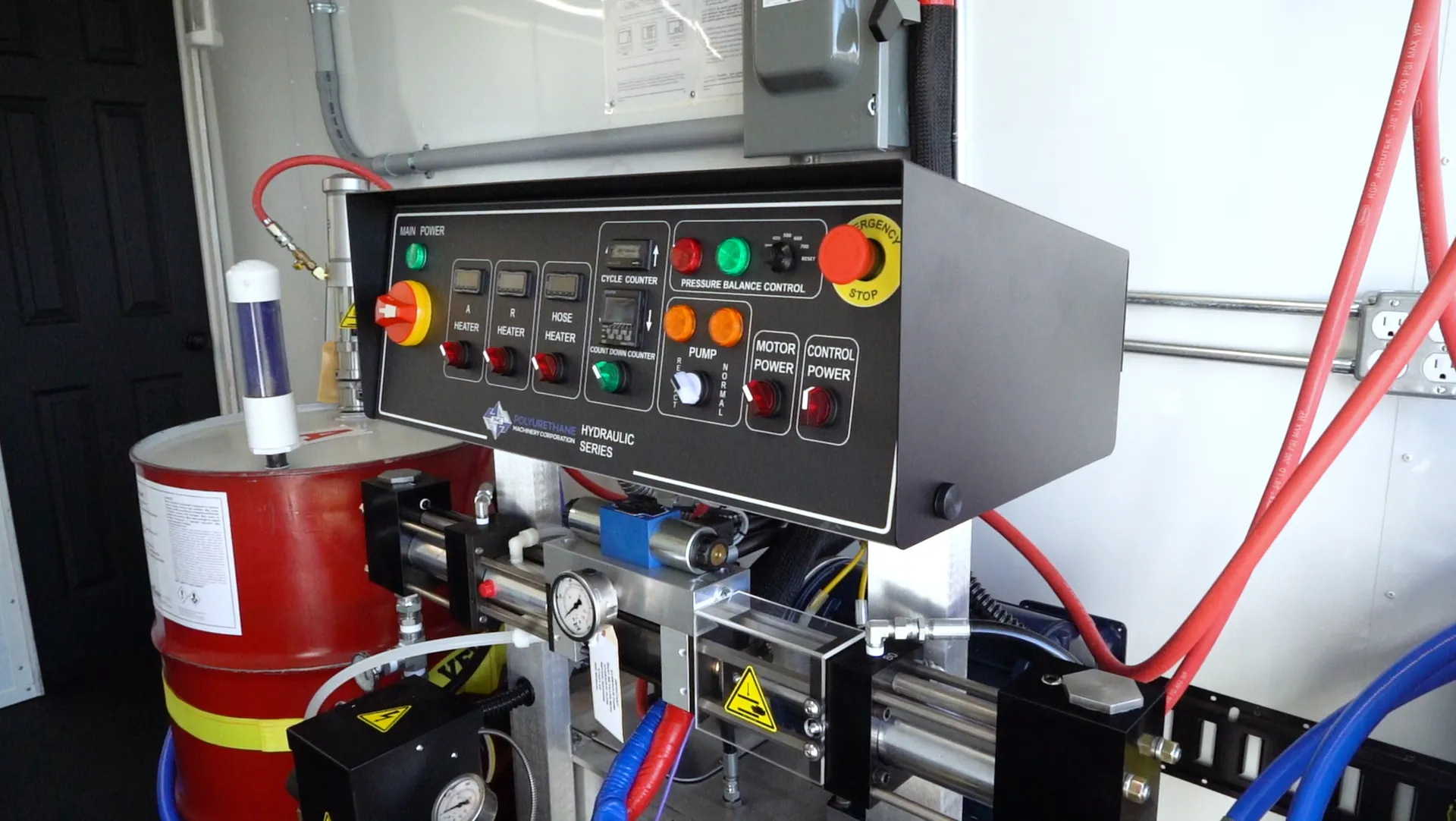
Concrete ponds, fountains, streams and rockwork need a bonded lining, and few crews can spray one. We make AquaShield and our other polyureas, build the spray rigs and train your crew at your location. Not a franchise: no franchise fee, no royalties, and startup packages from $25,000.
Questions first? Call (417) 831-5090 →
Koi pond liner FAQ
What is the best liner for a koi pond?
For a pond dug into soil, 45-mil pond-grade EPDM rubber over a heavy underlayment is the best all-round choice: flexible, cold-tolerant, repairable and about $0.75–$2.00 per sq ft (HomeGuide). For very large ponds, RPE is cheaper per sq ft. For concrete, block or formal ponds with several drains, skimmers or rockwork, a sprayed, NSF 61 polyurea lining has no seams to leak. The liner chooser scores your pond.
How thick should a koi pond liner be?
Use 45-mil EPDM for most koi ponds; 60 mil is sold but is heavier and harder to fold. RPE for large ponds is usually 36–45 mil, and PVC is sold at 20–40 mil. Coatings are thicker: we specify about 100 mils for a sprayed polyurea koi lining, and Pond Armor's DIY epoxy needs at least 10 mils.
Is EPDM or PVC better for a koi pond?
EPDM. It stays flexible in the cold (ChampKoi lists −49°F), lasts 20–30 years and pond grades are sold as fish-safe. PVC is cheaper but relies on plasticizers; ChampKoi says non-fish-grade PVC may leach phthalates, and HomeGuide marks PVC "not recommended" for koi because it's "not always fish safe."
Is EPDM pond liner safe for koi?
Pond-grade EPDM sold as fish-safe is the standard koi liner. Anjon, for example, describes its LifeGuard sheet as "Certified fish & wildlife safe." That's a maker's statement, not an NSF 61 certification. Roofing EPDM is a different product and may contain additives not meant for fish, so don't substitute it.
Can I use roofing EPDM for a pond?
Don't. Retailers including ChampKoi, Natural Waterscapes and The Pond Guy warn that roofing rubber can contain anti-algae, anti-fungal or other additives that can harm fish. The savings disappear the first time you lose a koi. Buy EPDM sold specifically for ponds.
How do I calculate what size pond liner I need?
Liner length = pond length + 2 × max depth + 2 ft, and liner width = pond width + 2 × max depth + 2 ft. That leaves 1 ft of overlap at each edge. A 12 × 8 ft pond that's 4 ft deep needs a 22 × 18 ft sheet. Many koi builders leave 2 ft a side instead. The size calculator also rounds to stock sizes and sizes the underlayment.
How long does a rubber pond liner last?
Pond-grade EPDM is commonly quoted at 20–30 years (ChampKoi, Play It Koi), and makers we checked warranty it for 20 to 25 years. Sunlight on exposed edges, sharp stones and punctures shorten that, so keep the liner covered and padded.
How much does a koi pond liner cost?
Material runs about $0.75–$2.00 per sq ft for EPDM, $0.40–$0.90 for RPE and $0.30–$0.60 for HDPE, plus $0.25–$0.40 per sq ft for underlayment (HomeGuide). For a 12 × 8 × 4 ft pond that's roughly $400–$950 in EPDM and underlayment. A sprayed polyurea lining runs about $10–$20 per sq ft installed, roughly $3,000–$6,000 for the same pond.
Do I need underlayment under a pond liner?
Yes. Underlayment is a nonwoven fabric that protects the liner from stones and roots, and at $0.25–$0.40 per sq ft (HomeGuide) it's cheap insurance. ChampKoi recommends 8–10 oz per square yard for koi ponds. Add a second layer or a rock pad under heavy boulders.
How deep should a koi pond be?
At least 3 ft by our rule of thumb, and HomeGuide puts the ideal at 3–5 ft depending on climate, with a minimum pond of about 6 × 8 × 4 ft. For capacity, we use about 25 sq ft of pond per koi and HomeGuide uses about 250 gallons per adult koi; start with whichever gives the smaller number.
Can you paint or coat over a pond liner?
Not in a way that lasts. Pond Armor says rubber and polyethylene liners are designed to repel other materials, so coatings won't bond long term. Sprayed polyurea needs a rigid shell too, so a failing sheet liner has to come out first.
How do you seal a concrete koi pond?
Let new concrete cure (Pond Armor says 28 days for standard concrete), repair cracks, then choose a DIY pond epoxy at 10 mils or more, an EPDM liner laid inside the shell over underlayment, or a sprayed polyurea lining from an applicator. Fresh concrete raises pH, so a continuous lining also keeps the cement out of the water. See concrete koi ponds.
Is sprayed polyurea better than a pond liner?
It depends on the pond. For a simple dug pond, a sheet liner is far cheaper and works well. For a concrete, block or formal pond with bottom drains, skimmers, a waterfall or caves, a bonded seamless polyurea lining removes the folds and boots where sheet liners usually leak. It costs more up front and needs a certified applicator.
Written from manufacturer and seller data, published cost guides and 35+ years of making polyurea and supporting the applicators who spray it. Last updated September 26, 2026.
Methodology and sources
Prices are published figures with their dates; they vary by region and retailer. Liner sizing, volume, stocking, cost-per-year and leak math are our calculations from the stated inputs. Material fish-safety statements are the makers' and sellers' own unless a certification is named. ArmorThane product statements are quoted from our product pages; confirm values against the current data sheet before writing a specification.
- HomeGuide, koi pond cost (updated Jan. 31, 2024): homeguide.com/costs/koi-pond-cost
- HomeGuide, pond liner cost (updated Apr. 5, 2023): homeguide.com/costs/pond-liner-cost
- ChampKoi, pond liner guide for koi (Jul. 15, 2025): champkoi.com/blogs/koi-guides/epdm-pond-liners-the-ultimate-guide-to-c
- The Pond Guy, pond liner calculator and guide (Feb. 2, 2023): thepondguy.com/learning-center/pond-liner-calculator-guide/
- The Pond Guy, pond liner: the essential guide (Aug. 10, 2023): thepondguy.com/learning-center/pond-liner-the-essential-guide/
- The Pond Guy, 45 mil EPDM pond liner (sizes): thepondguy.com/product/45-mil-epdm-rubber-pond-liner/
- The Pond Guy, pond underlayment: thepondguy.com/product/pond-underlayment/
- Play It Koi, pond liners (EPDM, RPE, box-welded): playitkoi.com/collections/pond-liner
- Just Pond Liners, 45 mil EPDM: justpondliners.com/
- Anjon, LifeGuard 45 mil EPDM liner: anjonmfg.com/45-mil-edpm-liner/
- Carlisle, AquaTough EPDM pond liners: carlislesyntec.com/en/Roofing-Products/Specialty/GeoMembrane/AquaTough
- BTL Liners, AquaArmor pond liners: btlliners.com/aquaarmor
- Everything Ponds, rectangular box-welded pond liner: everything-ponds.com/rectangular-box-welded-pond-liner-flexible.html
- Natural Waterscapes, EPDM pond liner: shop.naturalwaterscapes.com/pond-construction-supplies/pond-liner/
- Aquascape, pond liner and underlayment (rock pad): aquascapeinc.com/product-category/liner-underlayment
- Pond Armor, Pond Shield epoxy kits: pondarmor.com/
- Pond Armor, FAQ: pondarmor.com/faq/
- NSF, certified drinking water system components (NSF/ANSI/CAN 61) listings: info.nsf.org/Certified/PwsComponents/
- USGS, water density: usgs.gov/special-topics/water-science-school/science/water-density
- Swim University, how to find a pool leak (bucket test, Apr. 2026): swimuniversity.com/pool-leak/
- ArmorThane, aquatic coatings guide: armorthane.com/aquatic-coatings/
- ArmorThane, building a polyurea koi pond: armorthane.com/building-a-polyurea-koi-pond/
- ArmorThane, AquaShield: armorthane.com/products/armorline-products/high-pressure/aquashield/
- ArmorThane, AquaSafe pure polyurea: armorthane.com/products/armorline-products/high-pressure/aquasafe-pure
Start your coatings business with ArmorThane.
Tell us what you want to spray and where you are. An ArmorThane specialist will walk you through the equipment, chemicals, training and startup cost for the work you want to do.
- Equipment package matched to your applications
- Hands-on training and applicator certification
- Technical support once you are spraying
Concrete, block or formal pond? Talk to a certified polyurea applicator.
Tell us what you have: a new shell to line, a leaking concrete pond, or a stream and rockwork to waterproof. We'll connect you with an ArmorThane-certified applicator who will put the prep method, product and film thickness in writing.
- Concrete, block and shotcrete koi ponds
- Leaking pond shells, fountains and streams
- NSF 61 AquaShield lining, thickness on the quote
- Contractors: ask about polyurea, rigs and training