Liquid-Applied Waterproofing Membrane: Types Compared
Polyurea, polyurethane, PMMA, rubberized asphalt and cementitious membranes compared: ASTM specs, thickness in mils, surface prep, leak testing and liquid vs sheet.
Start a roof coating business
Spray roofs for a living.
ArmorThane sets you up to do this work, and you own the business. We make the chemistry, build the rigs, train you hands-on and answer the phone when a job gets difficult. You pay no franchise fee and no royalties. It has been that way since 1989.




- $0
- franchise fees or royalties
- 35+
- years in business
- 50+
- countries with applicators
- 24/7
- technical support
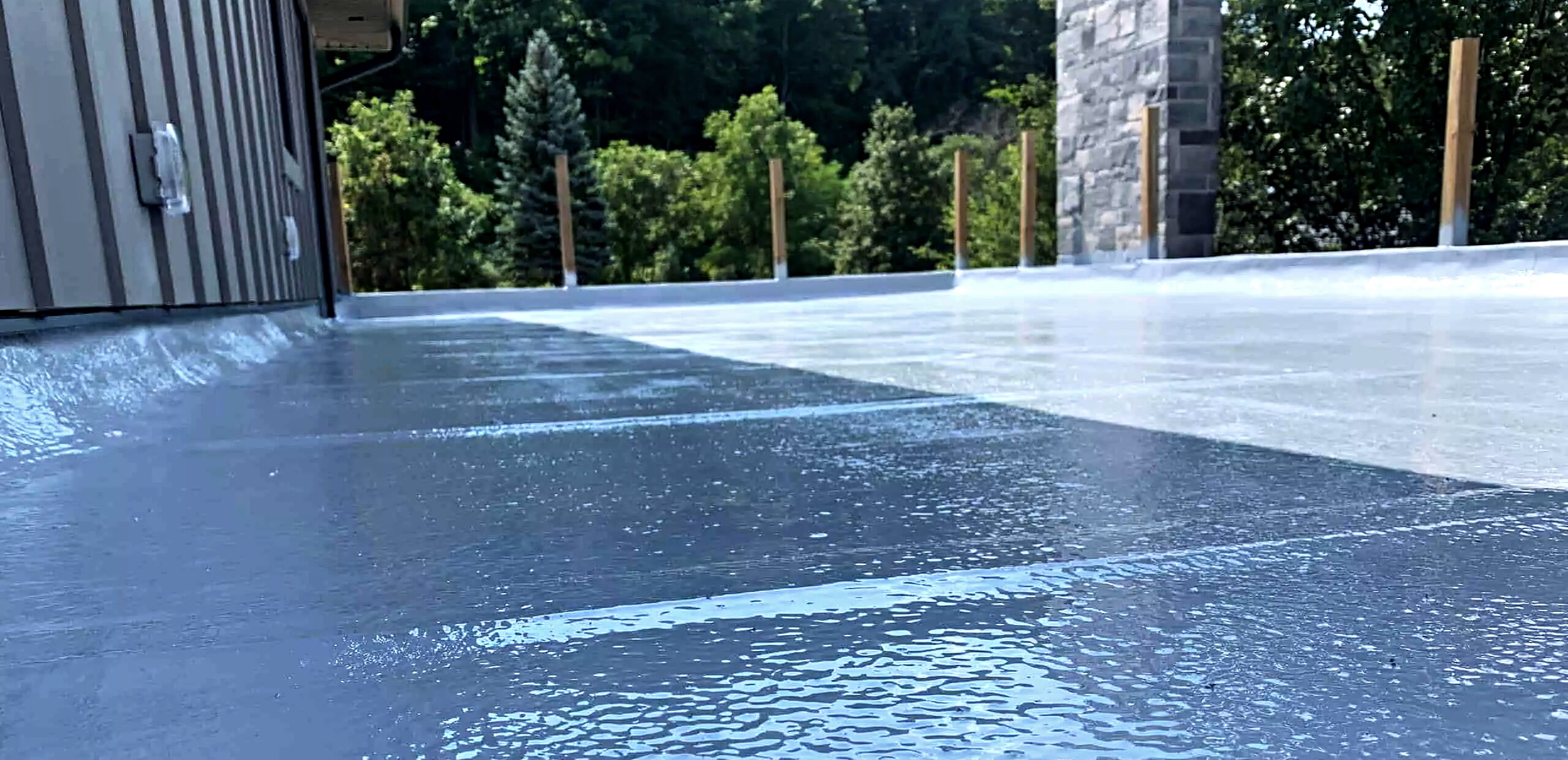
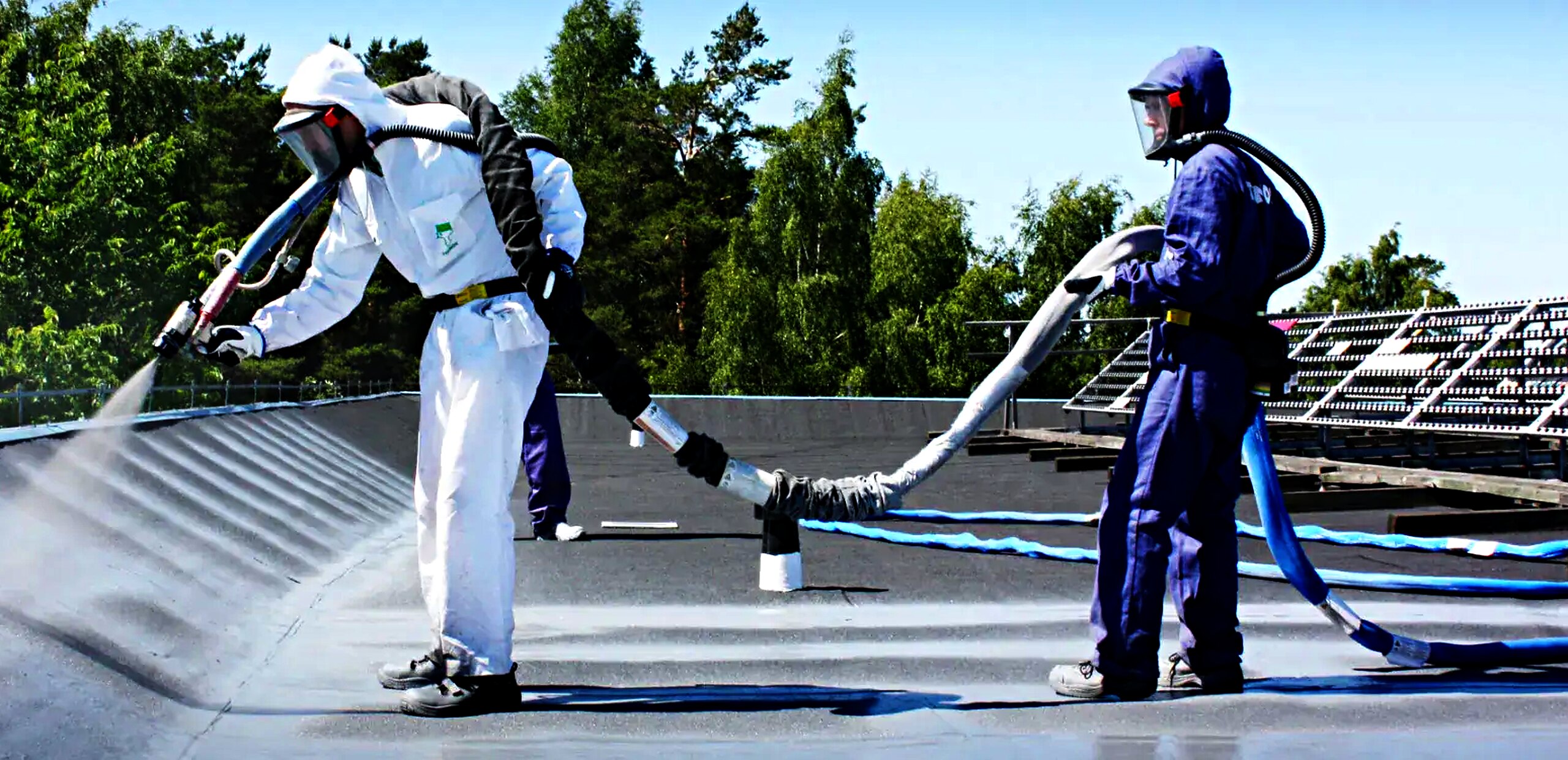
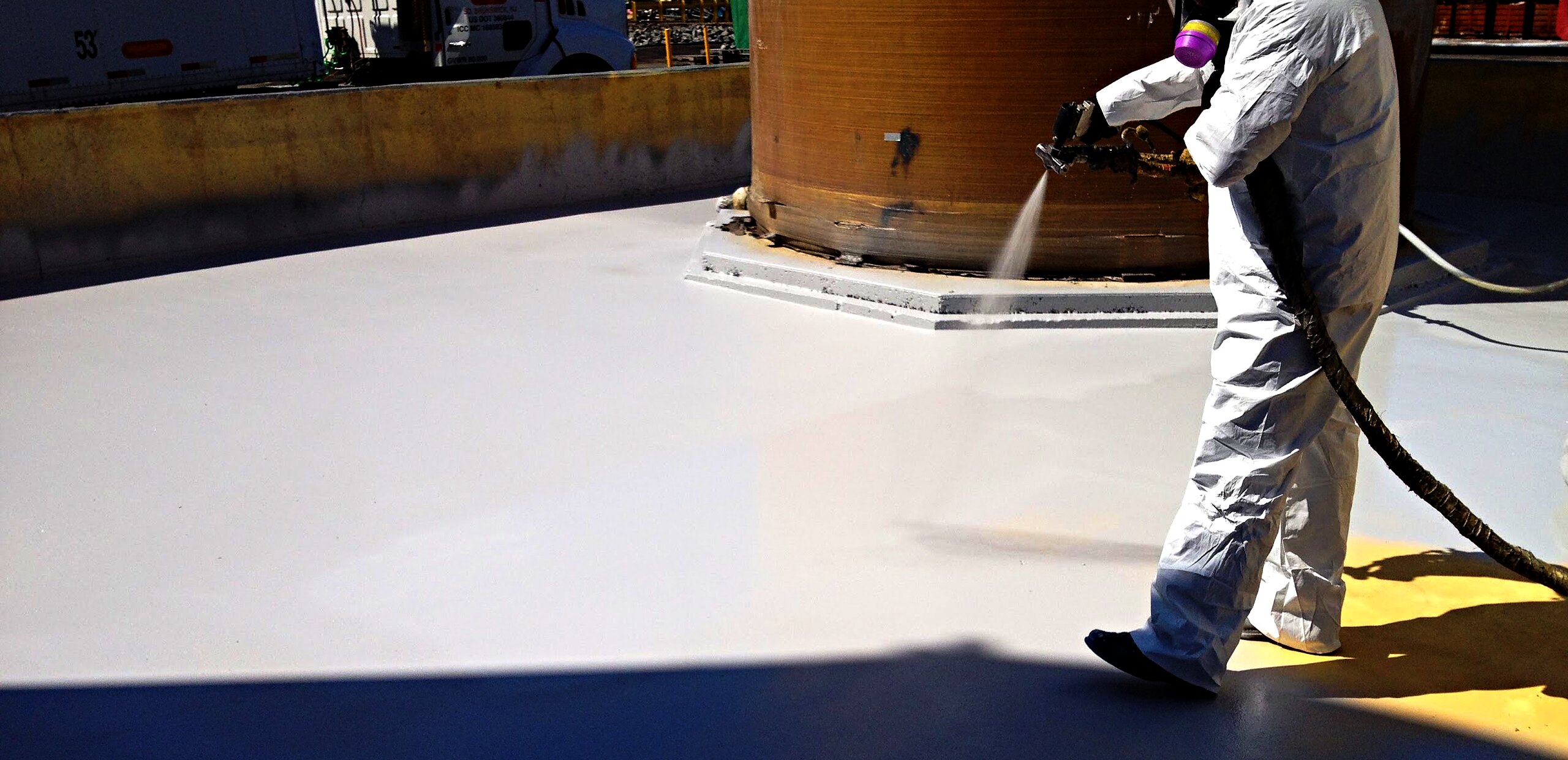
A liquid-applied waterproofing membrane goes on as a fluid and cures into one continuous rubbery layer, with no laps or seams to leak. The catch: it's only as thick, as well bonded and as pinhole-free as the crew made it that day. The spec and the field testing matter as much as the chemistry.
A liquid-applied waterproofing membrane is a fluid coating, such as polyurea, polyurethane, PMMA, rubberized asphalt or a polymer-modified cement, that cures into a seamless, self-flashing layer. Waterproofing grade starts around 40 mils; hot rubberized asphalt goes on at 185–215 mils. Buried or covered membranes are specified to ASTM C836, exposed traffic decks to C957. Pick a membrane or size it.
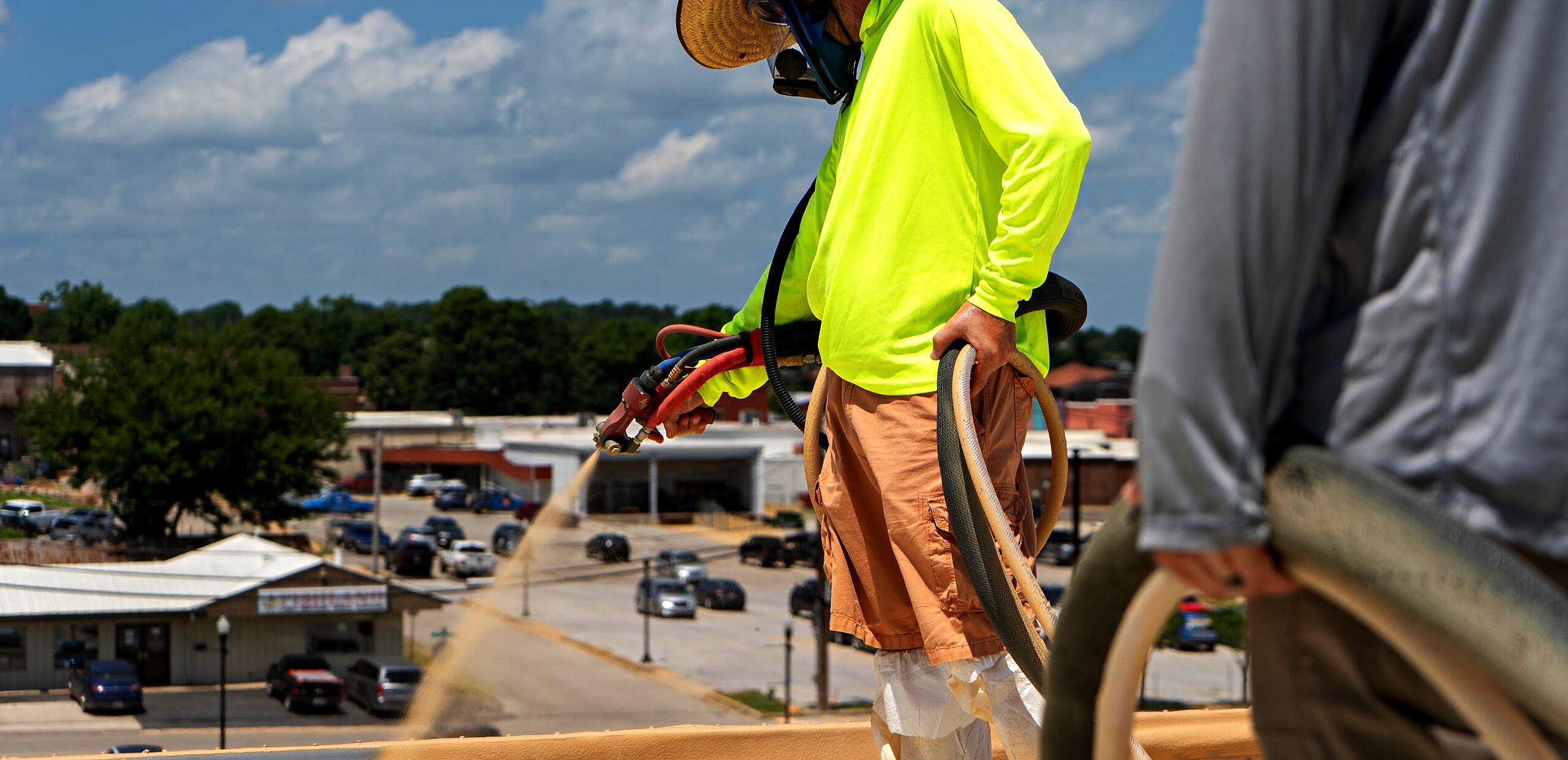
ArmorThane makes spray polyurea and polyurethane systems in Springfield, Missouri, and trains the certified applicators who install them. Polyurea is one family on this page, not the answer to every job; where another membrane fits better, we say so. This guide is for owners, facility managers, specifiers and contractors. Homeowners with a damp basement will find our concrete waterproofing guide a plainer read.
- 1What a liquid membrane is
- 2Membrane types compared
- 3Where each type is used
- 4Membrane selector (interactive)
- 5ASTM standards that matter
- 6Thickness, mils and solids
- 7Coverage calculator (interactive)
- 8Surface preparation
- 9Field testing: holiday, flood, ELD
- 10Liquid vs sheet membranes
- 11What it costs
- 12Liquid membrane FAQ
What is a liquid-applied waterproofing membrane?
It's a waterproofing layer built on site from a liquid that's sprayed, rolled or troweled onto concrete, masonry, metal or a roof. IIBEC's below-grade design guide says fluid-applied systems cure "to a monolithic, rubberized solid." Because the liquid wraps pipes, drains, corners and changes in plane, the membrane flashes itself instead of relying on lapped seams, and it accommodates movement. Choosing a liquid applied waterproofing membrane comes down to the substrate, movement, exposure and how quickly the area has to go back into service. Polyurea and polyurethane systems, both part of the polyurethane chemistry family, cure fastest and stretch the most, while a liquid applied waterproofing membrane based on acrylic or cement is easier to apply but less durable.
The families run from polyurea, polyurethane, PMMA and PUMA (a polyurethane-methacrylate hybrid) to silicone, acrylic, rubberized asphalt and polymer-modified cement.
Waterproofing is not dampproofing
W. R. Meadows draws the line: waterproofing uses materials of 40 mils or more that stay flexible in the cold and bridge cracks up to 1/16 inch; dampproofing is normally about 10 mils. Dampproofing slows soil moisture. It isn't built to hold back water under hydrostatic pressure. Henry's 789 fibered asphalt emulsion, for example, is sold as damp-proofing, not as a membrane.
Positive side or negative side
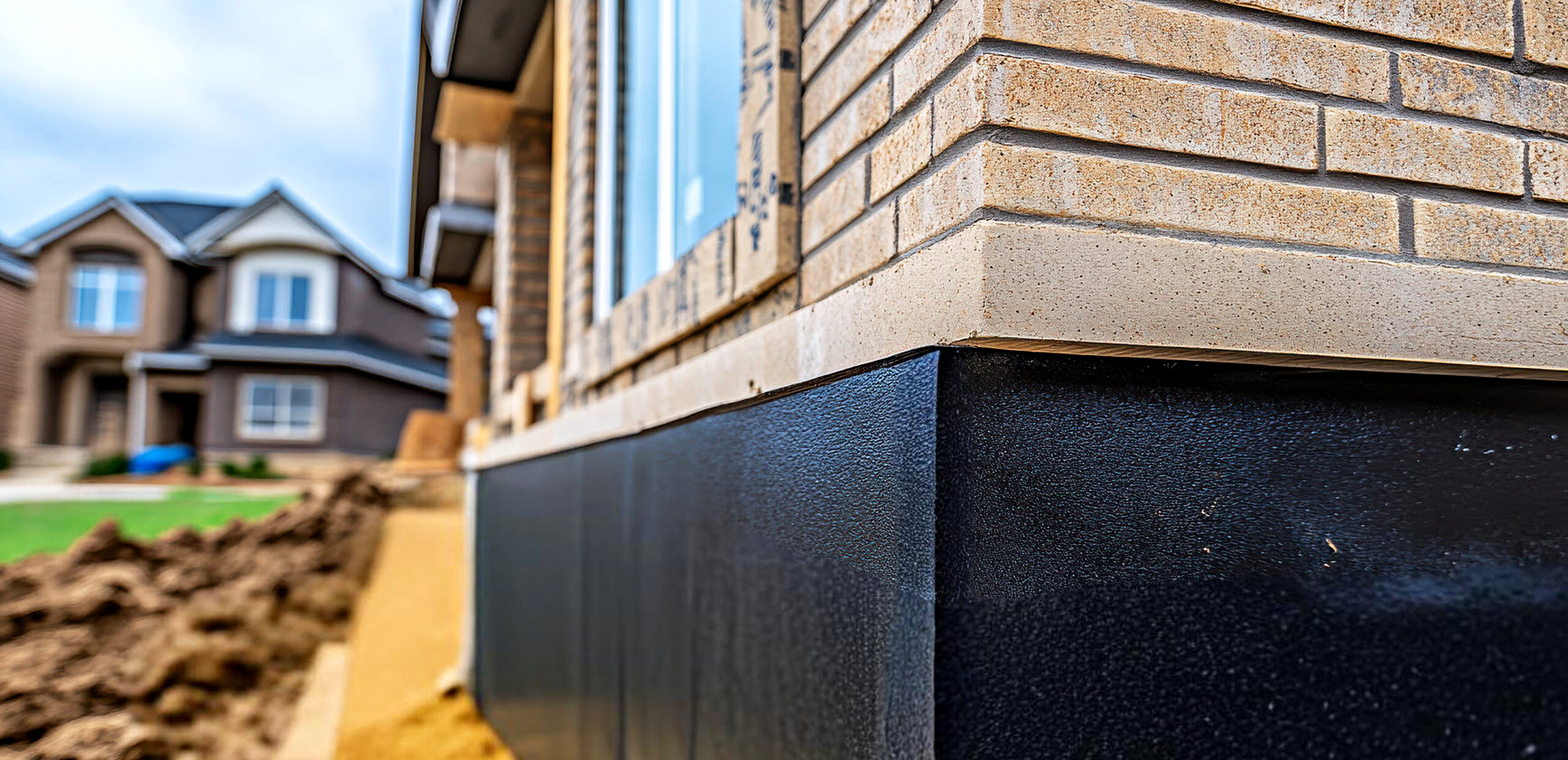
The positive side is where the water comes from: the outside of a foundation wall, the top of a deck. IIBEC prefers positive-side placement and calls negative-side (interior) systems "susceptible to failure" under hydrostatic pressure. That's why good foundation waterproofing starts with excavation, not a coat of paint on the basement wall.
Liquid membrane types, compared
One representative product per family, as its maker publishes it. Other products in the same family differ, so treat this as a map, not a specification.
| Family (example) | What stands out | Cure and service | Watch-outs |
|---|---|---|---|
| Pure spray polyurea (VersaFlex FSS 50DM+, Tecnocoat P-2049) | 100% solids, 0 VOC; 3,217 psi and 353% elongation (VersaFlex); 658% elongation, 1.5 mm minimum (Tecnocoat) | Tack-free in 5–7 s (VersaFlex); walkable in about 3 h, vehicles in about 12 h (Tecnocoat) | Needs spray equipment; aromatic grades need an aliphatic topcoat in sun |
| Single-component polyurethane (TREMproof 250GC) | Meets ASTM C836; 600% elongation; goes on damp and green concrete | Backfill in 6–12 h at 75°F; up to 120 wet mils per lift | VOC up to 177 g/L; 120 days’ sun at most |
| Polyurethane traffic coating (Vulkem 360NF+/346/346) | ASTM C957; 25–40 mil base (550% elongation) under 15-mil top coats | Service in 24 h; vehicles 72 h after cure | Slower return to service |
| Reinforced PMMA (Siplast Parapro) | 90 mils with polyester fleece; VOC under 25 g/L | Rain-safe in 30 min, walkable in 2 h at 68°F; winter grade to 23°F | 35% elongation at peak, reinforced |
| PUMA (Henry Pumadeq) | Solvent-free; constant immersion; zero pitch | Sets in 30 min; traffic after 1 h; low-temperature application | Compare numbers on the current data sheet |
| Hot rubberized asphalt (Henry 790-11) | 185 mils single layer or 215 reinforced; 0.016 perms; 0 VOC | Heated to 356–392°F on site | Bridges only non-moving cracks to 1/16 in.; must be covered |
| Asphalt emulsion (TREMproof 260) | 64% solids at 60 wet mils; 800% elongation; passes C1305 | Backfill after 16–24 h | UV exposure 30 days at most |
| Cementitious slurry (SikaTop Seal 107) | Two 40-mil coats; breathable at 18 perms; watertight to 3 bar (99 ft) | Applies at 45°F and up | About 25% flexibility; "Cannot bridge moving cracks" |
| Silicone (Henry Pro-Grade 988) | Solvent-free; rated for permanent ponding water; over 50 mils in one coat | Rain-safe in 15 min; 35–120°F | Roof coating; elongation data not verified |
| Acrylic (Henry Pro-Grade 280) | Water-based; up to 12-year warranty within a restoration system | Not stated | No elongation or permeance published |
Pure polyurea, hybrids, aromatic and aliphatic
The Polyurea Development Association defines polyurea as an isocyanate reacted with amine-terminated resins, with no intentional hydroxyl groups. Hybrids add hydroxyl (polyurethane) components, so ask which one your quote is for. The PDA says polyurea cures from −25°F to over 300°F, even in high humidity.
Aromatic grades have limited color stability outdoors; aliphatic grades hold color but cost more. So exposed aromatic membranes get an aliphatic topcoat, and Tecnopol says its P-2049 "requires solar radiation protection." Our elastomeric coating guide gives ArmorThane's ranges, and our polyurea waterproofing page shows them at work.
Where each membrane is used
Exposure decides the membrane more than brand does. Will it be buried, paved over, driven on, left in the sun or kept under water?
Backfilled walls and split slabs
C836-class liquids, asphalt emulsions and spray polyurea, which VersaFlex lists for below-grade work. Stay on the positive side. See retaining wall waterproofing.
Interior basement walls
The fallback when you can't dig. A cementitious slurry breathes but can't bridge moving cracks, and IIBEC warns these systems are prone to failure under hydrostatic pressure.
Plaza, podium and bridge decks
Hot rubberized asphalt, C836 liquids and PUMA under pavers, soil or asphalt. See plaza deck and bridge deck waterproofing.
Parking decks and balconies
C957 traffic coatings, PUMA, or polyurea under an aliphatic topcoat. See polyurea deck coatings and, for homes, deck waterproofing.
Flat and low-slope roofs
Reinforced PMMA, silicone where water ponds, acrylic restoration coatings and polyurea with a UV-stable topcoat. See polyurea flat roof waterproofing.
Tanks, ponds and water features
Polyurea, PUMA and polyurethanes approved for submerged service, spark-tested for pinholes. See concrete tank waterproofing.
Liquid membrane selector
Choose the application and tick any constraints. The selector ranks membrane families from the data-sheet figures above and names the governing spec and field tests. The designer of record still writes the spec.
Which liquid membrane fits this job?
One representative product per family. Confirm every choice against the current data sheet.
Below grade, backfilled. Work on the positive (water) side before backfill; IIBEC calls negative-side systems susceptible to failure under hydrostatic pressure. ASTM C836 covers this service. Ask for C1305 crack-bridging data and wet-film readings, and protect the membrane from job-site punctures before backfill. Tick a constraint to re-rank the list.
Single-component polyurethane
Meets C836; goes on damp and green concrete; 600% elongation; backfill in 6–12 hours at 75°F.
Example: TREMproof 250GC
Spray polyurea (pure)
100% solids, 0 VOC, tack-free in seconds, 353–658% elongation. Aromatic grades need an aliphatic topcoat in sun.
Example: VersaFlex FSS 50DM+, Tecnocoat P-2049
Polymer-modified asphalt emulsion
64% solids at 60 wet mils; 800% elongation; passes C1305. Backfill after 16–24 hours.
Example: TREMproof 260
Cementitious slurry
Two 40-mil coats; breathable at 18 perms. About 25% flexible, so it can’t bridge moving cracks.
Example: SikaTop Seal 107
The ASTM standards that matter
Two ASTM specifications define most building membranes, and a few test methods appear on nearly every data sheet. Know what each covers before you compare numbers.
| Standard | What it covers | What to ask |
|---|---|---|
| ASTM C836/C836M-18 | High-solids, cold liquid-applied membrane for decks and walls under hydrostatic pressure that get a wearing course, traffic course or backfill. Tests include low-temperature crack bridging, adhesion after water immersion and extensibility after heat aging. | The spec for buried and covered membranes. Does the product conform, and at what thickness? |
| ASTM C957/C957M-17 | Membrane with an integral wearing surface for pedestrian, vehicular and high-abrasion decks not under hydrostatic pressure. Adds weathering, abrasion and chemical resistance; tests need at least a 20-mil (0.5 mm) base coat. | The spec for exposed traffic decks. It doesn't replace C836 below grade. |
| ASTM C1305 | Crack bridging at low temperature, when a membrane is least flexible. One lab describes cycling a 1-inch strip to a 1/8 in. (3.2 mm) opening. Current edition: C1305/C1305M-25. | "Pass" means little without the conditions. Ask for the report. |
| ASTM D412 and D624 | Tensile strength, elongation and tear strength of elastomers. D412's Method A and Method B "do not produce identical results." | Compare elongation only when the method matches. |
| ASTM E96/E96M-22a | Water vapor transmission, by the desiccant or water method. | Vapor-tight or breathable? Hot rubberized asphalt rates 0.016 perms; one cementitious slurry, 18. |
| ASTM D7234-22 (D4541-22) | Pull-off adhesion with portable testers: D7234 on concrete, D4541 on metal and other rigid substrates. | Use D7234 on concrete, and don't compare results across instrument types. |
How thick should a liquid membrane be?
Thickness is specified in mils, thousandths of an inch; 40 mils is about 1 mm. What counts is the dry film thickness left after cure. Wet film equals dry film divided by volume solids, so a 100%-solids polyurea ends as thick as it went on, while TREMproof 260 at 64% solids and 60 wet mils ends about 38 mils dry, by our arithmetic.
W. R. Meadows, ASTM C957 and Tremco, Tecnopol, Sika, Siplast and Henry data sheets. The polyurea bar converts Tecnocoat P-2049's 1.5 mm minimum to mils.
Specs often give an average and a minimum (Henry's 790-11 single layer averages 185 mils, minimum 125). Write the minimum into the contract and check it with gauge readings.
Membrane thickness and coverage calculator
Enter the area and the dry thickness you need. The calculator converts it to wet mils at the product's volume solids and gives coverage, total gallons and the number of passes.
How much membrane, and how thick wet?
Uses 1,604 sq ft per gallon at 1 mil and 100% solids. Picking a type fills in its published solids and thickness; you can overwrite either.
60 wet mils leaves 60 dry mils (1.52 mm) at 100% volume solids. Theoretical coverage is 1,604 × 1.00 ÷ 60 = 26.7 sq ft per gallon. With a 10% allowance, 2,000 sq ft takes about 82 gallons, or 4.11 gallons per 100 sq ft. That’s in waterproofing range (40 mils or more, per W. R. Meadows); the data sheet’s minimum still governs. No per-pass limit entered; the PDA says polyurea can go on at any thickness in one application. Rough concrete, block and overspray use more than theory.
Surface prep: profile, pH and moisture
ICRI Guideline 310.2R-2013 sets ten concrete surface profile (CSP) benchmarks, from CSP 1 (nearly flat) to CSP 10 (amplitude over 1/4 inch), and describes what each prep method can achieve. Sherwin-Williams' specification guidance ties the profile to the film build.
| Coating build | Surface profile |
|---|---|
| Thin film, up to 20 mils | CSP 2–3 |
| Medium film, up to 40 mils | CSP 3–5 |
| High-build, ultra-high-solids | CSP 3–5 |
| Laminates and self-leveling mortars | CSP 4–6 |
| Repair mortars and reinforced systems | CSP 5–9 |
Let the concrete cure
IIBEC recommends at least 7 days before membrane work, with 28 days optimal. A few products, such as TREMproof 250GC, are made for damp or green concrete.
Profile it
Grind or blast to the CSP on the data sheet and compare with ICRI's replica chips. Remove laitance, curing compounds and old coatings.
Check pH and moisture
Aim for pH 10 or higher, and run a moisture check such as ASTM D4263 before coating.
Detail first
Treat cracks, joints, corners, drains and penetrations before the field coat. Moving joints need their own detail.
Apply and gauge
Measure wet film as you go (ASTM D4414) and record readings by date, area and batch.
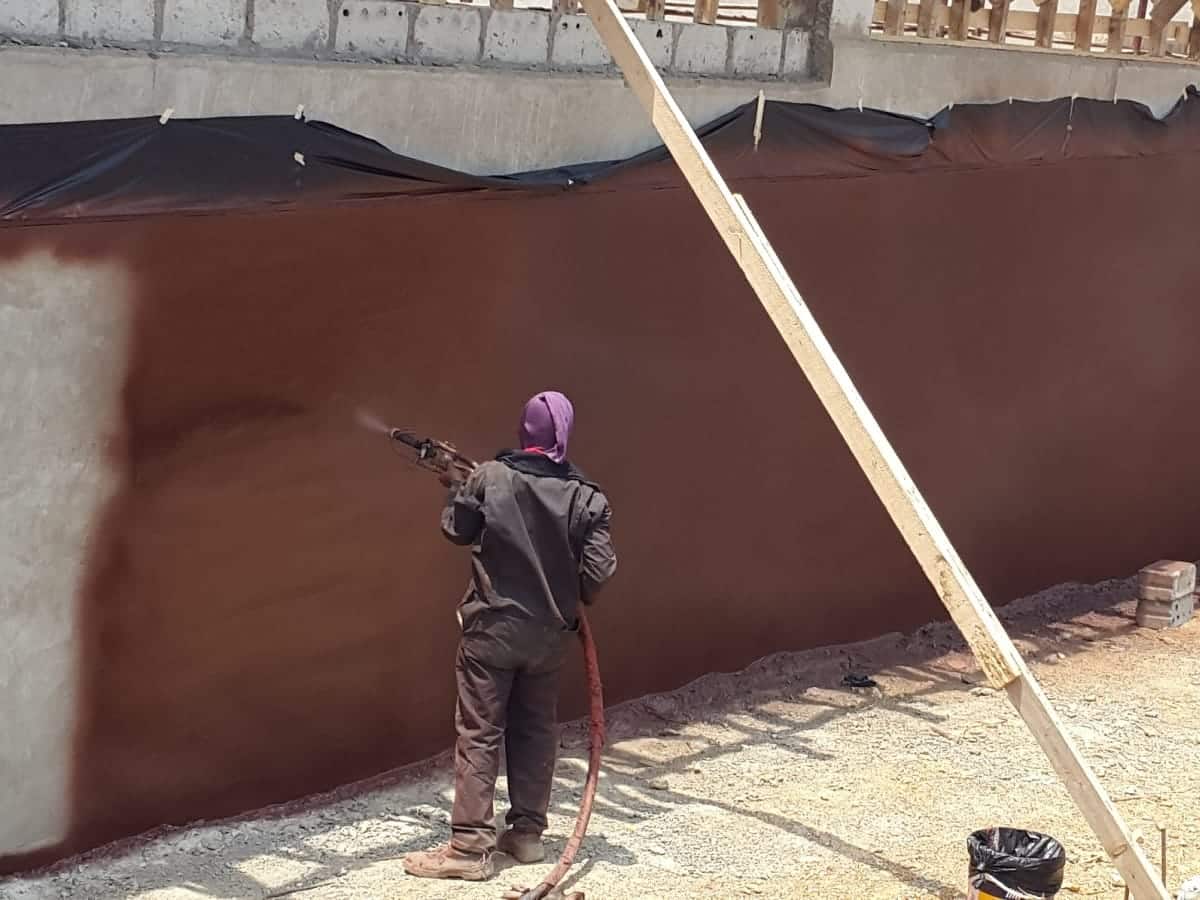
For the spray side of prep, see our guide to prepping concrete surfaces for spraying.
Field testing: holiday, flood and ELD
A seamless membrane with one pinhole is a leaking membrane. These are the field tests to write into the specification.
Wet-film gauge
Notched gauges read wet thickness during application, 0.5–80 mils or 1–100 mils by procedure. ASTM calls them "neither accurate nor sensitive," so take many readings; they catch thin spots.
Holiday (spark) testing
A high-voltage spark tester finds pinholes, voids, holidays, cracks and conductive inclusions in nonconductive linings on concrete. Most useful on tanks and immersion work.
Flood testing
For horizontal waterproofing on slopes of 2% or less, like plaza decks and parking garages over occupied space; not roofing. Pond 4 in. or less and wait 24 hours after installation (48 below 10°C, 50°F).
Electronic leak detection
Electrical conductance methods locate leaks in exposed or covered membranes on roofs, plaza decks, pools, water features and covered reservoirs.
Pull-off adhesion
A portable tester measures how strongly the membrane bonds to concrete. Stick with one instrument type; ASTM warns against comparing across them.
Test before you bury it
Flood test and leak survey before pavers, soil, topping or backfill go on. Afterward, finding a breach means removing what sits on top.
Liquid membrane vs sheet membrane
Sheet membranes are factory-made at a uniform thickness and installed in overlapping rolls. Henry's Blueskin WP200, for example, is 60-mil self-adhered SBS rubberized asphalt on HDPE film in 36-inch rolls, rated for hydrostatic head up to 231 ft. Each approach wins somewhere.
| Factor | Liquid-applied | Sheet |
|---|---|---|
| Seams | None; self-flashing at corners and penetrations | Laps shingled to shed water; seams need careful detailing |
| Thickness | Set by the crew; verified with wet-film readings | Uniform from the factory |
| Backfill or cover | After cure: 6–12 h (TREMproof 250GC), 16–24 h (TREMproof 260) | Immediately, per Henry for WP200 |
| Weak spot | Thin spots and pinholes; job-site punctures | Joints, laps, seams and changes in plane |
| Labor | May drop by up to 60% vs sheet, per the Construction Specifier | Baseline |
Sheet is often the sensible pick on simple walls you want to backfill the same day, or where the spec wants factory-controlled thickness. Liquid earns its place on congested decks full of drains and penetrations, on irregular shapes, and wherever laps would sit in standing water.
What a liquid membrane costs
Installed prices swing with access, prep, thickness and market. Here's what published cost guides and one building-envelope contractor report. We found no sourced side-by-side price for liquid vs sheet on the same job, so we don't quote one.
| Source | Scope | Installed, per sq ft |
|---|---|---|
| HomeGuide (Jan. 2026) | Residential basement waterproof membrane | $4–$7 |
| HomeGuide (Jan. 2026) | Waterproof paint or sealer | $2–$10 |
| Angi (July 2026) | Basement waterproofing (damp-proofing $3–$6) | $5–$10 |
| Fixr (Feb. 2026) | Basement waterproofing (sodium bentonite $2–$5) | $3–$10 |
| WCP Building Renewal (July 2025) | Rooftop replacement, torch-on or liquid-applied | $15–$25 |
| WCP Building Renewal | Balconies, liquid polyurethane | $20–$40 |
| WCP Building Renewal | Podium decks | $25–$40 |
| WCP Building Renewal | Parking decks, traffic-rated PU or PMMA/PUMA | $35–$50 |
The commercial rows are replacements of existing roof, balcony, podium and parking membranes, so they carry removal and traffic-grade work the residential rows don't. For a homeowner's numbers, see our basement waterproofing cost guide.
Spray polyurea membranes, applied by certified crews
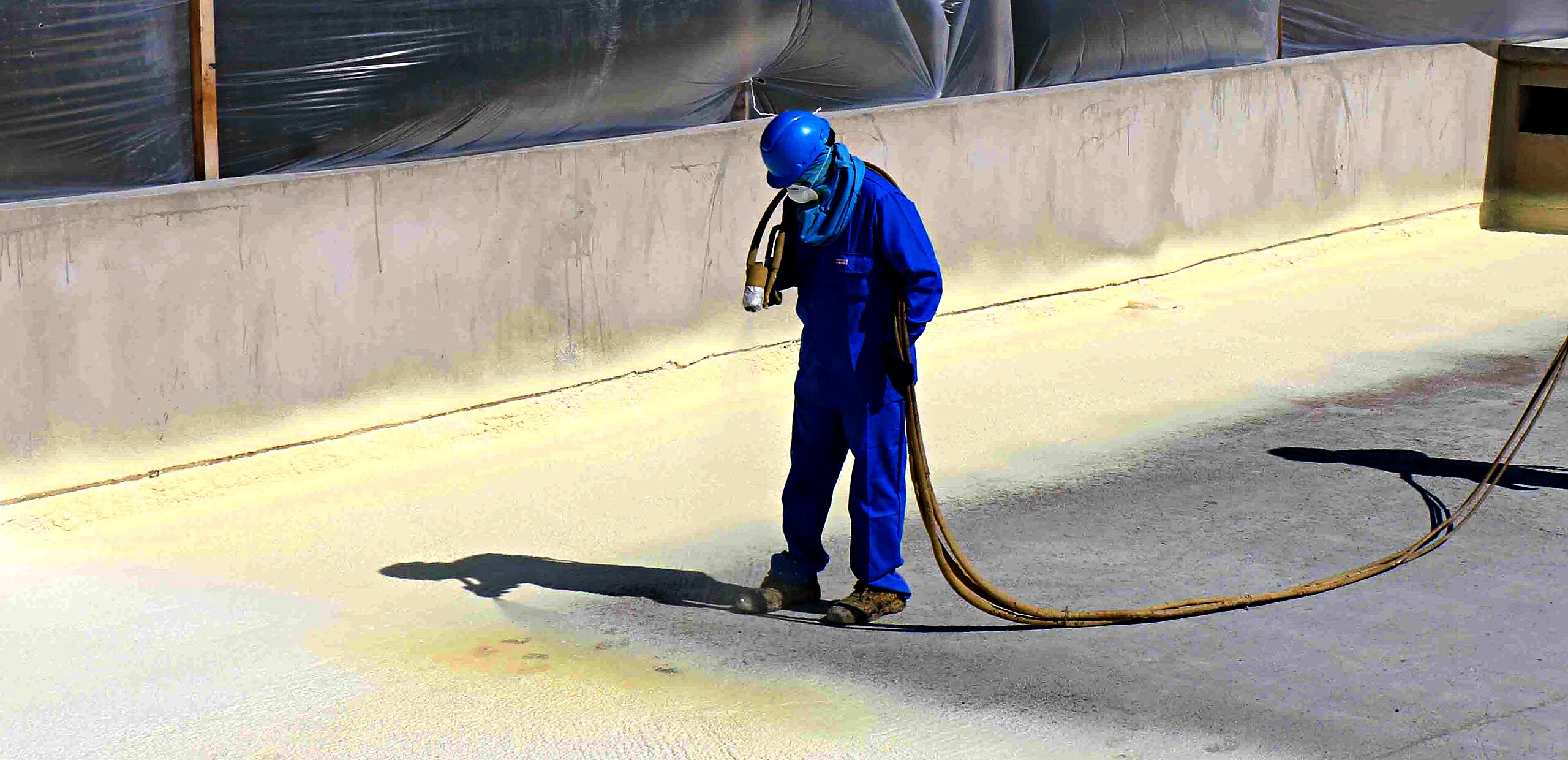
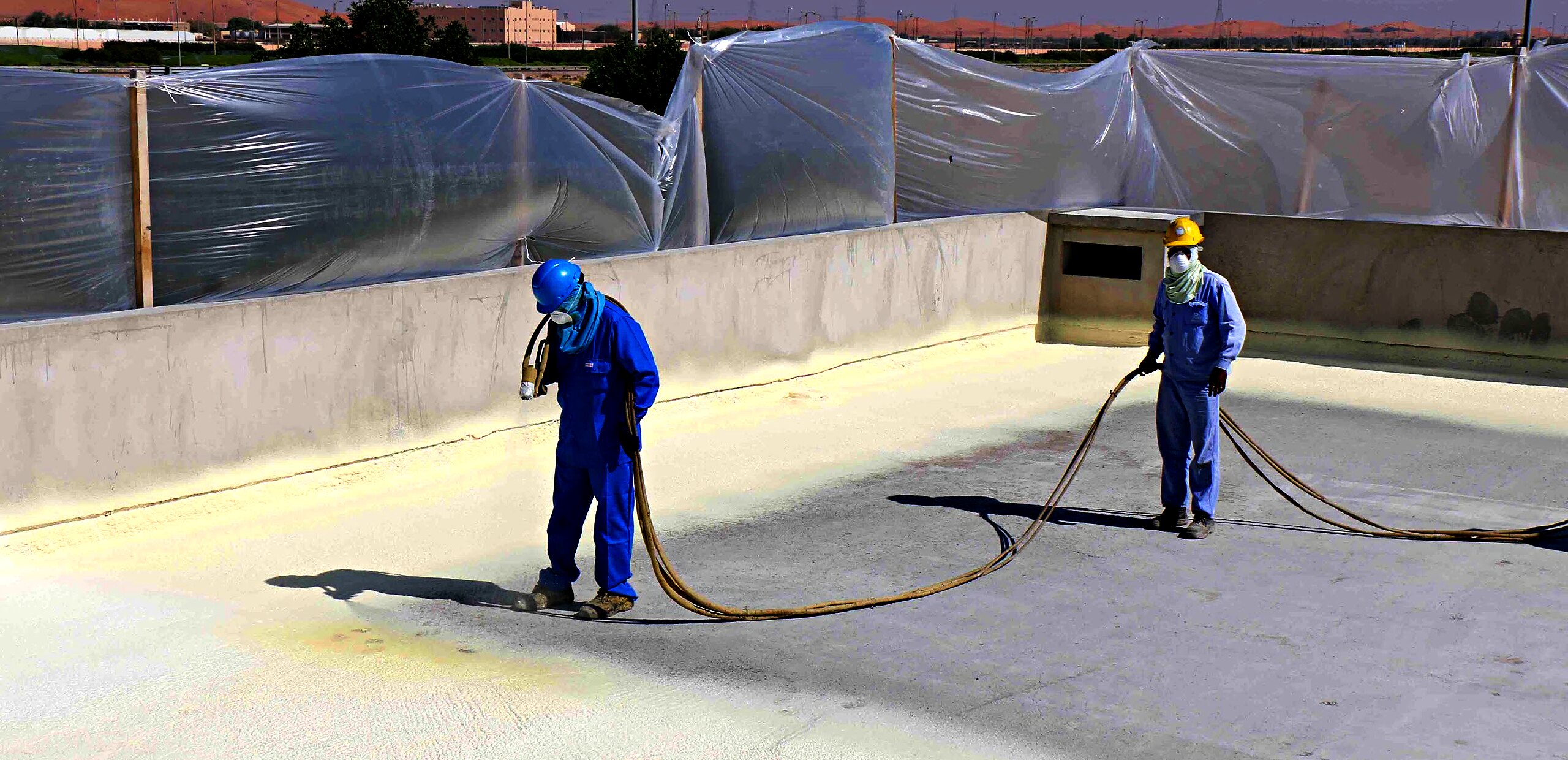
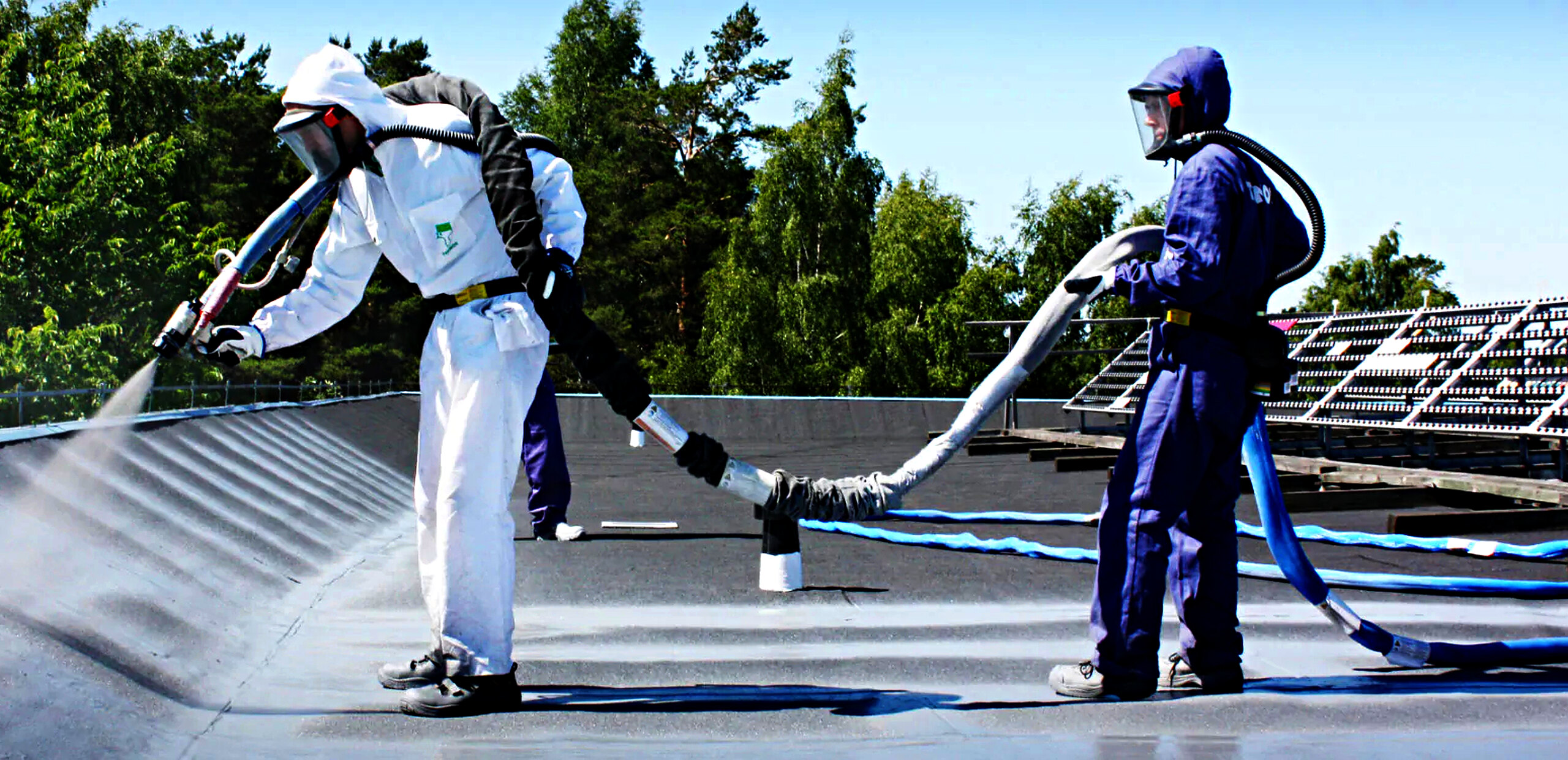
ArmorThane-certified applicators spray ArmorThane polyurea systems on foundations, decks, roofs and tanks, with the product, prep, minimum dry mils and field tests on the quote.
If your job is a simple wall you'll backfill tomorrow, a sheet membrane may be the better buy, and a good applicator will say so. On a congested deck, a tank or a roof full of penetrations, a seamless spray membrane pays off.
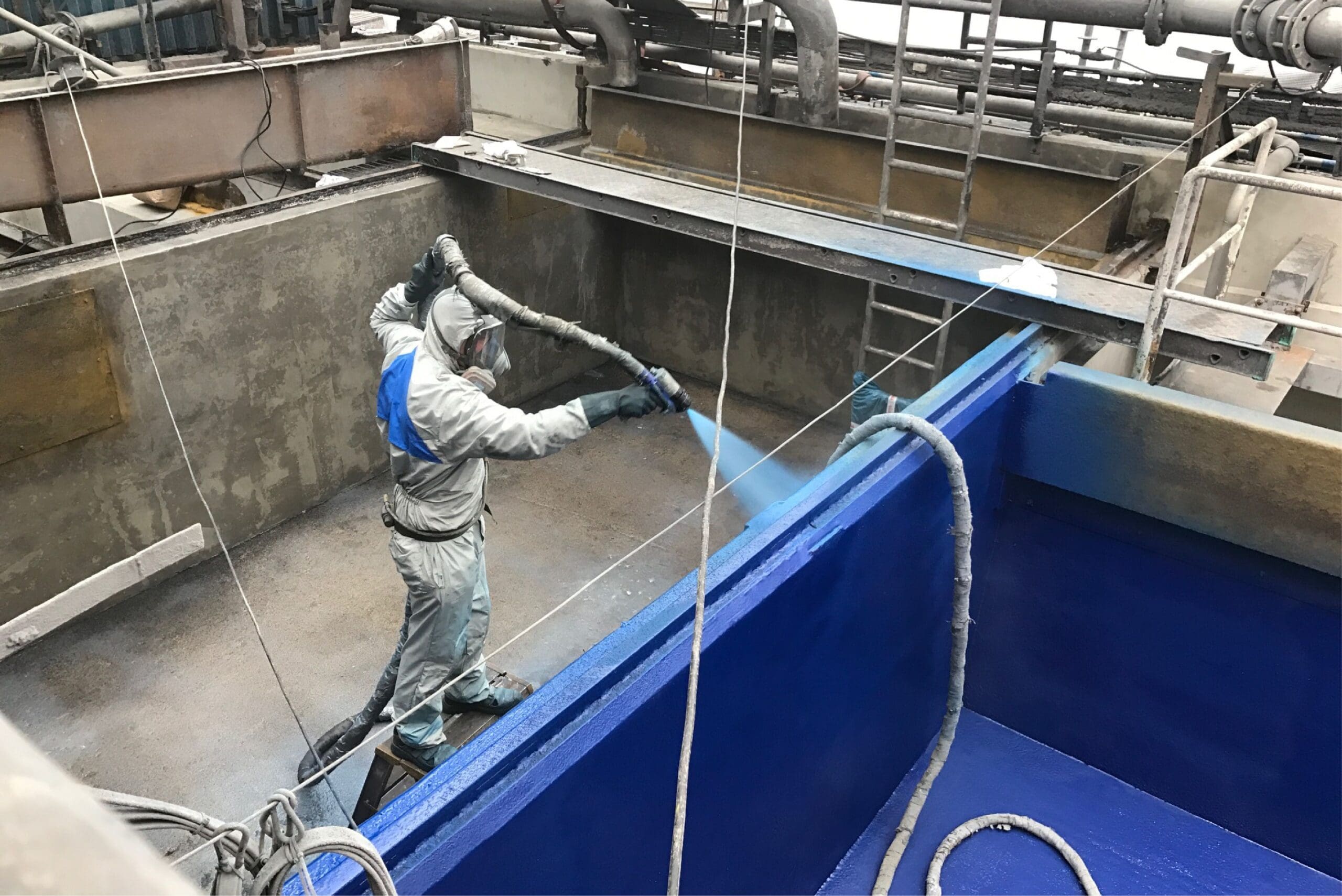
Zero VOC
ArmorThane's elastomeric coating guide lists its polyurea and polyurethane systems at 100% solids and zero VOC.
Elongation
With 2,500–4,500 psi tensile strength and Shore D 45–60, per the same guide.
Fast cure
Tack-free in 15–90 seconds; service range −40°F to +250°F.
Add waterproofing to your spray rig.
Foundations, plaza decks, roofs and tanks need seamless membranes applied to a written thickness and tested before they're covered. ArmorThane supplies the polyurea systems, equipment and hands-on training, with no franchise fee, dealership fee or royalty.
Liquid waterproofing membrane FAQ
What is a liquid applied waterproofing membrane?
It's a waterproofing layer made on site from a liquid that is sprayed, rolled or troweled onto concrete, masonry or a roof, then cures into one continuous rubbery film. Common families include polyurea, polyurethane, PMMA and PUMA, hot or emulsified rubberized asphalt, silicone and polymer-modified cement. With no laps or seams, it flashes itself around pipes, drains and corners.
What is the best liquid membrane waterproofing?
The best membrane is the one that fits the exposure. Below grade under backfill, look for a product that meets ASTM C836. For exposed parking and pedestrian decks, use a C957 traffic coating or PUMA. Under pavers or soil, hot rubberized asphalt or a C836 liquid. For fast return to service or cold weather, spray polyurea, PMMA and PUMA cure within minutes to about an hour.
How thick should a liquid waterproofing membrane be?
W. R. Meadows says waterproofing uses materials of 40 mils or more, while dampproofing is normally about 10 mils. Published systems range from about 59 mils for one pure polyurea (a 1.5 mm minimum) to 80 mils for a two-coat cementitious slurry and 185 to 215 mils for hot rubberized asphalt. The data sheet's minimum dry film thickness governs.
What is the difference between liquid and sheet membrane waterproofing?
Sheet membranes are factory-made rolls of uniform thickness, lapped and shingled to shed water; one 60-mil self-adhered sheet can be backfilled immediately. Liquid membranes are applied on site and cure seamless and self-flashing, so they handle drains, pipes and odd shapes well, but their thickness depends on the crew and they can be punctured on the job site.
How do you apply a waterproofing membrane?
Let new concrete cure at least 7 days (28 is optimal), prepare it to the ICRI surface profile the data sheet calls for, and confirm pH and moisture. Treat cracks, joints and penetrations first. Then spray, roll or squeegee the membrane to the specified wet film, checking with a notch gauge, and run the specified leak tests before covering it.
How do you apply a waterproofing membrane on a roof?
Clean and repair the roof, prime if the data sheet requires it, and reinforce seams, drains and penetrations before the field coat. Reinforced PMMA systems embed a polyester fleece in the resin; coatings such as silicone go on at the thickness the data sheet sets. ASTM D5957 flood testing isn't meant for roofing, so roof leaks are located with electronic leak detection (ASTM D7877).
Can you paint over a waterproofing membrane?
Only with a topcoat the membrane maker approves. Many systems are built for one: aromatic polyurea gets an aliphatic, UV-stable topcoat, and C957 traffic systems use specified top coats over the base. Ordinary paint isn't part of the tested system, so check the data sheet first. Membranes meant to be buried, such as hot rubberized asphalt, should be covered, not painted.
How long does a waterproofing membrane last?
It depends on the chemistry, thickness, prep and exposure, and manufacturers express it through warranties rather than one industry number. Henry, for example, offers up to a 12-year warranty on one acrylic roof restoration system. Buried membranes are shielded from sun and traffic; exposed ones wear, so topcoats and periodic inspection matter. Ask for the written warranty and what voids it.
How do you waterproof a basement wall from the outside?
Excavate to the footing, clean and repair the wall, and apply the membrane to the exterior (positive) side. IIBEC prefers positive-side placement because negative-side systems are susceptible to failure under hydrostatic pressure. A liquid membrane for backfilled walls should meet ASTM C836, go on at its specified thickness and be protected before backfill. Pair it with drainage at the footing.
How thick is a 215-mil hot-applied waterproofing membrane?
215 mils is 0.215 inch, about 5.5 mm. That's the fabric-reinforced build of a hot rubberized asphalt membrane such as Henry 790-11: a 90-mil layer, reinforcing fabric, then 125 mils. A single unreinforced layer averages 185 mils, with a 125-mil minimum. The material is heated to 356 to 392 degrees F and must be covered, not left exposed.
Written from ASTM and ICRI standard summaries, IIBEC and Construction Specifier articles, manufacturer data sheets and dated 2025–2026 cost guides. Reviewed September 27, 2026.
Methodology and sources
Product figures are each maker's published claims. Conversions use 231 cubic inches per US gallon. The selector's rankings are our editorial judgment, not a design professional's specification.
- ASTM International: C836/C836M-18 (2018); C957/C957M-17 (2017); C1305/C1305M-16 (2016); D412-16(2021); D624-00(2020); E96/E96M-22a (2022); D4541-22 and D7234-22 (2022); D4414-95(2020); D5957-98(2021)
- ANSI Webstore: ASTM C1305/C1305M-25 (2025), D4787-24 and D7877-24 (2024)
- Matest Labs, ASTM C1305 test description (July 9, 2026)
- ICRI, 310.2R-2013; DeFelsko, ICRI Concrete Surface Profile Chips
- Sherwin-Williams Protective and Marine, Concrete Surface Preparation for Water and Wastewater
- KTA-Tator, Testing for Moisture Content in Concrete (Nov. 2024)
- Polyurea Development Association, PDA brochure (2002)
- VersaFlex, FSS 50DM+ Aromatic; Tecnopol, Tecnocoat P-2049 page and TDS (2018)
- Tremco: TREMproof 250GC (Dec. 2025), TREMproof 260 (Nov. 2023), Vulkem 360NF+/346/346 (Apr. 2025) data sheets
- Siplast, Parapro Roof Membrane Resin data sheet (May 2026)
- Henry (Carlisle): Pumadeq, 789, Blueskin WP200, Pro-Grade 988 and Pro-Grade 280 pages; 790-11 product data (Jan. 10, 2024)
- Sika USA, SikaTop Seal 107 product data sheet (Nov. 20, 2015)
- The Construction Specifier, The Evolution of Fluid-Applied Membranes (Oct. 1, 2020)
- IIBEC, Stewart and DuPont, Below-Grade Waterproofing Selection and Design Consideration (Mar. 27, 2009)
- W. R. Meadows, Waterproofing vs Damp-Proofing (July 14, 2023)
- HomeGuide (Jan. 23, 2026), Angi (July 20, 2026) and Fixr (Feb. 6, 2026), basement waterproofing cost guides
- WCP Building Renewal, Cost per Square Foot to Replace a Waterproofing Membrane (July 4, 2025)
- ArmorThane, Elastomeric Coating Guide (Apr. 2026)
Need a membrane specified, sprayed and tested? Get a quote from a certified applicator.
Tell us what you're waterproofing (a foundation, plaza or parking deck, roof or tank) and roughly how many square feet. We'll connect you with an ArmorThane-certified applicator who sprays seamless polyurea membranes to a written thickness.
- Seamless spray polyurea, 100% solids
- Surface prep and minimum dry mils on the quote
- Foundations, decks, roofs and tanks
- Contractors: ask about becoming a waterproofing applicator