

Concrete Waterproofing Methods & Costs
Why concrete leaks, damp-proofing vs waterproofing, and how sealers, crystalline, coatings and membranes compare, with a pressure calculator and a cost estimator.
Start a roof coating business
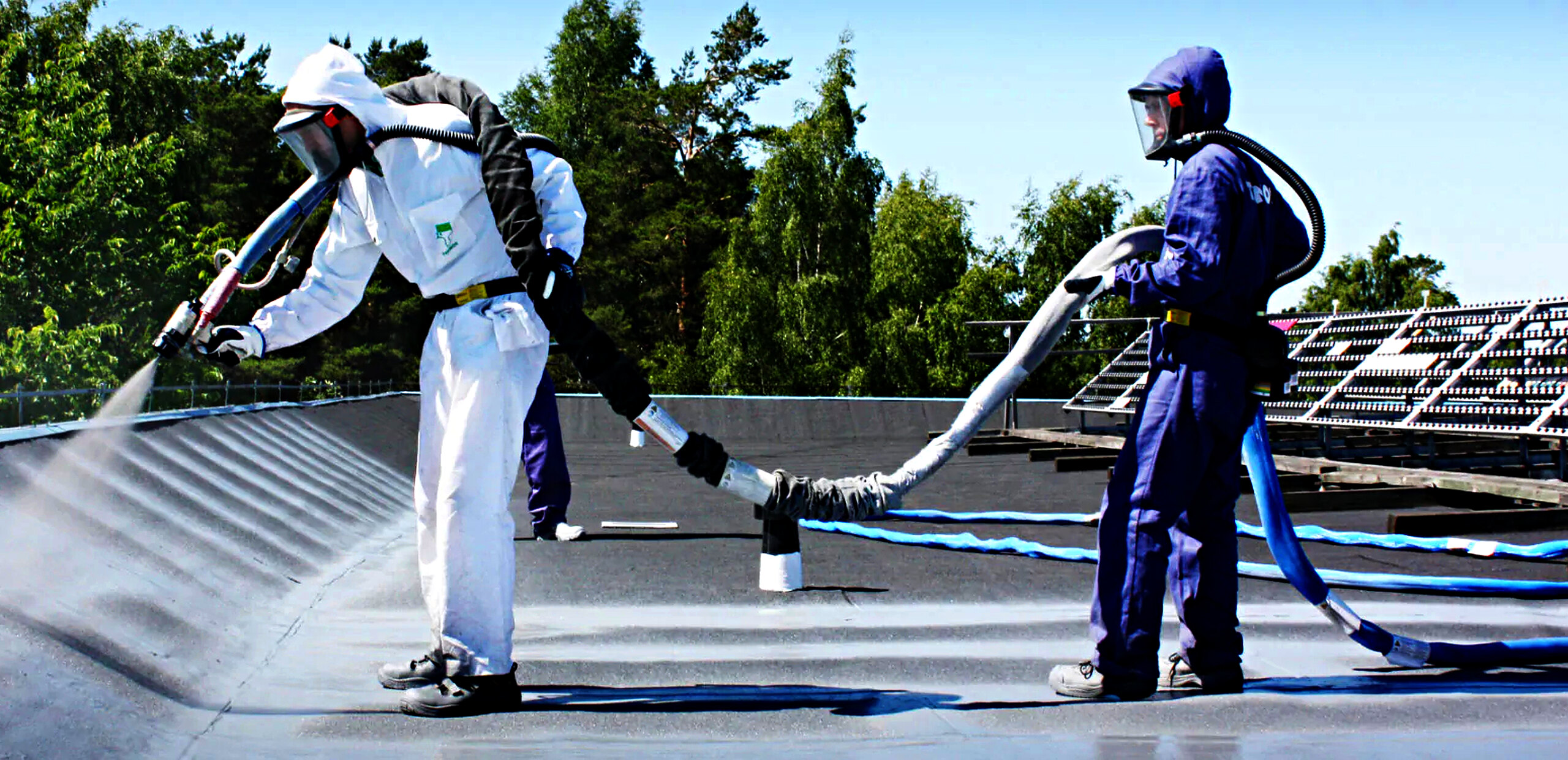
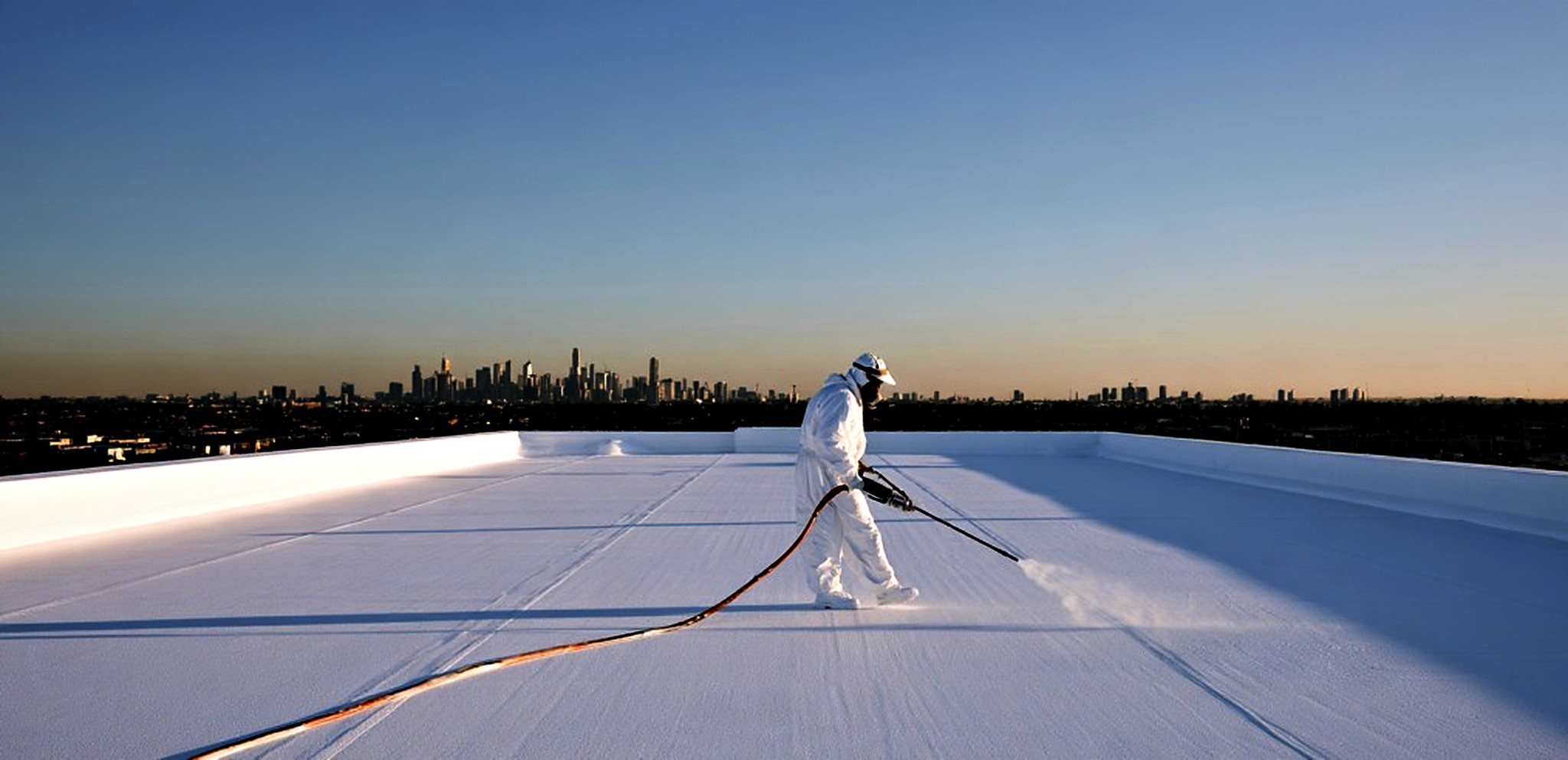
Spray roofs for a living.
ArmorThane sets you up to do this work, and you own the business. We make the chemistry, build the rigs, train you hands-on and answer the phone when a job gets difficult. You pay no franchise fee and no royalties. It has been that way since 1989.
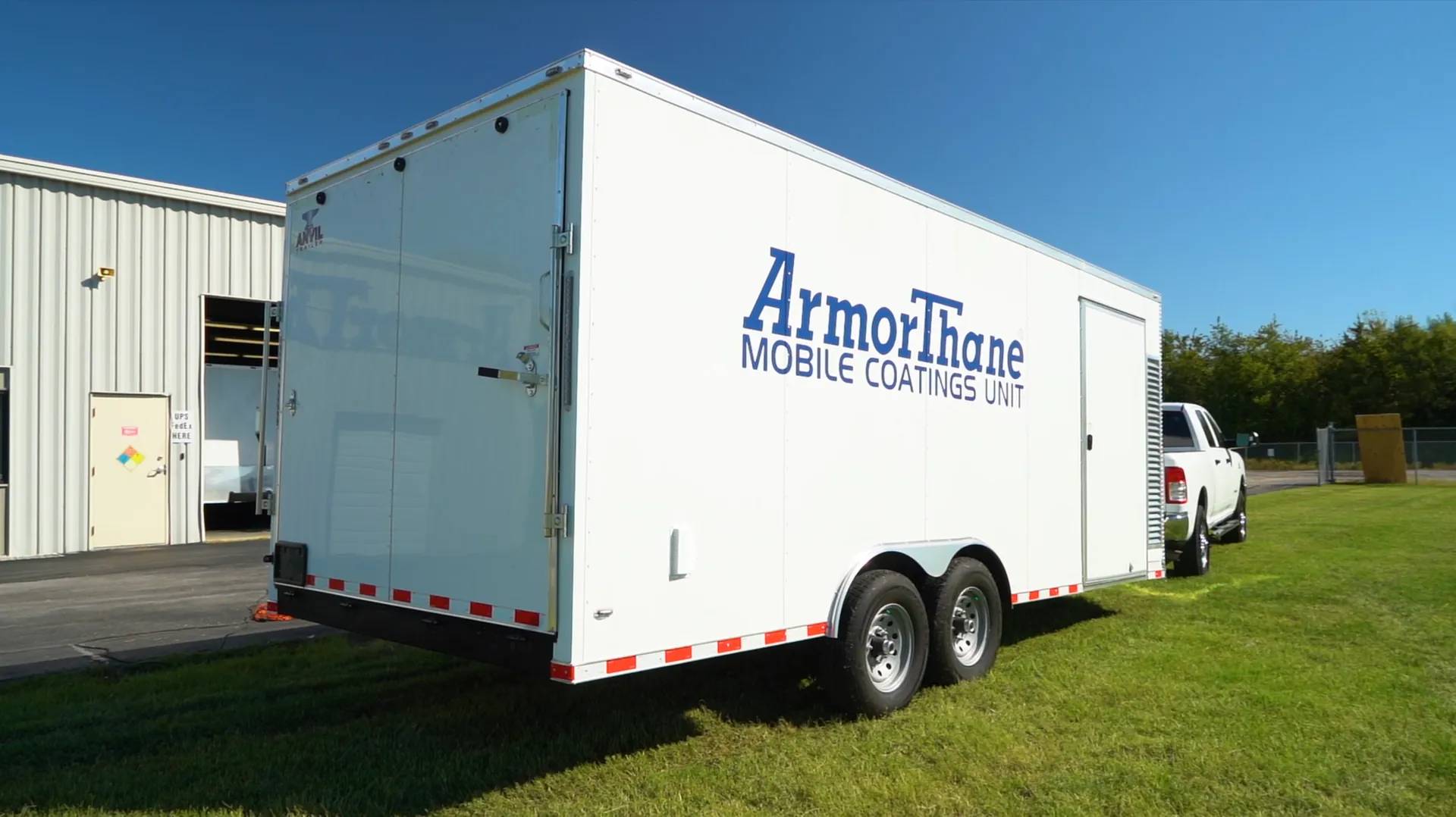
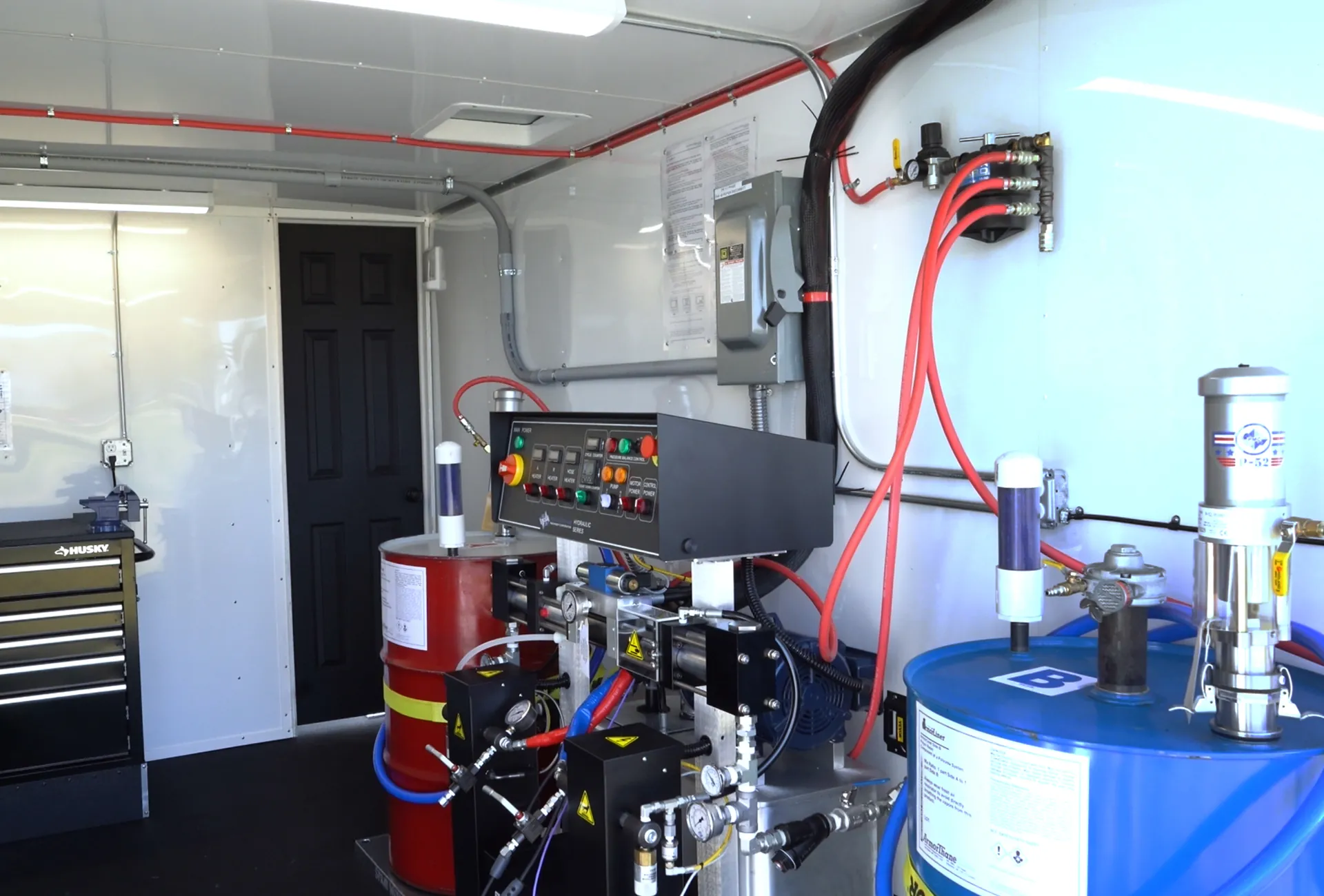

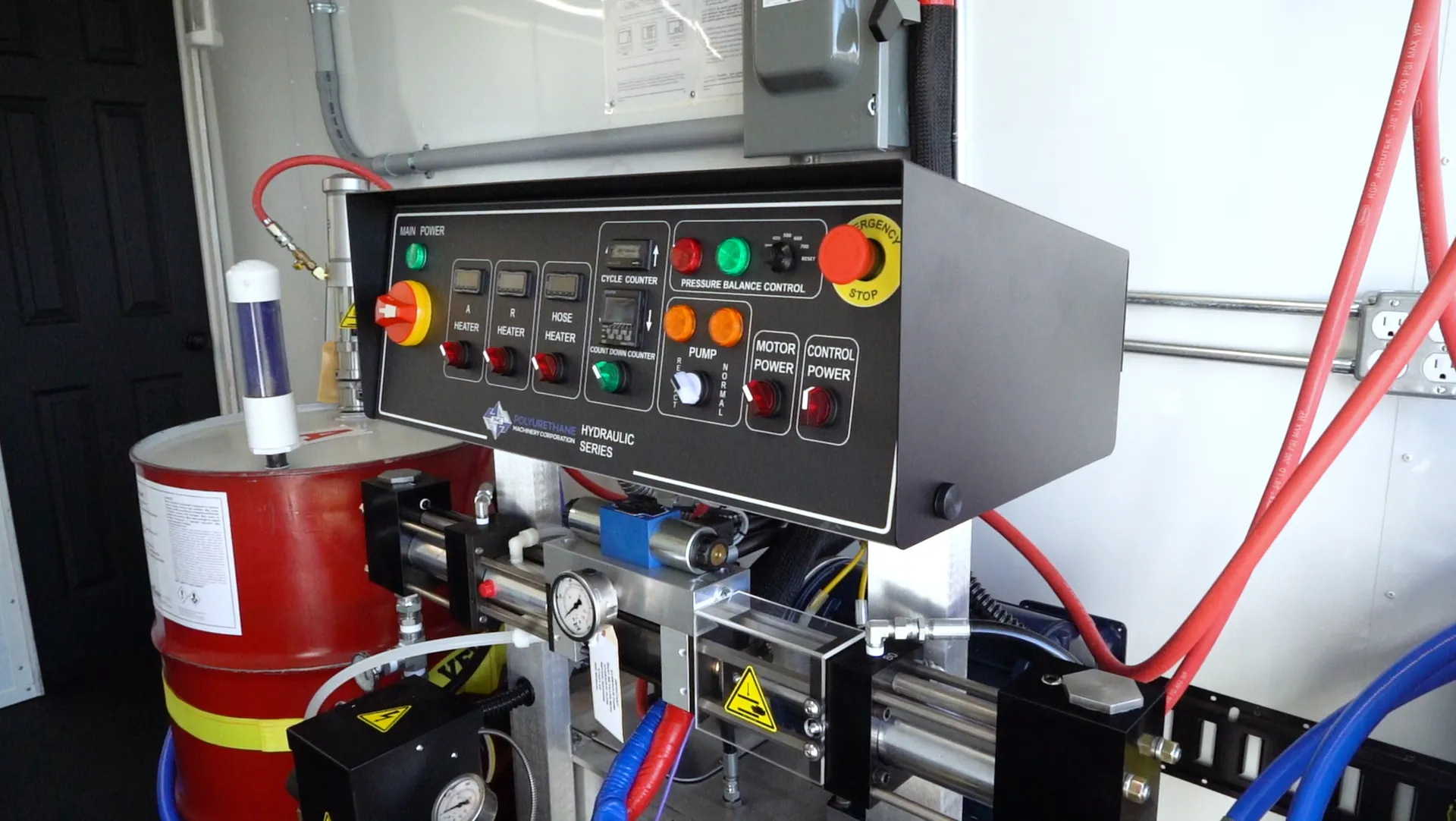
- $0
- franchise fees or royalties
- 35+
- years in business
- 50+
- countries with applicators
- 24/7
- technical support
Concrete looks solid, but it's full of tiny pores that pull water in. On a driveway that means dark patches and soaked-in road salt. Below ground, it means damp basements and leaks. Waterproofing concrete comes down to two questions: how is the water getting in, and which side can you reach?
Concrete isn't waterproof. Its pores wick water (capillary absorption), and groundwater pushes through under pressure: 0.433 psi per foot of depth. For driveways, patios and above-grade walls, a penetrating silane or siloxane sealer (about $1–$3 per sq ft installed) is the usual choice. Below grade, damp-proofing (normally about 10 mils) won't hold back pressure. That takes 40-mil-plus membranes, crystalline treatment or drainage, ideally on the water side. Find your pressure or estimate materials.
Who's writing: ArmorThane manufactures polyurea coatings in Springfield, Missouri, and trains the independent applicators who spray them, including waterproofing membranes for foundations, tanks and decks. We don't make silane sealers, crystalline products or bentonite, and for a lot of concrete one of those is the better answer. We'll say so. Every figure below comes from a dated source listed at the end.
- 1Why concrete leaks
- 2Damp-proofing vs waterproofing (IRC R406)
- 3Positive side vs negative side
- 4Waterproofing methods compared
- 5Which method for which structure
- 6Pressure and method finder (interactive)
- 7Crystalline waterproofing
- 8Concrete waterproofing sealers
- 9Sealer and coating estimator (interactive)
- 10Cracks, joints and drainage
- 11How to test concrete for moisture
- 12What it costs
- 13Concrete waterproofing FAQ
Why concrete lets water through
The American Concrete Institute (ACI) separates two ways water moves through concrete. The difference decides which fix works.
Wicking, with no pressure
Water moving through small pores with no external hydraulic head. Microscopic channels in the cement paste draw it in by surface tension. It's what darkens a patio after rain.
Water pushed by pressure
Water driven by a pressure gradient, such as groundwater against a buried structure. When soil stays saturated, water presses on the wall and floor and works into every crack, joint and pore.
How much pressure is that?
WATERPROOF! Magazine's rule: multiply the height of the water column in feet by 0.433 to get pounds per square inch, so 10 feet of water produces 4.33 psi at the base. Xypex's literature equates 150 psi with 350 feet of head, the same rate.
Multiply by 144 for pounds per square foot: 4.33 psi is about 624 lb on every square foot at the bottom of the wall. That's why driveway repellents aren't rated for basements. Euclid's silane data sheet rules out below-grade and hydrostatic use, and ACI says admixtures designed for non-hydrostatic exposure can't effectively block water under head pressure.
Damp-proofing vs waterproofing
The two terms aren't interchangeable. W. R. Meadows, which makes both, draws the line at pressure: damp-proofing slows moisture where hydrostatic pressure isn't a concern, and waterproofing is the only method that protects against it. Damp-proofing is normally about 10 mils thick and cannot seal cracks and holes; waterproofing materials run 40 mils or more.
| Damp-proofing (R406.1) | Waterproofing (R406.2) | |
|---|---|---|
| Required for | Foundation walls that retain earth and enclose interior spaces below grade | Those walls where a high water table or other severe soil-water conditions are known to exist |
| Extent and detailing | From finished grade down to the higher of the footing top or 6 in. below the top of the basement floor | All joints in membrane waterproofing lapped and sealed |
| Materials listed | Bituminous coating; 3 lb per sq yd of acrylic modified cement; a 1/8 in. coat of surface-bonding cement (ASTM C887); or any listed waterproofing material. Masonry walls get at least 3/8 in. of portland cement parging first. | Two-ply hot-mopped felts; 55 lb roll roofing; 40-mil polymer-modified asphalt; 60-mil flexible polymer cement; 1/8 in. cement-based, fiber-reinforced waterproof coating; 60-mil solvent-free liquid-applied synthetic rubber |
| Typical thickness | About 10 mils | 40 mils or more |
| Resists hydrostatic pressure? | No | Yes |
A house may have only the damp-proofing the code requires, often a bituminous coating that was never meant to hold back standing water. If water sits against your wall for part of the year, the fix is a true waterproofing layer, drainage or both. Our foundation waterproofing guide covers the exterior work.
Positive side vs negative side
The positive side is the face water pushes against: the outside of a basement wall, the underside of a slab, the inside of a tank. The negative side is the opposite, dry face, which is usually the one you can reach.
Stop water before it gets in
IIBEC's below-grade design paper calls positive-side waterproofing, including blind-side systems, the more effective system. It keeps water out of the structure and so reduces corrosion of the reinforcing steel.
- Existing walls need excavation
- Membranes, sheets and bentonite go here
Work from the inside
Negative-side systems let you work from the interior without digging. IIBEC's caution is that they are susceptible to failure under hydrostatic pressure.
- Crystalline products are sold for either face
- Pair with drainage where water persists
Crystalline products are the main exception. Xypex says its Concentrate coating can go on the positive or the negative side, and Penetron says its admixture resists extreme hydrostatic pressure from either surface, which is why crystalline shows up so often in interior repairs.
How to waterproof concrete: the methods compared
No single method is best everywhere. Each fits a kind of water and a side of the concrete.
| Method | How it works | Best fit | Limits |
|---|---|---|---|
| Penetrating silane or siloxane | Soaks in and makes the pores water-repellent; concrete still breathes | Driveways, patios, above-grade walls | Not for below-grade or hydrostatic use, or open cracks |
| Silicate densifier | Forms calcium silicate hydrate in the pores; hardens and dustproofs | Interior slabs | Not a waterproofing membrane |
| Crystalline (admixture or slurry) | Forms pore-blocking crystals with water and cement | New pours, tanks, basements; either face | Seals static cracks up to about 0.5 mm only |
| Cementitious coating | Polymer-modified cement slurry | Basement walls, tanks, retaining walls | Can't bridge moving cracks |
| Liquid-applied membrane, including polyurea | Elastomeric film sprayed, rolled or troweled on | Foundation exteriors, tanks, decks | Needs prep; can be punctured in backfill; some have UV limits |
| Sheet membrane | Self-adhered rubberized asphalt with lapped seams | Foundation walls, positive side | Needs full access and careful laps |
| Bentonite | Clay that swells into a gasket when wet | Below grade, positive or blind side | Must be confined before it gets wet |
| Crack injection | Resin injected into a leaking crack | Individual leaks | Treats the crack only |
| Drainage | Carries water away so pressure can't build | Any wall with persistent water | Doesn't seal; pair it with a coating |
Liquid-applied membranes range from asphalt emulsions to 100%-solids polyurea, and what sets them apart is stretch: Tremco lists 600% elongation for its TREMproof 250GC polyurethane, and VersaFlex lists 353% for a polyurea that names below-grade waterproofing among its uses. For thickness, primers and detailing, see our liquid-applied waterproofing membrane guide.
Which method for which structure
Usually fixed from inside
The water is outside, but the inside is what you can reach. Crystalline or cementitious coatings plus an interior drain are the common repair. See basement waterproofing.
Membrane on the outside
New or excavated walls get a positive-side membrane or sheet with sealed laps and drainage. This is where polyurea fits. See foundation waterproofing.
Penetrating sealer
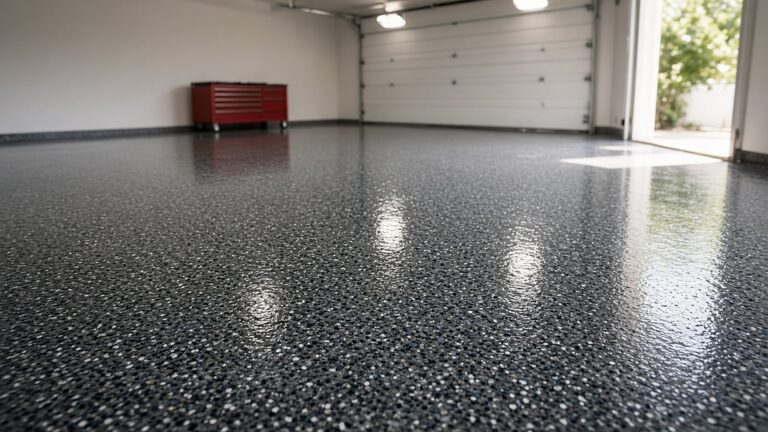
A silane or siloxane repellent keeps water and salts out and lets the slab breathe. See concrete driveway sealer.
Treat the soil side
Wet soil sits behind the wall by design. Coat the back while it's exposed and add drainage. See retaining wall waterproofing.
Line the water side
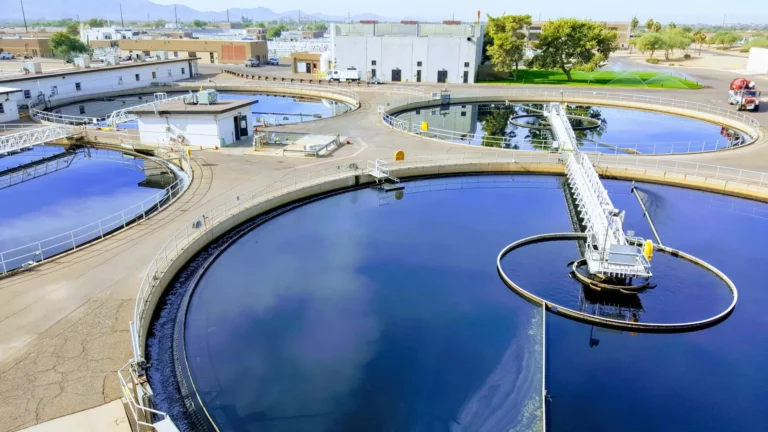
The inside is the positive side. Crystalline, cementitious and elastomeric linings are all used. See concrete tank waterproofing.
A membrane that takes traffic
Foot traffic, sun and standing water call for a membrane system rather than a repellent. See deck waterproofing.
Hydrostatic pressure and method finder
Enter the structure, how high water stands against it and which side you can reach. The finder works out the pressure and suggests approaches, with reasons.
How much pressure, and what should I use?
Pressure = feet of water × 0.433 psi. Measure from the bottom of the wall or slab up to the water table or the soaked-soil line, and enter 0 if water never stands against it.
10 ft of water = 4.33 psi at the base (WATERPROOF! Magazine).
Protection level: waterproofing. Suggested approach for a basement or foundation wall: crystalline or two-coat cementitious coating inside, plus drainage.
A starting point, not a site assessment. Read more: foundation waterproofing · basement waterproofing costs.
Crystalline waterproofing
Crystalline products work the opposite way from a repellent. Per ACI 212.3R, they're hydrophilic: the active ingredients react with water and cement to form calcium silicate hydrates and pore-blocking precipitates in capillaries and microcracks, and they reactivate when new hairline cracks let moisture in. ACI's caveat: cracks can still open wider than the self-sealing limit.
| Product | Type | Published claims | Dose or coverage |
|---|---|---|---|
| Xypex Admix C-500 / C-500 NF | Admixture, PRAH | No leakage at 150 psi (CRD C48); 20–120× lower permeability coefficient (EN 12390-8); seals static hairline cracks up to 0.5 mm | 2–3% by weight of cement (1–1.5% for NF) |
| Penetron Admix | Admixture, PRAH | Seals hairline cracks up to 0.5 mm; resists hydrostatic pressure from either face | 0.8–1.0% by weight of cementing materials |
| Kryton KIM | Admixture | Crystals fill capillary pores and microcracks; no crack width stated | Not stated on the product page |
| Xypex Concentrate | Surface-applied slurry | Positive or negative side; doesn't need a dry surface; seals static hairline cracks up to 0.5 mm | 6–7.2 sq ft per lb per coat |
PRAN vs PRAH: the label that matters
ACI splits permeability-reducing admixtures into two classes. A PRAN is for non-hydrostatic conditions, and ACI says PRANs are unable to effectively block water under hydrostatic head. A PRAH is for hydrostatic conditions. If a basement slab, pit or tank will see water pressure, ask which class you're getting; Xypex and Penetron both describe their admixtures as PRAH. None of the cost guides we checked price crystalline systems, so plan on a quote.
Concrete waterproofing sealers: penetrating vs film-forming
For driveways, patios, walks and above-grade walls, the question is which sealer to buy. The two families behave very differently.
Silane, siloxane, silane/siloxane
They soak in and react in the pores, so the concrete keeps what PROSOCO calls its natural permeance. Euclid's Baracade Silane 100 C cut water absorption 93% and chloride intake 93.7% in NCHRP 244 testing. PROSOCO puts service life at 5 years minimum, potentially 20 or more.
Acrylic, epoxy, polyurethane
They sit on top. PROSOCO warns that films can trap moisture, leading to blush, subflorescence (salts crystallizing under the surface and spalling it) and freeze-thaw damage, and puts film-formers at 1–5 years. HomeGuide lists acrylic at 1–3 years and epoxy or urethane at 5–15.
| Product | Type | Coverage | Published data |
|---|---|---|---|
| Euclid Baracade Silane 100 C | 100% silane | 250–400 sq ft/gal | 0.30 in. average penetration; 93.3% absorption reduction (ASTM C642); VOC 331 g/L; cure new concrete 7+ days |
| PROSOCO Silane 100 | 100% silane | 150–400 sq ft/gal | Depth set by application rate; full repellency in 72 h; cure 14–28 days; VOC 350 g/L max |
| PROSOCO Siloxane PD | Water-based silane/siloxane | 50–200 sq ft/gal | Under 30 g/L VOC; up to 10-year service life claimed |
| PROSOCO LS | Lithium silicate densifier | 500–1,000 sq ft/gal | Hardens and dustproofs; 0 g/L VOC; not a waterproofing membrane |
Two limits apply to every repellent. PROSOCO says its silane won't prevent water penetration through structural cracks, defects or open joints, bridging only shrinkage cracks of 0.02 inches or less. And none are made for walls under water pressure.
Sealer and coating estimator
Pick the surface and product. The estimator applies published coverage rates and installed prices, and flags products that don't suit the surface.
How much product, and what will it cost?
Coverage rates are the manufacturers'. Installed prices are HomeGuide's and Angi's; the guides we checked don't publish crystalline or densifier pricing.
Cracks, joints and drainage
A coating treats the concrete between the cracks. The cracks, and the pressure behind the wall, are separate decisions.
Crystalline can close them
Xypex and Penetron say their products seal static hairline cracks up to 0.5 mm, about 0.02 in. PROSOCO's silane bridges only shrinkage cracks of 0.02 in or less.
Needs something that stretches
Crystalline and cementitious systems handle static cracks only; Sika says SikaTop Seal 107 cannot bridge moving cracks. Use injection or an elastomeric membrane.
Stop the water first
HomeGuide puts epoxy crack injection at $250–$800+ per crack; This Old House says $800–$1,500. See polyurea concrete crack injection.
Drainage takes the pressure off
An interior coating has to resist whatever pressure the soil water puts on it. Drainage lowers that pressure by giving water somewhere else to go; Fixr lists interior perimeter drains at $40–$120 per linear foot. Outside, IIBEC notes fluid-applied membranes can be punctured on site and bentonite fails if it hydrates before it's confined. If a crack raises structural questions, deal with that first; see foundation repair.
How to test concrete for moisture
ASTM D4263, the plastic sheet method, indicates capillary moisture, which ASTM notes may be detrimental to certain coatings. It shows whether moisture is coming through, not how much. KTA-Tator's summary of the steps:
Tape down plastic
Use polyethylene at least 4 mils thick and at least 18 × 18 in, taped down to the concrete.
Wait
Leave it at least 16 hours, ideally 22–26.
Look underneath
Condensation under the sheet or darkened concrete indicates capillary moisture.
Know when the test is void
Lifted tape or heavy rain during the test voids it, and a low-permeance coating already on the slab can mislead you.
Tests a coating pro may run
- ASTM F1869 calcium chloride test: floors only, 60–72 hours
- ASTM F2170 in-situ relative humidity probes set into the slab
- ASTM D7234 pull-off test for coating adhesion on concrete
A contractor who coats a basement floor without any moisture test is skipping the step D4263 exists for.
What concrete waterproofing costs
Sealing a slab and waterproofing a basement are different jobs. Here's what the major cost guides report.
| Job | Typical price | Source |
|---|---|---|
| Seal a slab, professional | $1.00–$3.00 per sq ft (materials $0.30–$1.75) | HomeGuide, Nov. 2025 |
| Seal a slab, professional | $1.35–$2.50 per sq ft | Angi, July 2026 |
| Seal a slab, labor plus materials | $0.75–$1.50 labor plus $0.20–$0.60 materials per sq ft | Forbes Home, Feb. 2025 |
| Sealer by type, installed | Silane/siloxane $1–$3; acrylic $1–$2; polyurethane $1.25–$3; polyaspartic $4–$9; epoxy $4–$10 per sq ft | HomeGuide, Nov. 2025 |
| Basement waterproofing, overall | $6,000–$18,000 (interior $6,000–$12,000; exterior $10,000–$18,000) | HomeGuide, Jan. 2026 |
| Basement waterproofing, overall | $2,461–$8,202 typical; $5,241 average | Angi, July 2026 |
| Basement waterproofing, overall | Interior $2,000–$6,000; exterior $7,000–$15,000 | This Old House, Mar. 2026 |
| Waterproofing membrane, installed | $4–$7 per sq ft | HomeGuide, Jan. 2026 |
| Waterproofing vs damp-proofing | $5–$10 vs $3–$6 per sq ft | Angi, July 2026 |
| Wall coatings and sealants | $1–$8 per sq ft | This Old House, Mar. 2026 |
| Sodium bentonite | $2–$5 per sq ft | Fixr, Feb. 2026 |
| Crack injection | $250–$800+ per crack (epoxy); $800–$1,500 per crack | HomeGuide; This Old House |
| Interior perimeter drain | $40–$120 per linear ft | Fixr, Feb. 2026 |
| Crystalline systems | Not broken out | None of the guides above |
Every guide puts exterior basement work above interior work, because reaching the positive side means digging to the footing. On flatwork, budget for resealing: every one to five years per Angi, one to ten per Forbes Home. Our basement waterproofing cost guide goes deeper.
Polyurea waterproofing, sprayed by certified applicators
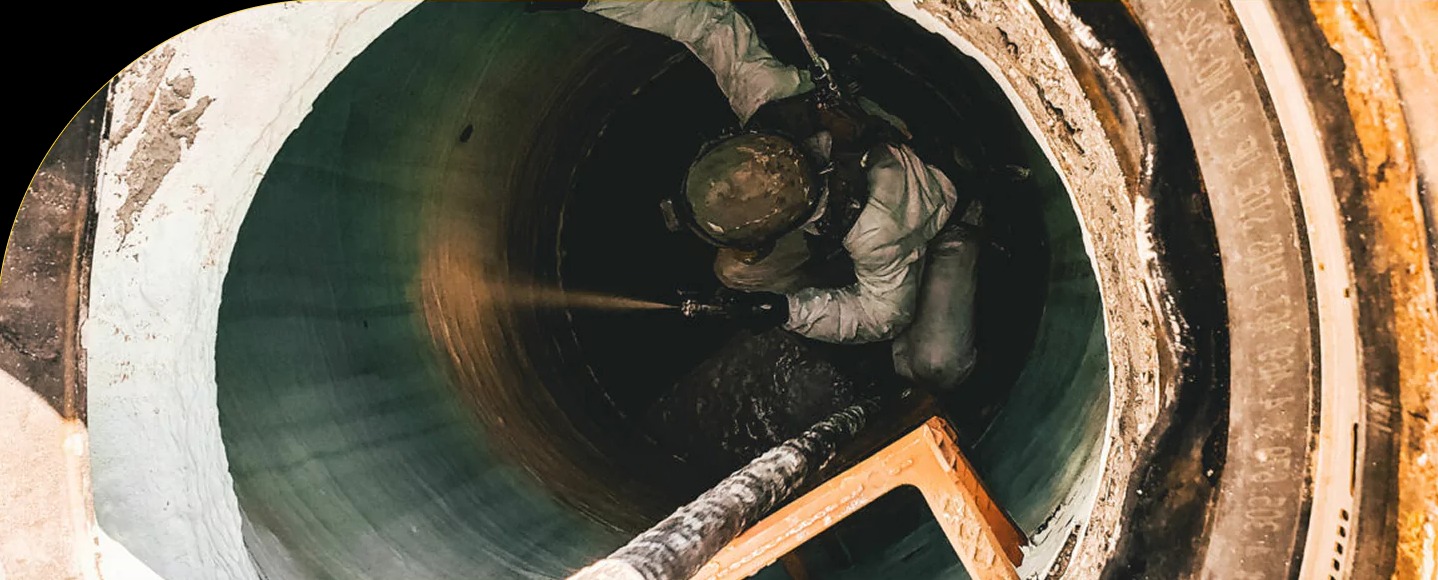
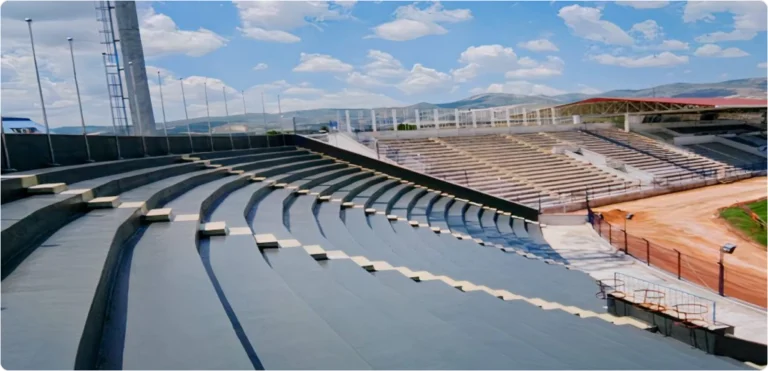
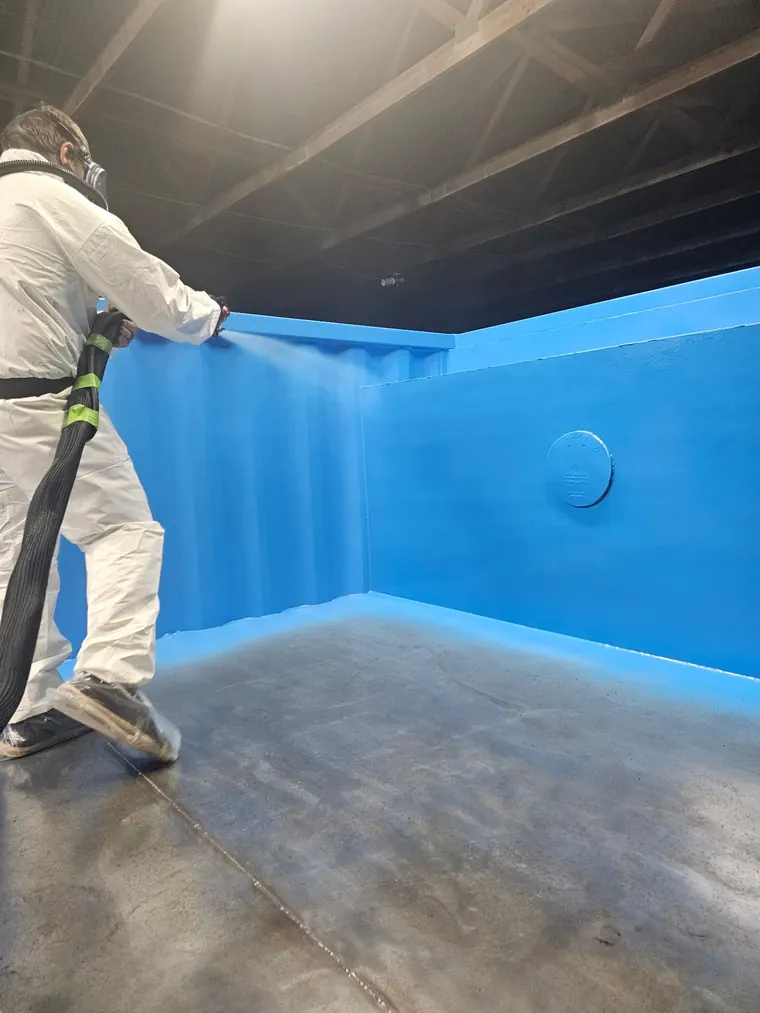
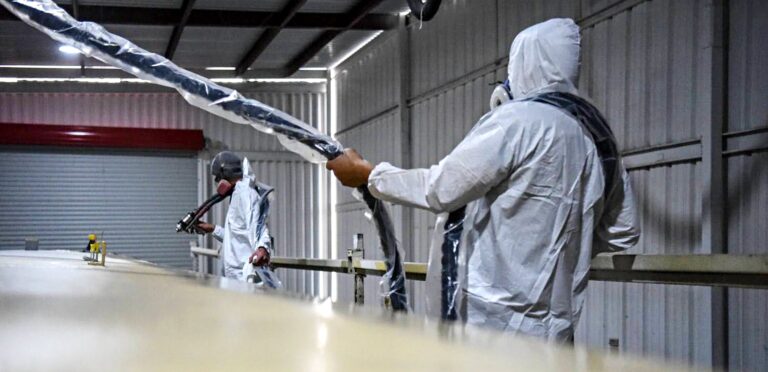
ArmorThane has manufactured polyurea and polyurethane coatings and trained independent applicators since 1989. Certified applicators spray ArmorThane polyurea systems as waterproofing membranes on foundations, tanks, retaining walls and decks, the positive-side, elastomeric end of the options on this page.
If your problem is a patio that soaks up rain, a penetrating sealer may be all you need. If water is pushing through a wall or a tank has to hold water, talk to an applicator who will test the concrete before recommending anything.
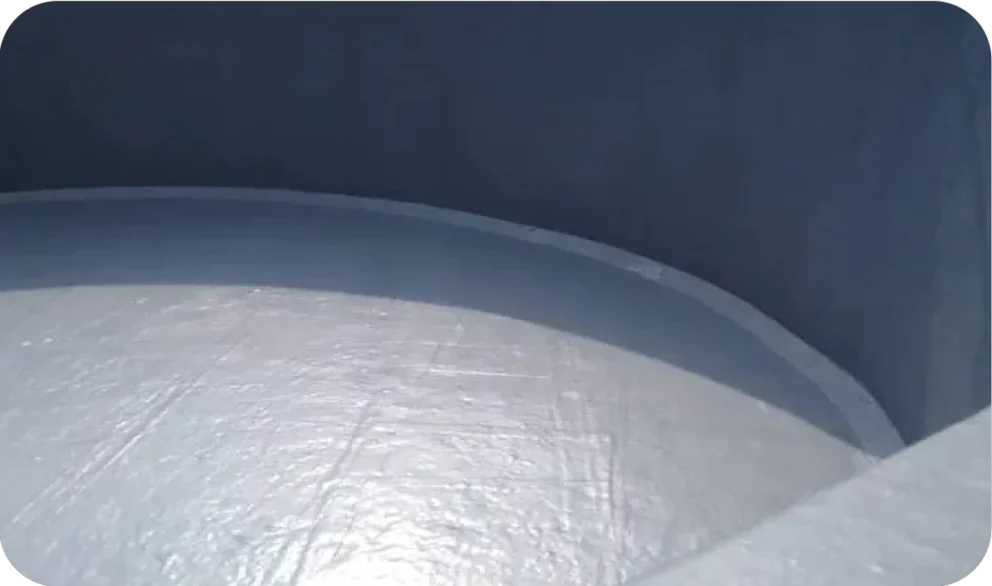
Add waterproofing to what you sell.
Waterproofing pairs naturally with concrete coatings, roofing and spray foam. ArmorThane trains and supplies independent applicators with no franchise fee, no dealership fee and no royalty, so you keep your own name and your margin.
Concrete waterproofing FAQ
Is concrete waterproof?
No. Concrete is porous. Microscopic capillary pores in the cement paste draw water in by surface tension, and water under pressure, such as groundwater against a basement wall, moves through it too. Crystalline admixtures, penetrating repellents, coatings and membranes make it far more water-resistant. How far you need to go depends on whether water only wets the surface or stands against it.
How do you waterproof concrete?
First work out how the water gets in. For surfaces that only see rain, a penetrating silane or siloxane sealer is the usual choice. Where water stands against concrete below grade, use a membrane, a crystalline treatment or a cementitious coating rated for water pressure, preferably on the side the water comes from, plus drainage. Repair cracks and test for moisture first.
How do you waterproof a concrete floor?
For a slab above grade, apply a penetrating silane or siloxane sealer at the data sheet's coverage rate once new concrete has cured (7 to 28 days, depending on the product). For a basement floor, test first by taping down 4-mil plastic for at least 16 hours (ASTM D4263). Moisture coming up through a slab can undermine many coatings.
How do you waterproof concrete blocks?
Per InterNACHI's summary of the IRC, masonry foundation walls get at least 3/8 inch of portland cement parging before damp-proofing. Where a high water table or severe soil-water conditions exist, the code calls for waterproofing instead, such as 40-mil polymer-modified asphalt or 60-mil liquid-applied synthetic rubber. From inside, a polymer-modified cement coating plus drainage is a common repair.
What is the best waterproofing for concrete?
It depends on the water. For driveways and patios, a penetrating silane or siloxane sealer is the usual choice; one 100% silane cut water absorption by 93% in testing. For foundations under water pressure, IIBEC calls positive-side waterproofing the more effective system, typically a membrane of 40 mils or more plus drainage. For interior and tank repairs, crystalline products are marketed for either face.
What is the difference between damp-proofing and waterproofing?
Damp-proofing slows moisture where there is no hydrostatic pressure. It is normally about 10 mils thick and cannot seal cracks and holes. Waterproofing resists water under pressure and typically uses 40 mils or more of material. Per InterNACHI's summary of the IRC, basement walls need damp-proofing by default and waterproofing where a high water table or severe soil-water conditions exist.
What is crystalline waterproofing?
Crystalline products react with water and cement to form crystals that block capillary pores and hairline cracks. They come as admixtures added to the mix or as slurries brushed on. Xypex and Penetron say their products seal static hairline cracks up to 0.5 mm, and Xypex's admixture showed no leakage at 150 psi in the CRD C48 test. Moving cracks still need repair.
Can you seal concrete to make it waterproof?
A penetrating sealer makes concrete water-repellent, not waterproof. Euclid's silane cut water absorption by about 93% in testing, but silane makers say their products won't stop water through structural cracks or open joints and aren't for below-grade or hydrostatic conditions. Film-forming sealers can trap moisture. PROSOCO puts penetrating repellents at 5 to 20+ years of service.
How much does concrete waterproofing cost?
Professional sealing runs about $1 to $3 per sq ft according to HomeGuide, or $1.35 to $2.50 according to Angi. Basement waterproofing is a bigger job: Angi's typical range is $2,461 to $8,202, and HomeGuide lists $6,000 to $18,000, with exterior work costing more than interior. HomeGuide puts an installed membrane at $4 to $7 per sq ft.
Can you waterproof a concrete wall from the inside?
Yes, with limits. Interior treatments such as crystalline slurries and two-coat cementitious coatings are common basement repairs, and crystalline products are marketed for either face. But IIBEC notes that negative-side systems are susceptible to failure under hydrostatic pressure. Pair an interior coating with drainage, and consider exterior waterproofing where water pressure is high or persistent.
Written from ACI, ASTM, IIBEC and InterNACHI documents, manufacturer data sheets and dated cost guides. Reviewed September 27, 2026.
Methodology and sources
Figures are each publisher's or manufacturer's own claims, as stated on the dated page. The finder uses 0.433 psi per foot of water and × 144 for pounds per square foot. The estimator divides your area by published coverage rates; mil-based gallons use the conversion of 1,604 sq ft per gallon at 1 mil. Code points follow InterNACHI's summary, not the ICC text. General information, not an engineering or code opinion.
- ACI 212.3R-10, Report on Chemical Admixtures for Concrete, Ch. 15 (2010)
- WATERPROOF! Magazine, Understanding Hydrostatic Pressure (Oct. 2023)
- InterNACHI, Inspecting Foundation Dampproofing and Waterproofing (IRC R406) (2025); Minn. R. 1309.0406 (2015)
- W. R. Meadows, Waterproofing vs Damp-Proofing (July 2023)
- IIBEC, Below-Grade Waterproofing Selection and Design Consideration (Mar. 2009)
- Kryton International, glossary and Krystol Internal Membrane page (n.d.)
- Xypex, Admix C-500 data sheet (June 2025), Admix C-Series brochure (Feb. 2025), Concentrate page (Aug. 2026)
- Penetron, PENETRON ADMIX data sheet (July 2013)
- Euclid Chemical, Baracade Silane 100 C TDS (Aug. 2025)
- PROSOCO, Silane 100 PDS (June 2023), product pages, water repellent articles (Mar. 2022, Sept. 2024)
- Sika USA, SikaTop Seal 107 PDS (Nov. 2015)
- Tremco, TREMproof 250GC (Dec. 2025) and 260 (Nov. 2023) data sheets; VersaFlex, FSS 50DM+ (n.d.)
- Henry, Blueskin WP200 and MiraCLAY pages (n.d.)
- ASTM D4263-83(2018) and D7234-22; KTA-Tator, testing for moisture in concrete (Nov. 2024)
- HomeGuide, concrete sealing (Nov. 2025) and basement waterproofing (Jan. 2026) costs
- Angi, concrete sealing (July 10, 2026) and basement waterproofing (July 20, 2026) costs
- Forbes Home (Feb. 2025), This Old House (Mar. 2026) and Fixr (Feb. 2026) cost guides
Water getting through your concrete? Get a quote from a certified applicator.
Tell us what's leaking and where: basement, foundation, retaining wall, tank or deck. We'll connect you with an ArmorThane-certified applicator who tests the concrete first and sprays a polyurea waterproofing membrane where one is the right fit.
- Moisture testing before any coating goes on
- Polyurea membranes applied on the water side
- Foundations, tanks, retaining walls and decks
- Contractors: ask about becoming a waterproofing applicator