
Bridge deck waterproofing
The Complete Guide to Bridge Deck Waterproofing Methods, Costs, and High-Performance Polyurea Coatings
How water breaks concrete apart
Concrete fails from the inside out once water gets in. Pick the damage you are seeing, run the winter, and compare bare concrete with a sealed, coated surface.
1Pick the damage
2Run the test
Find the cause
Repairs last when the source of the water, movement or corrosion is dealt with first.
Remove unsound concrete
Delaminated concrete is sounded out and removed back to solid material before rebuilding.
Seal the surface last
A protective coating over the finished repair keeps water, salts and freeze-thaw damage out.
Read ArmorThane's concrete structure rehabilitation brochure, or find an ArmorThane applicator near you.
Do concrete restoration work? Become an ArmorThane applicator
Illustration only. What happens on a real job depends on the condition of the surface, the prep and the system an ArmorThane applicator specifies.
Tyler Gleckler
, Coatings Specialist
18 min read
Updated May 13, 2026
8 Gulf Nations Covered
TABLE OF CONTENTS
01. Protecting Bridges & Creating Safer Surfaces
02. Why Is Bridge Deck Waterproofing So Important?
03. Cost Calculator & Price Per Square Foot
04. Advantages of Polyurea for Bridge Decks
05. Signs Your Bridge Deck Needs Waterproofing
06. Method Comparison & Service Life
07. Step-by-Step Installation Process
8. Specifications, ASTM & DOT Standards
9. Concrete, Steel & Railroad Bridge Decks
10. ArmorThane Bridge Deck Systems
11. Polyurea vs Other Waterproofing Systems
12. Choosing a Bridge Deck Contractor
13. Frequently Asked Questions
14. Request a Project Quote
What You Need to Know About Bridge Deck Waterproofing
Bridge deck waterproofing protects critical infrastructure from water intrusion, chemical attack, and freeze-thaw damage. Polyurea spray-applied membranes deliver the highest performance with the longest service life of any available technology.
25+
Year Lifespan
300%
Elongation
4000+
PSI Tensile
Zero
VOC Emissions
KEY TAKEAWAYS
- Polyurea delivers the lowest lifetime cost despite higher upfront investment
- Spray-applied membranes eliminate seam failures — the #1 cause of bridge deck leaks
- Rapid cure time (seconds, not days) means minimal traffic disruption
- Works on every substrate: concrete, steel, asphalt overlay, and composite decking
Bridge Deck Waterproofing Cost Calculator
Enter your bridge details to get an instant cost estimate and see how polyurea compares
Bridge Deck Area (sq ft)
Waterproofing Method
★ Polyurea (Recommended)Sheet Membrane SystemHot-Applied Asphaltic MasticEpoxy / Polymer System
▼
Estimated Total Cost
$425,000
Materials + installation
Annual Cost
$17,000
Amortized over lifespan
25-Year Total Cost
$425,000
Including recoats
Vs. Polyurea Savings
Best Value!
Over 25-year lifecycle


Polyurea Performance Ratings for Bridge Decks
How polyurea scores across the metrics that matter most for bridge infrastructure
Waterproof Seal
98%
UV Resistance
95%
Flexibility
97%
Chemical Resistance
94%
Abrasion Resistance
96%
Impact Resistance
93%
Protecting bridges and creating safer surfaces
Bridges new and old are testaments to man’s ingenuity, serving as some of our most idyllic and historical urban scenery, or as modern feats of engineering.
However, it’s to the structural engineering or architectural significance that our attention is most often drawn, but there are countless other design elements that play a similarly critical role in maintaining the safety and functionality of bridges.
This includes the steps taken to see that bridges are both safe to walk, ride, or drive on, and protected from water damage, chemical corrosion, physical abrasion, and myriad other risk factors.
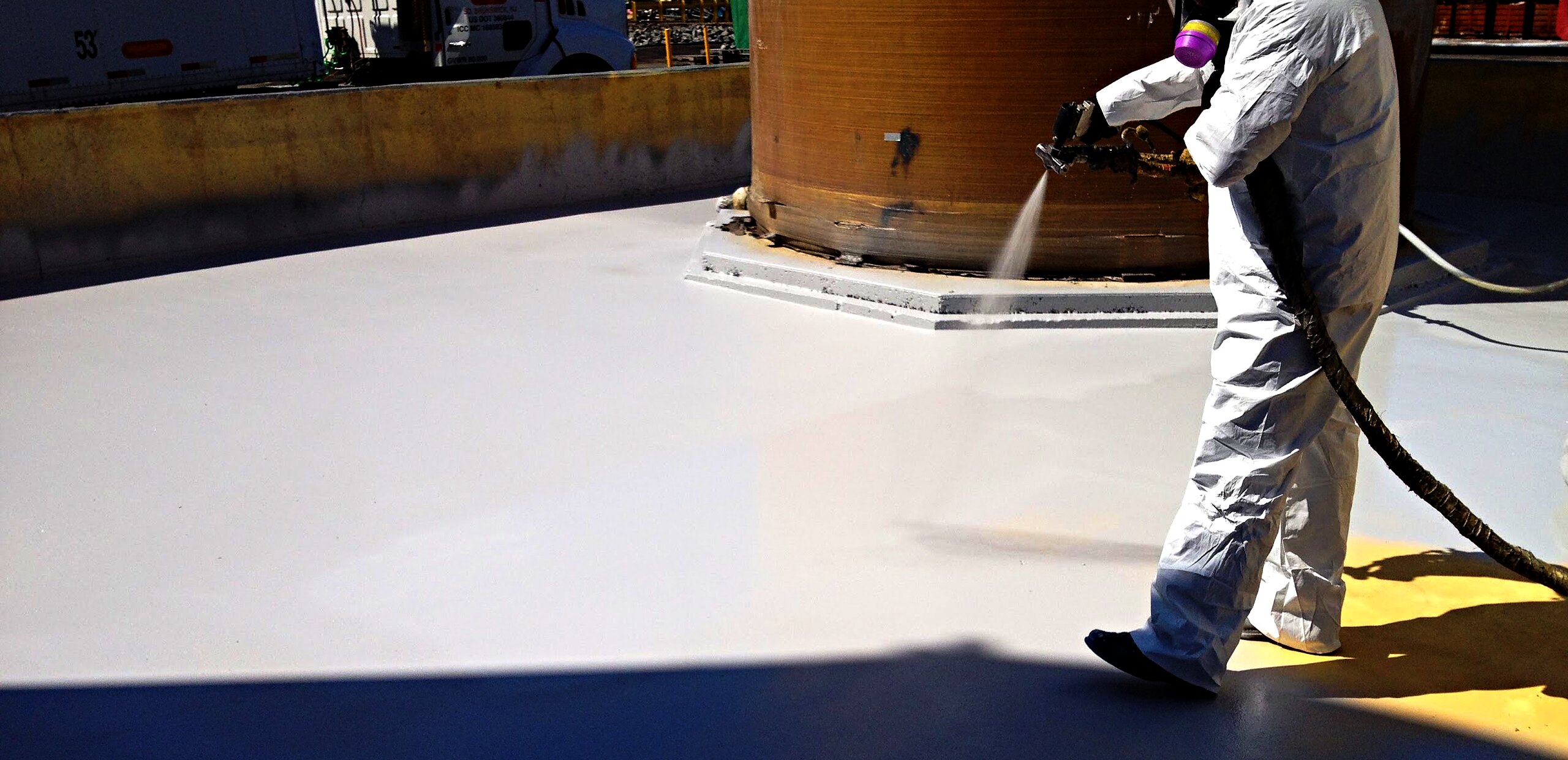
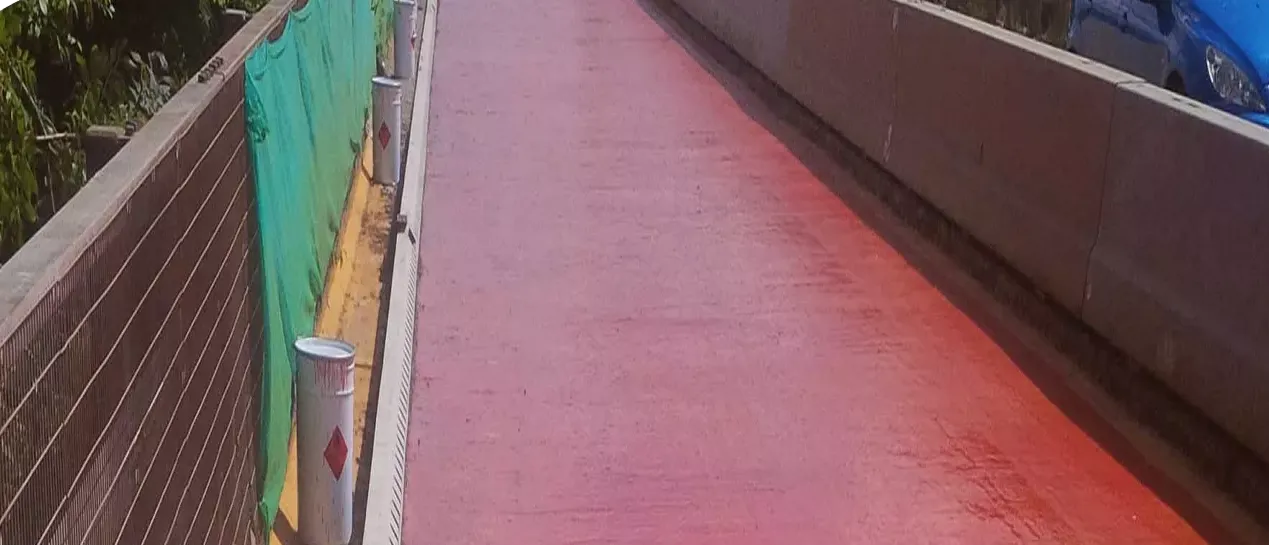
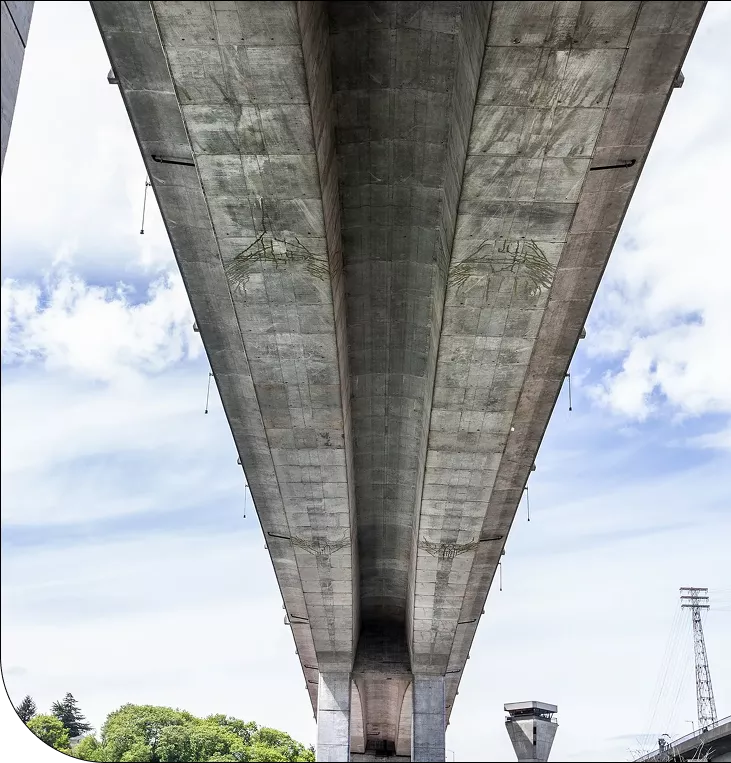
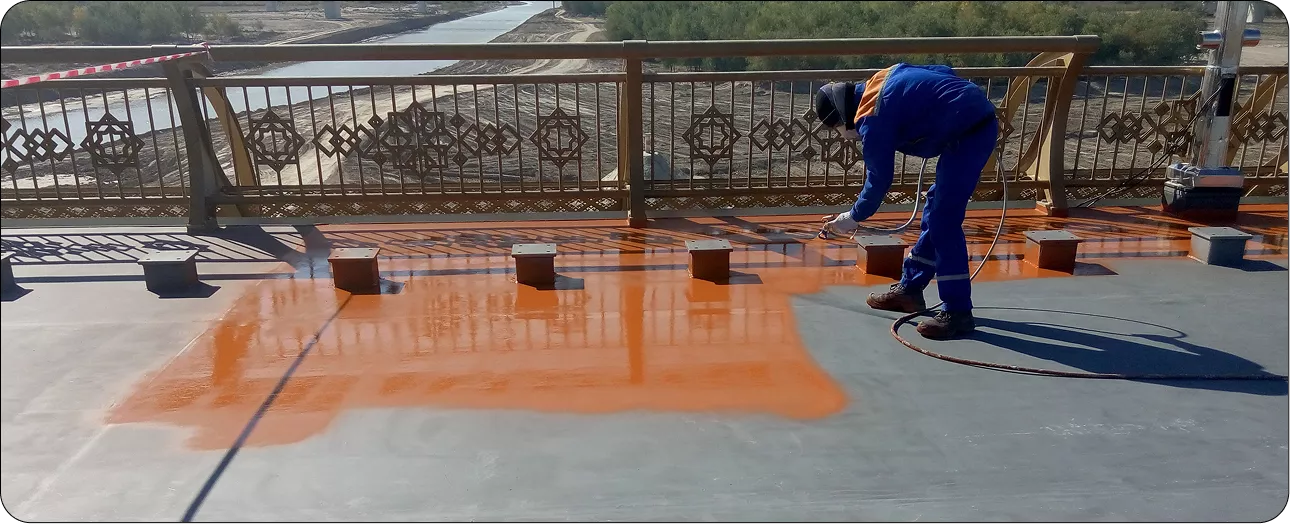
Known as bridge deck waterproofing, high-performance protective coatings like polyurea can be used to create a waterproof and watertight membrane that insulates bridges, roads, and walkways from their local environment.
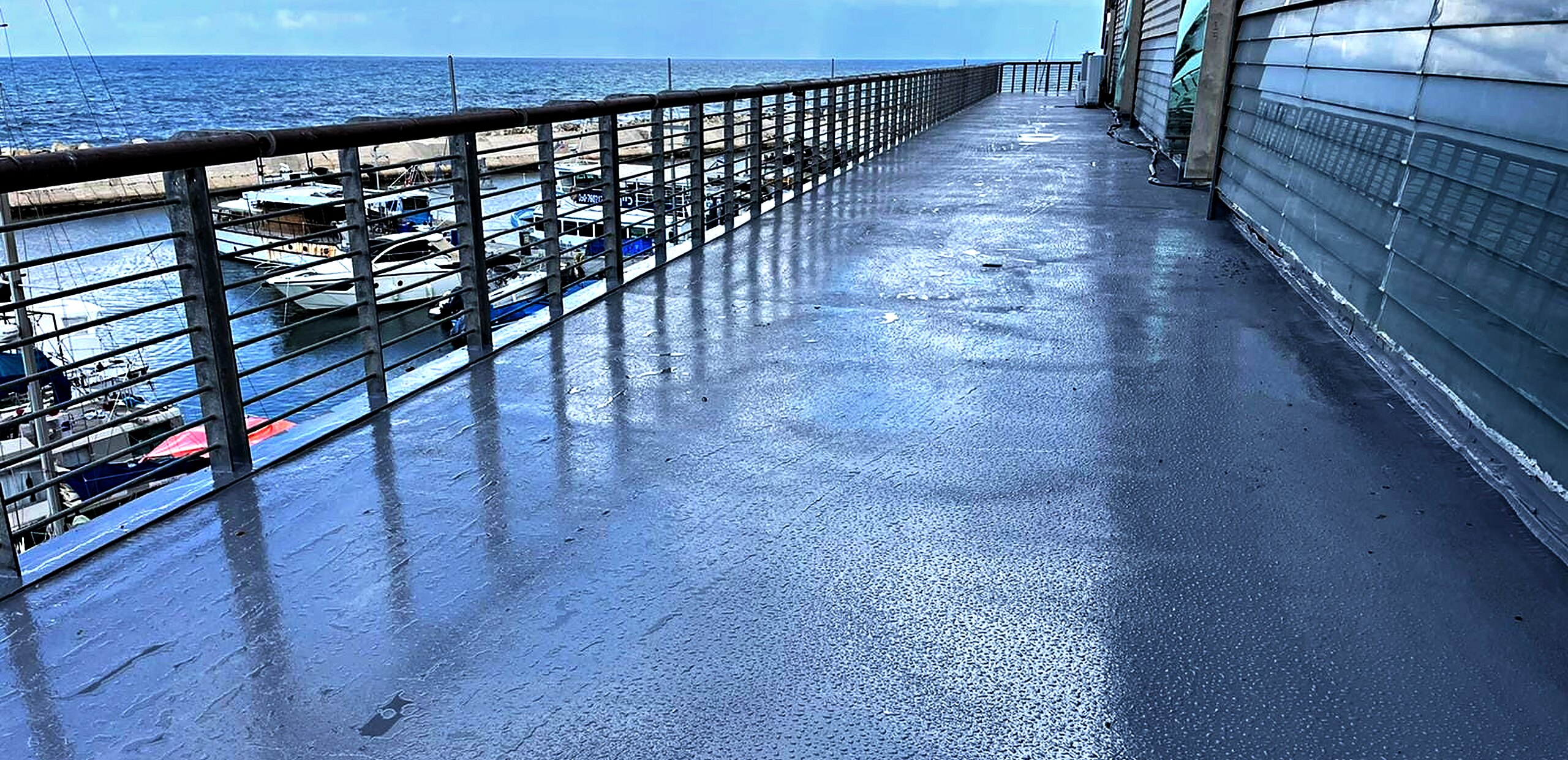
Whether it’s high foot traffic or torrential downpours, a properly specified deck membrane can protect a structure for many more years of safe and effective operation.
Why is bridge deck waterproofing so important?
Bridges aren’t your average infrastructure; they’re often the lifeblood of local communities, or even entire cities. Without them, the flow of goods and services can halt or be greatly limited, and transporting ourselves becomes just as difficult.
As a result, protecting these critical structures is paramount for the safety and well-being of travelers, especially when you consider that a single bridge can cost hundreds of millions — sometimes billions — of dollars to build or replace.
The trouble is, bridges are enormous, highly complex structures, made of concrete, metal, and many specialty materials used for everything from joints to bearings.
They’re constantly exposed to the elements, including high moisture and humidity, harsh UV radiation, fluctuating temperatures, and much more.
So, to protect bridges from everything we and mother nature throw at them, a waterproofing membrane is applied across the deck.
By coating surfaces in a durable layer of protective coatings like polyurea, bridges can stand the test of time, and resist corrosion, rust, road salt, and other common sources of structural damage.
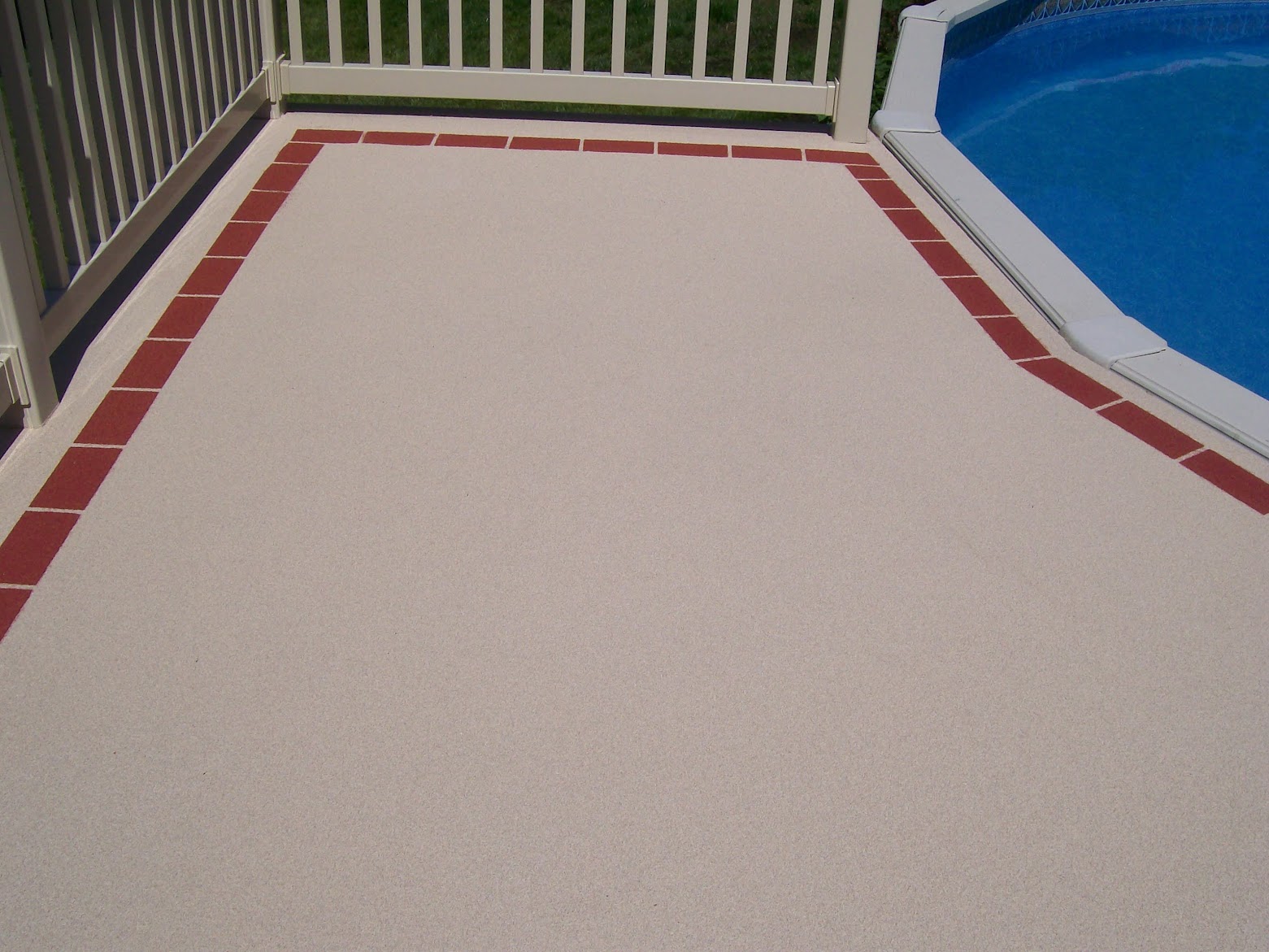
Moreover, instead of relying on the anti-slip and anti-skid properties of bare construction materials, a coated deck can also be finished to improve the surface profile of pedestrian or vehicular throughways.
In short, waterproofing the deck makes bridges last longer, require fewer repairs, and be safer and easier to use, making them an important part of modern bridges.
The right approach depends on the structure. Decks that have already suffered chloride intrusion and section loss usually need full polyurea bridge rehabilitation before any membrane goes down, while lighter pedestrian structures are handled as footbridge waterproofing projects at a lower film build.
What are the advantages of using polyurea for bridge deck waterproofing?
Polyurea is a premier coatings technology, designed to serve as a more moisture-resistant alternative to polyurethane, its sister material.
Since its development several decades ago, polyurea has become a popular choice for deck protection, thanks to the same key advantages that have seen it rise to the top of the coatings industry for wide ranging applications.
Firstly, polyurea is both strong and flexible, serving as a durable barrier that can adjust to its environment without compromising performance.
Polyurea’s strength also extends beyond the physical, and benefits from exceptional chemical resistance to strong acids, organic solvents, and other types of caustic chemicals.
On a bridge deck, polyurea’s watertight membrane and high moisture resistance make it a natural choice. Paired with high thermal stability and an improved environmental profile, those same properties make it the clear best option for most bridge deck projects.
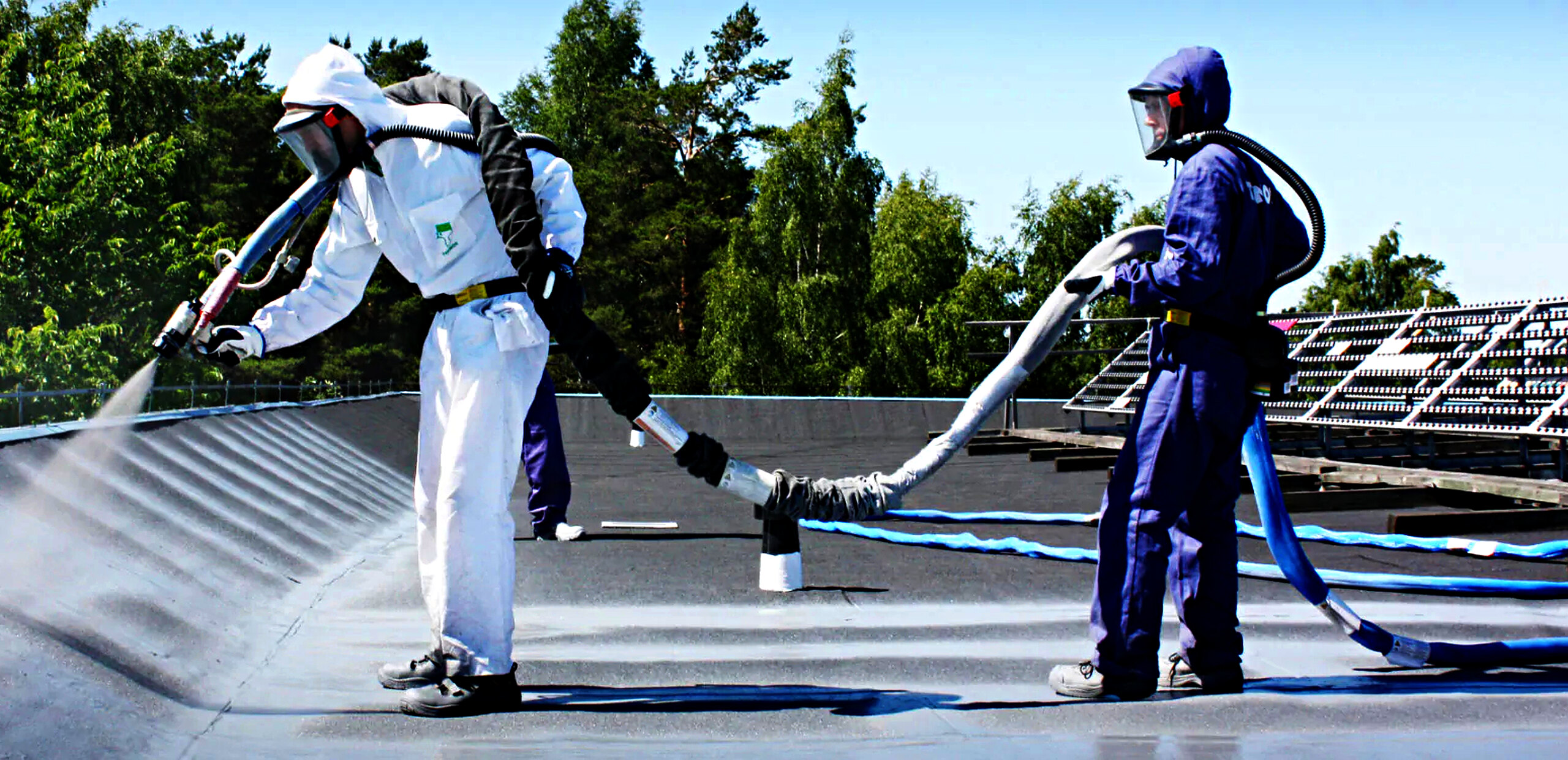
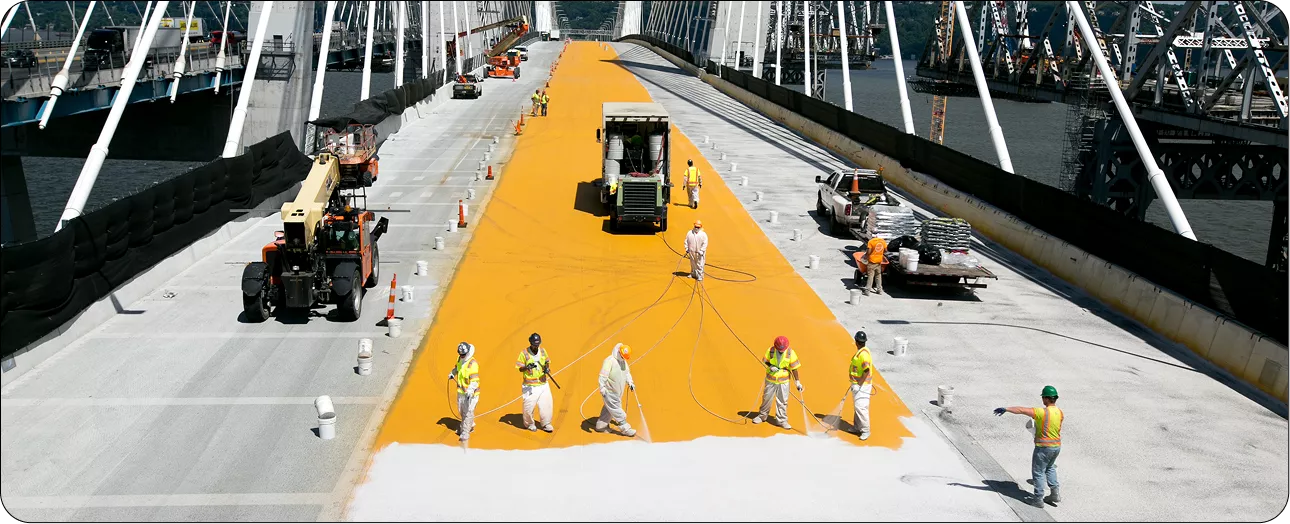
If that wasn’t already enough, polyurea is also among the most rapidly curing and easiest to apply high-performance coatings available on the market, allowing for large installations to start and finish on the same day.
ArmorThane formulates several systems for deck work: ArmorShield pure polyurea for fast-set membrane build, HardCoat rigid polyurea where abrasion resistance governs, and SureGrip soft polyurea where movement and crack bridging matter most.
Beyond the bridge
The same incredible polyurea spray elastomer technology used for bridge deck waterproofing can be used across numerous other private, commercial, and industrial applications.
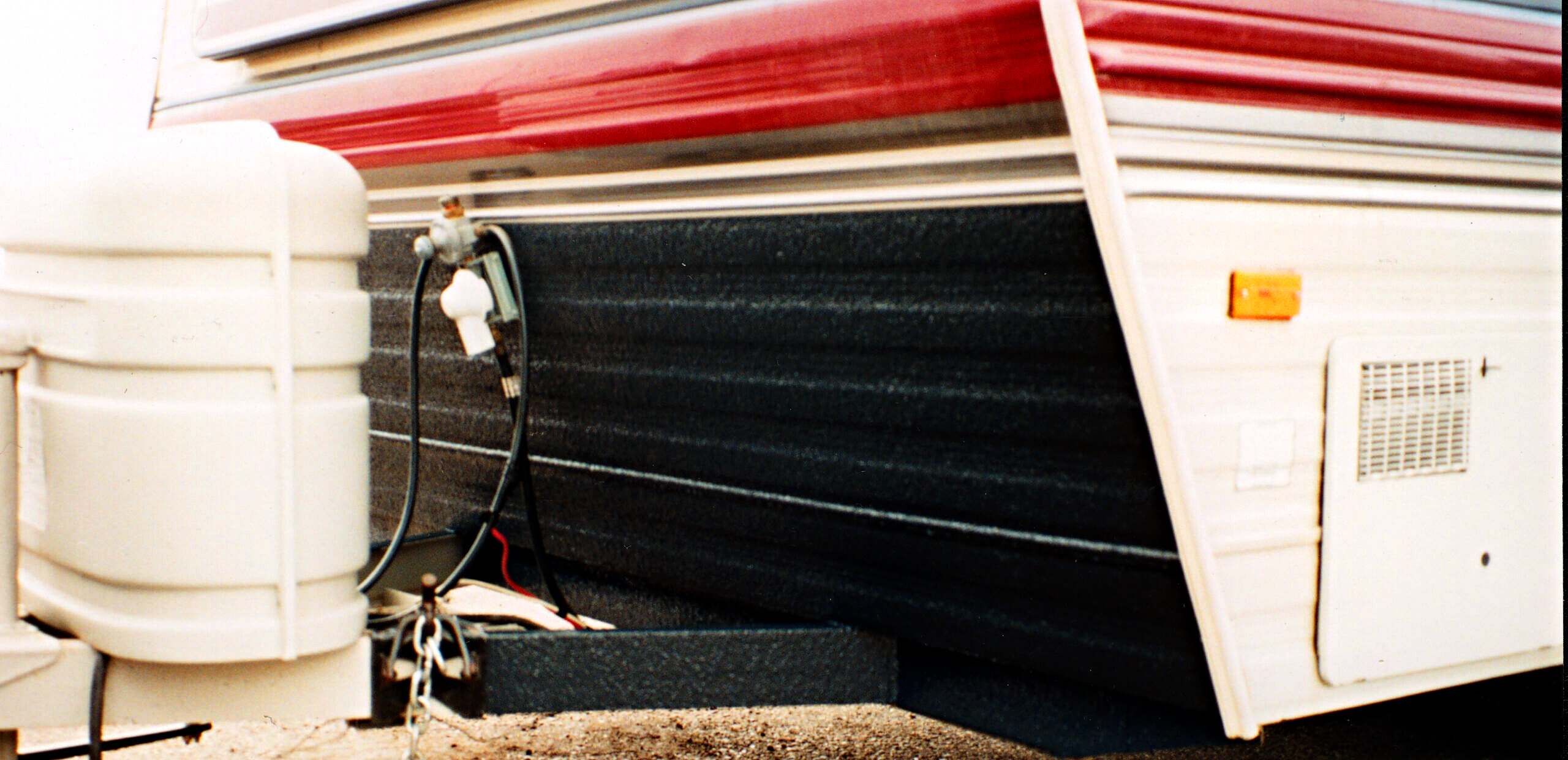
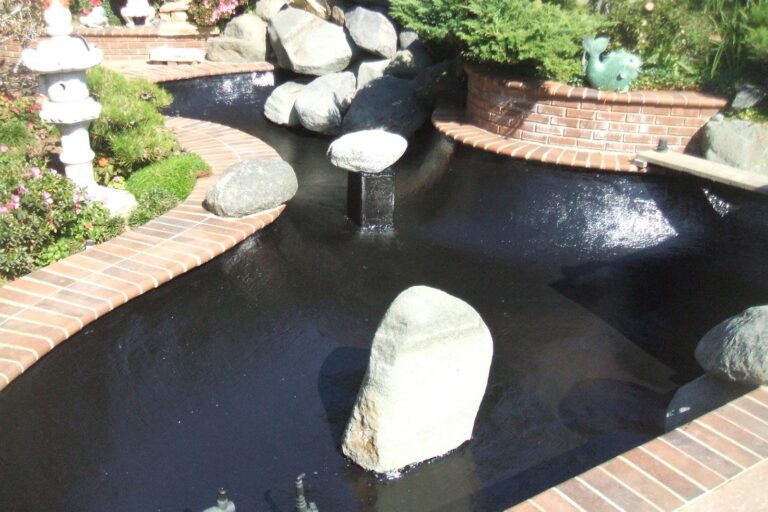
Whether it’s for protecting truck beds or creating robust secondary containment systems, polyurea is a highly robust and exceptionally versatile protective coatings perfect for countless different projects.
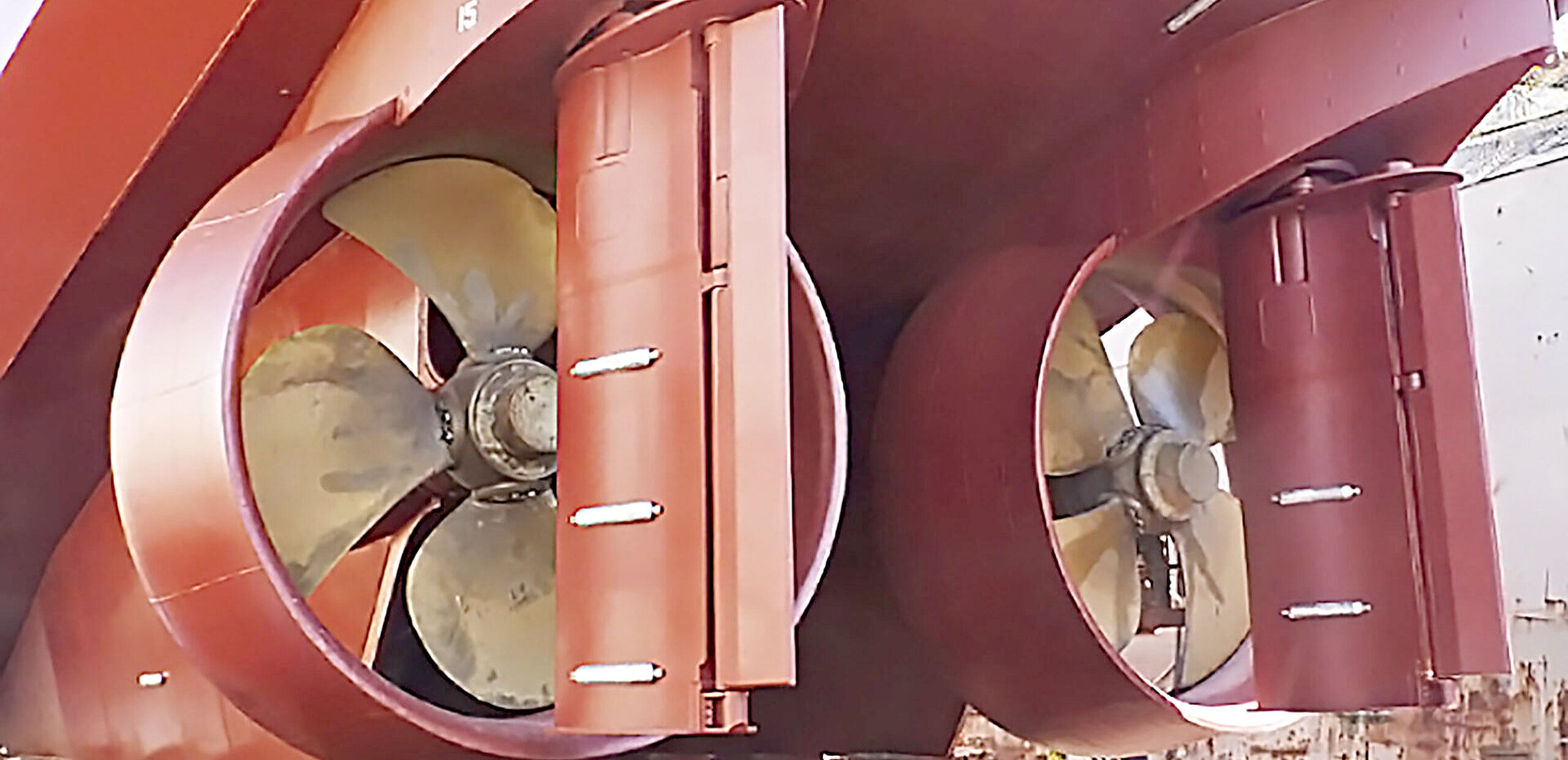
The same spray-applied chemistry protects stadium decks and grandstands, parking garage decks, flat roofs, silos, wastewater structures and marine assets exposed to salt water.
Signs Your Bridge Deck Needs Waterproofing
Efflorescence & Water Stains
White mineral deposits on concrete undersides indicate water is penetrating through the deck and dissolving salts.
Spalling & Delamination
Concrete surface flaking, pop-outs, or delamination suggests freeze-thaw damage from moisture intrusion.
Rebar Corrosion
Visible rust staining or exposed corroded reinforcement indicates the waterproofing membrane has failed.
Cracking Patterns
Map cracking or longitudinal cracks allow chloride-laden water to reach reinforcing steel, accelerating deterioration.
Drainage Issues
Pooling water or blocked deck drains create hydrostatic pressure that forces moisture into the concrete substrate.
Surface Deterioration
Worn or missing wearing surface exposes the waterproofing layer to direct traffic abrasion and UV damage.
Bridge Deck Waterproofing Method Comparison
| METHOD | COST/SQ FT | LIFESPAN | CURE TIME | ELONGATION | BEST FOR |
|---|---|---|---|---|---|
| Polyurea ★ BEST | $5–$12 | 25–30 yrs | Seconds | 300%+ | All bridge types |
| Epoxy | $3–$7 | 8–12 yrs | Hours | 5–10% | Low-traffic decks |
| Polyurethane | $4–$9 | 12–18 yrs | Hours | 50–200% | Pedestrian bridges |
| Mod. Bitumen | $2–$5 | 10–15 yrs | Hours | Low | Budget projects |
| MMA | $6–$14 | 15–20 yrs | Minutes | Moderate | Cold-weather pours |
| Hot Rubberized Asphalt | $4–$9 | 20–30 yrs | Minutes | Very high | Decks with an asphalt overlay |
| Preformed Sheet Membrane | $3–$8 | 15–25 yrs | Adhered — no cure | 150–250% | New deck construction |
Waterproofing Method Lifespan Comparison
Average expected service life by waterproofing type (years)
Polyurea
25–30 yrs
Hot Rubberized
20–30 yrs
Sheet
Membrane
15–25 yrs
MMA
15–20 yrs
Polyurethane
12–18 yrs
Mod. Bitumen
10–15 yrs
Epoxy
8–12 yrs
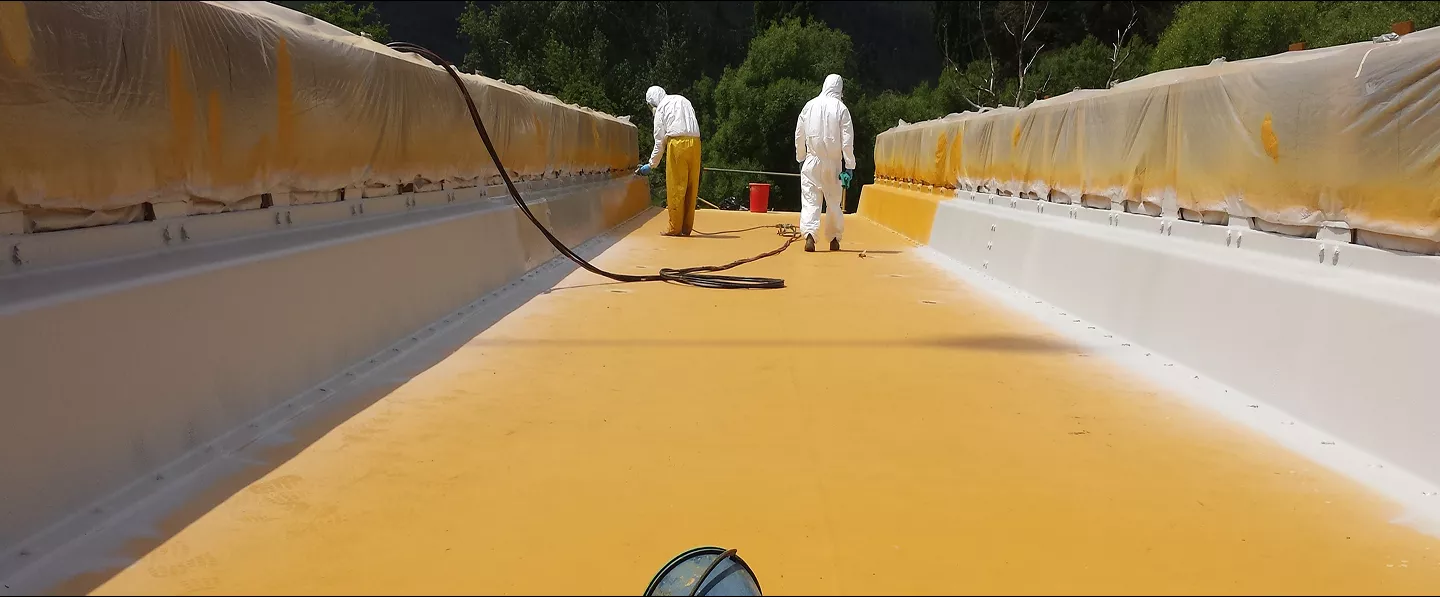
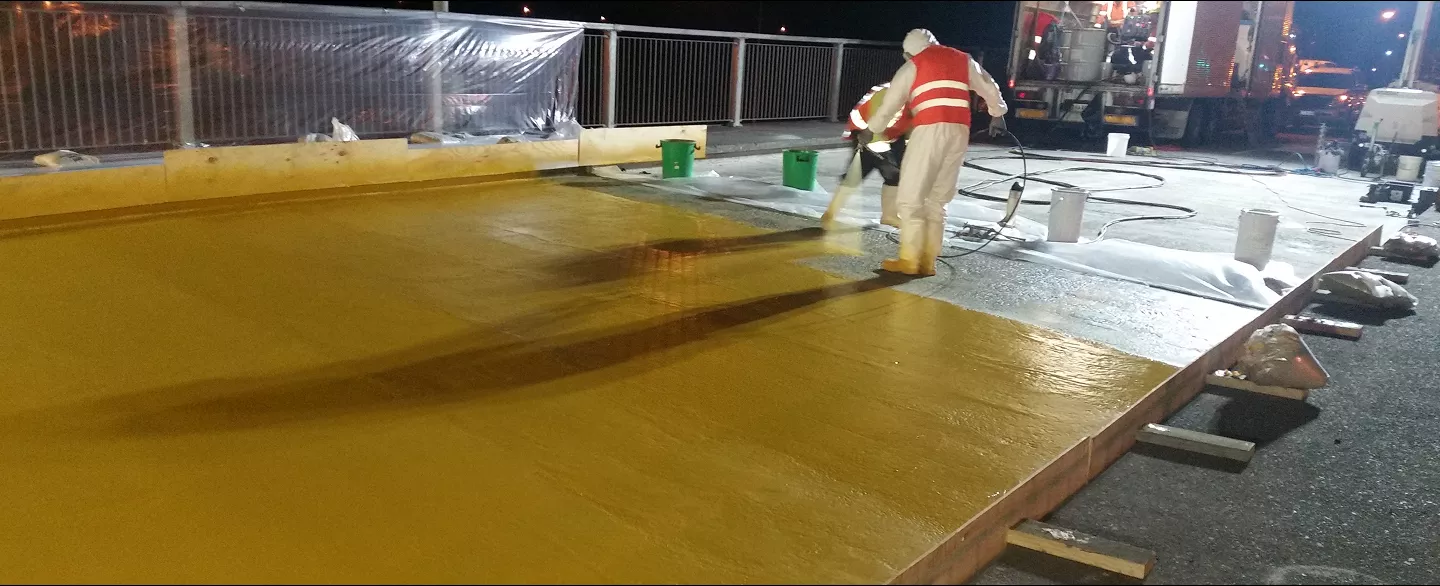
Bridge Deck Waterproofing: Step-by-Step Process
Want to APPLY Polyurea — Not Just Buy It?
Join the fastest-growing segment in the protective coatings industry with ArmorThane’s dealer program.
35+
Years in Business
$350K+
Avg. Annual Revenue
$0
Franchise Fees
100%
Your Business
Explore the Dealer Program
Bridge Deck Waterproofing Specifications & Standards
The codes, test methods and state DOT requirements that govern a compliant installation
AASHTO LRFD Bridge Design Specifications
State DOTs reference the AASHTO LRFD provisions for deck drainage and deck protection when specifying a waterproofing membrane and wearing course on new and rehabilitated decks.
ASTM D7234 — Pull-Off Adhesion
Measures bond strength of the membrane to the concrete substrate. Agency specifications commonly require 200–250 psi minimum, or failure within the concrete itself.
ASTM D4541 — Portable Adhesion Testers
The companion field method used to verify adhesion on the deck after primer and membrane application.
ASTM D7091 — Dry Film Thickness
Non-destructive DFT verification. Spray-applied polyurea deck systems are typically specified at 60–100 mils.
ASTM C1583 — Tensile Strength of Concrete Surfaces
Confirms the prepared substrate is sound enough to accept a membrane after shot blasting, scarifying or hydrodemolition.
ASTM C836 — Crack Bridging Membranes
Defines low-temperature flexibility and crack bridging performance for liquid-applied deck membranes.
FHWA Bridge Preservation Guide
Treats deck waterproofing as a preventive maintenance action that extends service life and defers far more expensive deck replacement.
State DOT Qualified Products Lists
Most state DOTs maintain an approved products list for deck membranes. Confirm QPL status, applicator certification and warranty terms before you bid the work.
Surface profile: CSP 3–5, achieved by shot blasting, scarifying or hydrodemolition.
Substrate moisture: concrete below 5% moisture, verified by ASTM F2170 relative humidity probes or a calcium chloride test.
Primer and tack coat: an epoxy or polyurea-compatible primer applied inside the manufacturer’s recoat window.
Membrane thickness: 60–100 mils of spray-applied polyurea, verified per ASTM D7091.
Crack bridging: the membrane must accommodate deck movement at low temperature per ASTM C836.
Wearing course: broadcast aggregate or an asphalt overlay placed over the cured membrane for skid resistance and abrasion
protection.
Warranty: a written material and workmanship warranty from both the manufacturer and the certified applicator.
Concrete, Steel & Railroad Bridge Decks: How the Spec Changes
Reinforced Concrete Decks
The most common case, and the one where chloride from de-icing salt is the primary threat. The membrane has to act as a true chloride barrier bonded directly to a shot-blasted CSP 3–5 profile. Spray polyurea at 60–100 mils bridges shrinkage and map cracking with no seams or laps to fail.
Orthotropic Steel Decks
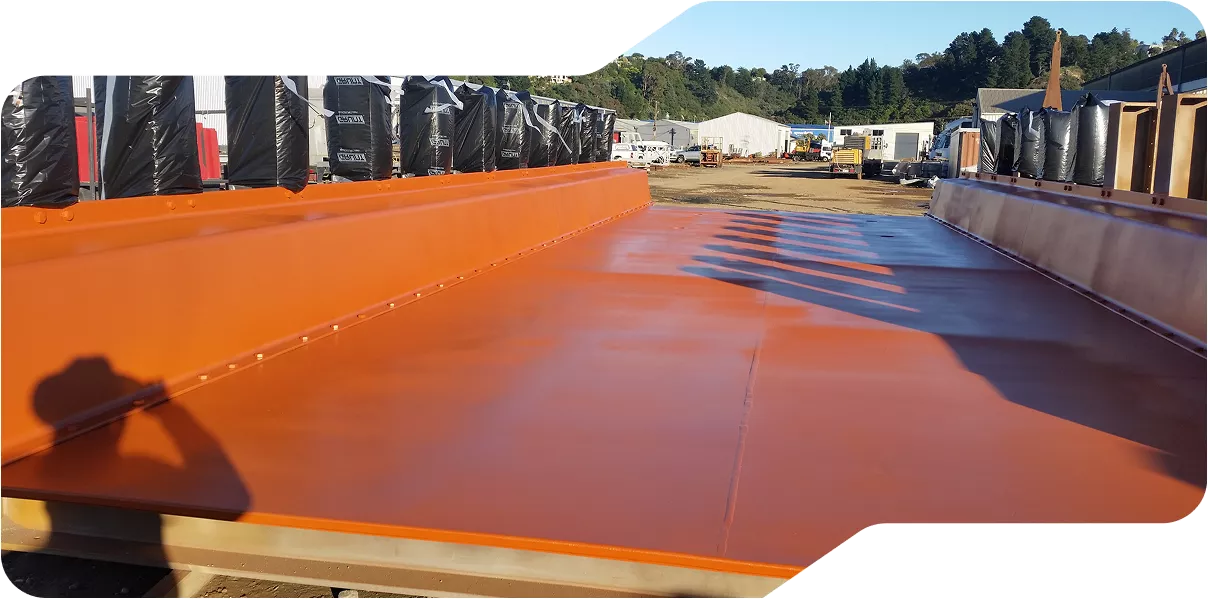
Steel plate decks deflect and move far more than concrete, and they heat rapidly under an asphalt overlay. They need an abrasive-blasted near-white profile, a corrosion-inhibiting primer, and a high-elongation polyurea that tolerates live-load deflection and wide thermal swings without disbonding.
Railroad & Transit Bridge Decks
Railroad bridge deck waterproofing has to survive ballast abrasion, vibration and concentrated point loading under ties. Rigid polyurea at an increased film build protects ballast-deck interfaces, direct-fixation slabs and open-deck spans, and it returns the track to service inside a short maintenance window.
Timber & FRP Composite Decks
Timber and composite decks move with moisture content and temperature. A soft, very high-elongation polyurea with an aggregate broadcast delivers waterproofing and skid resistance at the same time, without cracking along fastener lines or panel joints.
Decks Receiving an Asphalt Overlay
Post-Tensioned & Segmental Decks
Segmental box girders and post-tensioned decks concentrate risk at joints and anchorages, where water intrusion attacks tendons. A seamless spray membrane carried across the joint detail and up the parapet is the only practical way to close those paths.
- The Simple Definition
Rule of thumb: the more the deck moves, the more elongation the membrane needs. The more abrasion the deck sees, the more film build and hardness it needs. Spray-applied polyurea is the only common technology that can be formulated across both extremes with the same equipment and the same day-of-cure schedule.
ArmorThane Bridge Deck Waterproofing Systems
The specific polyurea formulations ArmorThane specifies for deck work, and where each one belongs.
| System | Chemistry | Typical DFT | Elongation | Specified for |
|---|---|---|---|---|
| HighLine 510 CORE | Pure polyurea | 60–100 mils | 300%+ | Primary deck membrane on concrete and steel. Fast set, same-day return to traffic. |
| HardCoat | Rigid polyurea | 80–125 mils | Moderate | Ballast decks, railroad spans and any deck where abrasion resistance governs. |
| SureGrip | Soft polyurea | 60–100 mils | Very high | Moving decks, crack bridging, footbridges and pedestrian structures. |
| ArmorPrime | Primer | 4–8 mils | — | Adhesion promoter on prepared concrete and blast-cleaned steel. |
| Aggregate broadcast | Silica or aluminium oxide | Surface | — | Skid resistance where the membrane is the finished wearing surface. |
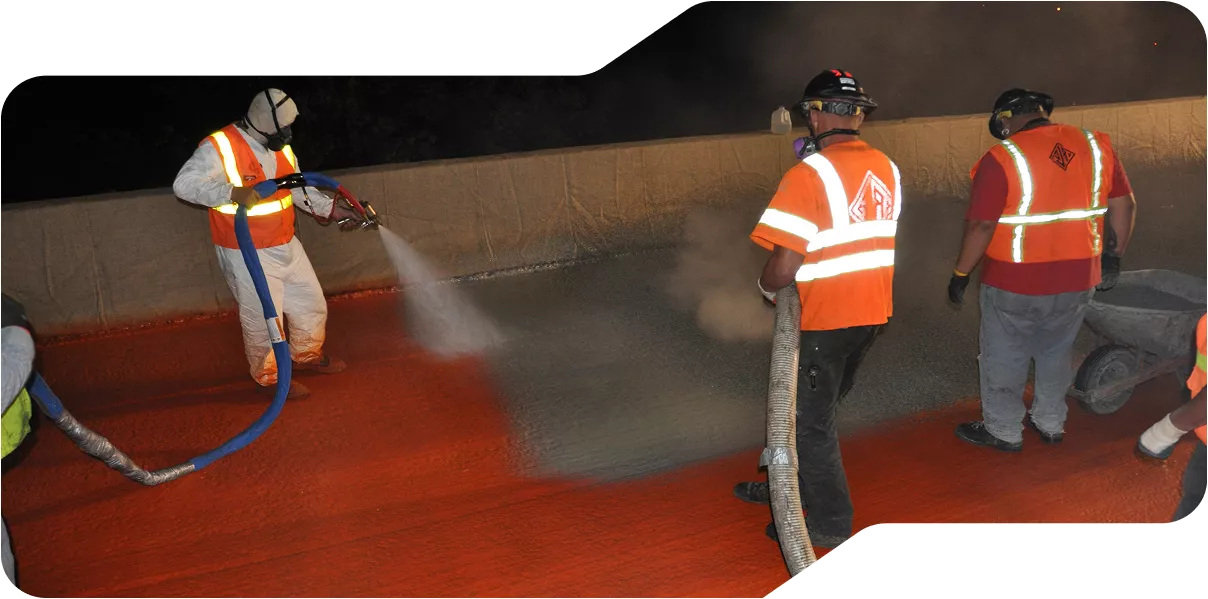
All four products are plural-component, 100% solids and zero VOC, sprayed through the same high-pressure proportioner. That
means one mobilisation, one crew and one certification path can cover the deck, the parapets, the drainage troughs and the
abutments in a single visit.
Polyurea vs the Other Bridge Deck Waterproofing Systems
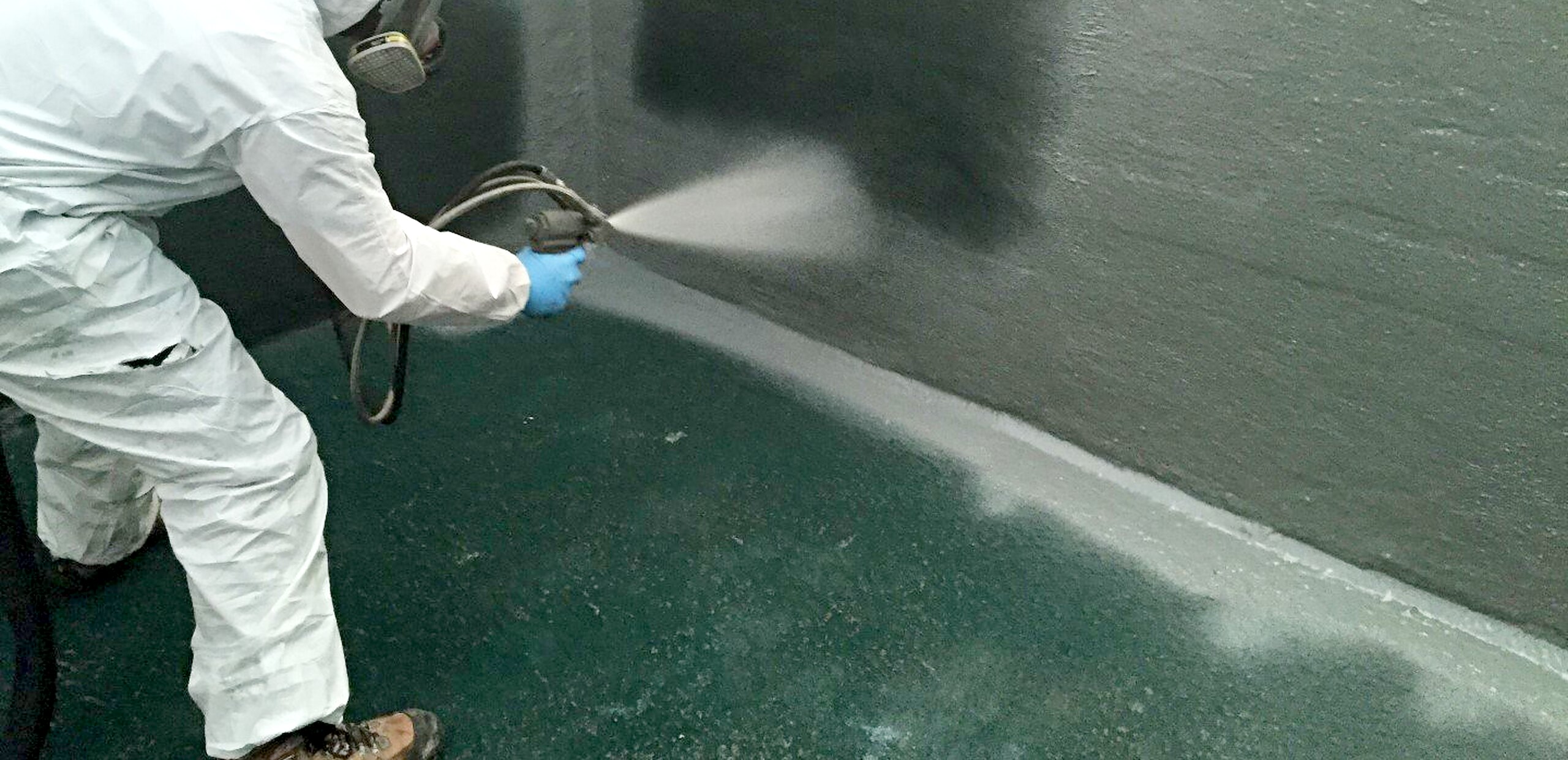
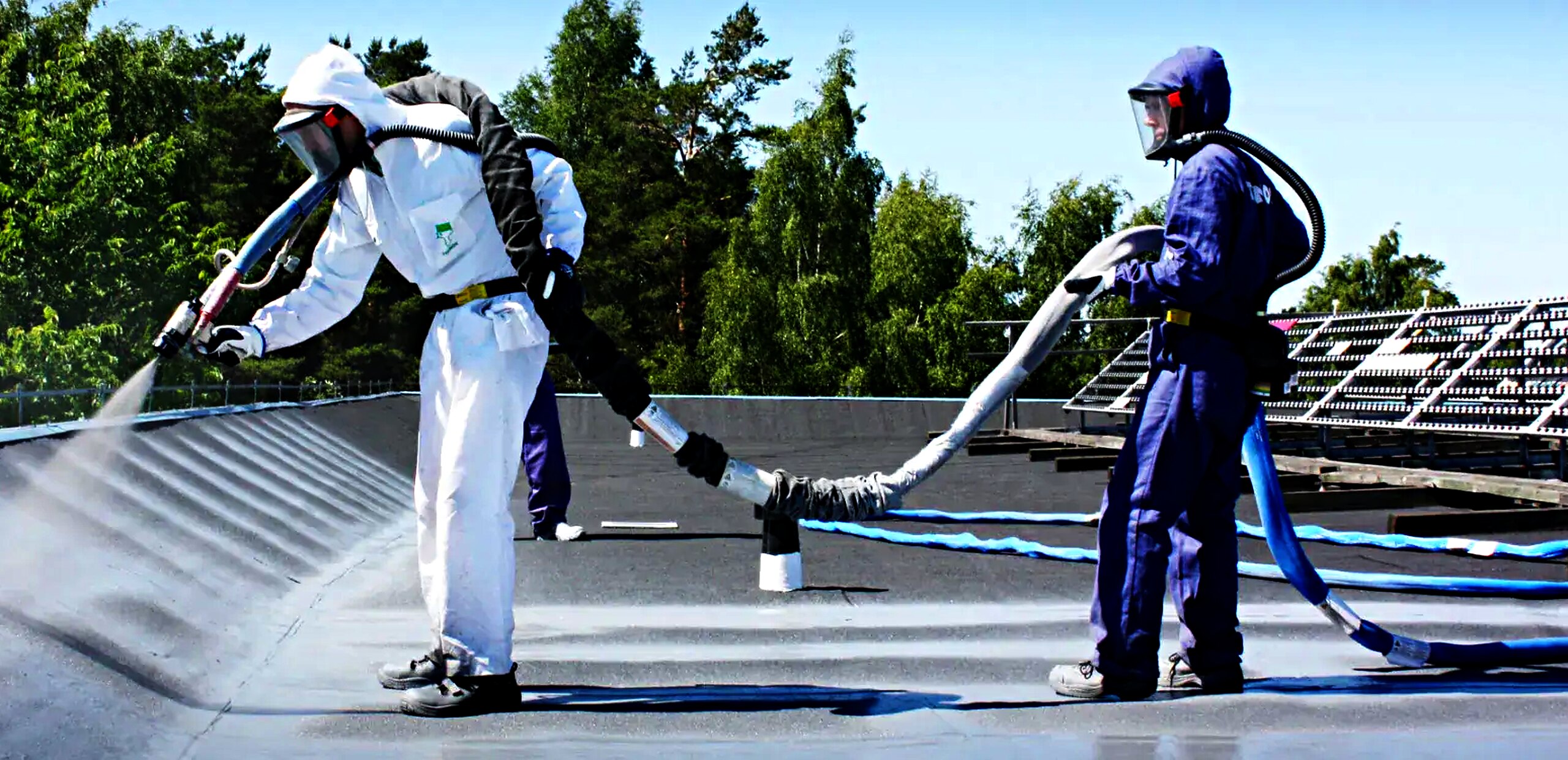
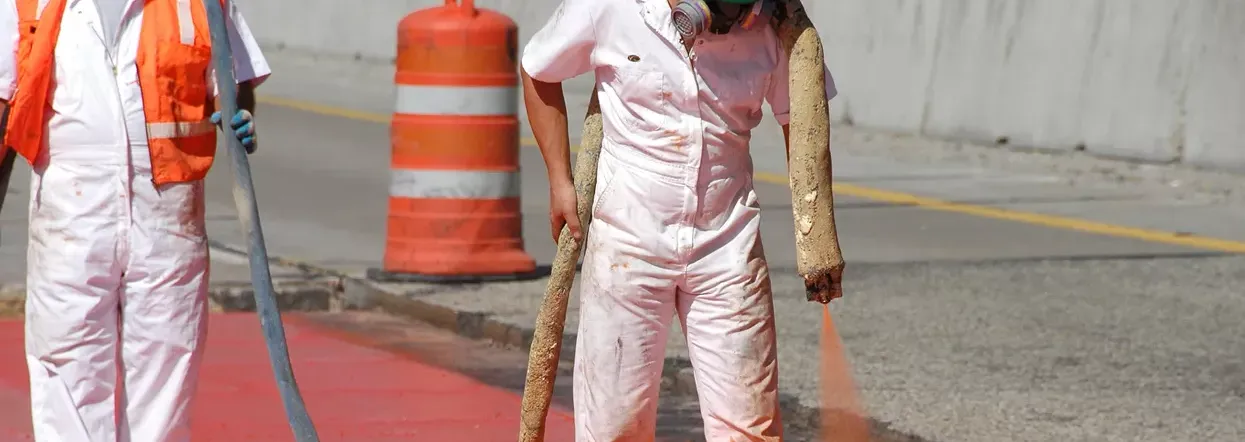
Spray foam insulation’s R-value performance is only as good as the installation. Unlike fiberglass batts that any homeowner can install, spray polyurethane foam requires professional application with specialized plural-component equipment. ArmorThane’s global dealer network brings certified, trained applicators to projects across North America and more than 30 countries.ArmorFoam is a two-component system: an isocyanate A-side and a polyol blend B-side. When the two components meet at the spray gun tip in precise ratio, they react and expand into foam in seconds. Here is what a professional installation looks like:
vs Preformed Sheet Membranes
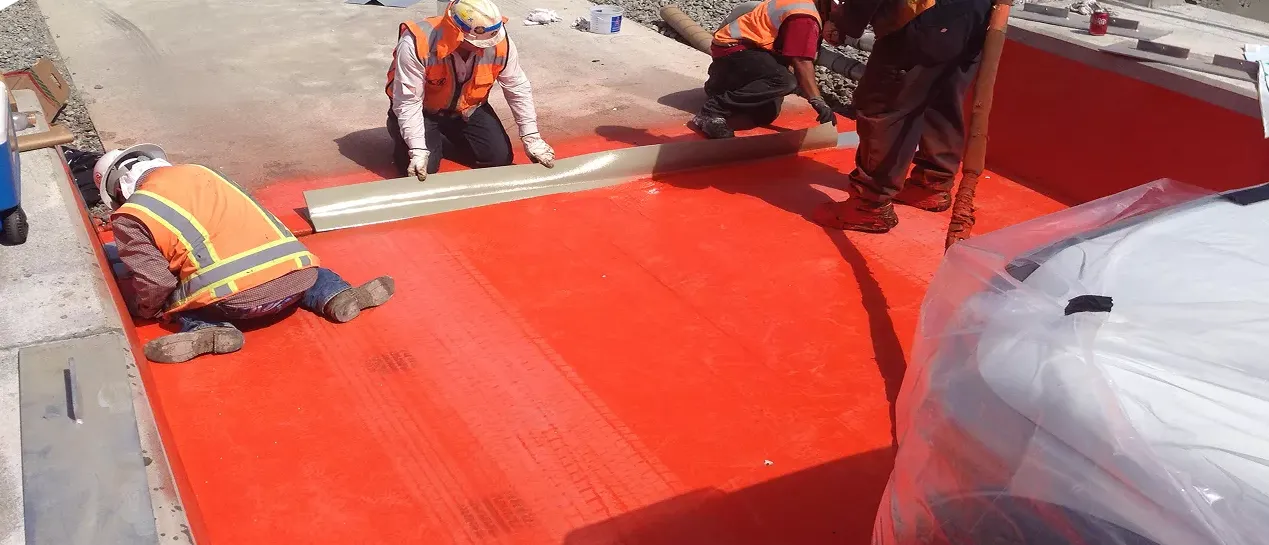
Roll-type self-adhesive sheets around 60–65 mils are proven and easy to inspect, and they remain a sensible choice on clean new-construction decks. But every roll creates laps, and laps are where deck membranes leak. A spray-applied membrane is monolithic and follows drains, scuppers and joint details that sheets have to be cut around.
vs Hot Rubberized Asphalt
Hot rubber is genuinely durable and very flexible, and it is the traditional pairing with an asphalt overlay. The trade-offs are kettle logistics, hot work on the structure, thick build, and much slower installation. Polyurea reaches similar service life without a kettle on the bridge.
vs Methyl Methacrylate (MMA)
MMA cures fast and works in genuinely cold weather, which makes it useful for winter shutdown work. It is also the most expensive option per square foot, has strong odour that constrains urban and enclosed work, and offers less elongation than a soft polyurea.
vs Epoxy Coatings
Epoxy is cheap and hard, but it is rigid: elongation in the 5–10% range cannot bridge a working crack in a deck. On a structure that moves under live load and thermal cycling, epoxy alone typically shows through-cracking well before its nominal service life.
vs Cementitious Systems
Cementitious waterproofing is inexpensive, breathable and chemically compatible with concrete, and it has a place on sheltered substructure elements. On an exposed deck it is brittle, has no meaningful crack-bridging ability and cannot take direct traffic.
vs Polyurethane
Polyurethane is polyurea’s sister chemistry and performs respectably at 12–18 years. It is more moisture-sensitive during cure, cures in hours rather than seconds, and is more prone to blistering when applied to a damp deck. Polyurea was developed specifically to remove those weaknesses.
- ■ Manufacturer-Direct Equipment
So what is the best bridge deck waterproofing? On lifecycle cost, seam risk, crack bridging and time-to-traffic together, spray-applied pure polyurea wins on the majority of highway and rail decks. Hot rubberized asphalt is the strongest alternative under a thick asphalt overlay, sheet membrane is defensible on new construction, and MMA earns its premium when the work has to happen below freezing.
Bridge Deck Waterproofing Contractors: How to Choose One
A deck membrane is only as good as the crew that sprays it. Most premature failures trace back to preparation and application, not to the product.
Check DOT prequalification first
If the structure is publicly owned, the contractor needs to be prequalified with the owning agency and the product needs to appear on that state’s qualified products list. Confirm both before the bid, not after the award.
Ask for manufacturer certification
Plural-component polyurea is applied through heated high-pressure proportioners at tightly controlled ratios and temperatures. Ask to see current manufacturer training certificates for the specific applicators who will be on the deck, and for their rig maintenance records.
Demand documented surface preparation
Insist on written records of the achieved surface profile, substrate moisture readings and chloride testing. A good contractor will offer these without being asked, along with adhesion pull test results after the primer goes down.
Look at comparable deck references
Deck work is not the same as tank lining or bedliner work. Ask for at least three bridge or elevated structure projects of similar scale, with the age of the installation and a contact at the owning agency.
Get the warranty in writing, from both parties
You want a material warranty from the manufacturer and a workmanship warranty from the applicator. A single combined verbal assurance is not a warranty, and it will not help you in year eight.
Plan the traffic window honestly
Polyurea cures in seconds, but preparation and repairs do not. Make the contractor walk you through the full closure schedule stage by stage, including contingency for weather and for hidden delamination found during blasting.Looking for a certified applicator near you? ArmorThane supports a network of trained applicators across the United States, Canada and international markets, and we ship material directly to project sites. Contact us with your location, deck area and substrate and we will connect you with a certified crew or quote the material for your own. See become an applicator if you want to do the work yourself, or jump to the project quote form.
| System | Chemistry | Typical DFT | Elongation | Specified for |
|---|---|---|---|---|
| HighLine 510 CORE | Pure polyurea | 60–100 mils | 300%+ | Primary deck membrane on concrete and steel. Fast set, same-day return to traffic. |
| HardCoat | Rigid polyurea | 80–125 mils | Moderate | Ballast decks, railroad spans and any deck where abrasion resistance governs. |
| SureGrip | Soft polyurea | 60–100 mils | Very high | Moving decks, crack bridging, footbridges and pedestrian structures. |
| ArmorPrime | Primer | 4–8 mils | — | Adhesion promoter on prepared concrete and blast-cleaned steel. |
| Aggregate broadcast | Silica or aluminium oxide | Surface | — | Skid resistance where the membrane is the finished wearing surface. |
Frequently asked questions
How Expensive Is Bridge Deck Waterproofing?
The cost of bridge deck waterproofing depends on several key factors, including the size of the bridge, the type of coating used, and the condition of the surface. Polyurea coatings typically cost $5-$12 per square foot, while budget options like modified bitumen range from $2-$5 per square foot.
Is Bridge Deck Waterproofing Necessary?
While not absolutely necessary, without bridge deck waterproofing, bridges are vulnerable to water intrusion, chemical attack, and freeze-thaw damage that can compromise structural integrity and lead to costly repairs or even catastrophic failure.
What Is The Best Coating For Bridge Deck Waterproofing?
Among the countless coatings technologies available on the market, polyurea stands out as one of the best choices for bridge deck waterproofing due to its exceptional strength, flexibility, rapid cure time, chemical resistance, and 25-30 year lifespan.
How Long Does Bridge Deck Waterproofing Last?
Polyurea coatings typically last 25-30 years with minimal maintenance. Epoxy systems average 8-12 years, polyurethane membranes last 12-18 years, and traditional bituminous membranes perform for 10-15 years.
Can Bridge Deck Waterproofing Be Applied in Cold Weather?
Yes, polyurea is particularly well-suited for cold-weather application because it cures through a chemical reaction rather than evaporation, allowing application in temperatures as low as -30F. Traditional methods typically require temperatures above 50F.
What Is the Difference Between Bridge Deck Waterproofing and Sealing?
Sealers penetrate the concrete surface to reduce moisture absorption but do not create a continuous membrane. Waterproofing systems form a complete barrier membrane over the deck surface that prevents all water penetration, including under hydrostatic pressure.
How Much Does It Cost to Waterproof a Bridge Per Square Foot?
Bridge deck waterproofing costs range from $2 to $14 per square foot depending on the system selected. Polyurea coatings typically cost $5-$12 per square foot installed, but offer the lowest lifecycle cost due to their 25-30 year lifespan.
Does Bridge Deck Waterproofing Improve Skid Resistance?
Yes, polyurea coatings can be formulated with anti-slip additives such as aluminum oxide, quartz, or polymer beads that create a textured surface exceeding ASTM and AASHTO skid resistance requirements.
What Standards Apply to Bridge Deck Waterproofing?
Bridge deck waterproofing is governed by AASHTO LRFD Bridge Design Specifications, ASTM D7234, D4541, D7091 standards for testing, FHWA Bridge Preservation Guide, and various state DOT qualified products lists.
What Is A Bridge Deck Waterproofing Membrane?
A bridge deck waterproofing membrane is a continuous barrier layer installed between the structural deck and the wearing surface to stop water, chlorides and de-icing salts reaching the concrete and its reinforcing steel. Membranes come in two broad families: preformed sheet membranes that are rolled and adhered, and liquid-applied membranes such as spray polyurea, polyurethane, hot rubberized asphalt and methyl methacrylate. Liquid systems are seamless, which removes the lap joints that cause most sheet membrane leaks.
How Do You Waterproof A Steel Bridge Deck?
Orthotropic and plate steel decks are blast-cleaned to a near-white metal profile, primed with a corrosion-inhibiting primer, then coated with a high-elongation polyurea. Steel decks deflect much more than concrete under live load and heat quickly beneath an asphalt overlay, so the membrane has to tolerate both movement and thermal cycling without disbonding. Film build is usually specified at 60 to 100 mils, with extra attention to weld seams, stiffener terminations and drainage details.
How Is Railroad Bridge Deck Waterproofing Different?
Railroad bridge deck waterproofing has to resist ballast abrasion, constant vibration and concentrated point loading under the ties, which is why rigid polyurea at an increased film build is normally specified instead of a soft membrane. Track access windows are also short, so a system that cures in seconds and allows the line to reopen on the same shift is a practical requirement rather than a convenience.
How Long Does A Bridge Have To Be Closed For Waterproofing?
The membrane itself cures in seconds, so the closure is driven by preparation and repairs rather than the coating. A straightforward deck of moderate size is often prepared, primed, sprayed and reopened within one to three days. Concrete repairs, hidden delamination discovered during blasting and weather are the usual sources of extension, which is why staged lane closures are common on larger structures.
Does Bridge Deck Waterproofing Need DOT Approval?
On publicly owned structures, yes. Most state departments of transportation maintain a qualified products list for deck membranes, and the specified system has to appear on it. The applicator normally has to be prequalified with the agency and certified by the coating manufacturer. Confirm product listing, applicator prequalification and warranty terms before the work is bid, because retrofitting compliance after award is expensive.
Can Polyurea Be Used Under An Asphalt Overlay?
Yes. Spray polyurea withstands hot mix placement and paver traffic, which makes it suitable as the waterproofing layer beneath a bituminous wearing course. A tack coat or bond coat is applied over the cured membrane so the asphalt keys into it. Thin epoxy and cementitious systems generally cannot survive hot mix placement, and that is one of the main reasons polyurea and hot rubberized asphalt dominate overlaid deck work.
Polyurea Or Sheet Membrane: Which Is Better For A Bridge Deck?
Sheet membranes are proven, easy to inspect and reasonable on clean new-construction decks, but every roll creates a lap, and laps are the most common leak path in deck waterproofing. Spray polyurea is monolithic, follows drains, scuppers, parapets and joint details without cutting and patching, and typically lasts 25 to 30 years against 15 to 25 for sheet. Sheet still wins where site conditions rule out spray equipment.
Latest news & bLOGS
Find or become an applicator
If you’re looking for expert guidance for your next bridge deck waterproofing project, partnering with ArmorThane can make all the difference.
We’re leaders in the paints and coatings industry, offering a growing catalog of advanced polyurea and polyurethane formulations perfect for bridges, pool decks, roofing, truck beds, and countless other applications.
As full service operators, we can serve as your one-stop shop for all of your coatings needs, whether you need help selecting the best material technology for your unique project, or want experienced professionals to handle your installation from start to finish.
For those of us who just can’t get enough of all things protective coatings, we also offer professional training and certification as well as cost-effective startup packages that include everything you need to start your own coatings business.
So, whether you’re rushing to meet project deadlines, or can’t wait to start your entrepreneurial journey, contact us today to see how we can help!
Contractors who want to add deck work to their services can become an ArmorThane applicator and receive equipment, training and certification in a single package.
More to read on infrastructure
Short reads from ArmorThane on Issuu. Tap one to open it right here.


Start your own coatings business.
Equipment, chemicals, hands-on training and technical support for life, all from one manufacturer that puts its applicators first.
Need a job done?
Tell us where the project is and we’ll connect you with a certified ArmorThane applicator near you.