Skip to content
Polyurea Liner

Polyurea Liner Guide: Spray-On Liners for Ponds, Pits and Tanks

How spray-on polyurea liners work, polyurea over geotextile vs sheet liners like HDPE, EPDM and PVC, and where a seamless polyurea liner is worth it.

Start a protective coatings business

Spray protective coatings for a living.

ArmorThane sets you up to do this work, and you own the business. We make the chemistry, build the rigs, train you hands-on and answer the phone when a job gets difficult. You pay no franchise fee and no royalties. It has been that way since 1989.


ArmorThane Mobile Coatings Unit trailer hitched to a pickup outside the plant Proportioner, A and B material drums and transfer pumps inside the spray rig Applicator in a protective suit holding a plural-component spray gun in a spray booth Proportioner control panel with heater, pressure balance and cycle counter controls

What comes with itProportioners, guns and complete spray rigs. We build them.

$0
franchise fees or royalties
35+
years in business
50+
countries with applicators
24/7
technical support
0 seams
Seams in a sprayed polyurea liner
Spray polyurea
Geotextile
Reinforced liner over prepared soil
Industry practice
Seconds
Gel time: builds on slopes and walls
Product data sheets
Hours
Typical time to return to service
Product data sheets

A polyurea liner is a containment membrane that is sprayed in place instead of rolled out and seamed. It bonds to concrete, steel, wood or a geotextile fabric laid over soil, and cures in seconds into a seamless, puncture-resistant skin. That makes it a strong alternative to sheet liners wherever seams, odd shapes, penetrations or abuse are a problem: ponds, pits, containment, tanks, trenches and truck beds.

Quick answer

A polyurea liner is a spray-applied, seamless elastomeric membrane used to contain water, chemicals, fuel or waste. It can be sprayed directly onto concrete and steel or onto a nonwoven geotextile placed over prepared soil to form a reinforced geomembrane. Compared with HDPE, EPDM or PVC sheet liners, it has no seams, conforms to any shape and resists puncture and abrasion, but costs more per square foot on simple, large, flat areas.

Start here

Where polyurea liners are used

Water

Ponds and water features

Koi ponds, farm ponds and decorative water. See pond liner and koi pond liner.

Containment

Pits and secondary containment

Frac pits, sumps, bund walls and berms. See our secondary containment guide.

Tanks

Tank linings

Steel and concrete tanks. See tank lining and fuel tank liner.

Livestock

Stock tanks and troughs

See stock tank liner.

Vehicles

Truck bedliners

The best-known polyurea liner. See spray-on bedliners.

Industrial

Trenches and channels

Chemical trenches, canals and spillways.

Compare

Polyurea vs sheet liners

FactorSpray polyureaHDPEEPDM / PVC
SeamsNoneWelded seamsTaped or welded seams
Odd shapes and penetrationsEasy, sprays around themDifficultModerate
Puncture and abrasionExcellentGoodFair
Bond to substrateFully bondedLoose laidLoose laid
RepairsSpray patchWeld patchGlue or tape patch
Cost on large simple areasHigherLowerLower
EquipmentPlural-component rigWelding equipmentBasic tools
Typical comparison; project specs govern.
On soil

Polyurea over geotextile

  1. Grade and compact

    Shape the excavation, remove rocks and roots, and compact the subgrade.

  2. Lay geotextile

    Place nonwoven geotextile with overlaps and anchor it in trenches.

  3. Spray

    Spray polyurea in multiple passes to the specified thickness, sealing overlaps and anchors.

  4. Detail

    Seal pipes, penetrations and transitions to concrete.

  5. Test

    Check thickness and inspect for pinholes before filling.

Field noteThe geotextile weight and polyurea thickness should match the use. Livestock, equipment traffic and rock subgrades need heavier fabric and more mils.
Choose

When to pick a polyurea liner

Best fit

Complex shapes

Many corners, steps, pipes and penetrations.

Best fit

Abuse

Livestock, equipment, debris and foot traffic.

Best fit

Bonded containment

Concrete and steel structures that must not leak behind the liner.

Compare

Huge flat areas

Large simple ponds may cost less with sheet liners.

How a Polyurea Liner Is Installed

  1. Inspect and repair. Cracks, holes and soft spots are fixed first. A liner can bridge small cracks, but it cannot fix a failing structure.
  2. Clean and profile. Concrete and steel are blasted or ground so the coating has something to grip. Oil, rust and loose material are removed.
  3. Prepare earthen sites. For ponds and pits dug into soil, the ground is graded and compacted, and a geotextile fabric is laid down to spray onto.
  4. Prime. Porous surfaces get a primer to seal them and stop air from bubbling up through the liner.
  5. Spray to thickness. The crew builds the liner in passes and checks thickness as they go.
  6. Test and return to service. Seams, edges and penetrations are checked before the area is filled or put back into use.

If the liner will hold drinking water, choose a system certified to NSF/ANSI 61. See a real project in building a polyurea koi pond, and read about cistern liner solutions and concrete tank waterproofing.

Ready to price it? See polyurea cost.

Polyurea liners

One seamless liner, no seams to fail.

A certified ArmorThane applicator can line your pond, pit, tank or containment area with spray polyurea.

Contractors: become an ArmorThane applicator

FAQ

Polyurea liner questions

What is a polyurea liner?

A spray-applied, seamless elastomeric membrane used to contain water, chemicals, fuel or waste, applied to concrete, steel or geotextile over soil.

Is polyurea better than an HDPE liner?

Polyurea is seamless, fully bonded and handles complex shapes, penetrations and abuse better. HDPE usually costs less on large, simple, flat areas.

Can polyurea be sprayed on dirt?

Not directly. It is sprayed onto nonwoven geotextile fabric laid over prepared, compacted soil.

How long does a polyurea liner last?

Properly applied polyurea liners commonly last decades, depending on thickness, UV exposure, chemicals and abuse.

Is a polyurea pond liner safe for fish?

Use a fully cured product suitable for aquatic use and follow the manufacturer cure time before adding fish or plants.

AT
Written by the ArmorThane technical team. We have manufactured polyurea, polyurethane and polyaspartic coatings, spray foam and plural-component spray equipment in Springfield, Missouri since 1989. Containment for regulated materials must follow applicable regulations and engineering specifications.

Sources

  1. Geosynthetic Institute resources. geosynthetic-institute.org
  2. Polyurea Development Association resources. pda-online.org
  3. U.S. EPA, Spill Prevention, Control, and Countermeasure (SPCC) rule. epa.gov/oil-spills-prevention-and-preparedness-regulations
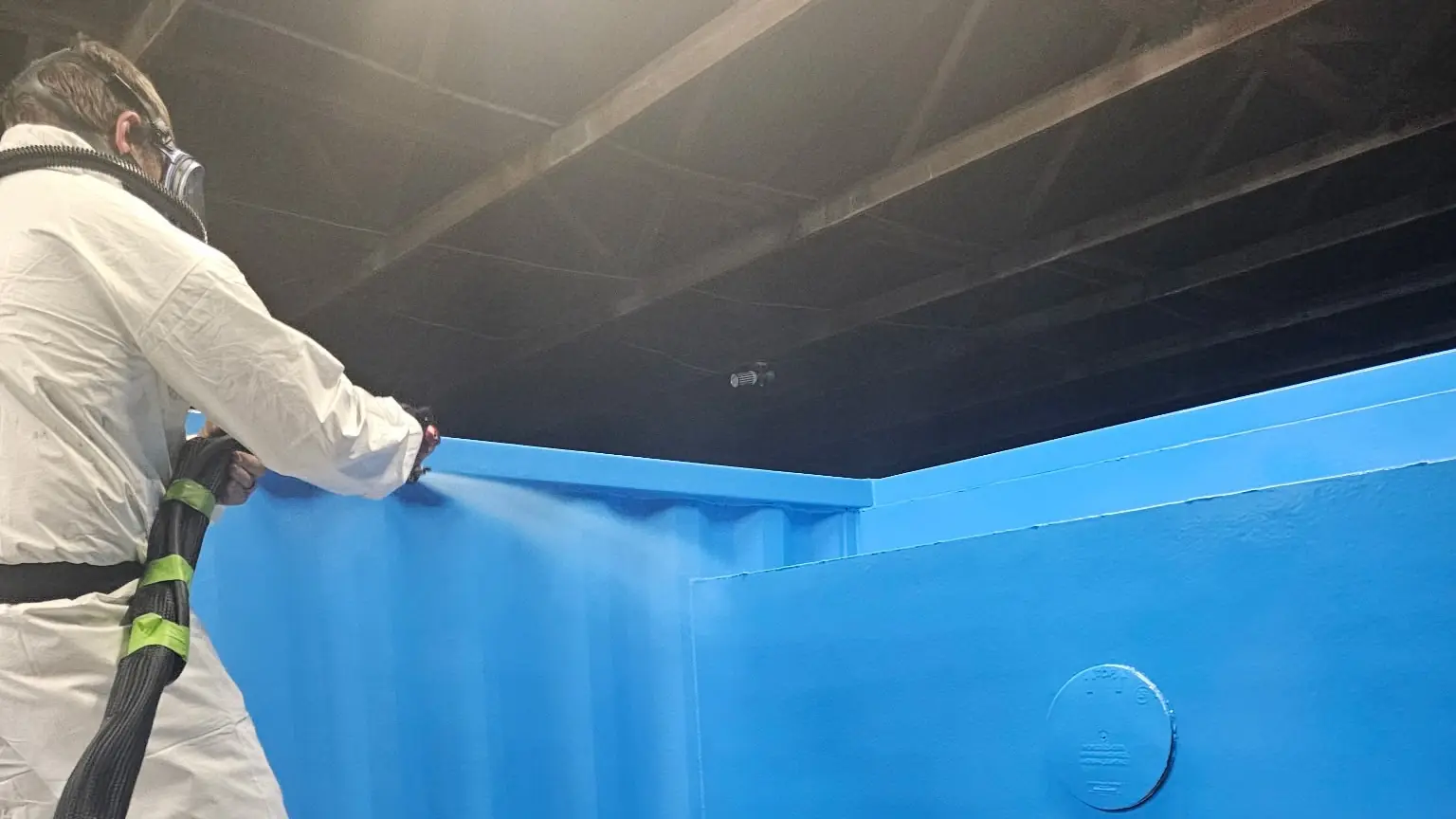
Applicator spraying a blue polyurea lining inside a steel tank
A polyurea liner being sprayed inside a steel tank. The lining is built up in passes to the specified thickness.

Contain it the first time.

Owners get a certified ArmorThane applicator for liners and containment. Contractors can add liner work with our equipment and training, with no franchise fee and no royalties.

United States 417-831-5090 · Canada 780-444-6200
Become an applicator

Pond, pit, tank or containment? Get a seamless liner quoted.

Tell us the size, the surface and what it will hold. We will connect you with a certified applicator.

  • What it will contain
  • Size and shape
  • Concrete, steel or soil
  • Location and access
Step 1 of 3
Become an applicator

Start your coatings business

Choose “becoming an Applicator / Dealer” and add your details. Our team will call you to talk through markets, equipment and budget.

1Choice
2Contact Information
3Location

Rather talk now? (417) 831-5090 · About the opportunity