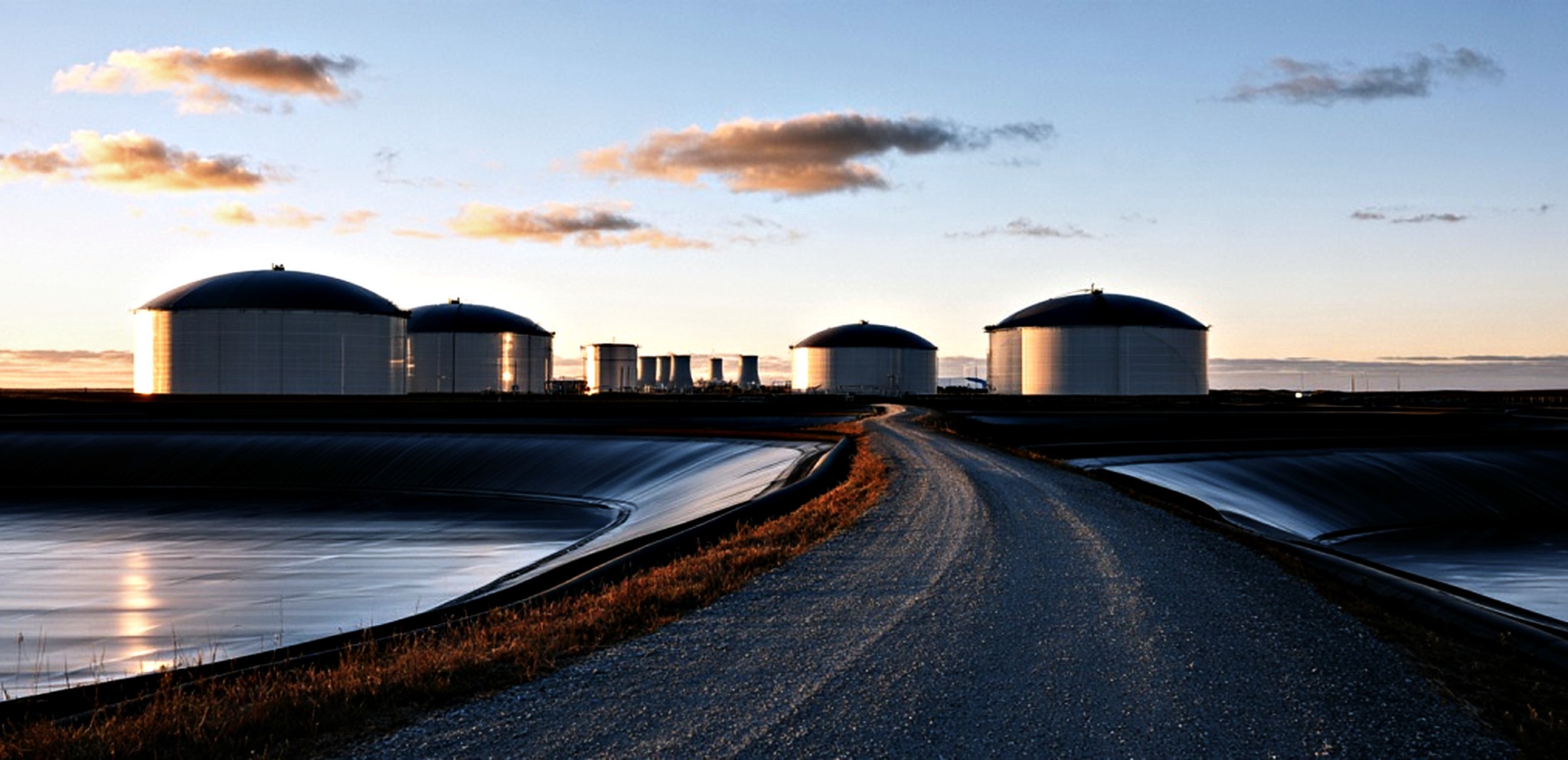
Fuel containment
Fuel storage tanks serve as the backbone of agriculture, construction, and transportation operations across the country. From powering heavy equipment on a job site to keeping a fleet of delivery trucks on the road, these tanks store and distribute the fuel that entire industries depend on daily. But storing large quantities of gasoline, diesel, or other petroleum products carries real risks — and the consequences of a leak or spill go far beyond a costly cleanup. Soil contamination, groundwater pollution, regulatory fines, and long-term environmental damage are all on the line when fuel storage goes wrong. That is exactly why fuel containment matters so much.
Where does a spill go?
A leaking tank is only half the problem. Pick what you store, start the leak, and see what happens on bare concrete compared with a seamless ArmorThane lining.
1Pick what you store
2Run the test
Size it to the rules
Containment is sized to the volume your regulations require, usually based on the largest tank in the area.
Match the lining to the chemical
Ask for chemical resistance data for exactly what you store before choosing a system.
Make it continuous
Pipe penetrations, joints and the wall-to-floor corners are detailed so the lining has no gaps.
Read ArmorThane's secondary containment brochure, or find an ArmorThane applicator near you.
Line containment areas for a living? Become an ArmorThane applicator
Illustration only. What happens on a real job depends on the condition of the surface, the prep and the system an ArmorThane applicator specifies.
A fuel containment system is any engineered method designed to capture, hold, or redirect petroleum products that escape from a primary storage vessel. Under the Environmental Protection Agency’s SPCC (Spill Prevention, Control, and Countermeasure) regulations, any facility that stores more than 1,320 gallons of oil above ground — or more than 42,000 gallons underground — must have a written SPCC plan that includes proper secondary containment. Failing to meet these requirements can result in fines exceeding $50,000 per day of violation, not to mention the liability exposure from an actual spill event.
The right containment system depends on a number of factors: the size and type of fuel being stored, the tank location, the surrounding terrain, local and federal regulatory requirements, and the operational needs of the facility. While traditional concrete and steel containment structures have served the industry for decades, a newer and far more effective technology has emerged — polyurea spray-applied coatings. These advanced polymer systems outperform conventional materials in nearly every measurable category, from chemical resistance and flexibility to speed of application and long-term cost savings.
See how secondary containment is specified for fuel storage, including freeboard and SPCC capacity rules.
Fuel Storage Tank Containment Berms and Barriers
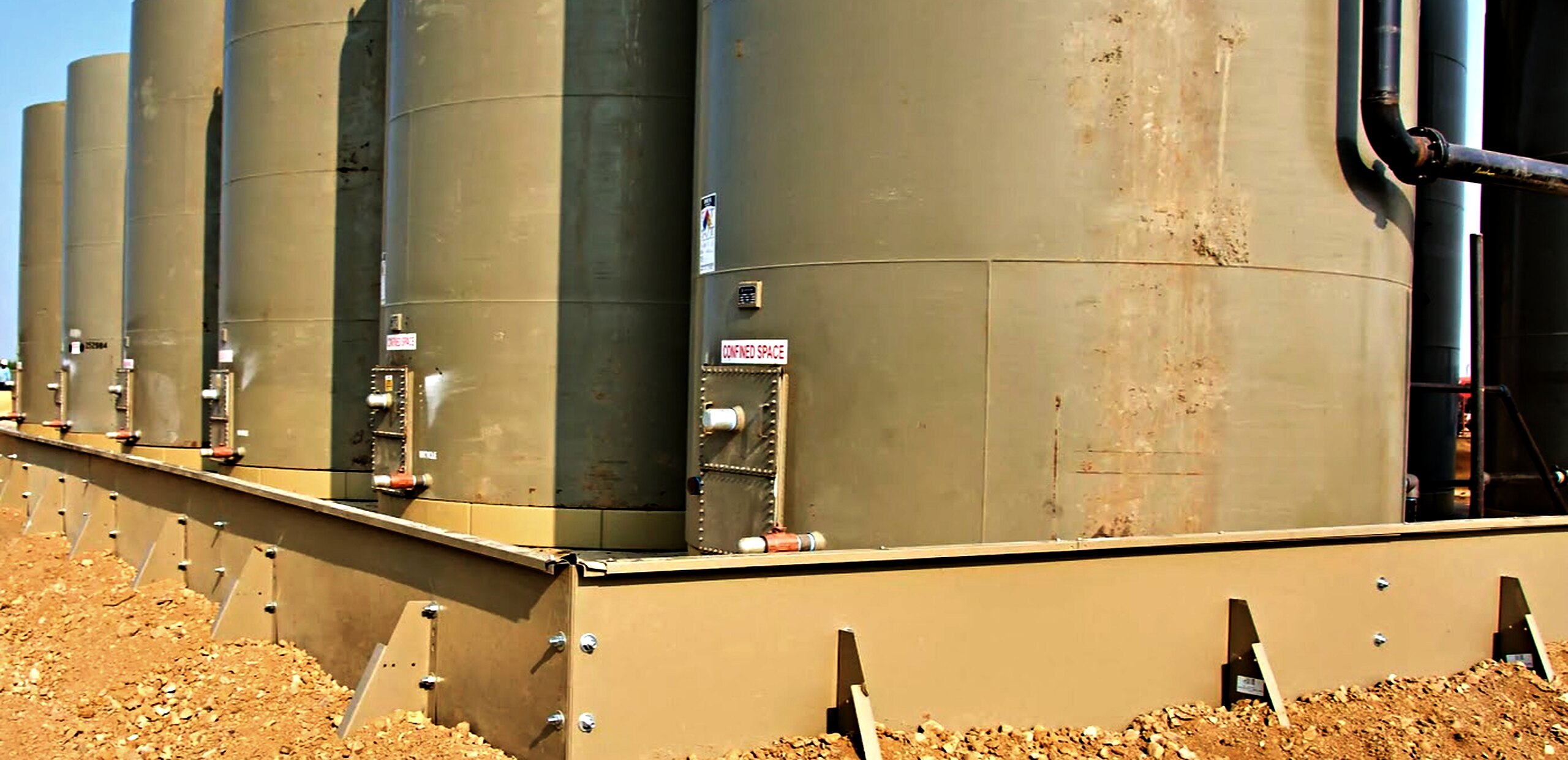
A containment berm is a physical barrier built around a fuel storage tank or group of tanks to catch and hold any fuel that escapes during a leak, spill, or overfill event. These barriers act as a last line of defense between a fuel release and the surrounding soil, waterways, and ecosystems. Federal regulations under the EPA’s Spill Prevention, Control, and Countermeasure (SPCC) rule require secondary containment for facilities that store oil above certain thresholds — and containment berms are one of the most common ways to meet that requirement.
Berms come in several forms. Concrete berms have long been the default choice because of their strength and chemical resistance. They work well as permanent installations around fixed tank farms and refueling stations. Steel berms, on the other hand, offer portability. Field crews and construction teams often favor them because they can be repositioned as project needs change. However, both concrete and steel berms share a common weakness: they crack, corrode, and degrade over time when exposed to petroleum products, UV radiation, and temperature swings.
That is where advanced polymer coatings — specifically polyurea — change the equation. A polyurea-lined containment berm does not crack the way bare concrete does. It resists chemical attack from gasoline, diesel, and jet fuel. And because polyurea cures in seconds and bonds directly to the substrate, it creates a seamless, monolithic barrier with no joints or seams where fuel can find its way through. For any facility serious about long-term fuel containment, a polyurea-coated berm is the most reliable option available today.
Where Fuel Containment Is Required
Fuel is stored almost everywhere: farms, fleet yards, marinas, airports, construction sites, hospitals with standby generators and data centers with backup power. Wherever it sits in aboveground tanks, a leak can reach soil, storm drains and groundwater quickly. That is why fuel storage is one of the most regulated forms of containment. In the United States, facilities above the SPCC thresholds must provide secondary containment for each container sized for the largest tank plus room for rain.
- Generator and day tanks inside buildings, usually in curbed rooms or bunds.
- Aboveground storage tanks in diked areas or on lined pads.
- Fueling and transfer areas, where most small spills actually happen.
- Mobile and temporary tanks on job sites, which need containment that can move with them.
Why Coated Containment Works
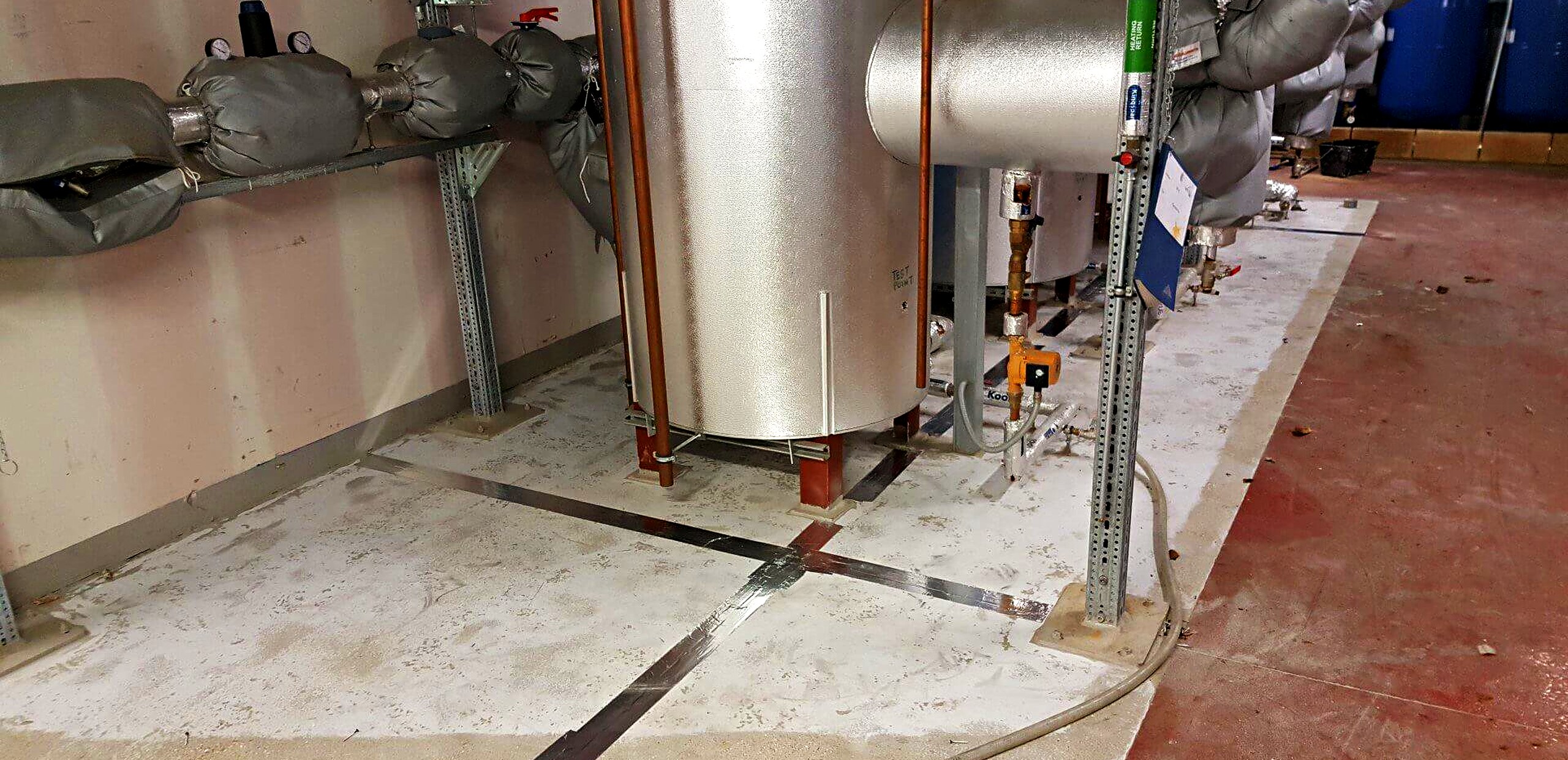
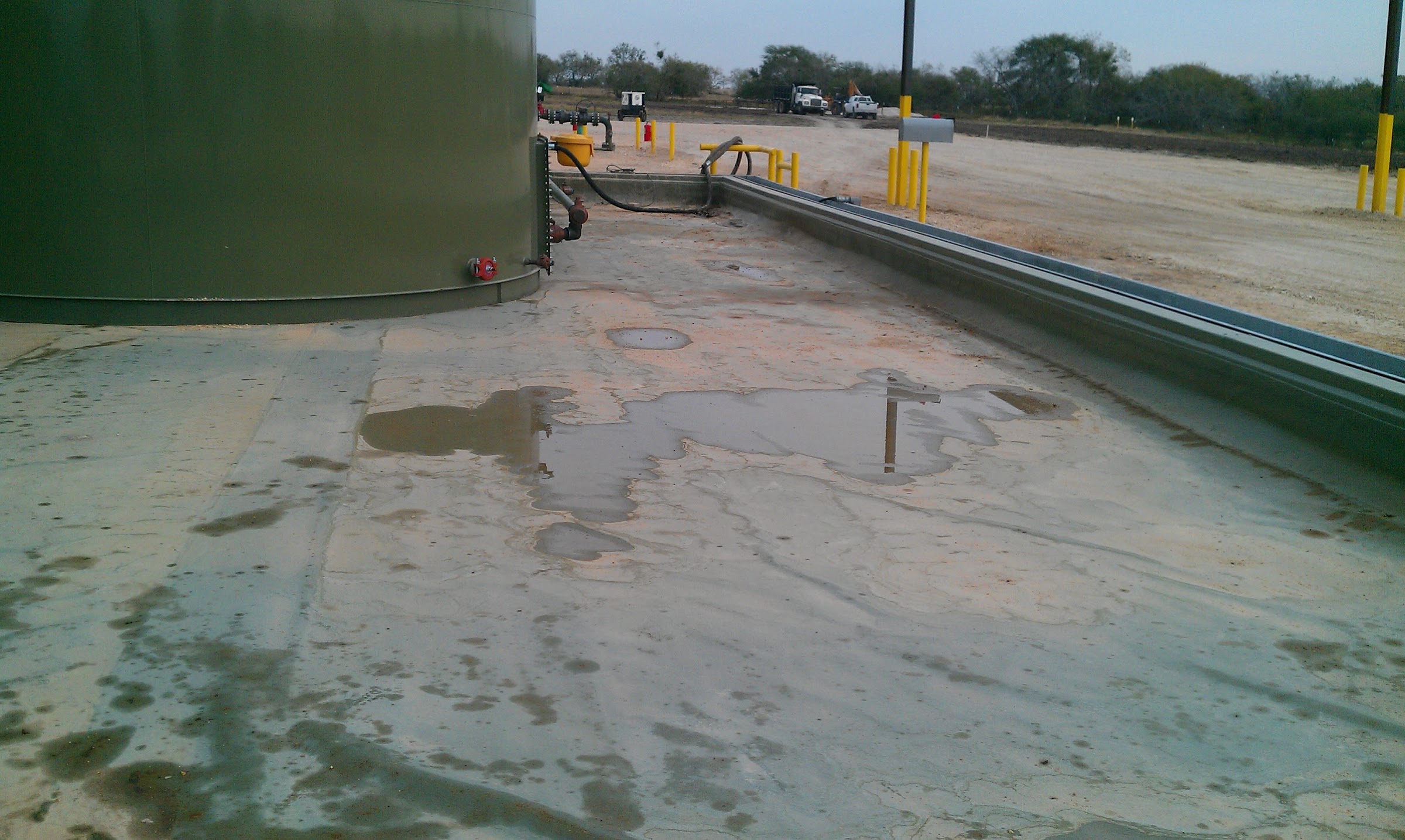
Bare concrete and compacted soil are not liquid-tight. Fuel soaks into concrete, finds cracks and joints, and travels under the slab. A sprayed polyurea lining seals the floor, walls and penetrations in one continuous membrane that resists gasoline, diesel and jet fuel. It also cures fast, so containment can be lined or repaired without a long shutdown.
Regular inspection keeps the system working. Look for standing water that reduces capacity, damage from vehicles and equipment, and any staining that suggests a leak. Small areas can be cleaned and recoated before they become a compliance problem. For related work, see storage tank containment, spill containment berms and polyurea spill containment.

Why choose ArmorThane polyurea for fuel containment coatings?
Not every coating can handle the harsh reality inside and around a fuel storage tank. Constant chemical exposure, wide temperature swings, UV degradation, and mechanical stress push ordinary linings to their limits within a few years. ArmorThane polyurea coatings were engineered specifically for these punishing conditions — and after decades of proven performance across thousands of installations, they remain the industry benchmark for fuel containment protection.
Unmatched Durability That Outlasts Traditional Coatings
Fuel storage tanks endure some of the harshest conditions imaginable. They sit in direct sunlight, freeze through winter nights, bake through summer heat, and face constant contact with corrosive petroleum chemicals. Standard epoxy or paint-based linings often crack, peel, or blister within just a few years under these stresses — leaving the tank exposed and the owner facing expensive re-coating bills.
ArmorThane polyurea coatings take a fundamentally different approach. The molecular structure of polyurea gives it exceptional elongation and tensile strength, meaning it flexes with the tank as temperatures change instead of cracking. It resists abrasion from fuel flow and mechanical cleaning, shrugs off impact damage, and maintains its protective bond for years without degradation. Facilities that switch to ArmorThane typically see maintenance costs drop dramatically because the coating simply does not fail the way traditional systems do.
Superior Corrosion Resistance for Long-Term Tank Protection
Corrosion is the silent killer of fuel storage infrastructure. When moisture, oxygen, and fuel vapors interact with bare or poorly coated metal surfaces, rust and chemical corrosion eat through tank walls from the inside out. A single pinhole breach can lead to thousands of gallons of lost product, massive cleanup costs, and regulatory penalties under EPA and state environmental laws.
ArmorThane fuel containment coatings form an impervious chemical barrier that isolates metal surfaces from every corrosive agent in the fuel storage environment. Whether the tank holds gasoline, diesel, biodiesel, ethanol blends, or aviation fuel, the polyurea membrane prevents direct contact between the fuel and the tank substrate. This does more than stop rust — it preserves the structural integrity of the entire tank, extends its operational life by years, and virtually eliminates the risk of corrosion-driven leaks reaching the soil or groundwater.
Customizable Fuel Containment Solutions for Every Application
No two fuel storage setups are identical. A 500-gallon farm diesel tank sitting on a gravel pad has very different containment needs than a 50,000-gallon above-ground petroleum terminal surrounded by a concrete dike. Tank shape, fuel type, climate exposure, substrate material, and regulatory requirements all factor into which coating system will deliver the best results.
ArmorThane offers a full range of polyurea and polyurethane formulations that trained applicators can tailor to the specific demands of each project. Thin-film spray coatings work well for interior tank linings where space is tight, while thicker build-up systems provide heavy-duty impact and abrasion resistance for exterior containment berms and secondary structures. Color options, texture profiles, and cure speeds can all be adjusted to match the installation timeline and performance goals of the facility. This flexibility means every client gets a containment solution that actually fits their operation — not a generic product forced into the wrong application.
Environmentally Responsible Coatings with Zero VOCs
Environmental compliance is no longer optional for fuel storage operators. The EPA, state environmental agencies, and local authorities all hold facility owners accountable for preventing fuel releases — and increasingly, they also scrutinize the materials used in containment systems themselves. Solvent-based coatings that release volatile organic compounds (VOCs) during application contribute to air pollution and create health hazards for workers and nearby communities.
ArmorThane containment coatings are formulated with zero or near-zero VOC content, making them one of the cleanest protective coating options on the market. They cure almost instantly after spraying, which minimizes airborne exposure and allows coated areas to return to service the same day. For companies that take their environmental responsibilities seriously — and for those that want to demonstrate that commitment to regulators, customers, and the public — choosing a low-VOC polyurea system is a meaningful step toward greener operations without compromising protection.
Contact US now
Ready to protect your fuel storage tanks with the most advanced containment coatings in the industry? Whether you need a polyurea lining for a single farm tank or a full secondary containment system for a commercial fuel terminal, ArmorThane has the products and expertise to get the job done right. Call us at 800.227.2905 or fill out the form below to speak with a fuel containment specialist today.
More to read on containment
Short reads from ArmorThane on Issuu. Tap one to open it right here.
 Quick readFuel Storage Safety: ArmorThane’s Containment Basin Resurfacing
- Quick readWhy Containment Floors Fail & How HighLine 510 Stops It
- Quick readPolyurea Containment Mats – Spray-Applied Spill Control for Industrial Jobsites
- Quick readSpills Will Happen, But Spread Doesn’t Need To: Spill Containment Coatings