




TPO Roofing: Cost, Lifespan & Restore or Replace
See what a TPO roof costs installed, how long it lasts, where it leaks, and whether yours should be repaired, coated or replaced.
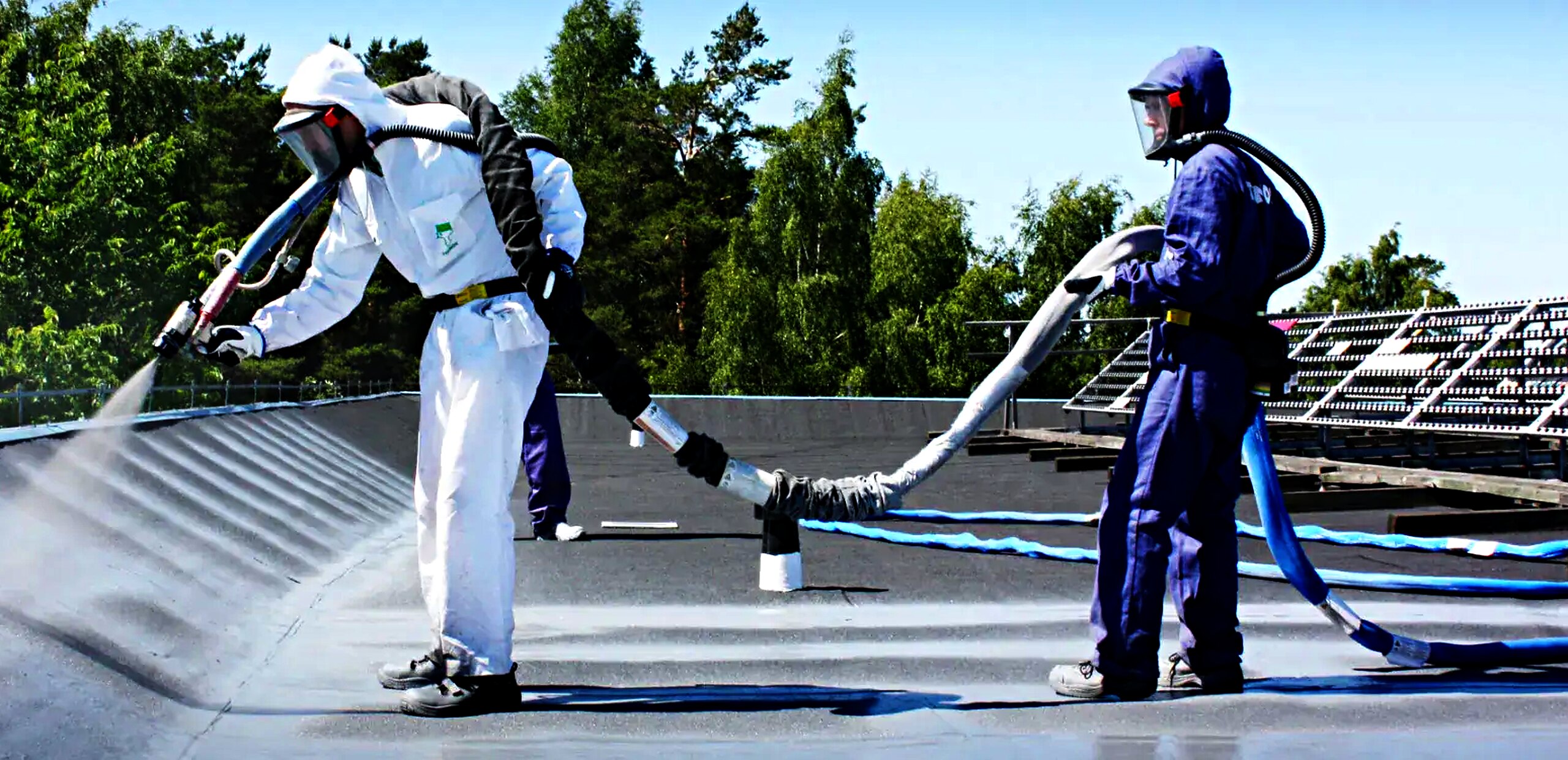
Spray roofs for a living.
ArmorThane is the one-stop shop for applicators. We make the chemistry, build the equipment, train you hands-on and back you with technical support, with no franchise fees and no royalties. Applicators have come first here since 1989.
- $0franchise fees or royalties
- 35+years in business
- 50+countries with applicators
- 24/7technical support
TPO is the bright white sheet on a lot of warehouses, retail boxes and office buildings. It's priced well, reflects the sun and heat-welds at the seams. It also tends to look fine from the parking lot while a seam, a corner or a low spot lets water into the insulation. Here's what you're paying for, where TPO fails, and how to choose between a repair, a coating restoration and a new roof.
TPO (thermoplastic polyolefin) is a white single-ply membrane with hot-air welded seams. This Old House puts it at $4 to $10 per square foot installed; HomeAdvisor reports $4 to $14 with an $8.75 average. Expect 15 to 30 years. If an aging TPO roof is still dry underneath, a coating restoration at roughly $1 to $4 per square foot can push the tear-off back, but only with a TPO primer and a passed adhesion test. TPO roofing has become the most common single-ply choice for new commercial roofs because it is affordable, reflective and heat-welded at the seams. Like any membrane, TPO roofing ages, and seams, flashings and the top surface wear first. Knowing how TPO roofing fails is the first step to deciding whether to repair, coat or replace it, and our TPO roof waterproofing guide covers the coating option.
TPO roof help near you, matched by ZIP
Most TPO questions start with a leak or a replacement bid that made someone wince. Tell us about the building, and the nearest certified ArmorThane applicator can walk the roof, check it for moisture and tell you in writing whether it's a restoration candidate.
Request a TPO roof assessment
Enter your ZIP or postal code and a few details. We route the request to the nearest certified ArmorThane applicator; nothing is shared with anyone else.
Enter your ZIP or postal code and we'll route your request to the nearest certified ArmorThane applicator.
Rather talk it through? Call (417) 831-5090. In Canada, ArmorThane Coatings, Inc. is at 780-444-6200.
What TPO stands for and how it goes on
TPO stands for thermoplastic polyolefin. It's a single-ply membrane: one factory-made sheet with a fabric scrim between two plies, rolled out over insulation board and joined at the laps with hot air. Because it's a thermoplastic, the edges soften with heat and fuse as they cool, so a good weld turns two sheets into one.
The sheet is the easy part. Whether a TPO roof reaches the top of its life range comes down to how it's held down, how the seams are welded and how the edges, curbs and drains are flashed. There are three ways to attach it.
Mechanically fastened
Screws and plates fasten each lap to the deck, and the next sheet is welded over the fastener row. It's fast and economical, but the membrane is held in rows, so wind makes it billow, and years of flutter work on seams and fasteners.
Fully adhered
The sheet is glued to the insulation or cover board across its whole surface. No billowing and better wind resistance in the field, at a higher labor and material cost. Adhesives are sensitive to temperature and dew point.
Induction welded
Coated plates hold the insulation down, the sheet goes over them, and an induction tool heats each plate from above so it bonds to the underside. The field is held without a fastener through the membrane; the laps are still hot-air welded.
Seams are where quality shows
Robotic welders handle long runs and hand guns the details. Good crews test-weld every morning and probe every seam. Cold welds peel later; overheated ones weaken the sheet at the lap edge.
Pros and cons
Strengths
- Energy efficient: the white surface reflects heat
- Resists heat, UV and oxidation; flexible and lightweight
- Fire resistant
- Holds up to oil and grease
- Easy to maintain, with welded rather than taped seams
Per This Old House, June 2026.
Weak spots
- Plain look
- A shorter track record than older flat roof systems
- Weld quality depends on the crew
- Hand-flashed details are vulnerable
- Hard to coat without a TPO-specific primer
What a TPO roof costs installed
Published 2026 ranges agree on the low end and split on the high end. This Old House, drawing on HomeGuide and Angi data, puts TPO at $4 to $10 per square foot installed, about $10,700 for a 1,500-square-foot roof. HomeAdvisor runs $4 to $14 with an $8.75 average. Insulation, penetrations and access push a job toward the top.
| Roof size | New TPO at $4–$10 | HomeAdvisor top end ($14) | Coating restoration at $1–$4 |
|---|---|---|---|
| 1,500 sq ft | $6,000–$15,000 | Up to $21,000 | $1,500–$6,000 |
| 5,000 sq ft | $20,000–$50,000 | Up to $70,000 | $5,000–$20,000 |
| 10,000 sq ft | $40,000–$100,000 | Up to $140,000 | $10,000–$40,000 |
| 25,000 sq ft | $100,000–$250,000 | Up to $350,000 | $25,000–$100,000 |
| 50,000 sq ft | $200,000–$500,000 | Up to $700,000 | $50,000–$200,000 |
What moves a TPO bid
- Tear-off. Removing the old roof and prepping the deck adds $1 to $4 per sq ft in Angi's single-ply breakdown, plus any wet insulation found.
- Insulation. New board adds about $0.50 to $3 per sq ft (Angi).
- Thickness. 60 and 80 mil sheets cost more than 45 mil and leave more material over the scrim as they weather.
- Attachment. Fully adhered costs more than mechanically fastened.
- Details. Every curb, drain and pipe is hand work, so a crowded roof costs more per foot.
- Permits and access. Angi lists permits at $250 to $500; cranes and occupied buildings add more.
On homes and small buildings, HomeAdvisor puts a typical flat roof replacement at $3,331 to $11,558 in total, averaging $7,433.
Where TPO roofs actually leak
Leaks on TPO almost always start at a detail, not mid-sheet. Walk the roof with this list.
Laps opening from the edge
Cold welds, dirt in the lap and wind flutter open seams from the edge, and a seam probe finds them. Aged TPO doesn't always take a fresh weld, so a crew should test-weld first or strip the lap in with a cover strip.
Corners, curbs and pipe boots
Cut and welded by hand, so they're the weak link on many roofs. Look for split corners, loose termination bars, dried sealant at wall flashings and empty pitch pans.
Ponding water
Water still sitting a couple of days after rain collects dirt, grows algae and works on nearby seams. Fix the slope or drains first; see our ponding water guide.
Punctures
Tools, service traffic, hail and debris punch through. Water from one hole can spread under the sheet across a lot of insulation before a stain shows inside. Walkway pads to rooftop units are cheap insurance.
Perimeter and fasteners
Wind loads peak at corners and edges. Look for plates showing through, fasteners backing out and loose edge metal, and fix lifted perimeters first.
A worn top ply
The top ply wears thinner every year. Once the scrim shows, the sheet is near the end of its life: restore it while it's dry, or budget for replacement.
Repair, restore or replace?
Three very different jobs all get sold as fixing the roof. Knowing which one you need is where the savings are.
| Option | When it fits | What the job includes | Typical cost |
|---|---|---|---|
| Repair | A few known leaks; roof otherwise sound and dry | Reweld seams, rebuild flashings, patch punctures | About $400 for an average flat roof repair (HomeAdvisor) |
| Restore | Dry insulation, attachment holding, membrane weathered or aging | Moisture survey, wet areas out, repairs, primer, adhesion test, coating to spec | $1–$4 per sq ft; $4.50–$8+ when repair-heavy (HomeGuide 2026 via ArmorThane) |
| Replace | Widespread wet insulation, failing attachment, deck damage, worn-out sheet | Tear-off, new insulation, new membrane and flashings | $4–$10 per sq ft (This Old House); $4–$14 (HomeAdvisor) |
It's tuned to TPO, so it asks about sheet thickness and how many roofs are on the deck.
Replace or restore your TPO roof?
Replacement: This Old House's $4–$10 per sq ft (HomeAdvisor's $14 top end for reference), plus $1–$4 tear-off when two or more roofs are on the deck (Angi). Restoration: $1–$4 per sq ft when dry; wet area at the replacement rate and the rest at the $4.50–$8 repair-heavy band (HomeGuide 2026 via ArmorThane). The verdict is a rule of thumb; a moisture survey and an adhesion test settle a real roof.
Want the coating numbers by system? See the roof coating cost guide.
Coating TPO the right way
TPO is made to shed things, and its slick, low-surface-energy face sheds coatings too. Skip the primer on a weathered sheet and the coating can peel off in sheets within a few seasons. Done properly, a coating gives the membrane a new weathering surface and buys years before a tear-off. A restoration bid should show this order of work.
Survey for moisture
Infrared, meter readings and core cuts, with wet areas marked on a plan you keep.
Cut out the wet areas
Wet board and the membrane over it come out; dry insulation and new welded TPO go in.
Fix seams, flashings and fasteners
Laps rewelded or stripped in, corners rebuilt, edge metal secured. A coating is not a seam repair.
Clean and dry the membrane
Dirt, chalking and growth come off with a TPO-compatible cleaner, and the roof dries fully.
Prime with a TPO primer
A membrane-specific primer lets the coating bond to a polyolefin. The bid should name the one the coating maker specifies for TPO.
Pass an adhesion test
Patches on several areas cure and get pulled before the full job. If they fail, the prep or the system changes.
Reinforce, then coat to thickness
Seams and penetrations get fabric or a detail coat, then the field goes on at the specified dry mils, checked with a gauge.
Sprayed polyurea
Thick, seamless and tough under foot traffic and hail. See polyurea roof coating and ArmorSeal 100 AL.
Questions to ask a TPO roofer
Ask every contractor the same questions and the bids get easy to compare.
| Ask | A good answer | Red flag |
|---|---|---|
| Did you run a moisture survey? Can I see the map? | Readings confirmed with cores, wet areas on a plan | "It looks dry from up here" |
| What thickness, attachment and insulation are you quoting? | Mils, attachment, board type and thickness in writing | "Standard TPO" |
| How is wet insulation found mid-job billed? | A unit price per board or per sq ft in the contract | "We'll work it out later" |
| Why replace instead of restore? | Specific findings: wet share, attachment, deck | Restoration never came up |
| Which primer, and how will you test adhesion? | A named TPO primer and test patch locations | Coating goes straight on |
| Who stands behind the warranty, and what voids it? | The holder's name and maintenance terms in writing | Verbal promises only |
For small fixes, see flat roof repair. For comparing coating bids, see our roof coating contractors guide.
Still dry under there? Restore it while it is.
A certified ArmorThane applicator near you can survey the roof, test adhesion on your membrane and put the system, thickness and price in writing.
Roofing contractor? Add coatings to your crew
TPO roofing questions
What does TPO stand for?
TPO stands for thermoplastic polyolefin. It's a single-ply roofing membrane, usually white, reinforced with a fabric scrim and joined at the seams with hot air rather than glue or tape.
How much does a TPO roof cost?
This Old House puts TPO at $4 to $10 per square foot installed, or about $10,700 for a 1,500-square-foot roof. HomeAdvisor reports $4 to $14 with an $8.75 average. Tear-off, insulation, thickness and penetrations decide where your roof lands.
How long does a TPO roof last?
This Old House gives a typical lifespan of 15 to 30 years. Seam welds, flashings, drainage, rooftop traffic and climate decide where in that range a roof ends up.
Can you coat a TPO roof?
Yes, if the roof is dry underneath and the membrane is still attached. It has to be cleaned, primed with a TPO primer and pass an adhesion test first. Most coating restorations cost $1 to $4 per square foot installed.
Should I repair, restore or replace my TPO roof?
Repair a few leaks on a sound roof. Restore with a coating when the membrane is aging but the insulation is dry. Replace when much of the insulation is wet, the attachment is failing or the deck is damaged. A moisture survey tells you which case you're in.
How do I find a TPO roof contractor near me?
Use the ZIP tool on this page. Your request goes to the nearest certified ArmorThane applicator, who can survey the roof and quote a restoration in writing. You can also call ArmorThane at (417) 831-5090.
Sources
- This Old House, "TPO Roofing" (updated June 5, 2026). thisoldhouse.com
- HomeAdvisor, "Flat Roof Cost" (updated June 20, 2026). homeadvisor.com
- Angi, "PVC Roofing Cost" (updated July 9, 2026), for single-ply tear-off, insulation and permit costs. angi.com
- ArmorThane, Roof coating cost guide (HomeGuide 2026 data). armorthane.com/roof-coating-cost
Don't tear off a roof you can restore.
Certified ArmorThane applicators survey TPO roofs for moisture, test adhesion and spray restoration systems when the roof is a good candidate. Ask for the findings in writing.
 Read it
Protective Roof Coatings & Leak Repair
Flip through the whole brochure right here, or open it full screen on Issuu to share it.
Start your coatings business with ArmorThane.
Tell us what you want to spray and where you are. An ArmorThane specialist will walk you through the equipment, chemicals, training and startup cost for the work you want to do.
- Equipment package matched to your applications
- Hands-on training and applicator certification
- Technical support once you are spraying
Aging TPO roof? Find out if it can be restored.
Tell us about the building and the roof. We'll route your request to the nearest certified ArmorThane applicator, who can check it for moisture and quote a restoration in writing.
- Roof size, even a rough number
- Roof age and sheet thickness, if known
- Where it leaks or ponds
- Building ZIP or postal code
More to read on roofing
Short reads from ArmorThane on Issuu. Tap one to open it right here.