Ponding Water on Flat Roof Decks: Causes, Weight and Fixes
When standing water counts as ponding, why it collects, how much load it puts on the deck and which fixes actually move the water off the roof.
Coat decks and pools for a living.
ArmorThane is the one-stop shop for applicators. We make the chemistry, build the equipment, train you hands-on and back you with technical support, with no franchise fees and no royalties. Applicators have come first here since 1989.
- $0franchise fees or royalties
- 35+years in business
- 50+countries with applicators
- 24/7technical support
Ponding water on flat roofs is more than a cosmetic puddle. Every inch of depth adds 5.2 pounds per square foot to the deck, the wet edge of the pond is where seams and coatings wear first, and a deck that sags under the water collects even more of it the next time it rains.
Ponding water on flat roof areas is water that is still there 48 hours after rain in drying weather, the industry test NRCA uses. It comes from clogged or high drains, too little slope, deck deflection or crushed insulation. Clear and lower drains first, then add crickets or tapered insulation. A coating rated for ponding protects the surface but does not fix the slope. Most roofing manufacturers define ponding water on flat roof areas as water that is still there 48 hours after the rain stops.
Puddle or pond: how to tell
Every low-slope roof holds some water right after a storm. NRCA's line is simple: there should be no ponding water on the roof 48 hours after a rain, during conditions conducive to drying. Water that is gone by then is a puddle. Water that is still there is a pond, and most manufacturer warranties treat it as a drainage defect.
Wait for the right weather
Check two days after a real rain, with sun or wind and no fresh showers. A cold, cloudy, still week can leave water that would be gone in July.
Outline the water
Walk the perimeter of each pond with marking paint or chalk so the footprint is still visible after it dries. Dirt rings tell the same story on roofs that have ponded for years.
Measure the deepest point
A tape or ruler at the low spot is enough. Note the length and width of each pond too; the calculator below turns those into gallons and pounds.
Photograph and repeat
Date-stamped photos after two or three storms show whether the ponds are stable or growing. Growing ponds point to a moving deck.
Why ponding water on flat roofs happens
The cause decides the fix, so find it before anyone talks about coatings. Most roofs have two or three of these at once.
| Cause | How to spot it | Usual fix | Disruption |
|---|---|---|---|
| Clogged drains or scuppers | Water ringed around the drain, leaves and gravel in the bowl | Clean, add strainers, schedule spring and fall checks | Low |
| Drain set too high | Water ponds right next to a clean drain | Lower the drain bowl or build a sump around it | Moderate |
| Curbs and units damming water | Ponds on the high side of HVAC curbs and skylights | Crickets or saddles to split the flow around them | Moderate |
| Crushed or wet insulation | Soft spots underfoot, ponds along foot traffic paths | Cut out, replace insulation and membrane | Moderate |
| Roof built dead flat | Water scattered over the whole field, no clear low spot | Tapered insulation or spray foam to build slope | High |
| Deck deflection between supports | Ponds lined up midway between joists or beams, growing over time | Engineer review; structural repair before re-sloping | Highest |
Ponding water on flat roofs is most common on older buildings, and for a reason. The building code lets a reroof keep the existing slope as long as the roof still drains, so plenty of roofs built dead flat decades ago have been re-covered dead flat ever since.
How much does that pond weigh?
People underestimate ponds because they look shallow. An oval pond the size of a two-car garage, just 2 inches deep at the middle, holds close to 200 gallons. Enter what you measured and pick the shape that matches best.
Ponding load calculator
Volume = footprint area × average depth. A dish-shaped birdbath averages half its deepest point over an oval footprint (area = length × width × 0.785); a trough averages about two thirds; a flat-bottomed low area about 90%. Water weighs 62.4 lb per cubic foot, 7.48 gallons per cubic foot, so each inch of depth is 5.2 psf. The 20 psf reference is the minimum roof live load for ordinary flat roofs in IBC Table 1607.1, shown for scale only.
Already leaking under a pond? Start with our commercial roof leak repair guide, then come back to the drainage fix. The roof coating guide compares every coating family in depth.
What standing water does to a roof
The deflection loop
Water weighs the deck down, the deck sags a little, and the sag holds more water next storm. Engineers call the runaway version ponding instability. For roofs with less than 1/4 inch per foot of slope, IBC 1611.2 requires the designer to check stiffness against progressive deflection under ASCE 7.
The wet edge wears first
Sun, dirt and repeated wetting concentrate along the pond's shoreline, which is why you see dirt rings, alligatoring and split seams there. Ice in winter scrubs the surface, and algae and plants take root in the silt.
Warranties are the other cost. Many manufacturer warranties exclude damage from a lack of positive drainage, and some spell out how large a birdbath may be. A roof that ponds can lose coverage on exactly the areas most likely to fail.
How to fix it, cheapest first
Work up this list and stop at the first fix that actually empties the roof inside 48 hours. Skipping straight to a coating is the most common mistake we see in bids. If you are still hunting for a leak, our flat roof repair guide covers leak tracing by membrane type.
Clean every drain and scupper
Add strainer baskets and put drain checks on the spring and fall maintenance list. It costs almost nothing and solves more ponds than anything else on this list.
Fix the drain height
A drain sitting proud of the membrane leaves a ring of water around itself. Lowering the bowl, or tapering a sump into it, lets the last inch go.
Add crickets and saddles
Small tapered pieces behind curbs, units and between drains split the water and send it where it should go.
Build slope across the field
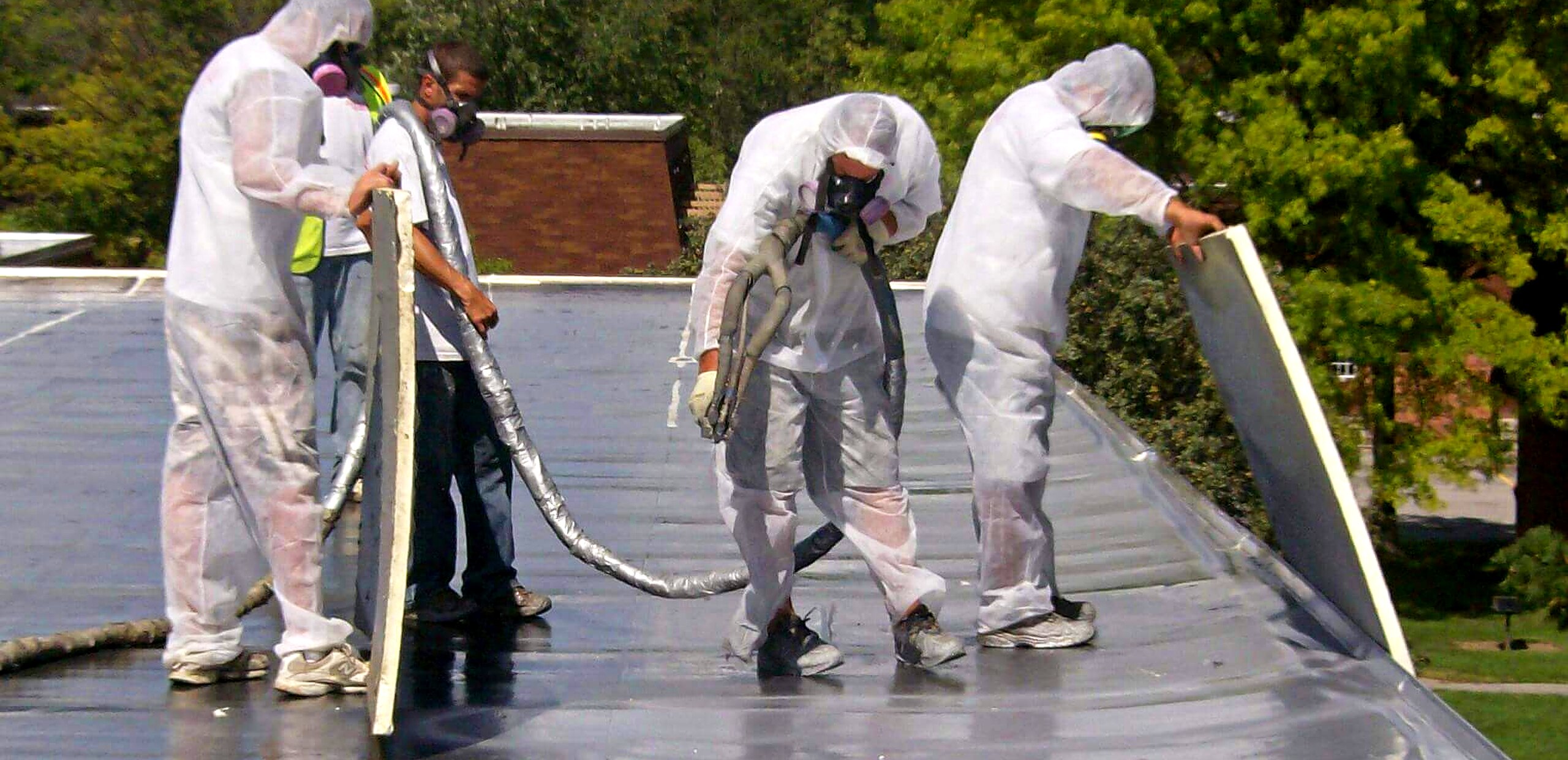
Tapered insulation during a reroof, or spray foam during a recover, builds real slope toward the drains. Foam is sprayed thicker in the low areas, so it can correct ponding without a tear-off. ArmorThane's ArmorFoam Roof 200 builds slope and adds R-value in the same pass; see spray foam roofing.
Add drains or overflow scuppers
Where low spots are far from any outlet, a new drain is often cheaper than re-sloping half the roof. Parapet roofs also need secondary overflow drains or scuppers, and code sets scupper openings at no less than 4 inches.
Coat with a ponding-rated system
Once drainage is right, finish with a coating rated for standing water so the leftover birdbaths do no harm.
Acrylic
Water-based acrylics can soften and swell under standing water. Fine on roofs that drain, a poor choice where birdbaths remain.
Silicone
Moisture-cured and water resistant, the common pick for roofs that will always hold some water. See our silicone roof coating guide.
Polyurea and urethane
Tough, low-absorption films that handle standing water and foot traffic. Read about polyurea roof coating.
Patching compound alone
Filling a birdbath with mastic can help a shallow spot, but heavy fills crack and hold water at the edges. Use it for small depressions only.
Slope where you need it, a membrane that can take water.
A certified ArmorThane applicator can map your ponds, build slope with spray foam where it makes sense and finish with a coating made for wet spots.
Contractors: become an ArmorThane applicator
Ponding water questions
Is ponding water on flat roofs normal?
Some water right after a storm is normal. Water that is still standing 48 hours after rain, in weather that should dry it, is ponding by the NRCA definition and points to a drainage problem worth fixing before it damages the membrane or the deck.
How long can water sit on a flat roof?
The industry benchmark is 48 hours after rain in drying conditions. Many roof manufacturers use that same window in their warranties, and some exclude damage caused by a lack of positive drainage.
How much does ponding water weigh on a roof?
Each inch of depth adds about 5.2 pounds per square foot. A dish-shaped pond 20 by 12 feet and 2 inches deep at the middle holds about 117 gallons, close to 1,000 pounds, with 10.4 psf at its deepest point.
Will a roof coating fix ponding water?
No. A coating protects the surface under the water, but it does not change the slope. Fix drains, add crickets or build slope first, then use a ponding-rated coating such as silicone or polyurea for any small birdbaths that remain.
Does ponding water void a roof warranty?
It can. Many manufacturer warranties require positive drainage and exclude failures caused by standing water, and some limit the allowed birdbath size. Read the drainage clause in your warranty before you decide to live with a pond.
How do you get rid of standing water on a flat roof?
Clean the drains and scuppers, lower any drain set too high, add crickets behind curbs, then build slope with tapered insulation or spray foam where the field is flat. Add a drain where low spots are far from an outlet.
Sources
- Professional Roofing (NRCA), Still water runs deep. professionalroofing.net/Articles/Still-water-runs-deep
- IIBEC, Secondary Drainage and Ponding Requirements in the IBC and IEBC. iibec.org/secondary-drainage-ponding-requirements-ibc-iebc
- WoodWorks, Considerations for Roof Ponding in Low-Slope Wood-Frame Roofs. woodworks.org/resources/considerations-for-roof-ponding
- Florida Roofing and Sheet Metal Contractors Association, Ponding Water and Manufacturer Warranties. floridaroof.com/Ponding-Water-and-Manufacturer-Warranties
Move the water, save the roof.
Owners get a certified ArmorThane applicator who fixes drainage first and then coats with a system made for wet spots. Contractors can add foam re-sloping and roof coatings with our materials, spray rigs and training, with no franchise fee and no royalties.
Start your coatings business with ArmorThane.
Tell us what you want to spray and where you are. An ArmorThane specialist will walk you through the equipment, chemicals, training and startup cost for the work you want to do.
- Equipment package matched to your applications
- Hands-on training and applicator certification
- Technical support once you are spraying
Water still sitting two days later? Get it looked at.
Send us the roof type, the size and roughly where the water sits. We will connect you with a certified ArmorThane applicator who can map the ponds, find the cause and quote a drainage fix and a coating that tolerates standing water.
- Roof type and approximate size
- Where the ponds are and how deep
- How long the water stays after rain
- Any leaks, sagging or ceiling stains inside