Rubber Roof Coating: Types, EPDM Fit & Cost
What’s actually inside a “rubber” or “liquid rubber” roof coating, which ones bond to EPDM, what they cost per square foot and per mil, and how long each lasts, from a manufacturer that makes the sprayed kind.
Start a roof coating business
Spray roofs for a living.
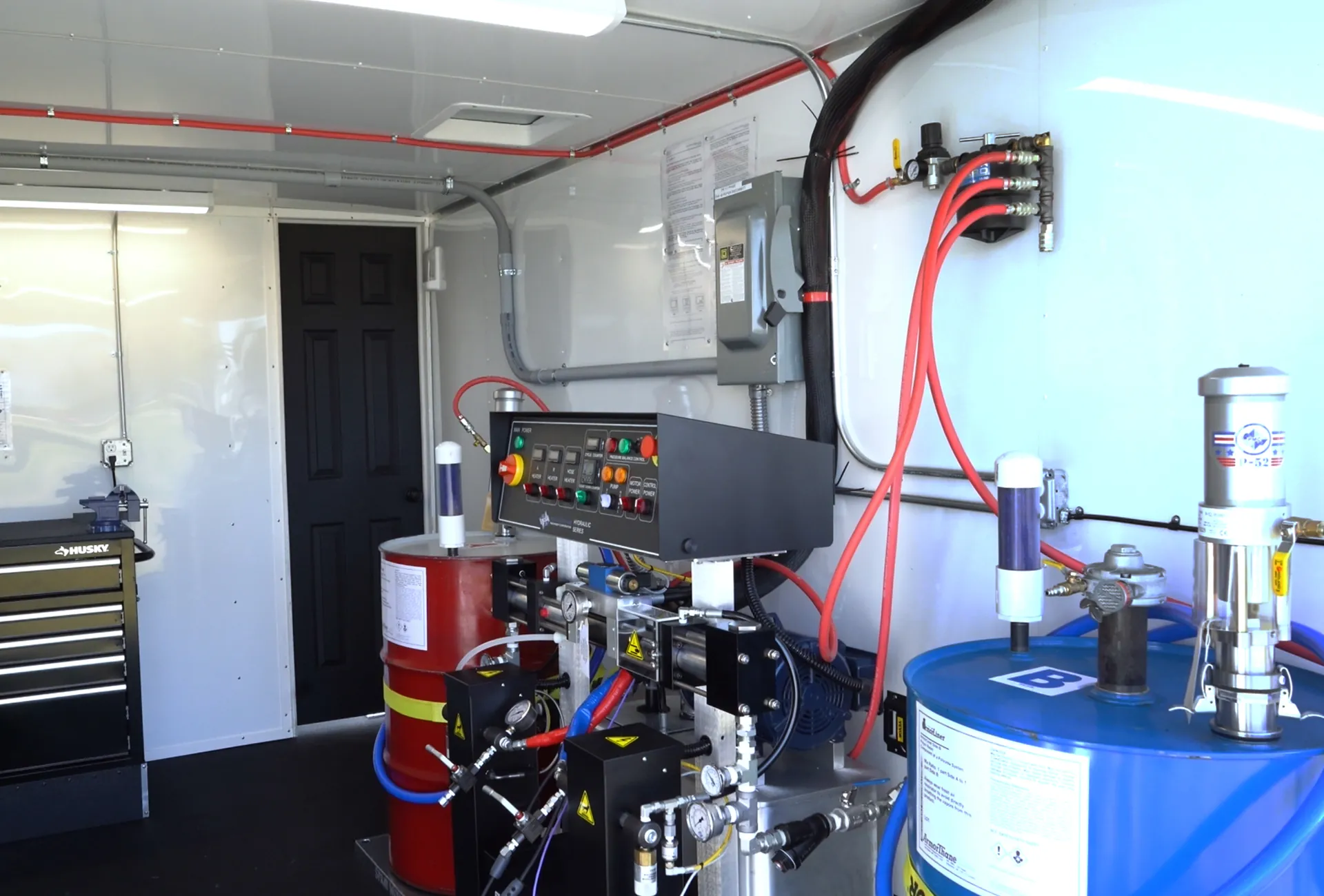
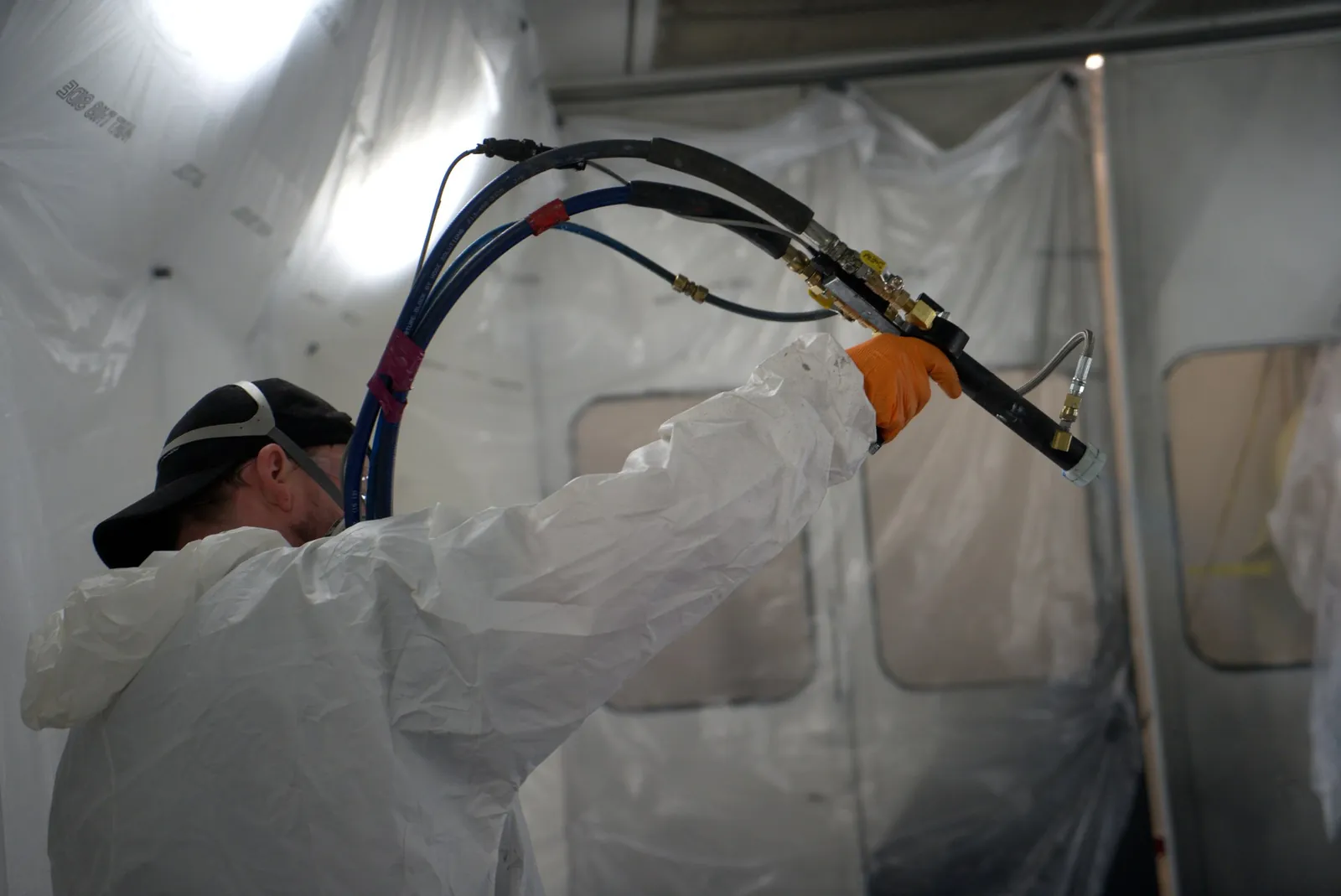
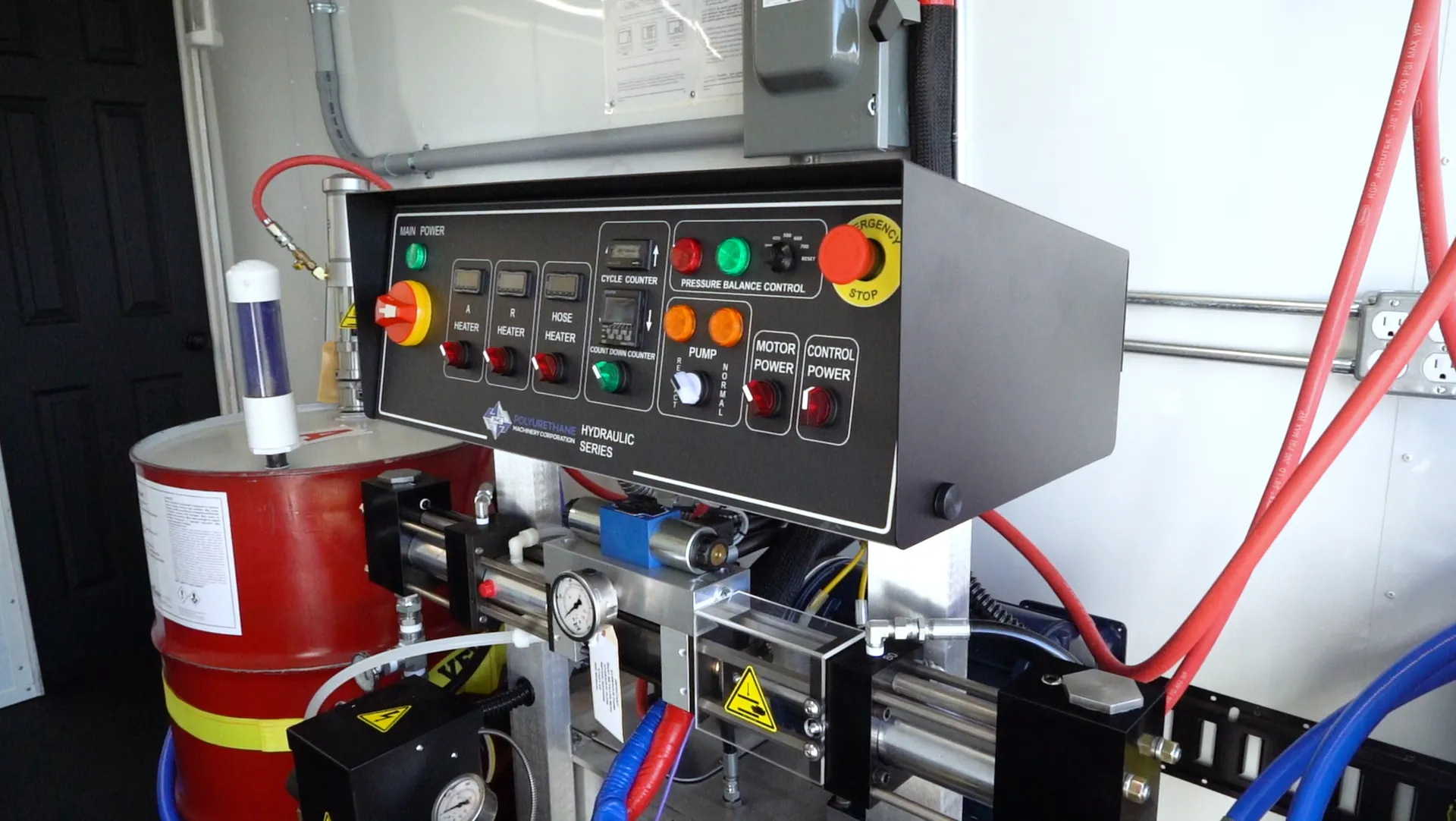
ArmorThane sets you up to do this work, and you own the business. We make the chemistry, build the rigs, train you hands-on and answer the phone when a job gets difficult. You pay no franchise fee and no royalties. It has been that way since 1989.
- $0
- franchise fees or royalties
- 35+
- years in business
- 50+
- countries with applicators
- 24/7
- technical support
Walk the roofing aisle and a lot of pails say rubber. Some are acrylic latex. Some are silicone. One of the most popular brands, with over 2 million gallons sold by its own count, sells a roof sealant that's 40 to 60 percent asphalt. A few are solvent-borne butyl, and the tough stuff contractors spray is polyurea. On an EPDM roof they behave nothing alike.
"Rubber roof coating" is a marketing term, not a chemistry. It covers asphalt emulsions, acrylics, silicones, solvent butyl, SEBS-type rubbers and sprayed polyurea. If your roof is EPDM and sound, it doesn't need a coating at all (EPDM Roofing Association). If you coat it anyway, to stop small leaks, turn a black roof white or buy time on a chalking RV roof, pick a product whose data sheet names EPDM, clean with a non-petroleum cleaner, use the maker's EPDM primer or activator and test a patch first. Acrylic is the budget pick on well-drained roofs. Silicone handles ponding but locks you into silicone. A sprayed polyurea membrane is the long-life option when the roof is worth keeping. Decode your label or check your EPDM roof.
Most pages on this topic are product pages for one brand of "liquid rubber," or cost guides that treat liquid rubber as a single material with a single price. Neither tells you what's in the can, whether it will bond to EPDM, or how thick the film is once the water or solvent leaves. That last number decides how long it lasts.
We're ArmorThane, a coatings manufacturer in Springfield, Missouri, and we've been at it for more than 35 years. We make polyurea, which is the "spray-on rubber" pros use. We don't make acrylic, silicone, butyl or asphalt roof coatings, so we have no reason to oversell them, and we'll tell you when one of them is the better buy. Every product fact below comes from the maker's own page, data sheet or safety data sheet.
- 1What rubber roof coating really is
- 2Which one do you have? (label decoder)
- 3Can you coat an EPDM roof?
- 4Should you coat yours? (checker)
- 5How much you need, in gallons and mils (calculator)
- 6Rubber roof coating cost in 2026
- 7How long it lasts (coat vs. replace calculator)
- 8How to apply it on EPDM
- 9Ponding water and flat roofs
- 10Shingles, metal, TPO and mobile homes
- 11Common mistakes
- 12Where sprayed polyurea fits
- 13Rubber roof coating FAQ
What is rubber roof coating, really?
A rubber roof coating is any liquid-applied roof coating that cures to a flexible, rubbery film. The word describes how it feels, not what it's made of. Under that one label you'll find asphalt emulsions, acrylic latex, silicone, solvent-borne butyl, SEBS-type rubbers and sprayed polyurea, and each has its own rules for EPDM, ponding water and recoating.
Try it yourself. Search Home Depot for "rubber roof coating" and you get 307 results (September 27, 2026). Near the top: Henry's 587 acrylic, Henry's 887 silicone, an asphalt emulsion, a "rubberized aluminum" coating, Ames "Maximum-Stretch Rubber and Acrylic," and a Gardner pail the store titles "Liquid Rubber Coating" that Gardner's own page calls "100% Silicone." Same word, at least four chemistries.
What gets sold as rubber roof coating
Filter by how the product cures. Water-based products dry as the water leaves. Solvent and moisture-cure products are one-part pails that clean up with mineral spirits. Pro-sprayed means two components through a heated rig.
| What it really is | Label words | Example, in the maker's words | Coverage | Dry film | Price seen | On EPDM |
|---|---|---|---|---|---|---|
| Asphalt emulsion (polymer-modified) | "Liquid rubber," "rubberized" | Liquid Rubber Waterproof Sealant: "premium bitumen coating," goes on brown, dries black. SDS: asphalt cement 40–60% | 15 sq ft/gal on flat roofs | Not published (60–63% solids by weight) | $219.95 / 5 gal | Maker requires its EPDM & TPO Primer |
| Acrylic latex elastomer | "Rubberized," "elastomeric," "rubber roof coating" | Ames Maximum-Stretch: "elastomeric, acrylic, rubberized." Dicor's RV "rubber roof coating" is a "high solids acrylic elastomer" | Ames 100 sq ft/gal per coat, 2 coats; Dicor 125 per coat, 2 coats | Ames 5.3 mils per coat, 10.6 minimum | Ames $178 MSRP / 5 gal; Henry 587 $109 / 4.75 gal | Allowed on prepared EPDM (ERA); Dicor requires its cleaner/activator |
| Water-based "RV rubber" coating (polymer not named) | "Liquid rubber," "RV roof coating" | Liquid Rubber RV Roof Coating: "elastomeric coating," no solvents, 46% solids by volume | 50 sq ft/gal final, 2+ coats | ≈14.8 mils (our calc) | $299.95 / 5 gal | Maker requires its EPDM primer |
| Silicone | "Rubberized," "liquid rubber," "100% silicone" | Kool Seal Tundra "Silicone Rubberized"; Gardner SK-8245 "100% Silicone," sold at Home Depot as "Liquid Rubber Coating" | Tundra 50 sq ft/gal in one coat; Henry 887 ≈67 | Not published for these | Henry 887 $369 / 4.75 gal; Gardner $305.91 / 4.75 gal | Usually with primer or activator (Dicor, Gaco) |
| Solvent-borne butyl rubber | "Liquid EPDM," "liquid butyl rubber" | EPDM Coatings LLC: "Liquid Butyl Rubber," one coat "at a 20-mil film (50 sq. ft per gallon)" | 50 sq ft/gal, 1 coat | 20 mils (maker's figure) | $399.77 / 5 gal | Maker lists EPDM adhesion "Pass," no primer |
| SEBS thermoplastic rubber | "Liquid rubber" | Tough Tech Tough Roof RV: kits "made with SEBS" liquid rubber; "final thickness should be 30 mils" | 50 sq ft/gal | 30 mils (maker's figure) | $479 / 5-gal kit | Maker warns of bubbling on loose-laid EPDM if applied too thick |
| Sprayed polyurea | "Spray-on rubber" | ArmorFlex UV: two-component, 100% solids aliphatic polyurea, "color-stable" | ≈13–27 sq ft/gal at 120–60 mils (theoretical) | 60–120 mils | Installed only: $3–$6 per sq ft | Needs prep and a bonding primer |
Liquid EPDM vs. liquid butyl
EPDM is one specific synthetic rubber: ethylene-propylene-diene terpolymer, and the sheet standard is ASTM D4637. Plenty of "liquid EPDM" roof coatings aren't EPDM. The best-known brand, EPDM Coatings LLC, calls its product Liquid Butyl Rubber in its own copy. Butyl is a different synthetic rubber, made by copolymerizing isobutylene with a little isoprene and prized for being gas-tight (Britannica).
That doesn't make it a bad coating. It means the words "liquid EPDM" tell you nothing about how the product bonds to your EPDM sheet. Read the TDS. And read it closely: that maker's technical page lists elongation as 500% (ASTM D412) in its table and "180-200%" in its spread-rate paragraph. Ask which one applies.
The ASTM check: the fastest way past the label
The International Residential Code accepts seven material standards for liquid-applied roofing (R905.15.2). If a pail names one, you know its family and that it met a minimum spec. If it names none, you're relying on the maker's word.
| Standard | What it covers | Label words you'll see |
|---|---|---|
| ASTM D6083 | Water-dispersed acrylic latex elastomeric roof coatings | "Elastomeric," "rubberized," "white roof coating" |
| ASTM D6694 | Silicone coatings for spray-foam roofs, more than 95% silicone polymer | "100% silicone," "rubberized" |
| ASTM D6947 | Single-component moisture-cured polyurethane for spray-foam roofs | "Urethane," "polyurethane" |
| ASTM D1227 | Emulsified asphalt protective coatings, on inclines of at least 4% (½ in. per ft) | "Asphalt emulsion," sometimes "liquid rubber" |
| ASTM D3468 | Liquid-applied neoprene and chlorosulfonated polyethylene (Hypalon) "synthetic rubber solutions" | The original liquid rubber roofing |
| ASTM C836 / C957 | Cold liquid-applied elastomeric waterproofing membranes for decks | Deck and plaza membranes |
Which rubber roof coating do you actually have?
Read four things on the pail: the color it dries, how it cleans up, whether it's one can or two, and which ASTM standard it names. Black with soap-and-water cleanup points to asphalt emulsion. White with soap-and-water points to acrylic. Mineral-spirits cleanup points to silicone or a solvent rubber. Two parts through a heated rig means polyurea.
What's really in this "rubber" roof coating?
Answer from the label, the data sheet or the pail you already have. It scores eight chemistry families and tells you what that means for an EPDM roof.
Runner-up: Acrylic latex elastomer. An ASTM spec on the label or an asphalt line in SDS section 3 would settle it.
Asphalt emulsion (“liquid rubber”)
Asphalt (bitumen) plus polymers in water. The SDS of one popular “liquid rubber” sealant lists 40–60% asphalt cement; it goes on brown and dries black.
Spec to look for: ASTM D1227 covers emulsified asphalt roof coatings on slopes of ½ in. per foot or more.
Compatibility and prep
Liquid Rubber requires its EPDM & TPO Primer on EPDM. EPDM is harmed by prolonged contact with liquid petroleum (ERA), so don’t skip the primer.
Ponding, UV and weather
Black finish runs hot. Its maker rates it 5–10 years before recoating.
Coverage and recoating
About 15 sq ft per gallon on flat roofs (Liquid Rubber).
Not over silicone or coal tar (maker).
How the top four scored
A rule of thumb from the data sheets in this guide, not a lab result. If you’re about to put it on EPDM, see the EPDM checker next.
How it works: each answer adds weighted points to eight families (asphalt emulsion, acrylic, silicone, solvent butyl, SEBS or other solvent rubber, neoprene/Hypalon, moisture-cure urethane, polyurea). A named ASTM spec or an asphalt line on the SDS outweighs everything else. It's a rule of thumb built from the data sheets in this guide, not a lab test. The SDS settles it: section 3 lists the hazardous ingredients.
Can you put a rubber coating on an EPDM roof?
Yes, with the right product and prep. But a sound EPDM roof doesn't need one. The EPDM Roofing Association (ERA) says acrylic coatings "can be applied directly to a prepared EPDM surface," and that EPDM needs "no special coating or other surface treatment" to reach its life expectancy. Coat EPDM to fix a specific problem, not by default.
Does a rubber roof need to be coated?
Usually not. The ERA reports EPDM installations past 40 years, studies suggesting a potential 50-year life for aged membrane, and, thanks to its UV resistance, warranties of up to 30 years. Standing water "has absolutely no affect on EPDM membrane," in the ERA's words, though it still recommends positive drainage. HomeGuide says the same thing in plainer English: an EPDM roof "typically does not need a coating."
So why coat one? Four honest reasons:
- You want a white roof. Black EPDM gets its UV resistance from carbon black, which turns sunlight into heat (ERA). A reflective roof can stay more than 50°F cooler (DOE). In cold climates, DOE warns the winter heating penalty can outweigh the summer savings.
- The membrane is getting thin. That's mostly an RV problem; see below.
- It has many small repairs. Patched seams and old punctures can be tied together under one film, once each is repaired properly.
- Appearance. A chalky, stained roof you look down on from a second story.
And reasons not to: a coating adds a maintenance cycle to a roof that didn't have one, and it can complicate a membrane warranty. The ERA says to contact the EPDM manufacturer first "to ensure compatibility and continuation of warranty coverage."
Rubber roof coating compatibility with EPDM, by type
| Coating | Sticks to EPDM? | Prep the maker specifies | Watch out for |
|---|---|---|---|
| Acrylic | Yes, on prepared EPDM (ERA) | Pressure wash with detergent (ERA); Dicor's Part 1 cleaner/activator at 1 qt per 125 sq ft; an EPDM-grade primer (our roof coating guide) | Softens under ponding water; Dicor's acrylic is unstable if it freezes within 48 hours |
| Silicone | Yes, usually with primer | Dicor's cleaner/activator under its silicone; GacoRoof may need E5320 epoxy primer on aged EPDM, confirmed with a 24-hour adhesion test | Only silicone sticks to cured silicone, so every future recoat is silicone |
| Asphalt emulsion "liquid rubber" | With the maker's primer | Liquid Rubber: multipurpose cleaner, then EPDM & TPO Primer (175–200 sq ft/gal, stays sticky); bridge seams with seam tape or fabric | Black finish runs hot; not over silicone or coal tar (maker) |
| Solvent butyl | Maker says yes, no primer | Clean; one coat at 50 sq ft/gal | EPDM is harmed by prolonged liquid petroleum (ERA) and Dicor says petroleum distillates swell its membrane. Test a patch and ask the membrane maker. |
| SEBS rubber | Maker says yes on RV EPDM | Per the maker's steps | Bubbling on loose-laid EPDM if too thick (maker); not over old silicone or acrylic |
| Sprayed polyurea | Yes, with prep | Clean, prep, bonding primer, adhesion test | Skip the primer and it can release within a year (our RV roof repair guide) |
| Household silicone caulk | No | Don't | Dicor: "it will not adhere to the EPDM rubber," and nothing bonds over its residue |
RV rubber roofs aren't commercial EPDM
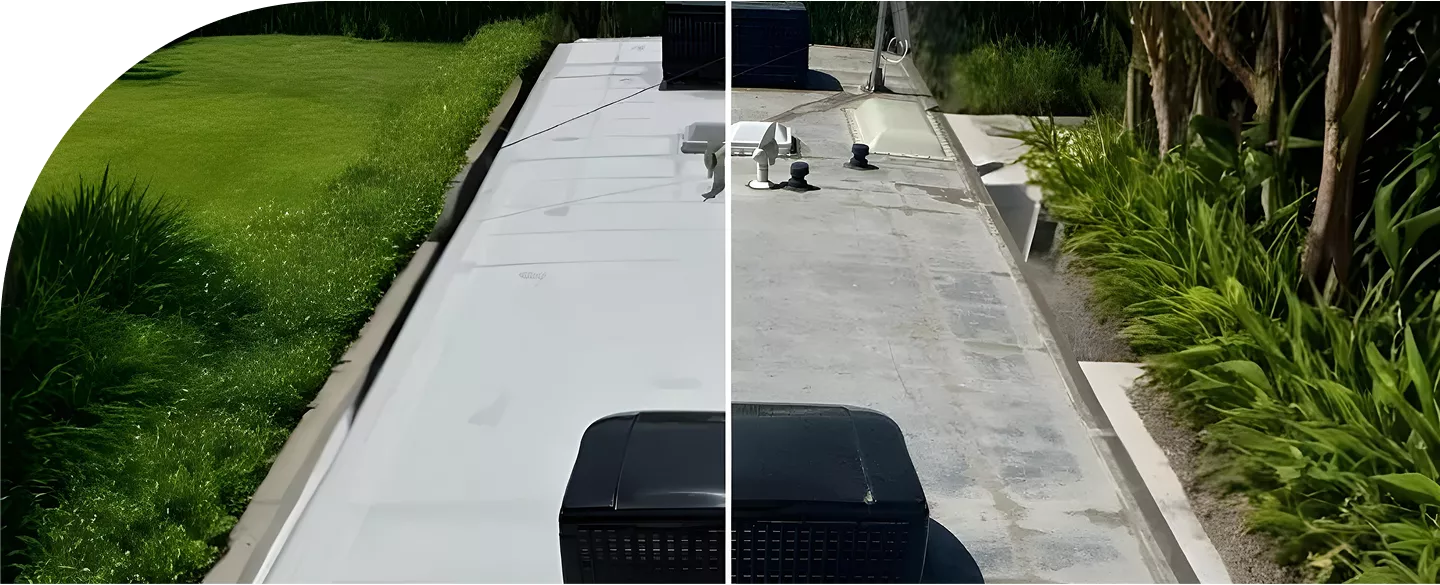
Commercial EPDM runs .045 to .090 in. thick (ERA). Dicor's Brite-Ply RV membrane is .035 in. And it's meant to wear: Dicor says it "may oxidize 10% of it's thickness" in a dozen years, which it calls normal, and it expects a maintained roof to last at least 20 years. That white chalk on your rag is roof leaving.
Dicor's care rules matter before any coating: wash at least four times a year, and never use cleaners with petroleum solvents, harsh abrasives or citrus. Petroleum distillates, it says, make the membrane "swell or balloon." A coating won't stick to a swollen sheet, and it won't fix one.
On a thinning RV roof, a coating system does real work. Dicor's own "rubber roof coating" is an acrylic that goes on in two coats at 125 sq ft per gallon each, after its cleaner/activator. Our RV roof sealant guide covers the seams and fixtures that fail first, and RV roof coatings covers the sprayed option.
Silicone on EPDM: caulk no, coating maybe
Dicor's installation guide is blunt: "Do not use silicone – it will not adhere to the EPDM rubber." Yet Dicor also sells a 100% silicone coating for EPDM roofs. The difference is the product and the prep: its silicone goes over its cleaner/activator, in two coats at 125 sq ft per gallon. Household silicone caulk has no such system, and it leaves a residue that tape, sealant and coatings won't bond to. More on silicone's trade-offs in our silicone roof coating guide.
Read the warranty before you coat
Two warranties are in play. The membrane maker's may care what you put on its sheet, which is why the ERA says to call first. The coating maker's usually covers the product, not your labor or your ceiling. EPDM Coatings' warranty, for example, is limited to replacement product or a refund, excludes "the absence of positive drainage," and runs "no more than 10 years." Liquid Rubber's 10-year RV warranty replaces failed product, can't be transferred, and wants contact within 30 days of a problem.
Should you coat your EPDM roof?
Coat it when the membrane is sound and you have a reason: repaired seams you want to protect, a thinning RV sheet, or a black roof you want white in a hot climate. Don't coat over wet insulation, open seams or a roof whose membrane warranty you haven't checked. This checker sorts out which case you're in.
Is my rubber roof a candidate for a coating?
Built from the EPDM Roofing Association FAQ, the coating makers' data sheets and the IRC re-cover rules. Tick what you see on the roof.
A sound EPDM roof doesn’t need a coating
The ERA says EPDM needs “no special coating or other surface treatment” to reach its life expectancy, and reports installations past 40 years. Clean it, inspect it twice a year and after storms (This Old House), and save the coating money. If it leaks, check the seams, flashings and penetrations first and repair that spot.
Acrylic on EPDM
- The EPDM Roofing Association says acrylics can go directly on prepared EPDM (pressure wash with a detergent solution).
- Use the maker’s EPDM primer or activator; Dicor’s Part 1 cleaner/activator goes on at 1 qt per 125 sq ft.
- Two coats at the stated rate. Ames’ data sheet gives 10.6 dry mils minimum.
Screening only. A roofer’s moisture survey or core cut is the way to find wet insulation under a dry-looking membrane.
Educational screening, not a roof inspection. It can't see wet insulation under a dry-looking membrane; a roofer's core cut or moisture survey can. The IRC doesn't allow a re-cover over a roof that's water-soaked or deteriorated (R908.3.1.1), and our roof coating guide makes the same point: a coating over wet insulation won't fix it.
How much rubber roof coating do you need?
Divide the roof area by the product's coverage per coat, multiply by the number of coats, and add about 10% for waste. The catch: products called rubber range from 15 to 125 sq ft per gallon per coat, so the pail count means little until you know the dry film thickness it leaves behind.
Wet mils vs. dry mils
A gallon is 231 cubic inches. Spread it over 100 sq ft and the wet film is 16 mils (thousandths of an inch); the rule is wet mils = 1,604 ÷ sq ft per gallon. Then the water or solvent leaves, and only the solids stay. Ames lists its acrylic at 33% solids by volume, so 16 wet mils dries to 5.3, exactly what its data sheet says. Liquid Rubber's RV coating is 46% solids: 32 wet mils at 50 sq ft per gallon, about 14.8 dry. Polyurea is 100% solids, so what's sprayed is what stays.
Gallons, dry film and cost per square foot
Pick a product preset (maker coverage and September 2026 prices) or enter your own. The bars compare every preset on your roof.
Dry film known Ames Maximum-Stretch (acrylic): 2 coats at 100 sq ft per gallon = 32.1 wet mils × 33% volume solids = 10.6 dry mils. Coating total $470, or $0.074 per sq ft per dry mil. Ames TDS: 1 gal per 100 sq ft per coat, 2 coats minimum, 33% volume solids; $178 MSRP per 5 gal. This maker doesn’t list an EPDM primer on the documents we used; our roof coating guide recommends an EPDM-grade primer and a test patch.
Every preset on your roof: cost per sq ft (bar) and dry film
How we calculated this: gallons = area × (1 + waste) × coats ÷ coverage per coat; wet mils per coat = 1,604 ÷ coverage; dry mils = wet × volume solids, or the maker's stated film where solids aren't published; primer = area × (1 + waste) ÷ 187.5 sq ft/gal (midpoint of Liquid Rubber's 175–200). Prices are single retail observations on September 27, 2026 (maker stores and Home Depot), before tax and shipping. The 10% waste allowance is our assumption. Polyurea is priced installed, $3–$6 per sq ft from our roof coating guide.
Why cost per mil is the number to watch
Henry's 587 acrylic is the cheapest pail per square foot in this set, about $0.46 for two coats before waste, but Henry doesn't publish its solids, so you can't know the dry film. Ames' acrylic costs $0.71 a square foot for a documented 10.6 mils, about $0.067 per square foot per mil (the calculator adds waste, so its figures run a little higher). Liquid Rubber's RV coating lands near $0.081 per mil, and the butyl near $0.080 at its stated 20 mils. A pro-sprayed polyurea roof at $3–$6 installed and 60–100 mils works out to roughly $0.03–$0.10 per mil, with labor included. Thickness is what you're buying. Price it that way.
Rubber roof coating cost in 2026
Hired out, published averages run about $1.50–$3.50 per square foot for "liquid rubber" (HomeGuide 2024; Angi 2026), $0.65–$1.75 for acrylic and $1.50–$2.50 for silicone (Angi 2026). Doing it yourself, materials run roughly $0.46–$2.93 per square foot plus about $0.48 for primer. Replacing an EPDM roof costs $4–$10 per square foot (HomeGuide).
Installed cost per square foot
| Option | Installed per sq ft | Source | Date |
|---|---|---|---|
| Acrylic coating | $0.65–$1.75 | Angi | Aug 2026 |
| Acrylic/elastomeric coating | $0.50–$3.00 | HomeGuide | Apr 2024 |
| Silicone coating | $1.50–$2.50 | Angi | Aug 2026 |
| Silicone coating | $1.50–$4.50 | HomeGuide | Apr 2024 |
| "Liquid rubber" | $1.75–$3.50 | Angi | Aug 2026 |
| "Liquid rubber" | $1.50–$2.50 | HomeGuide | Apr 2024 |
| Coating or recoating an EPDM roof | $1–$4 ($500–$2,000 typical total) | HomeGuide, rubber roof cost | Apr 2024 |
| Sprayed polyurea | $3.00–$6.00 | ArmorThane roof coating guide | 2026 |
| New EPDM roof | $4–$10 | HomeGuide | Apr 2024 |
| New EPDM roof | $7.50–$12.50 | RoofingCalc | Oct 2024 |
DIY: what the pails cost per square foot
| Product | Price seen | Coverage | Material per sq ft |
|---|---|---|---|
| Henry 587 acrylic, 2 coats | $109.00 / 4.75 gal (Home Depot) | 100 sq ft/gal per coat | $0.46 |
| Ames Maximum-Stretch acrylic, 2 coats | $178.00 / 5 gal (MSRP) | 100 sq ft/gal per coat | $0.71 |
| Henry 887 silicone, 1 coat | $369.00 / 4.75 gal (Home Depot) | 1.5 gal per 100 sq ft | $1.17 |
| Liquid Rubber RV Roof Coating | $299.95 / 5 gal | 50 sq ft/gal final | $1.20 |
| EPDM Coatings Liquid Butyl, 1 coat | $399.77 / 5 gal | 50 sq ft/gal | $1.60 |
| Liquid Rubber Waterproof Sealant | $219.95 / 5 gal | 15 sq ft/gal on flat roofs | $2.93 |
| Add: Liquid Rubber EPDM & TPO Primer | $89.95 / gal | 175–200 sq ft/gal | +$0.48 |
RV rubber roofs
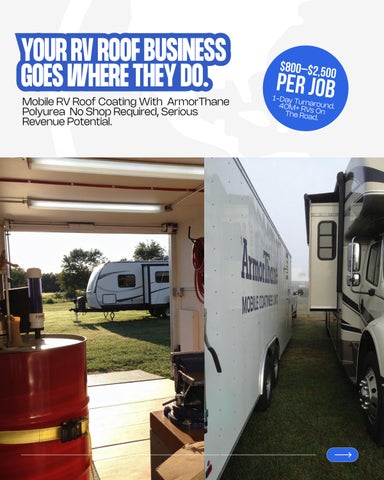
RVs are priced by the foot. An acrylic roll-on job runs $500–$1,000 and gets redone every three to five years; a sprayed seamless roof is about $170–$210 per linear foot; a dealer tear-off and new EPDM or TPO membrane runs $7,000–$18,000 (our RV roof business guide). The full breakdown, with a calculator, is in our RV roof replacement cost guide.
How long does rubber roof coating last?
Figure 5–10 years for an asphalt "liquid rubber" (its maker's number), roughly 7–20 for acrylic depending on film thickness and whose figures you trust, 10–15 for silicone, and 15–25 for sprayed polyurea (our roof coating guide). Warranty length is a floor, not a forecast, and most coating warranties cover product, not labor.
| Type | Published life | Warranty example | Source |
|---|---|---|---|
| Asphalt "liquid rubber" | 5–10 years before recoat | – | Liquid Rubber product page |
| Acrylic | 7–20 years; 10–15; RV roll-on redone every 3–5 | Henry 587: 10-yr limited; 287: 7-yr | HomeGuide; ArmorThane guides; Henry catalog |
| Silicone | 10–15 years | Henry 887 and Kool Seal Tundra: lifetime limited | HomeGuide; Liquid Rubber (its silicone); makers |
| Solvent butyl | Maker claims "an additional 18-20 Yrs" | Product defect, up to 10 years, product or refund only | EPDM Coatings |
| Sprayed polyurea | 15–25 years | Varies by applicator system | ArmorThane roof coating guide |
| The EPDM membrane itself | 15–25 years; potential 50 (aged commercial EPDM); RV at least 20 if maintained | Up to 30 years (commercial) | HomeGuide; ERA; Dicor |
What does each option cost over the years you'll own the roof?
Defaults are midpoints of the published ranges above. Change any cost or life to match your quotes.
1,000 sq ft · 20 years Lowest total: Solvent butyl at $3,200 (2 applications of 10-year life). Lowest cost per year of service: Silicone at $137. The butyl default uses its 10-year warranty as its life; its maker claims more, and we found no independent figure either way. Coating costs are materials only, with EPDM primer on the acrylic, asphalt and silicone coats; your labor, cleaners, tape and rollers are extra. Whole applications are counted, so a coat applied late in your horizon counts in full; the per-year figure evens that out. Every coating assumes a sound membrane underneath. Run the checker if you haven’t.
How we calculated this: applications = years ÷ life, rounded up; total = applications × cost per sq ft × area, in current dollars with no inflation; cost per year of service = cost ÷ life, which doesn't penalize a coat applied late in your horizon. DIY defaults are the material costs above (Ames acrylic, Liquid Rubber sealant, EPDM Coatings butyl, Henry 887). Contractor defaults are Angi's 2026 midpoints: acrylic $1.20, liquid rubber $2.63 (used for asphalt and butyl), silicone $2.00. Polyurea $4.50 is the midpoint of our guide's $3–$6; a new EPDM roof $7.00 is the midpoint of HomeGuide's $4–$10. Default lives are our picks inside each published range. Every coating option assumes the membrane underneath is sound; if the checker says replace, only the last row is real.
How to apply rubber roof coating on an EPDM roof
Repair first, clean with a non-petroleum cleaner, let it dry completely, prime or activate exactly as the coating maker says, and test a patch. Then roll the full rate in the number of coats specified, cross-direction, and keep the roof dry for as long as the product needs to cure. Most failures trace to the first three steps.
Inspect and fix the roof itself
Find soft spots, open laps and punctures. Wet insulation gets replaced, not coated; the IRC bars re-covering a water-soaked roof (R908.3.1.1). Repair seams with EPDM seam tape and primer, the way the ERA describes: clean, prime, apply a laminated patch.
Clean with the right cleaner
The ERA's prep for acrylic is a pressure wash with a detergent solution. Dicor warns against cleaners with petroleum solvents, harsh abrasives or citrus. Liquid Rubber wipes seams and edges with acetone on a white rag, and says never to pour acetone onto the roof.
Dry it completely
Every maker in this guide wants a dry, frost-free surface. Coat a damp roof and you trap the water under the film.
Prime or activate
Use the coating maker's EPDM step, not a generic one: Dicor's Part 1 cleaner/activator (1 qt per 125 sq ft, rinsed off), Liquid Rubber's EPDM & TPO Primer (4–5 dry mils at 175–200 sq ft per gallon; it stays tacky, so topcoat as soon as it dries), or GacoRoof's E5320 epoxy primer if its adhesion test fails.
Test a patch
Ames, Liquid Rubber and our own roof coating guide all call for a small test area; GacoRoof sells a kit with results in 24 hours. Pull on it. If it peels clean, stop and call the maker.
Apply the full rate
Spread the stated coverage per coat and check it with a wet-film gauge. Liquid Rubber has you alternate direction each coat and finish in the direction of slope. Bridge seams with fabric or tape where the maker's system includes it.
Protect the cure
Dicor: keep the roof free of rain and dew for 48 hours. Liquid Rubber: no rain, fog or dew forecast within 24 hours. Ames: full cure takes 7–10 days. EPDM Coatings: it cures only on days above 50°F.
Weather windows from the data sheets
| Product | Apply at | Rain and dew | Between coats |
|---|---|---|---|
| Ames Maximum-Stretch (acrylic) | 50–90°F; surface 5°F above dew point and rising | – | 24 hours |
| Dicor EPDM acrylic (RV) | No freezing within 48 hours after | Dry 48 hours | 1.5–2 hours |
| Liquid Rubber Waterproof Sealant | 50–86°F, under 80% humidity | None forecast within 24 hours | – |
| Liquid Rubber RV Roof Coating | 50°F and above, under 80% humidity | – | Dry to touch 4–6 hours |
| Henry 887 (silicone) | 35–120°F | Rain-safe in 15 minutes | One coat |
| Dicor Signature (silicone, RV) | 35–100°F; not within 5°F of dew point | – | Dry to touch |
| EPDM Coatings Liquid Butyl | 50–100°F; cures only above 50°F | Light rain OK after 2–3 hours (maker) | One coat |
Ponding water and flat rubber roofs
Standing water doesn't hurt EPDM itself (ERA), but it's hard on many coatings. Acrylics soften and lose adhesion under sustained ponding (our roof coating guide). If water sits more than 48 hours after rain, fix the drainage or choose a coating rated for ponding, such as silicone or a sprayed membrane.
Code points the same way. The IRC wants liquid-applied roofing on a design slope of at least ¼ in. per foot (R905.15.1). The ERA's fixes for flat roofs are drains in the low spots, crickets and saddles, and tapered insulation. And read the fine print: EPDM Coatings' warranty excludes damage from "the absence of positive drainage," even though the product is marketed as taking standing water 365 days a year.
If ponding is the whole problem and the EPDM is sound, remember the ERA's point: the membrane doesn't mind. A coating doesn't have to be the answer. When it is, our silicone roof coating guide covers the ponding-rated option, and flat roof waterproofing covers the sprayed one.
Rubber roof coating on shingles, metal, TPO and mobile homes
Rubber coatings get sold for every roof, but they don't suit every roof. Shingles are the one to skip; metal, TPO and mobile homes have their own rules.
Asphalt shingles: don't
DOE says field-coating shingle roofs "can create moisture retention issues, may void the shingle manufacturer's warranty, and is not recommended." Kool Seal's silicone says "Not for use on roof shingles." Shingles shed water by overlap; sealing them traps it.
TPO and PVC
Different chemistry from EPDM, different prep. Liquid Rubber has you scuff TPO and PVC with 120-grit sandpaper before priming; Dicor uses a TPO-specific primer under its silicone. More in TPO roof waterproofing.
Metal roofs
Fasteners, seams and rust come first. Acrylic, silicone and polyurea all work on metal with the right primer; our roof coating guide has the substrate table.
Mobile homes and plywood decks
Mobile homes have their own roof types and coverage math; see our mobile home roof coating guide. On plywood or OSB, Liquid Rubber wants wood moisture below 15% before coating.
Common rubber roof coating mistakes
- Buying by the word "rubber." Ask for the TDS and SDS, and look for an ASTM spec.
- Coating a roof that didn't need it. Sound EPDM needs cleaning and inspection, not a coating (ERA).
- Coating over wet insulation or open seams. The water stays; the coating just hides it.
- Cleaning EPDM with petroleum or citrus cleaners. Dicor says they can cause "irreparable damage" and void the warranty.
- Skipping the primer or activator. Our RV guide calls EPDM a low-surface-energy substrate. That's why makers specify one.
- Silicone caulk anywhere on the roof. Nothing bonds over it later.
- Acrylic over old silicone. It peels. Over silicone, only silicone.
- Spreading too thin. The dry-film and warranty numbers assume the full stated rate, in the stated number of coats.
- Rain on a fresh coat. Dicor wants 48 dry hours; Liquid Rubber wants no rain, fog or dew in the forecast for 24.
- Not calling the membrane maker while the roof is still under warranty.
Where sprayed polyurea fits, and where it doesn't
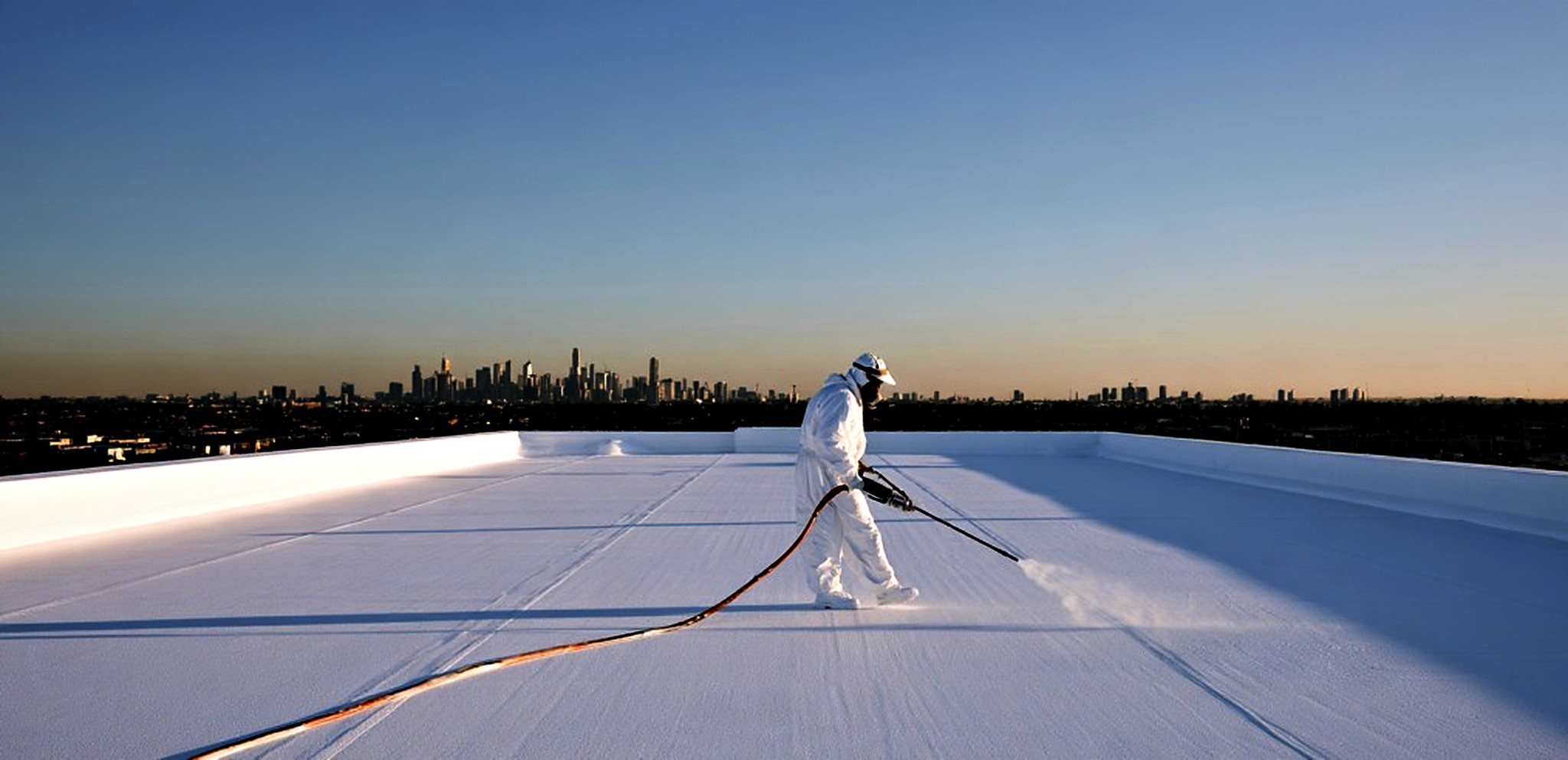
We make polyurea, the "spray-on rubber" that pros apply with plural-component rigs. ArmorFlex UV is our two-component, 100% solids aliphatic polyurea, formulated to stay color-stable in sunlight. It goes on as a seamless membrane at whatever thickness the job calls for: 60–100 mils on roofs, 120 on an RV. That's roughly 3 to 10 times the documented dry film of the acrylic and butyl pails above.
It isn't the answer for every rubber roof. A sound commercial EPDM roof under warranty should be left alone. A single leak needs a patch. On a roof you'll sell in three years, a good acrylic is the smarter spend. Where polyurea earns its price: RV roofs chalked thin with failing seams and fixtures, flat roofs with foot traffic, and owners on their second or third recoat who want to stop recoating. The substrate still needs prep and a bonding primer on EPDM, and any applicator who skips that conversation is the wrong one. More in ArmorFlex UV and our elastomeric coating guide.
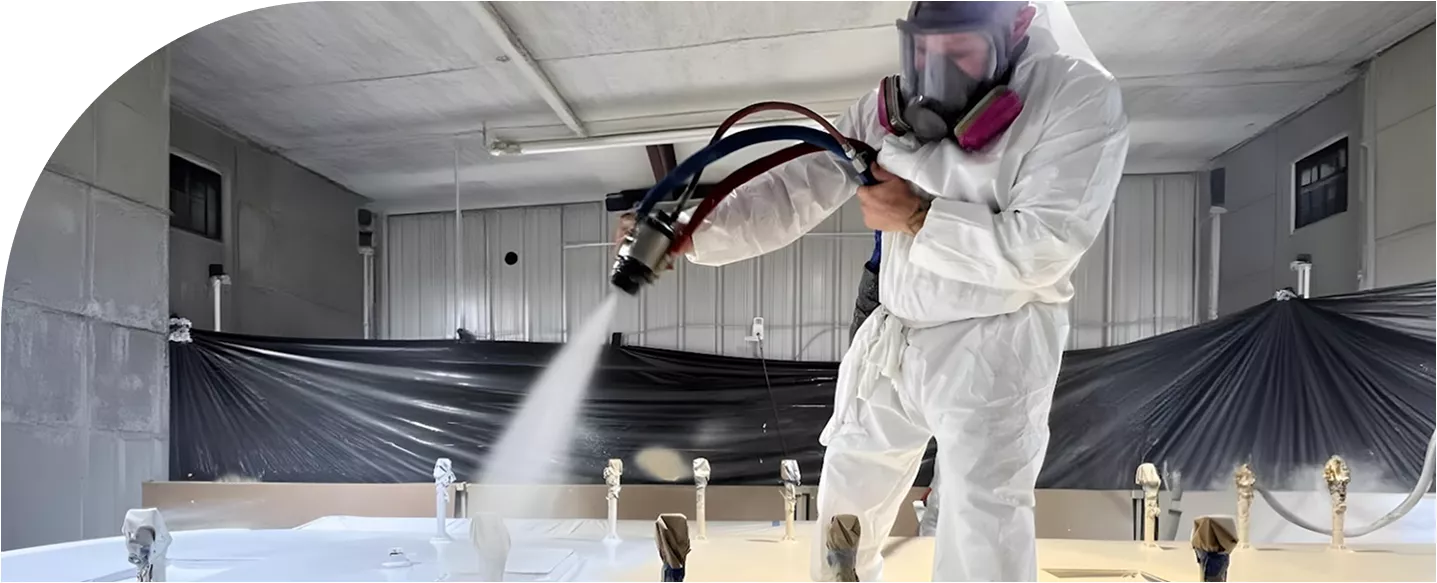
What's sprayed stays
No water or solvent to leave, so wet film equals dry film.
Roof film build
60–100 mils on roofs in one pass; 120 on RVs.
To walk on
Most polyurea roof coatings can be walked on within an hour (our roof coating guide).
Owners on their third recoat want a permanent roof.
RV and flat-roof owners who've rolled on "liquid rubber" twice are shopping for something that lasts. We make the polyurea, build the spray rigs and give your crew hands-on spray training. Starter packages begin at $25,000. It's not a franchise: no franchise fee, no royalties.
Questions first? Call (417) 831-5090 in the US or 780-444-6200 in Canada.
Rubber roof coating FAQ
What is rubber roof coating?
It's a marketing name for any liquid roof coating that cures to a flexible, rubbery film, not a single material. Under that label you'll find asphalt emulsions, acrylic latex, silicone, solvent-borne butyl, SEBS rubbers and sprayed polyurea. The data sheet, or the ASTM spec the pail names (D6083 acrylic, D6694 silicone, D1227 asphalt), tells you which one you're buying. The label decoder helps.
Is liquid rubber roof coating any good?
Some are, for the right job. One popular "liquid rubber" is a water-based asphalt sealant (40–60% asphalt per its SDS) that its maker rates at 5–10 years before recoating and applies thick, at 15 sq ft per gallon on flat roofs. That makes it a capable patch-and-seal product, not a reflective or long-life roof. Judge any liquid rubber by its data sheet: chemistry, dry film thickness and whether it names your roof type.
Can you coat an EPDM rubber roof?
Yes. The EPDM Roofing Association says acrylic coatings can be applied directly to a prepared EPDM surface, usually after a pressure wash with a detergent, and that you should contact the membrane maker first about compatibility and warranty. Most coating makers also specify an EPDM primer or activator. Test a patch before you coat the whole roof.
What is the best coating for an EPDM roof?
On a well-drained roof, an acrylic made for EPDM, over the maker's primer or activator, is the budget pick. Where water ponds, silicone with its EPDM primer holds up better but commits every future recoat to silicone. For long life, foot traffic or an RV roof that's chalked thin, a pro-sprayed polyurea membrane at 60–120 mils. And many sound EPDM roofs need no coating at all.
Can you use silicone on an EPDM roof?
Silicone caulk, no: Dicor says it "will not adhere to the EPDM rubber," and tape, sealant and coatings won't bond over its residue later. A silicone roof coating, yes, inside the maker's system: Dicor applies its silicone over a cleaner/activator, and GacoRoof may call for an epoxy primer on aged EPDM after a 24-hour adhesion test. After that, only silicone will stick to the roof.
Does a rubber roof need to be coated?
Usually not. The EPDM Roofing Association says EPDM needs no special coating or surface treatment to reach its life expectancy, and HomeGuide says an EPDM roof typically doesn't need one. Coat it for a specific reason: a white surface in a hot climate, a thinning RV membrane, or many small repairs you want under one film.
How long does rubber roof coating last?
It depends on the chemistry and the dry film. Published figures run 5–10 years for an asphalt "liquid rubber" (its maker), 7–20 years for acrylic (HomeGuide), 10–15 for silicone, and 15–25 for sprayed polyurea (our roof coating guide). Thin films and standing water shorten all of them.
How much does rubber roof coating cost?
Installed, cost guides put "liquid rubber" at $1.50–$3.50 per square foot (HomeGuide 2024; Angi 2026), acrylic at $0.65–$1.75 and silicone at $1.50–$2.50 (Angi 2026). DIY materials run about $0.46–$2.93 per square foot at September 2026 prices, plus about $0.48 for an EPDM primer. A new EPDM roof costs $4–$10 per square foot (HomeGuide).
Is liquid EPDM the same as an EPDM roof membrane?
Not necessarily. EPDM sheet roofing is defined by ASTM D4637, and none of the seven standards the IRC lists for liquid-applied roofing is written for liquid EPDM. The best-known "liquid EPDM" maker describes its own product as liquid butyl rubber, a different synthetic rubber. Ask for the TDS and SDS before you buy.
Can you put rubber roof coating over shingles?
We wouldn't. The U.S. Department of Energy says field-coating asphalt shingle roofs can create moisture retention issues, may void the shingle warranty and is not recommended, and silicone makers such as Kool Seal exclude shingles. Shingles shed water by overlapping; a coating can trap it.
Can you paint a black rubber roof white?
Yes, usually with an acrylic roof coating. The EPDM Roofing Association says acrylic coatings can go on prepared EPDM, and latex paints can too once the membrane maker confirms compatibility. A reflective roof can stay more than 50°F cooler in sun (DOE), but in cold climates the winter heating penalty can cancel the savings.
How many coats of rubber roof coating do I need?
Whatever the maker specifies, at its stated rate. Acrylics are typically two coats at 100–125 sq ft per gallon each (Ames, Henry, Dicor), some silicones and butyls go on in one coat at about 50–67 sq ft per gallon, and Liquid Rubber's asphalt sealant goes on at 15 sq ft per gallon on flat roofs. The calculator turns that into gallons, dry mils and cost.
What is the best rubber roof coating for an RV?
Start with the membrane: many towables have thin EPDM (Dicor's is .035 in.) or TPO. For a DIY recoat, use a system made for RV EPDM with its cleaner or primer, such as Dicor's two-coat acrylic or silicone, and keep petroleum cleaners off the roof. If the roof is chalked thin with failing seams and you want to stop recoating, a sprayed polyurea roof runs about $170–$210 per foot; see our RV roof replacement cost guide.
Written from coating makers’ data sheets and safety data sheets, EPDM Roofing Association guidance, code text and 35+ years of making sprayed elastomers. Last updated September 27, 2026.
Methodology and sources
Product chemistry, coverage and cure data come from each maker's product page, technical data sheet or safety data sheet; prices were observed on September 27, 2026 and will change. EPDM guidance is from the EPDM Roofing Association and Dicor; code text is the 2015 IRC as adopted by Seattle; standard titles are from ASTM's listings. Installed costs come from HomeGuide (2024), Angi (2026), RoofingCalc (2024) and our own guides. Mil and cost-per-mil figures are our calculations. The tools are screening estimates, not a roof inspection or a quote.
- EPDM Roofing Association, Can EPDM be coated or painted?: epdmroofs.org/faq/can-epdm-be-coated-or-painted/
- EPDM Roofing Association, Does EPDM require coatings to achieve its life expectancy?: epdmroofs.org/faq/does-epdm-require-systematic-maintenance-or-addition
- EPDM Roofing Association, Expected longevity of EPDM: epdmroofs.org/faq/what-is-the-expected-longevity-of-epdm-membrane/
- EPDM Roofing Association, Is EPDM UV resistant?: epdmroofs.org/faq/is-epdm-uv-resistant/
- EPDM Roofing Association, Ponded water and EPDM: epdmroofs.org/faq/does-ponded-water-have-any-affects-on-the-performanc
- EPDM Roofing Association, Black vs. white EPDM: epdmroofs.org/faq/what-is-the-difference-between-black-epdm-and-white-
- EPDM Roofing Association, EPDM thicknesses and types: epdmroofs.org/faq/what-are-the-available-thicknesses-and-types-of-epdm
- EPDM Roofing Association, EPDM and petroleum exposure (airports): epdmroofs.org/faq/can-epdm-be-installed-at-airport-facilities-where-je
- EPDM Roofing Association, Repairing aged EPDM: epdmroofs.org/faq/regarding-aged-epdm-membrane-what-type-of-surface-pr
- EPDM Roofing Association, Drainage on flat roofs: epdmroofs.org/faq/how-can-drainage-be-enhanced-on-a-flat-roofing-insta
- ASTM D4637, EPDM sheet used in single-ply roof membrane: store.astm.org/d4637_d4637m-15r21e01.html
- ASTM D6083, liquid-applied acrylic coating used in roofing: store.astm.org/d6083_d6083m-24.html
- ASTM D6694, liquid-applied silicone coating for SPF roofing: store.astm.org/d6694_d6694m-25.html
- ASTM D6947, moisture-cured polyurethane coating for SPF roofing: store.astm.org/d6947_d6947m-16r23.html
- ASTM D1227, emulsified asphalt protective coating for roofing: store.astm.org/d1227_d1227m-13r24.html
- ASTM D3468, liquid-applied neoprene and chlorosulfonated polyethylene: store.astm.org/d3468_d3468m-99r20.html
- ASTM C836, cold liquid-applied elastomeric waterproofing membrane: store.astm.org/c0836_c0836m-18r22.html
- ASTM C957, cold liquid-applied elastomeric membrane with integral wearing surface: store.astm.org/c0957_c0957m-25.html
- 2015 IRC Chapter 9 as adopted by Seattle (R905.12, R905.15, R908.3): seattle.gov/documents/Departments/SDCI/Codes/SeattleResidentialCode/20
- U.S. DOE Energy Saver, Cool roofs: energy.gov/energysaver/cool-roofs
- Dicor FAQ (membrane thickness, oxidation, coating cure): dicorproducts.com/faq/
- Dicor EPDM rubber roofing, care and installation: dicorproducts.com/product/dicor-epdm-rubber-roofing-2/
- Dicor EPDM Roof Acrylic Coating (Part 2): dicorproducts.com/product/epdm-roof-acrylic-coating-part-2-of-epdm-roo
- Dicor EPDM Cleaner/Activator (Part 1): dicorproducts.com/product/epdm-acrylic-rubber-roof-coating-cleaneracti
- Dicor Signature Extended Life silicone RV roof coating: dicorproducts.com/product/signature-extended-life-rv-roof-coating/
- Liquid Rubber Waterproof Sealant, product page (prices Sept. 27, 2026): shopliquidrubber.com/products/waterproof-sealant
- Liquid Rubber Waterproof Sealant TDS (PDF): shopliquidrubber.com/cdn/shop/files/Liquid_Rubber_Waterproof_Sealant_T
- Liquid Rubber Waterproof Sealant SDS (PDF): shopliquidrubber.com/cdn/shop/files/LRC_Waterproof_Sealant_SDS.CANUSA.
- Liquid Rubber Waterproof Sealant coverage sheet (PDF): shopliquidrubber.com/cdn/shop/files/LR-Waterproof_Sealant-Coverage_Rat
- Liquid Rubber RV Roof Coating, product page and warranty: shopliquidrubber.com/products/rv-roof-coating
- Liquid Rubber RV Roof Coating TDS (PDF): shopliquidrubber.com/cdn/shop/files/Liquid_Rubber_RV_Roof_Coating_TDS.
- Liquid Rubber EPDM & TPO Primer: shopliquidrubber.com/products/epdm-tpo-primer
- Liquid Rubber EPDM & TPO Primer TDS (PDF): shopliquidrubber.com/cdn/shop/files/Liquid_Rubber_EPDM_TPO_Primer_TDS.
- EPDM Coatings LLC, Liquid Butyl Rubber: epdmcoatings.com/liquid-rubber-epdm-roof-coating
- EPDM Coatings LLC, technical properties: epdmcoatings.com/technical.php
- EPDM Coatings LLC, store prices: epdmcoatings.com/store/index.php
- EPDM Coatings LLC, warranty: epdmcoatings.com/warranty.php
- Tough Tech Coatings, Tough Roof RV: toughtechcoatings.com/products/copy-of-buy-direct-from-manufacture-the
- Ames Maximum-Stretch product page: amesresearch.com/all-products/maximum-stretch/
- Ames Maximum-Stretch TDS (PDF): amesresearch.com/content/TDS2023/TDS%20-%20Maximum-Stretch.pdf
- Kool Seal Tundra Silicone Rubberized White Roof Coating: koolseal.com/product/tundra-silicone-rubberized-white-roof-coating/
- Gardner 100% Silicone Flat Roof Coat-N-Seal SK-8245: gardnercoatings.com/products/gardner-flat-roof-coat-n-seal-sk-8245
- Home Depot, Gardner Flat Roof Coat-n-Seal Liquid Rubber Coating: homedepot.com/p/Gardner-4-75-Gal-Flat-Roof-Coat-n-Seal-Liquid-Rubber-C
- Henry retail product catalog, 06/24 (PDF): dam.carlisle.com/asset/1a7b0464-4df2-41c3-b0f0-74a1feb6431d/Retail-Pro
- Home Depot, Henry 887 Tropi-Cool silicone: homedepot.com/p/Henry-887-Tropi-Cool-White-100-Silicone-Reflective-Roo
- Home Depot, Henry 587 Dura-Brite acrylic: homedepot.com/p/Henry-587-Dura-Brite-White-100-Acrylic-Elastomeric-Ref
- GacoRoof FAQs: gaco.com/gacoroof-faqs/
- Flex Seal Liquid: flexsealproducts.com/products/flex-seal-liquid
- Britannica, butyl rubber (IIR): britannica.com/science/butyl-rubber
- HomeGuide, roof coating and sealing cost (Apr. 2024): homeguide.com/costs/roof-coating-or-sealing-cost
- HomeGuide, rubber roof cost (Apr. 2024): homeguide.com/costs/rubber-roof-cost
- Angi, roof coating cost per square foot (Aug. 2026): angi.com/articles/how-much-does-roof-coating-cost-square-foot.htm
- RoofingCalc, EPDM rubber membrane roof cost (Oct. 2024): roofingcalc.com/epdm-rubber-membrane-roof-cost/
- This Old House, how to patch a leaking rubber roof: thisoldhouse.com/roofing/how-to-patch-a-leaking-rubber-roof
- ArmorThane, roof coating guide: armorthane.com/knowledge-center/roof-coating-guide/
- ArmorThane, RV roof repair guide: armorthane.com/rv-roof-repair-guide/
- ArmorThane, how to start an RV roof business: armorthane.com/start-an-rv-roof-repair-business/
- ArmorThane, ArmorFlex UV: armorthane.com/products/armorline-products/high-pressure/armorflex-uv/

Rather have it sprayed? Get a quote from a certified applicator.
Tell us what the roof is (EPDM, TPO, metal or an RV) and roughly how big it is. We'll connect you with an ArmorThane-certified applicator who can look at the membrane and quote prep, primer and film thickness in writing.
- Flat and low-slope rubber roofs
- RV and camper roofs
- Prep, primer and mils spelled out on the quote
- Contractors: ask about spray rigs and startup packages
More to read on roofing
Short reads from ArmorThane on Issuu. Tap one to open it right here.