




Flat Roof Repair Find the Leak, Fix It Right
Trace the leak, fix it by membrane type, stop ponding water and decide between a patch, a coating restoration or a new roof, with 2025–2026 costs and two calculators.
Start a roof coating business
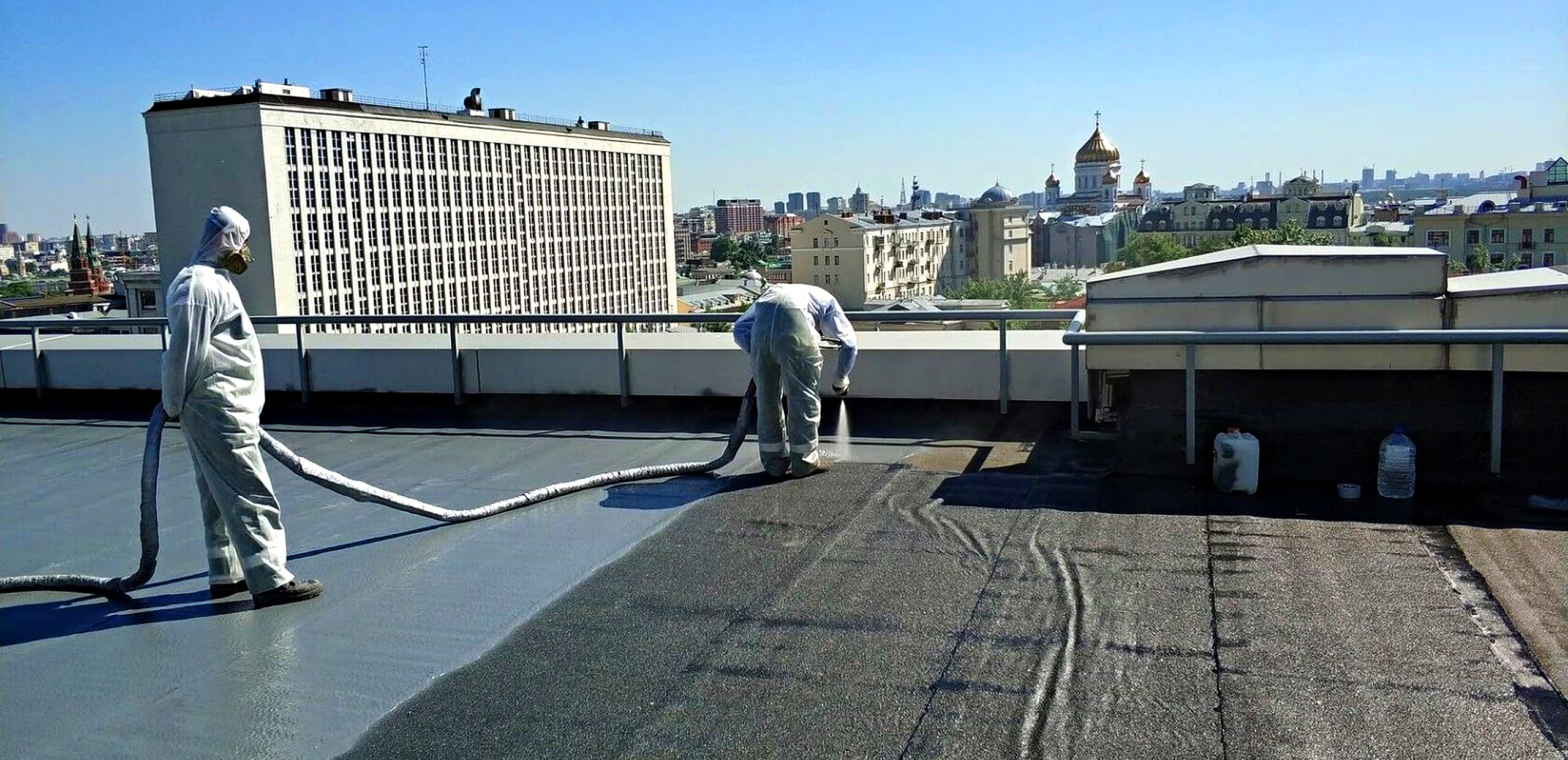
Spray roofs for a living.
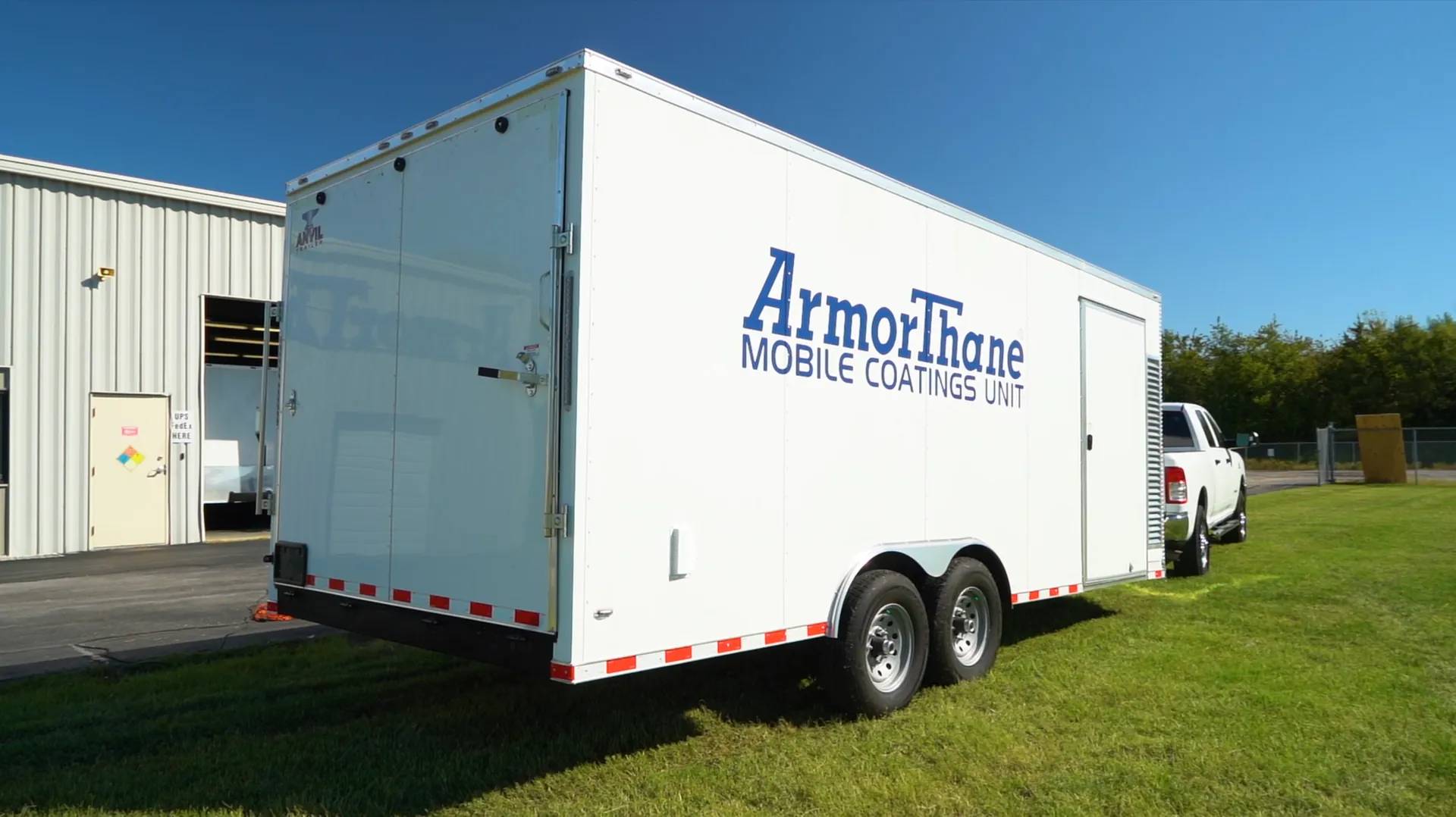
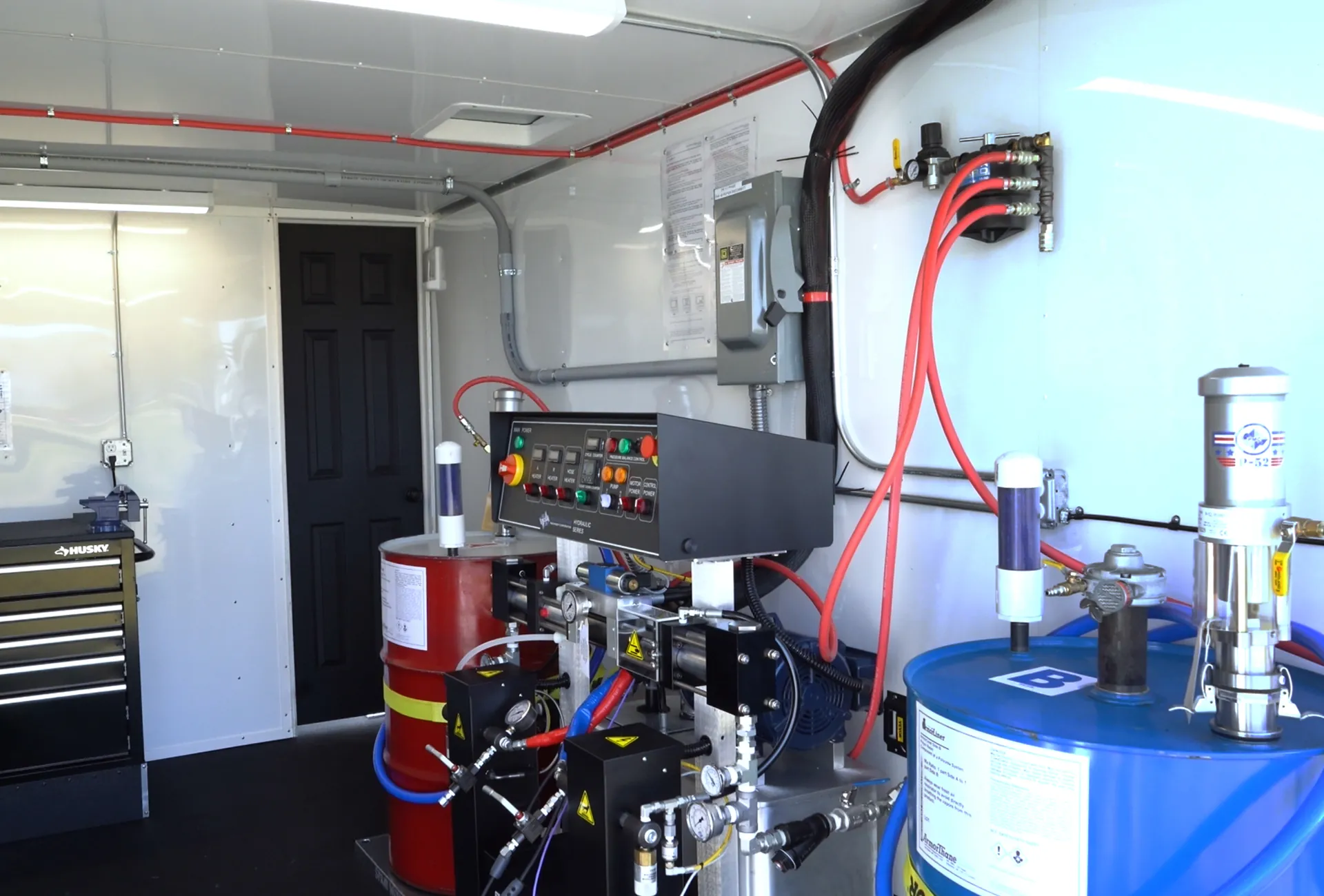
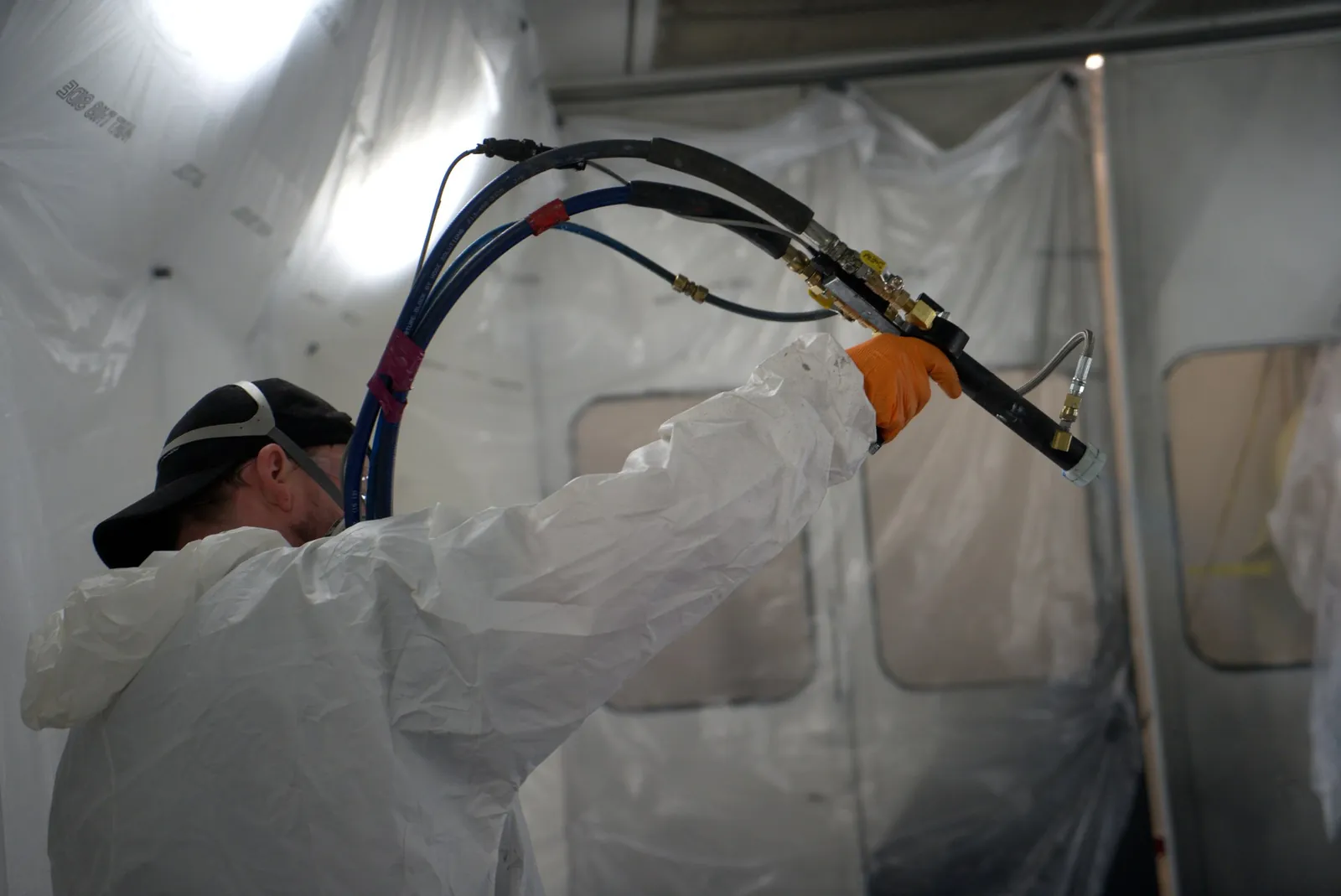
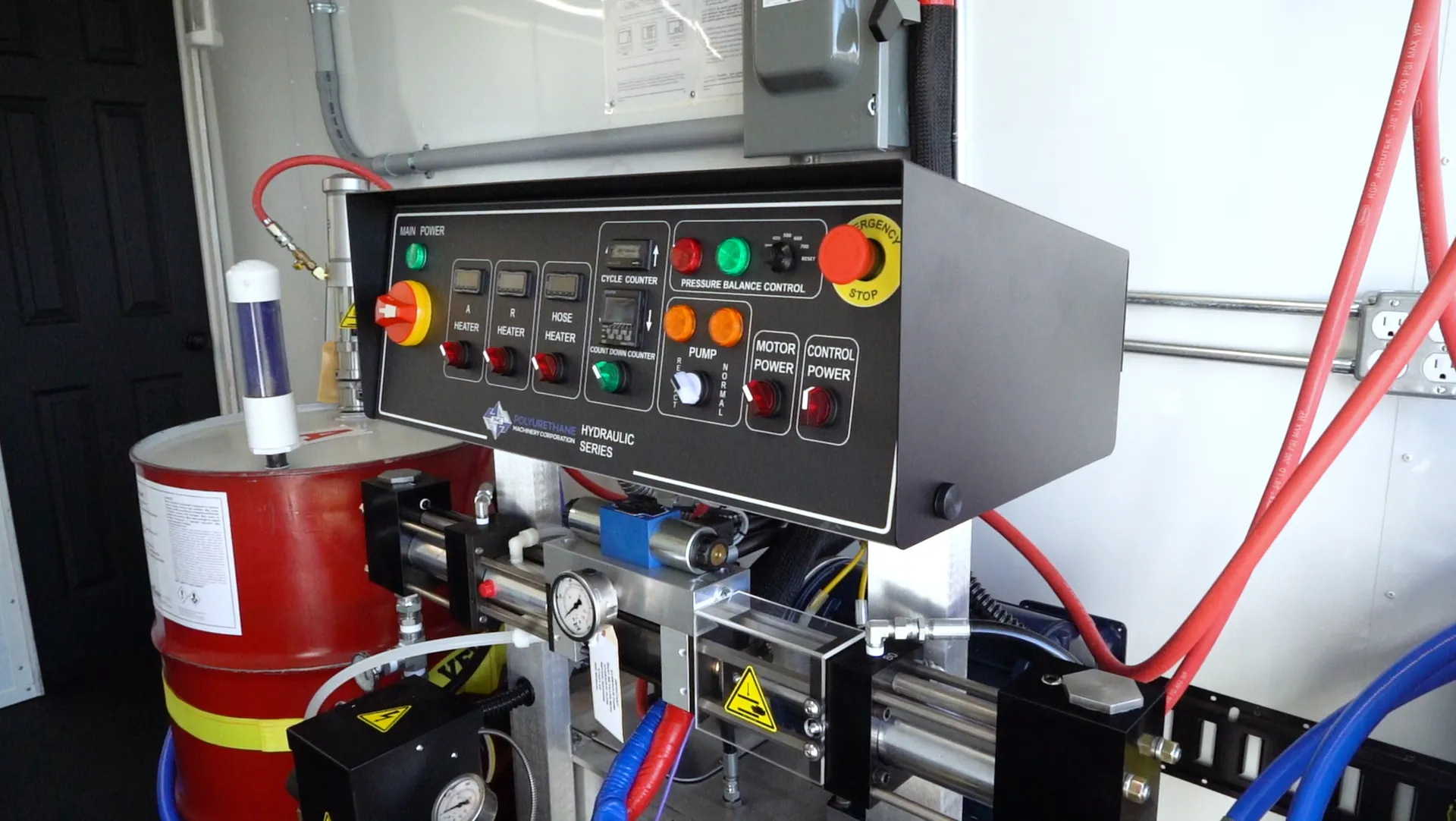
ArmorThane sets you up to do this work, and you own the business. We make the chemistry, build the rigs, train you hands-on and answer the phone when a job gets difficult. You pay no franchise fee and no royalties. It has been that way since 1989.
- $0
- franchise fees or royalties
- 35+
- years in business
- 50+
- countries with applicators
- 24/7
- technical support
A flat roof rarely leaks where the stain is. Water gets in at a flashing, a seam or a drain, travels along the deck or through the insulation, and drips wherever it finds a way down. Here's how to trace it, how each roof type is repaired, and when a patch, a coating or a new roof is the right call.
Most flat roof leaks start at flashings, seams, drains and penetrations, and the water can travel before it shows inside. A typical repair costs $300–$1,100. If the membrane is attached and the insulation mostly dry, a coating restoration runs about $1–$4 per sq ft; replacement runs $3–$11 per sq ft plus $1–$2 tear-off. Water still standing after 48 hours is ponding. Diagnose your leak or compare your options.
Who's writing: ArmorThane makes polyurea coatings and spray foam in Springfield, Missouri, and trains the applicators who spray them on flat roofs. We don't make EPDM, TPO, PVC or silicone, so this guide starts with the repair and gets to coatings only when a roof qualifies.
How to find a flat roof leak
WATERPROOF! Magazine calls flashings and seams "the weak spots in any roof design," with drains and penetrations close behind. Open field membrane is the least likely source, even when the stain is right under it. Work through the roof in this order before anyone cuts anything.
Read the leak from inside
Note when it drips: every rain, only long rains or only wind-driven rain. That timing narrows the cause as much as the stain's location.
Clear the drains and scuppers
A clogged drain holds water over small weaknesses. Clear it before looking for holes; drain repairs run $70–$500 (Fixr, 2026).
Walk the perimeter
Look where the roof meets walls, parapets and edge metal: base flashing pulling loose, open coping joints, cracked counterflashing, and on EPDM, a sheet "tenting" away from the wall as it shrinks.
Check every penetration upslope of the stain
Curbs, vents, pipes, skylights and pitch pans. Flashings should lap over the membrane on the downhill side, and pitch-pan sealant should crown above the lip so it sheds water.
Probe the seams
Check single-ply seams with a probe or pick for open laps and fishmouths. On mod bit and built-up roofs, look for splits, blisters and laps with no bitumen squeezed out at the edge.
Water test one area at a time
Still stuck? Wet one small area at a time, working up from downslope of the suspect spot, while someone watches inside.
How the pros find leaks and wet insulation
Instruments help on big roofs, but none replaces a look at the flashings. Angi puts an inspection at $75–$600 depending on method.
| Method | Standard | What it finds | Limits |
|---|---|---|---|
| Infrared scan | ASTM C1153 | Wet insulation under the membrane, imaged at night as the roof cools | Needs about 3 dry days and wind under 14 mph; not for metal roofs, below-deck insulation or heavy ballast; confirm with cores |
| Electronic leak detection | ASTM D7877 | Breaches in the membrane itself | Not accurate on EPDM or other conductive membranes; low-voltage testing struggles at vertical turn-ups |
| Impedance survey | ASTM D7954 | Moisture under the membrane | Limited over conductive materials such as EPDM |
| Flood test | ASTM D5957 | Whether an area leaks, holding 1–4 in. of water for 24–72 hours | Poor at pinpointing small breaches; the deck has to carry the water |
| Core cut | Used to verify scans | The actual roof layers and whether the insulation is wet | Has to be patched correctly afterward |
Flat roof leak triage
Pick your roof type and what you're seeing. The tool suggests where to look first, the likely cause and the usual repair, based on NRCA, InterNACHI and manufacturers' repair guidance.
Where is my flat roof leaking from?
A starting point for you or your roofer, not a substitute for a roof inspection.
Flashing repair (EPDM). Reseal or replace the flashing where the roof meets the wall, and check the coping and counterflashing above it. EPDM seams often develop defects within the first three years, and shrinkage pulls the sheet away from walls (“tenting”). Weathered EPDM must be cleaned and primed before pressure-sensitive patches will stick. A sound EPDM roof needs no coating. HomeGuide suggests weighing replacement for roofs 10–15 years old that need extensive repairs; one leak isn’t that, several are.
Flat roof repairs by membrane type
A patch has to match the roof: EPDM takes primer and pressure-sensitive tape, TPO and PVC take heat welds, mod bit takes compatible bitumen. The wrong material may peel off or attack the membrane.
EPDM
Where it leaks: seams (InterNACHI says defects often show within three years), flashings, and walls where a shrinking sheet tents away. Oils and solvents damage it.
How it's fixed: clean and prime the rubber, apply pressure-sensitive patches or tape, and seal edges with lap sealant. Sound EPDM needs no coating; our rubber roof coating guide covers when one makes sense.
TPO
Where it leaks: hand-welded seams, flashings and punctures; older TPO near hot equipment can degrade.
How it's fixed: probe seams for at least a 1.5 in weld. Weathered TPO must be scrubbed and cleaned so new welds take, then failed spots are rewelded or overlaid. For coating over it, see TPO roof waterproofing.
PVC
Where it leaks: seams, and wherever the sheet has turned brittle. An NRCA technical paper blames most long-term PVC failures on embrittlement from heat and UV.
How it's fixed: condition and reweld seams. Keep PVC away from asphalt and polystyrene. Ask whether very brittle PVC is worth patching at all.
Modified bitumen
Where it leaks: laps, splits at inside corners, flashings and blisters; granule loss exposes the asphalt.
How it's fixed: reseal or patch laps with compatible material; good laps show 1/4–1/2 in of bitumen run-out. APP mod bit isn't compatible with asphalt cement, and pitch pans aren't recommended on it.
Built-up (BUR)
Where it leaks: splits over deck joints, alligatored (craze-cracked) asphalt, flashings and blisters between plies.
How it's fixed: seal cracks and bare spots. Small intact blisters can be left; 3–5 ft blisters need repair, and widespread large ones mean the roof is near its end (InterNACHI). Gravel has to come off before GAF's silicone goes on.
Spray foam (SPF)
Where it leaks: where the coating has worn thin and sunlight has degraded the foam, plus hail dents and punctures.
How it's fixed: SPFA says caulk and coat light damage; scarify 1/2 in, refoam and coat heavy damage. IBHS puts recoating at every 10–20 years. See spray foam roofing.
Metal
Where it leaks: loose fasteners and worn washers, laps, rust at the laps and penetrations, rarely the panel itself.
How it's fixed: secure or replace fasteners, prime rust, and seal laps and fasteners with fabric-reinforced mastic, the prep coating makers require before a restoration. See metal roof repair.
Ponding water on a flat roof
Every flat roof holds a little water after a storm; the problem is water that stays. NRCA's test is "no ponding water on the roof 48 hours after a rain during conditions conducive to drying," and the Asphalt Roofing Manufacturers Association uses the same 48 hours.
The International Building Code requires membrane roofs (except coal-tar built-up) to slope at least 1/4 inch per foot, a 2% slope. Reroofing is exempt if the roof keeps positive drainage, which is why many older roofs are flatter than a new one would be.
What ponding does
- Adds weight that deflects the deck, so it holds more water
- Speeds "deterioration of the membrane surface" (ARMA)
- Freezes into ice that scrubs the membrane
- Grows algae and vegetation
- Soaks seams and wets insulation
How it's fixed
- Clear drains; add or move drains at low spots
- Add crickets and saddles behind curbs
- Build slope with tapered insulation
- Add overflow drains where code requires
- If you coat, pick a chemistry made for standing water
Coatings differ here. GAF says silicone is "great for applications where you need ponding water resistance," as does our silicone roof coating guide, while our roof coating guide recommends acrylic only where drainage is reliable. A coating doesn't remove the water or its weight, though. HomeGuide lists pooling and sagging repairs at $800–$2,500; Fixr lists ponding fixes at $70–$750.
Repair, restore or replace?
Three questions decide it: how wet is the insulation, is the membrane still attached, and how old is it?
Fix the leak
- One or a few leaks at flashings, seams or drains
- Roof is well inside its service life
- Insulation is dry beyond the leak area
- Typical cost: $300–$1,100 (HomeGuide)
Coat the whole roof
- Membrane is aging but still attached and "clean, dry and tight" (GAF)
- Wet areas are small and get cut out and replaced first
- Coating passes an adhesion test
- Typical cost: $1–$4 per sq ft (HomeGuide)
Tear off and reroof
- Insulation is widely wet, or the roof is brittle, split or loose
- Repairs would cost more than half of a new roof (Angi)
- There are already two roof coverings
- Typical cost: $3–$11 per sq ft plus $1–$2 tear-off
The wet insulation question
Wet insulation is what usually rules out a coating: "Wet insulation left beneath a new coating will cause blistering, failed adhesion, and continued leaks," as one coating contractor puts it. Many treat about 25% wet as the limit for a restoration, a rule of thumb rather than a standard. GAF's silicone spec requires a moisture survey and says to "remove and replace any wet areas."
Age matters too. HomeGuide puts flat roof life at 15–25 years and suggests weighing replacement for roofs 10–15 years old that need extensive repairs. Angi's rule: when a repair costs more than half of a replacement, replace.
Not sure which you need? An ArmorThane-certified applicator can inspect the roof, core it if needed and tell you whether it's a repair, a polyurea restoration or a replacement. Request a free flat roof quote.
What flat roof repair costs
HomeGuide and Fixr both put the typical flat roof repair at $300–$1,100, with averages of $900 and $700. Labor is about 70% of it by Fixr's estimate, at $45–$80 an hour.
| Repair | HomeGuide | Fixr |
|---|---|---|
| Minor leak | $150–$500 | — |
| Leak, average to extensive | $500–$3,000 | $150–$4,000 |
| Flashing | $200–$500 | $200–$750 |
| Seam | — | $200–$1,000 |
| Drain | — | $70–$500 |
| Blistering or cracking | $250–$1,250 | $250–$1,500 (blisters); $250–$1,250 (alligatoring) |
| Ponding, pooling or sagging | $800–$2,500 | $70–$750 (ponding); $800–$2,500 (sagging) |
| Roof decking | $200–$2,500 | — |
| Coat, reseal or recover | $500–$2,000 ($1–$4 per sq ft) | $400–$1,250 (resealing) |
| Inspection | $100–$400 | $75–$600 |
Repair and replacement by membrane
| Membrane | Repair, per sq ft | Replace, per sq ft | Typical life (years) |
|---|---|---|---|
| EPDM | $2–$10 | $4–$10 | 15–25 |
| TPO | $2–$9 | $4–$10 | 10–25 |
| PVC | $3–$12 | $5–$12 | 20–30 |
| Modified bitumen | $3–$8 | $4.00–$7.50 | 10–20 |
| Built-up (BUR) | $2–$7 | $3.50–$7.50 | 20–30 |
| Spray foam (SPF) | $2–$3 | $3.50–$7.00 | 40+ with upkeep (SPFA) |
| Metal | $5–$10 | $5–$16 | 30–80 |
Coating a flat roof vs replacing it
Installed cost per sq ft; bars show the high end. Replacement excludes tear-off.
Acrylic, silicone and replacement: HomeGuide. Polyurethane: Angi (Aug. 2026). Sprayed polyurea: ArmorThane's roof coating guide (Mar. 2026); roofs needing heavy prep cost more.
Repair vs restore vs replace cost estimator
Enter the roof size, membrane, how much is wet or damaged and the coating you'd use. The estimator prices all three options from the ranges above.
Should I repair, coat or replace my flat roof?
Uses HomeGuide, Angi and ArmorThane published ranges. Restore includes replacing the wet area; replace includes tear-off.
Restore. At 12 years the roof is at the age where HomeGuide suggests looking past spot repairs, and with 5% wet it may still be dry enough to coat. At the midpoints, restoring costs about 46% of replacing. Restoration here means replacing about 100 sq ft of wet or damaged roof and coating all 2,000 sq ft with silicone ($1.50–$4.50 per sq ft). Coating warranties usually come in 10-, 15- or 20-year terms tied to thickness; a new modified bitumen roof lasts about 10–20 years (HomeGuide).
Published ranges, not a quote. Access, penetrations, local labor and what's under the membrane move real prices.
How a coating restoration works
A restoration isn't paint. It's a fluid-applied membrane built to a specified thickness over a roof that has been surveyed, repaired and cleaned. Skip the prep and it peels, blisters over wet insulation, or leaks at the same flashings. These steps follow manufacturers' published specifications.
Moisture survey
An infrared or impedance scan confirmed with cores. GAF's silicone spec makes it mandatory.
Cut out wet areas
Replace wet insulation and membrane so the roof is "clean, dry and tight."
Repair and clean
Fix seams, blisters and flashings, then power wash. On metal, secure fasteners and prime rust.
Test adhesion
A test patch shows whether the coating bonds; GAF says a primer can help where it fails, and requires the test on smooth asphalt roofs.
Reinforce the details
Seams, drains, penetrations and fasteners get extra coating and fabric first.
Coat to thickness
The specified gallons per square earn the warranty term, so ask how many gallons will go on.
| Warranty term | Gallons per 100 sq ft | Dry film |
|---|---|---|
| 10 years | 1.75 | 27 mils |
| 15 years | 2.25 | 35 mils |
| 20 years | 2.50 | 39 mils |
Which coating?
Silicone handles ponding best, but future recoats generally have to be silicone too. Acrylic costs least and suits roofs that drain well. Polyurea and polyurethane hold up better to foot traffic and impact; our polyurea flat roof waterproofing page covers the sprayed system, and the liquid-applied waterproofing membrane guide compares chemistries by standard. For a cooler building, see cool roof coatings.
Add flat roof restoration to your business.
ArmorThane equips and trains independent applicators to spray polyurea roof systems, with no franchise, royalty or dealership fee. Turnkey systems start at $25,000 with equipment, training, first chemical, prep and safety gear; low-pressure 1:1 rigs start as low as $20,000. Third-party financing is available.
Already in the trade? Add protective coatings →
DIY fixes and roof safety
Clearing drains, picking up debris and a temporary patch made for your membrane are fine for a careful owner. So is watching the roof: HomeGuide suggests a pro inspection every 3–5 years plus your own yearly checks, and SPFA says to inspect spray foam roofs twice a year and after severe weather.
Leave heat welding TPO and PVC, torching mod bit and cutting out wet insulation to a roofer. A bad weld or a misplaced torch can make the leak worse, and the wrong patch material can peel off or damage the membrane: asphalt products on PVC and petroleum solvents on EPDM are the classic examples.
Seamless polyurea from certified applicators
When a flat roof qualifies for restoration, ArmorThane-certified applicators spray a seamless polyurea membrane over it, after prep and primer, on roofs from concrete and mod bit to metal and aged single-ply. They're trained on site or virtually and certified by ArmorThane, which has made coatings since 1989 and supplies applicators in more than 50 countries.
If your roof only needs a repair, a good applicator will say so. Use the applicator finder to reach one near you, read more on flat roof waterproofing, and join the newsletter for new roofing guides and price updates.
Flat roof repair FAQ
How much does flat roof repair cost?
HomeGuide puts the typical flat roof repair at $300–$1,100, with a $900 national average, or $2.50–$10 per sq ft. A minor leak runs $150–$500 and an extensive one $1,200–$3,000. Fixr's 2026 average is $700, and labor is roughly 70% of the bill.
How do I find a leak in a flat roof?
Clear the drains, then check the perimeter flashings, every penetration upslope of the stain and the seams. Water often travels under the membrane before it drips, so the leak is rarely right above the stain. If you still can't find it, water test one small area at a time, or have an infrared survey done.
Can I fix a flat roof leak myself?
You can clear drains, remove debris and apply a temporary patch made for your membrane. Heat welding TPO or PVC, torching mod bit and cutting out wet insulation are jobs for a roofer, because the wrong material or a bad weld can make the leak worse. Use fall protection near edges.
What is considered ponding water on a flat roof?
Water that is still on the roof 48 hours after rain, in weather good for drying. That is NRCA's test, and the Asphalt Roofing Manufacturers Association uses the same 48-hour definition. The building code requires new membrane roofs to slope at least 1/4 inch per foot to prevent it.
How do you fix ponding water on a flat roof?
Clear clogged drains first. Lasting fixes add slope or drainage: crickets and saddles, tapered insulation, new or relocated drains, and overflow drains where required. HomeGuide lists pooling and sagging repairs at $800–$2,500. A silicone coating resists ponding water, but it doesn't remove the water or its weight, so fix the drainage too.
Should I repair, restore or replace my flat roof?
Repair a few leaks at flashings, seams or drains when the insulation is dry. Restore with a coating when the membrane is aging but attached and mostly dry, after wet areas are replaced. Replace when insulation is widely wet (many contractors use about 25% as the cutoff), the roof is brittle, or repairs cost more than half of a new roof.
Can you put a coating over a leaking flat roof?
Not as a fix by itself. Coating manufacturers require the roof to be clean, dry and tight first. GAF's silicone specification requires a moisture survey and says to remove and replace any wet areas, and adhesion testing shows whether the coating will bond. Wet insulation left under a coating causes blistering, failed adhesion and continued leaks.
How long does a flat roof coating last?
It depends on the coating and its thickness. Warranties usually come in 10-, 15- and 20-year terms; GAF's high-solids silicone over asphalt roofs calls for 27, 35 and 39 dry mils for those terms. HomeGuide says sealing can add 7–10 years to a roof's life, and most coatings can be recoated.
What is the most common cause of flat roof leaks?
Flashings and seams. Roofing inspectors and trade publications consistently name the joints, not the open field, as the weak spots: wall and edge flashings, penetrations, drains and seams. Ponding water makes any of them worse. On EPDM, InterNACHI notes seam defects often appear within the first three years after installation.
How much does it cost to replace a flat roof?
HomeGuide puts flat roof replacement at $3–$11 per sq ft installed, or $4,000–$16,800 with a $10,800 average, plus $1–$2 per sq ft to tear off the old roof. Angi's 2026 average is $7,433. Modified bitumen and built-up roofs sit at the low end; PVC and metal at the high end.
How do you repair an EPDM, TPO or PVC roof?
EPDM is cleaned, primed and patched with pressure-sensitive patches or tape, with lap sealant at the edges. TPO and PVC are heat-welded: weathered membrane has to be scrubbed and cleaned first, and seams need at least a 1.5 inch weld. PVC must be kept away from asphalt, and very brittle PVC may not be worth patching.
Written from NRCA, ARMA, OSHA and IBC guidance, InterNACHI inspection guides, manufacturers' specifications, dated cost guides and decades of making roof coatings. Reviewed September 27, 2026.
Methodology and sources
Costs are national ranges as each guide published them, read September 2026. The estimator prices repair at $2.50–$10 per sq ft of damaged area ($150–$500 minimum), restoration as coating the whole roof plus replacing the wet area, and replacement at HomeGuide's installed rate plus $1–$2 per sq ft tear-off. The 25% wet insulation limit is a rule of thumb, not a standard.
- HomeGuide, flat roof repair and replacement (Nov. 2025) and roof coating (Apr. 2024) costs: homeguide.com
- Fixr, Flat Roof Repair Cost in 2026 (Jan. 2026): fixr.com
- Angi, roof repair, flat roof replacement and roof coating costs (Jul.–Aug. 2026): angi.com
- Professional Roofing (NRCA), Still Water Runs Deep (Jul. 2012): professionalroofing.net
- Asphalt Roofing Manufacturers Association, Ponding Water Basics (Jan. 2019): asphaltroofing.org
- WATERPROOF! Magazine, Roof Leaks: Pinpointing and Repairing (Jan. 2010): waterproofmag.com
- IIBEC, The Leak Stops Here: Methodology of Leak Detection (Mar. 2021): iibec.org
- ASTM C1153, Location of Wet Insulation in Roofing Systems Using Infrared Imaging: astm.org
- CoatingsPro Magazine, Roof Infrared Thermography (Sep. 2019): ampp.mydigitalpublication.com
- InterNACHI, EPDM, TPO, PVC, mod bit and BUR inspection guides: nachi.org
- QXO, Detecting Shrinkage in EPDM Roofing Materials (Aug. 2024): qxo.com
- Carlisle, FleeceBACK EPDM Rooftop Guide and Inspection (Apr. 2026): Carlisle (PDF)
- EPDM Roofing Association, General Questions: epdmroofs.org
- Versico, Seam Probing (Dec. 2019): versico.com
- Foley et al., Aging and Hail Research of PVC Membranes (NRCA library): nrca (PDF)
- SPFA-139 hail repair (2015) and SPF roof maintenance (Aug. 2024): sprayfoam.org
- IBHS, RICOWI Roof Guide: Spray Foam: ibhs.org
- GAF, silicone quick spec, metal restoration systems, TAB C-43 (2021) and silicone blog (Mar. 2026): gaf.com
- Benchmark Inc., Considerations When Evaluating Use of Roof Coatings (May 2019): benchmark-inc.com
- West Roofing Systems, Requirements Needed to Install a Roof Coating System (Jul. 2024): westroofingsystems.com
- IBC 2018 Section 1511.3.1.1, as adopted in Oklahoma Administrative Code 748:20-2-20: justia.com
- OSHA, 29 CFR 1926.501 and 1926.502, Fall Protection: osha.gov
- ArmorThane, roof coating, polyurea flat roof, silicone and rubber roof guides: armorthane.com

Start your coatings business with ArmorThane.
Tell us what you want to spray and where you are. An ArmorThane specialist will walk you through the equipment, chemicals, training and startup cost for the work you want to do.
- Equipment package matched to your applications
- Hands-on training and applicator certification
- Technical support once you are spraying
Leaking flat roof? Get it checked by a certified applicator.
Tell us the roof size, the membrane if you know it and where it leaks. We'll connect you with an ArmorThane-certified applicator who can tell you whether it needs a repair, a polyurea restoration or a new roof.
- Leak tracing at flashings, seams and drains
- Seamless spray polyurea over many existing roofs
- Straight repair vs restore vs replace advice
- Roofers: ask about adding polyurea roof systems
More to read on roofing
Short reads from ArmorThane on Issuu. Tap one to open it right here.