


Commercial Kitchen Flooring Compared
Quarry tile, urethane cement, epoxy, MMA, polyaspartic, sealed concrete, vinyl and rubber, rated on heat, grease, slip resistance, health code, closure time and cost.
Start a floor coating business
Coat floors for a living.
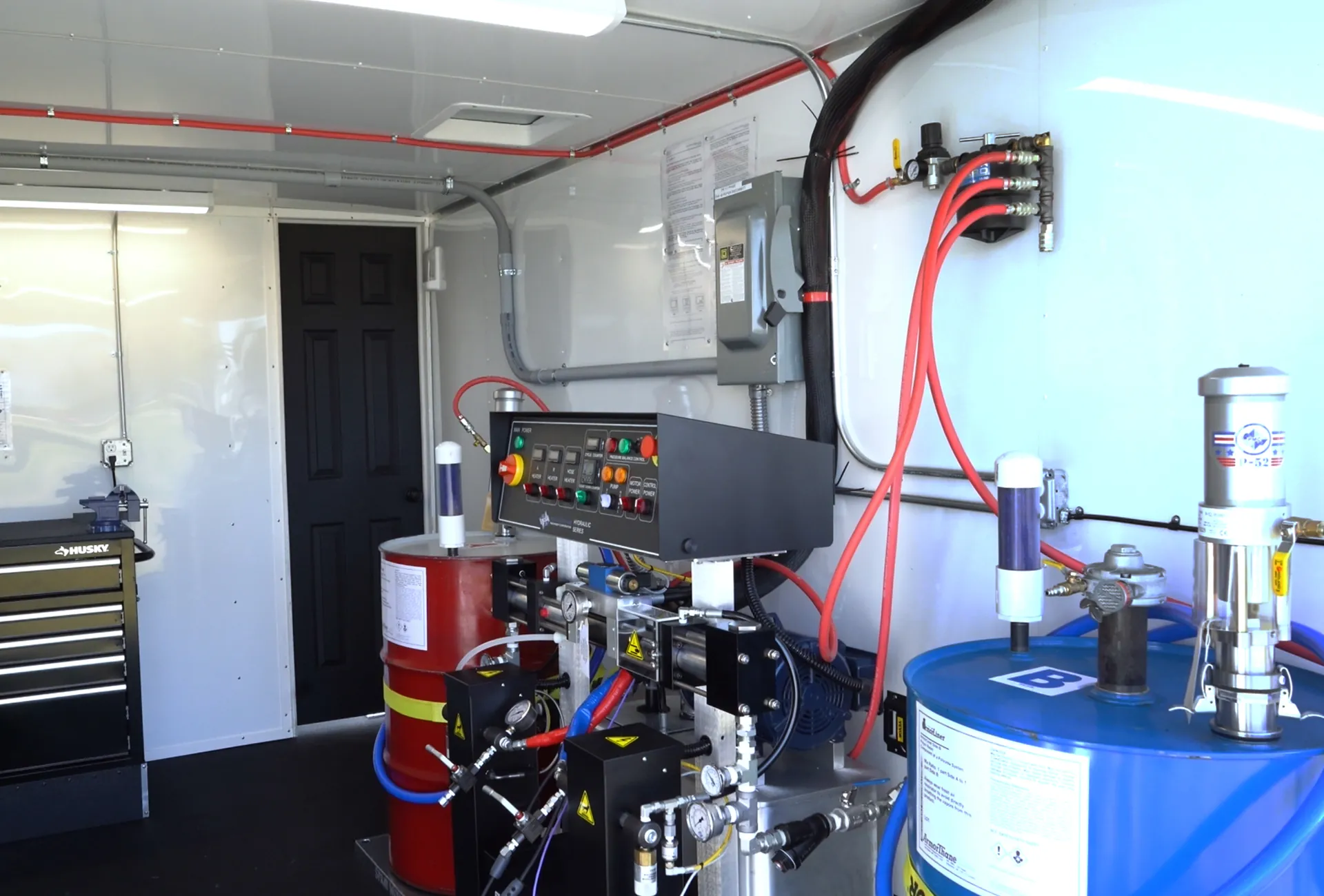
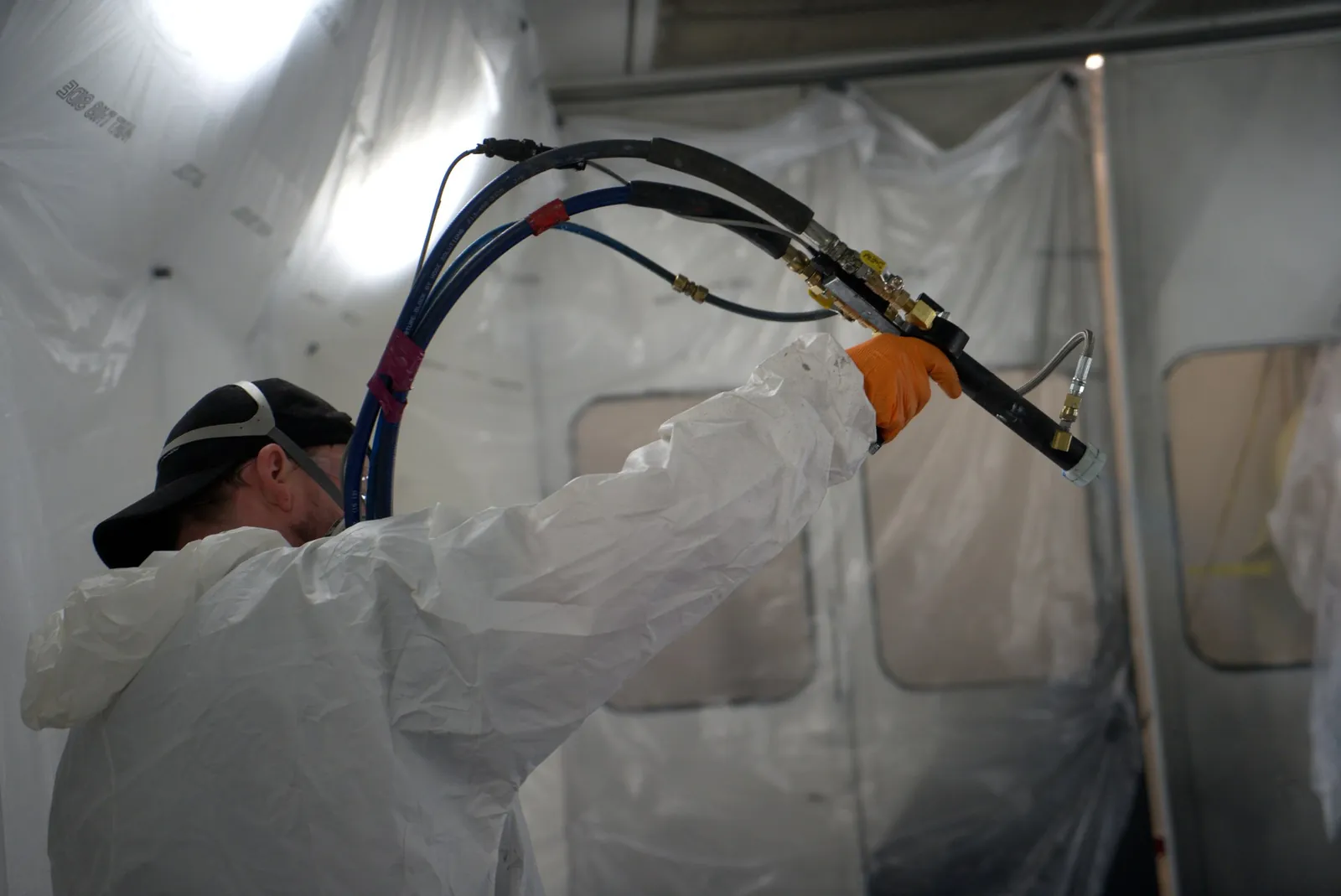
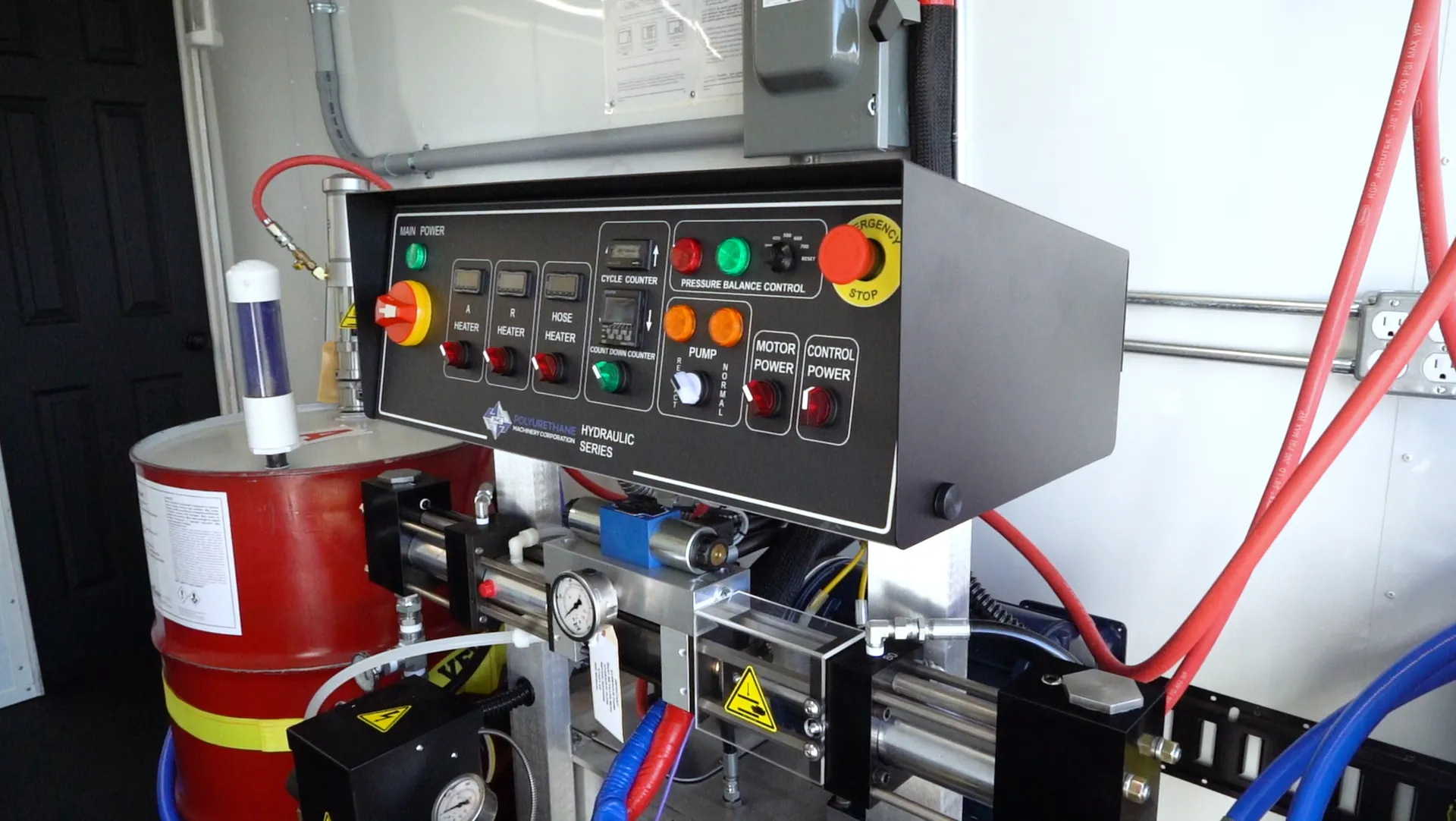
ArmorThane sets you up to do this work, and you own the business. We make the chemistry, build the rigs, train you hands-on and answer the phone when a job gets difficult. You pay no franchise fee and no royalties. It has been that way since 1989.

- $0
- franchise fees or royalties
- 35+
- years in business
- 50+
- countries with applicators
- 24/7
- technical support
A commercial kitchen floor takes 375°F fryer oil, scalding washdown water, fats, acids, enzyme cleaners and constant foot traffic, and it has to pass a health inspection while it does. Kitchen floors rarely fail from simple wear. The usual culprits are heat, grease and a grout line or seam that lets water under.
For cook lines and dish pits, the proven choices are urethane cement at 1/4–3/8 inch (rated to about 248°F and steam-cleanable, roughly $8–$25 per sq ft installed) or quarry tile with 100%-solids epoxy grout ($8–$15). Most epoxies top out near 140°F. MMA reopens in hours. Health departments want a sealed, coved base, commonly 4 inches high. Pick a system or price the closure.
There's no single best restaurant flooring. A dish pit, a walk-in freezer and a dry storage room need different floors, and the cheapest square foot can cost the most if it means a four-day closure. This guide compares eight systems, shows what the code says and gives you two tools to narrow it down.
A word about who's writing. ArmorThane has made polyurea, polyurethane and polyaspartic coatings in Springfield, Missouri, since 1989 and trains the certified applicators who install them. We don't make quarry tile, urethane cement or vinyl, and we'll tell you where those are the better floor.
- 1Zone the kitchen first
- 2Eight floor systems compared
- 3Floor system selector (interactive)
- 4What the health code requires
- 5Thermal shock and heat ratings
- 6Grease, acids and cleaners
- 7Slip resistance
- 8Each system's pros and cons
- 9Drains, slope and cove base
- 10Closure cost calculator (interactive)
- 11Cost and lifespan
- 12Commercial kitchen flooring FAQ
Zone the kitchen first
Health departments treat a kitchen as several rooms with different jobs. Choose a floor zone by zone.
Cook line and fryers
Hot oil, grease, dropped pans and hot-water cleanup. Sherwin-Williams' example: a 375°F oil spill followed by a 185°F washdown. Thermal shock ratings matter most here.
Dish pit and warewashing
Standing water, hot rinse water and detergents. Floors must be nonabsorbent, and water-flushed floors need drains and a coved, sealed base.
Walk-in coolers and freezers
Cold floors hit by warm air and carts. Some counties allow sealed concrete here. Freezer floors also need insulation; see our walk-in cooler insulation guide.
Prep, bakery and dry storage
Flour, spills and carts rather than fryer oil. Sonoma County, California, accepts vinyl composition tile in dry storage but not in full-service kitchen areas.
Eight commercial kitchen floors, compared
Heat and cure figures come from manufacturer data sheets; prices are contractor estimates read September 2026, so treat them as ranges, not quotes. Tap a heading to sort.
| System | Heat and thermal shock | Grease and cleaners | Back in service | Installed, per sq ft |
|---|---|---|---|---|
| Urethane cement (1/4–3/8 in) | Best. −40°F to 248°F; steam-cleanable at 1/4 in (Sika) | Best. Made for aggressive chemicals | Foot traffic in 6–18 h; normal operations about 24 h (Stonhard) | $8–$25 |
| Quarry tile, epoxy grout | Tile: excellent. Grout is the weak point | Good with 100%-solids epoxy grout | No published figure; mortar and grout must cure | $8–$15 |
| Epoxy | Limited. Most rated to about 140°F | Good. Hard and chemical resistant | Foot traffic 12–24 h; full service 48–72 h | $4–$12 |
| MMA (methyl methacrylate) | Moderate. 180°F maximum operating (Sika cove system) | Good. Keep strong solvents off | About 1 hour per coat, down to 24°F | $12–$25 |
| Polyaspartic or polyurea coating | Unrated. No published hot-washdown rating found | Good. Not for strong acids | Walk in 3–4 h; heavy traffic about 24 h | $5–$12 |
| Sealed concrete | Depends on the sealer | Weak. Only as good as the sealer | Depends on the sealer | $2–$6 |
| Safety sheet vinyl | Limited. 140°F dry heat (Altro) | Good. Built for wet, greasy floors | Adhesive-free: walk on the same day | $6–$15 |
| Rubber | No kitchen heat rating found | Oil-resistant grades only (ASTM D471) | Not published | $7–$14 |
Kitchen floor system selector
Choose the zone, cleaning method, grease load, closure window and budget. The selector ranks all eight systems and says why the others fell down the list.
Which floor fits this part of my kitchen?
Ratings are our reading of the published heat, chemical, slip and cure data in this guide. Run it once per zone.
What the health code requires
The FDA Food Code (current edition 2022) is a model that states and counties adopt with their own amendments. Its floor rules are short; what your inspector accepts is decided locally. A kitchen floor is an incidental contact surface, which is a lower bar than a tank lining has to clear — our guide to food grade coating rules sorts the four contact levels and the paperwork each one needs.
Smooth, durable, nonabsorbent
Floors must be "smooth, durable, and easily cleanable" where food is handled, and nonabsorbent in areas subject to moisture: food prep, walk-in refrigerators, warewashing, toilet rooms and areas cleaned by flushing or spraying.
Coved and sealed
Floor-to-wall junctures must be coved and closed to no more than 1/32 inch (1 mm). Where floors are water-flushed, they must have drains, be "graded to drain," and the juncture must be coved and sealed.
No clutter on the floor
No horizontal pipes or utility lines on the floor, no carpet in prep, walk-in, warewashing or toilet areas, and mats or duckboards must be removable and easily cleanable.
| Jurisdiction | Kitchen floors accepted | Not accepted or limited | Cove base |
|---|---|---|---|
| Sonoma County, CA | Quarry tile; troweled epoxy, "not paint," 1/4 in minimum; heat-welded kitchen vinyl | Sealed concrete only in walk-ins; VCT only in dry storage | 3/8 in radius, at least 4 in up the wall |
| UC Santa Barbara, CA | Quarry or ceramic tile 1/4 in minimum; troweled epoxy 1/4 in; sheet vinyl with a .080 in wear layer | Sealed concrete and VCT not in prep or dish areas | Integral, 3/8 in radius, 4 in; vinyl or rubber top-set cove not approved |
| Maricopa County, AZ | Sealed concrete, VCT, ceramic or quarry tile, if non-slip and grease-resistant | Carpet in prep, storage and washing areas | 3/8 in radius or more; vinyl, rubber, tile or stainless |
Notice the split. A top-set rubber cove and a sealed concrete prep floor pass in Maricopa County and fail at UCSB. The California lists also ask for epoxy troweled to 1/4 inch, which rules out a thin roll-on coating there. Send the floor, base and drain details to your plan reviewer before you order anything.
OSHA adds its own rule (29 CFR 1910.22): floors kept clean and, as far as feasible, dry, and where wet processes are used, "drainage must be maintained" with dry standing places such as mats or platforms.
Thermal shock and heat ratings
Thermal shock is the stress a floor takes when its temperature changes suddenly, such as a cold slab hit by hot oil or boiling water. Sherwin-Williams says it can start with swings as small as 50°F but "more commonly becomes problematic" past 100–150°F. It says epoxy "does not perform as well" here, while cementitious urethane can typically handle swings of over 200°F.
Ratings depend on formula and thickness. Sika's Sikafloor-22 NA PurCem is rated from −40°F to 248°F and steam-cleanable at 1/4 inch, while its self-smoothing PurCem HS-21 is rated only to about 176–194°F (80–90°C) at 4–6 mm. Ask for the rating at the thickness you're buying.
Published maximum service temperatures. Quarry tile is rated by its maker for use under fryers; its limit is the grout. We found no hot-washdown rating for thin-film polyaspartic or polyurea, or for rubber.
Grease, acids and cleaners
Grease is slippery, but the bigger problem is chemistry. MAPEI found that no-rinse enzyme cleaners can push oleic acid concentrations on a kitchen floor to 30%, against 0.5–2% in natural cooking oils, causing "rapid deterioration" of ordinary epoxy grout.
- Tile grout: cement grout "will degrade or deteriorate" in a commercial kitchen (Stone World). Use a 100%-solids industrial epoxy grout (ANSI A118.3), not a ready-mixed single-component grout.
- Urethane cement: Sika markets PurCem for "aggressive chemicals" and says it meets CFIA and USDA requirements for food plants.
- Polyaspartic: ArmorFloor Aliphatic Polyaspartic is made for "moderate to severe chemical environments," but strong acids are a poor fit for polyaspartic in general.
- Rubber: choose an oil-resistant grade, such as Johnsonite Defiant, made to resist "vegetable and cooking fats" (ASTM D471).
- Sealed concrete: where it's accepted, Maricopa County requires a proper concrete sealer and filled joints and cracks.
Whatever you install, rinse enzyme cleaners as the label says. For tile, Metropolitan Ceramics recommends warm water and a neutral cleaner and warns that topical sealers hurt slip resistance.
Non-slip commercial kitchen flooring: what the numbers mean
The U.S. test for hard floors is ANSI A326.3, which measures dynamic coefficient of friction (DCOF). Since 2021 it sorts products into five uses, from Interior Dry to Oils/Greases. Interior Wet needs a wet DCOF of at least 0.42, but the Oils/Greases class is "manufacturer-declared," so there's no universal pass mark for a greasy kitchen. The Tile Council also warns that DCOF "does not predict the likelihood a person will or will not slip."
Quarry tile
Metropolitan Ceramics reports a wet DCOF of 0.60 or more at manufacture, from a slightly textured "orange peel" face.
Textured resin floors
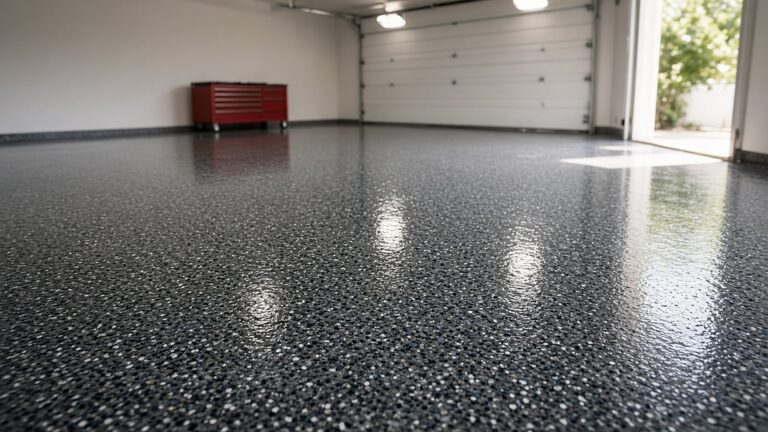
Simiron measured 0.65 wet DCOF on flake systems with a polyaspartic topcoat. Aggregate broadcast into a wet coat raises grip on any resin system.
Safety vinyl
Altro rates Stronghold 30 at R12, its highest, and says it stays slip resistant with oil, greasy water and flour underfoot.
Texture is a choice, not a given. Sika's smooth PurCem HS-21 carries an R9 slip class, while its broadcast versions add texture. Ask for texture in wet and greasy zones. ArmorThane offers non-slip aggregates and SureGrip soft polyurea, which has the highest coefficient of friction of our coatings. Removable mats are fine under the Food Code if they can be lifted and cleaned.
Each restaurant flooring system's pros and cons
Urethane cement
Polyurethane resin, cement and aggregate, troweled or self-leveled at 1/4–3/8 inch. Built for thermal shock, and SaniCrete says it tolerates slabs emitting up to 25 lb of moisture vapor per 1,000 sq ft per day, against 3–5 lb for most epoxies.
- Rated −40°F to 248°F at 1/4 in (Sika)
- Normal operations in about 24 h (Stonclad UT)
Quarry tile with epoxy grout
The traditional kitchen floor: 1/2 inch hard-fired tile absorbing under 3% water. MAPEI says properly installed quarry tile "can last for decades," with 3/8–1/2 inch joints of industrial epoxy grout.
- Wet DCOF 0.60+ out of the box
- Movement joints every 8–12 ft
Epoxy
Seamless, hard and affordable. Terrapin Construction Group says standard epoxy "softens under heat and can delaminate under thermal cycling." Sonoma County and UCSB accept troweled epoxy at 1/4 inch.
- Most systems rated to about 140°F
- Needs a dry slab (3–5 lb MVER)
- 48–72 h to full service
MMA
Cures in about an hour per coat and can go down in a freezer. Sika lists it for commercial kitchens. It's the system for overnight closures.
- 180°F max operating (Sika cove system)
- Strong odor during install; explosion-safe ventilation required
- $12–$25 per sq ft
Polyaspartic and polyurea
Thin, fast, seamless coatings that can run up the wall as an integral cove. See polyaspartic vs epoxy and polyurea vs epoxy. The catch: no published hot-washdown rating for thin films.
- Walk in 3–4 h; heavy traffic in about 24 h
- Chemical resistant; not for strong acids
- $5–$12 per sq ft (garage-market pricing)
Sealed concrete
The cheapest floor, accepted in walk-ins in Sonoma County. UCSB and Sonoma County won't take it in prep or dish areas, and it performs only as well as its sealer.
- $2–$6 per sq ft (warehouse pricing)
- Needs filled joints and cracks
- Coved concrete or metal base in walk-ins
Safety sheet vinyl
Not home-kitchen vinyl. Altro Stronghold 30 is a 3 mm sheet rated R12, with a 20-year life expectancy and 12-year warranty, heat-welded seams and a self-coved base.
- 140°F dry-heat rating; flame guards under cooking equipment
- Drains must be clamped, not cut around
- Adhesive-free versions: walk on the same day
Rubber
Comfortable, but not a kitchen floor on any health department list we checked. Use oil-resistant rubber or removable mats where staff stand.
- Oil-resistant grades meet ASTM D471
- $7–$14 per sq ft (healthcare pricing)
- Top-set rubber cove rejected at UCSB
Drains, slope and cove base
Put these details on the drawings and the quote.
Grade it to drain
The Food Code requires drains and a floor "graded to drain" wherever you clean by flushing with water. Stone World's tile guidance says both mortar-bed and direct-bond substrates should be sloped to drain in wet areas. Your designer and plan reviewer set the slope.
Waterproof under it
For tile, run a waterproofing membrane 4–6 inches up the wall in wet zones, with movement joints every 8–12 feet (TCNA EJ171).
Seal every penetration
Altro says cutting vinyl around a drain voids its warranty; the sheet must be clamped into the drain and its weep holes sealed.
Cove it, then seal it
The Food Code allows no more than a 1/32 inch gap at the wall. Local rules commonly ask for a 3/8 inch radius at least 4 inches up. Integral coves avoid the glued-on joint some reviewers reject.
Keep lines off the floor
Horizontal pipes and conduit can't run on the floor (Food Code 6-201.12), so plan equipment connections before the floor goes down.
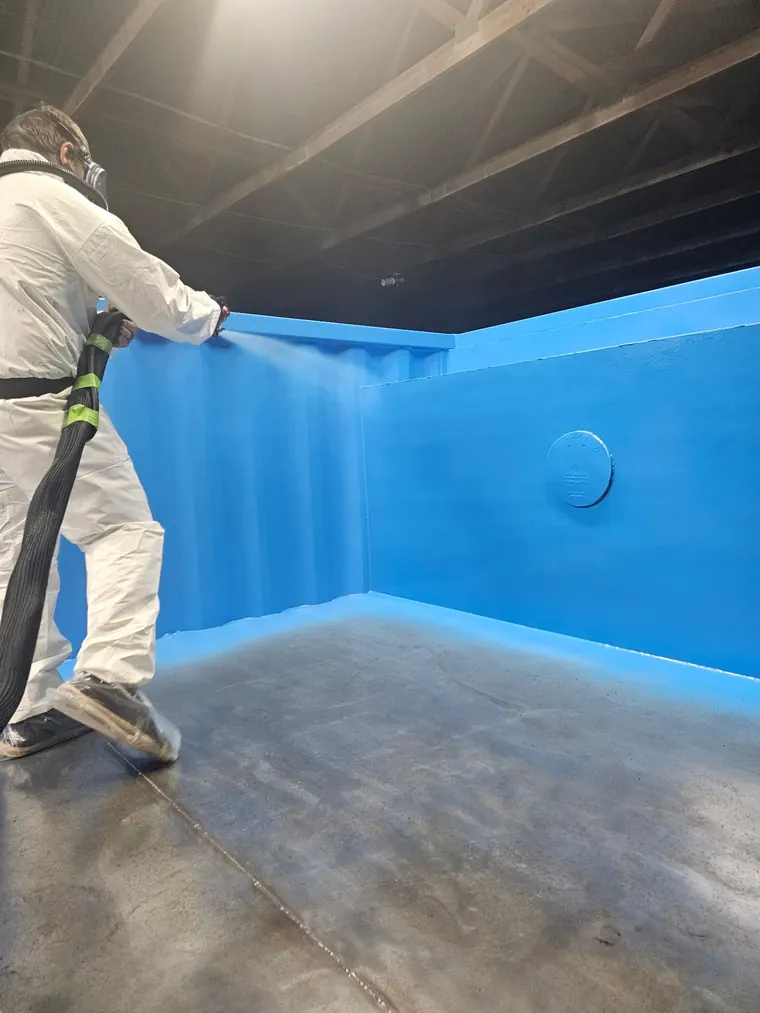
Our commercial and industrial floors checklist covers slab condition and performance needs. Spraying a coating partway up the wall creates what it calls "a seamless waterproof basin," the same idea as an integral cove.
Closure cost calculator
A cheap floor that closes you for four days can cost more than a pricier one that reopens tomorrow. Enter your kitchen size and what a closed day costs you; the calculator adds installed cost to lost sales.
What does each floor really cost me?
Cure times from manufacturer data; installed costs from contractor guides read September 2026. Use your own quotes if you have them.
Commercial kitchen flooring cost and lifespan
Installed prices from five sources published since June 2025, plus the lifespan claims. Notice who's making them: mostly people who sell the floor.
| System | Installed cost, per sq ft | Lifespan claims | Who says so |
|---|---|---|---|
| Quarry tile | $8–$15 (Terrapin); $9–$19 (Flooring Clarity); $5–$10 (Well Built Florida) | 50+ years; 20+ years; or 5–10 years | Tile maker; cost blog; seamless-floor maker |
| Urethane cement | $12–$25 (Terrapin); $8–$15 (SaniCrete, Elite Diamond) | 20+ years | Stonhard (its seamless systems) |
| Epoxy | $4–$12 (Elite Diamond); $4–$10 (SaniCrete); $5–$17 (Flooring Clarity) | 10–20 years | Flooring Clarity |
| MMA | $12–$25 (Flooring Clarity) | 15+ years | Flooring Clarity |
| Commercial vinyl | $6–$15 (Flooring Clarity); $4–$8 sheet vinyl (Terrapin) | 20-year life expectancy; 7–15 years | Altro (Stronghold 30); Flooring Clarity |
| Polyaspartic | $5–$12 (cost guides, 2024–2026) | Not published for kitchens | ArmorThane polyaspartic guide |
Stonhard, which sells seamless floors, says quarry tile "typically" degrades in 5–10 years from grout failure and thermal-shock cracking; the tile maker claims 50 years and more. Both point at the same weak spot, the grout, which is why the grout spec matters more than the tile.
Elite Diamond Coatings puts a 1,000 sq ft restaurant kitchen at about $5,000–$15,000 installed in 2026, with cove base, slip-resistant aggregate, drains and old-coating removal adding to that. Ask for those as separate lines so bids compare.
Seamless floors from certified applicators
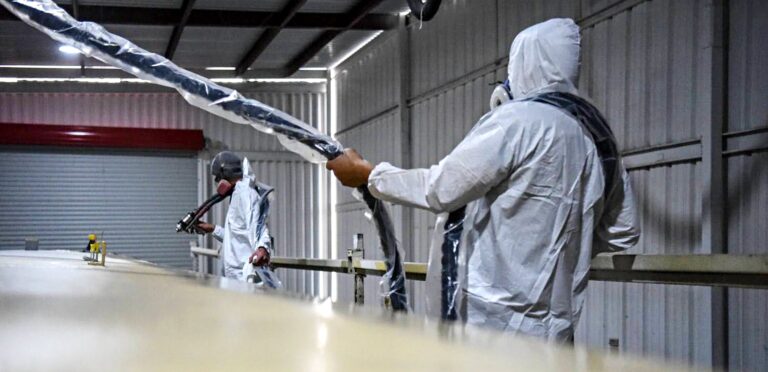
ArmorThane makes spray and roll-on polyurea, polyurethane and polyaspartic floor systems, including ArmorFloor polyaspartic and SureGrip soft polyurea, for applicators in more than 50 countries. Certified applicators can run a coating up the wall as a sealed cove, add non-slip aggregate or use our silver-ion antimicrobial polyurea.
We'll be straight about fit. Our ArmorFloor pages don't list a hot-washdown or thermal-shock rating, so they're good candidates for prep, storage, service corridors, restrooms and front-of-house floors. For a fryer line or a steam-cleaned dish pit, ask for a data sheet rating at that thickness, or put urethane cement or tile there. More on our food and health coatings and industrial flooring pages.
Use the applicator finder to reach a certified installer, and join the newsletter for new commercial floor guides.

Every restaurant needs a floor. Be the one who installs it.
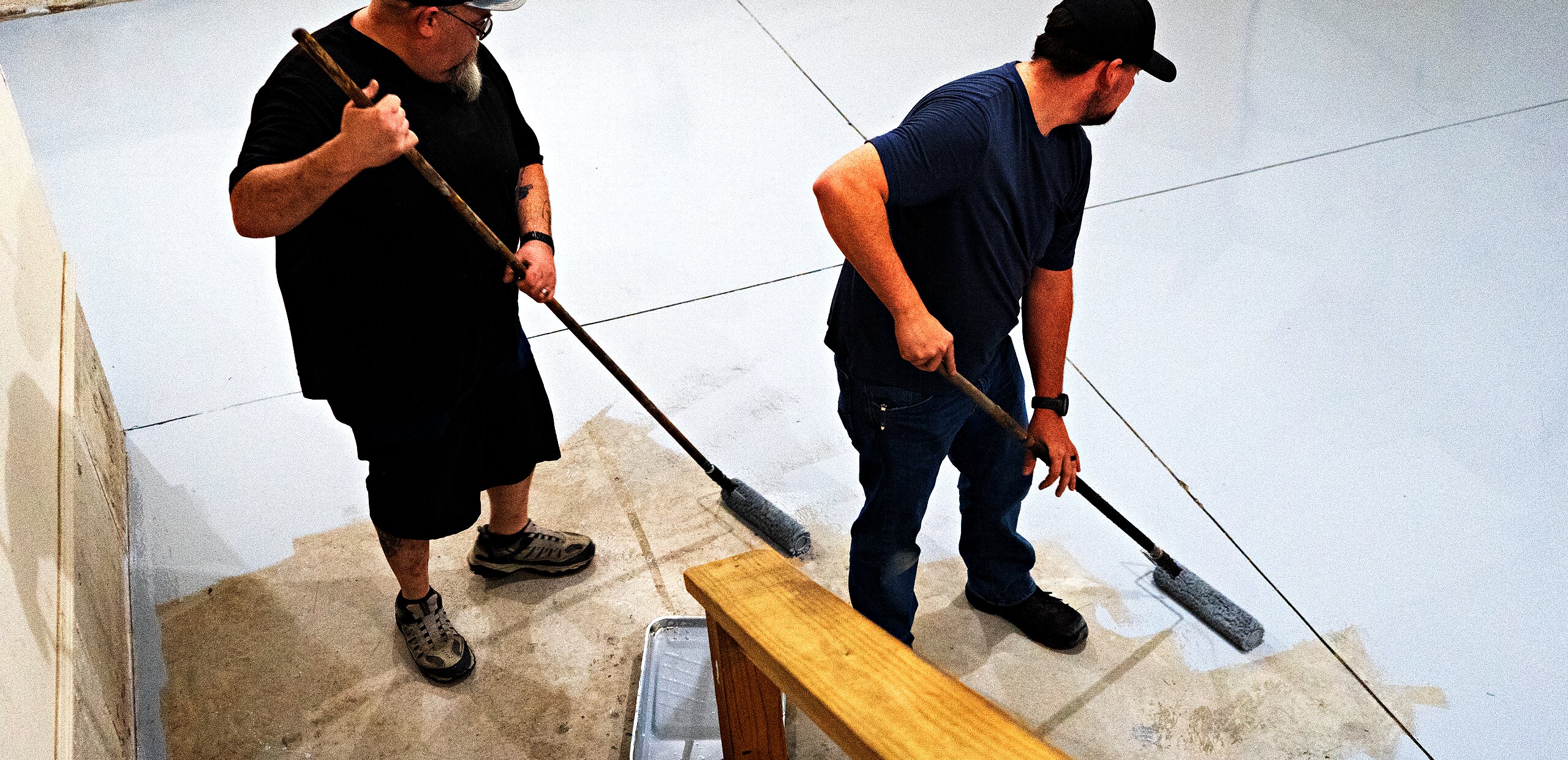
Commercial kitchens, breweries and food plants need crews who understand prep, moisture, coves and drains. ArmorThane supplies the coatings and the equipment and trains you on site or virtually through certification, with a 24/7 tech line after that. New applicator systems start at $25,000, turnkey. No franchise fee, no royalties.
Commercial kitchen flooring FAQ
What is the best flooring for a commercial kitchen?
For cook lines and dish pits, urethane cement at 1/4–3/8 inch or quarry tile with 100%-solids epoxy grout, because both handle hot oil, hot washdowns and grease. Sika rates its 1/4 inch urethane cement from −40°F to 248°F. Prep, storage and front-of-house areas can use epoxy, MMA, polyaspartic or safety vinyl.
Is epoxy good for commercial kitchen floors?
In lighter zones, yes. On a fryer line or in a dish pit it's a risk: SaniCrete says most epoxy systems are rated to about 140°F, and Terrapin Construction Group says standard epoxy softens under heat. Some California health departments accept only troweled epoxy at least 1/4 inch thick, not a thin coating.
What does the health code require for restaurant floors?
The FDA Food Code requires smooth, durable, easily cleanable floors, nonabsorbent in wet areas such as prep, walk-ins and warewashing. Floor-wall junctures must be coved and closed to 1/32 inch or less, and hosed floors need drains and grading to drain. Local rules often add a 3/8 inch radius cove at least 4 inches high.
Is quarry tile still a good choice for restaurant kitchens?
Yes, if it's installed for a kitchen. Quarry tile is hard-fired, absorbs under 3% water and tests at a wet DCOF of 0.60 or more when made. The weak point is grout: cement grout breaks down under kitchen acids and cleaners, so specify 100%-solids industrial epoxy grout, a bed sloped to drain and movement joints.
What is urethane cement flooring?
Urethane cement, or cementitious urethane, is a troweled or self-leveling blend of polyurethane resin, cement and aggregate, usually 1/4–3/8 inch thick. It's built for thermal shock, grease and aggressive cleaners, and it tolerates damper slabs than most epoxies. Stonhard's Stonclad UT reaches normal operations in about 24 hours.
How much does commercial kitchen flooring cost per square foot?
Contractor guides from 2025–2026 put installed costs at about $8–$15 for quarry tile, $8–$25 for urethane cement, $4–$12 for epoxy, $12–$25 for MMA, $5–$12 for polyaspartic and $6–$15 for commercial vinyl. Cove base, slip-resistant aggregate, drains and tear-out add cost, so get them priced separately.
What is the most slip-resistant commercial kitchen flooring?
Textured systems. Quarry tile tests at a wet DCOF of 0.60 or more, textured resin floors have measured 0.65, and Altro rates its Stronghold 30 kitchen vinyl R12, its highest. ANSI A326.3 sets 0.42 wet DCOF for interior wet floors, but grease-rated classes are manufacturer-declared, so keeping grease off the floor still matters.
Can you use vinyl flooring in a commercial kitchen?
Commercial safety sheet vinyl, yes, where your health department accepts it. Sonoma County accepts homogeneous kitchen vinyl with heat-welded seams and a 4 inch self-coved base; vinyl composition tile is usually limited to dry storage. Altro rates its kitchen vinyl to 140°F dry heat and requires flame guards under cooking equipment.
Is rubber flooring good for restaurant kitchens?
Rubber is comfortable, but it wasn't listed as a kitchen floor by the health departments we checked, and UCSB rejects rubber top-set cove base. If you use it, choose an oil-resistant grade such as Johnsonite Defiant (ASTM D471). Most kitchens use removable rubber mats, which the Food Code allows if they can be cleaned.
How long does a restaurant have to close to replace the kitchen floor?
It depends on the system. MMA cures in about an hour per coat, so overnight installs are possible, and adhesive-free safety vinyl can be walked on the same day. Polyaspartic and urethane cement need about 24 hours after install, and epoxy 48–72 hours to full service. We found no published reopening time for quarry tile.
Is sealed concrete allowed in a commercial kitchen?
Sometimes. Maricopa County, Arizona, accepts sealed concrete if it's smooth, sealed and has joints and cracks filled. Sonoma County allows new sealed concrete only in walk-ins, and UC Santa Barbara doesn't accept it in prep or dishwashing areas. Check with your plan reviewer before you choose it.
Written from the FDA Food Code as adopted by states, county plan-review guidelines, OSHA 29 CFR 1910.22, manufacturer data sheets and contractor cost guides read September 27, 2026, and decades of making floor coatings. Reviewed September 27, 2026.
Methodology and sources
Temperature, cure and slip figures are as each manufacturer publishes them, for the product and thickness named. Installed costs are contractor estimates with different regions and scopes. The selector's ratings are our reading of that data; the closure calculator adds published cure-to-service times to your install days. Local health departments decide which materials they accept. This isn't legal or code advice.
- FDA, Food Code 2022 and Supplement: fda.gov
- Minnesota Rules 4626.1345 (Food Code 6-201.13): revisor.mn.gov
- Maine Food Code, 10-144 C.M.R. ch. 200 §6: law.cornell.edu
- Sonoma County, Flooring Guidelines: sonomacounty.gov
- UCSB EH&S, Accepted Flooring Materials: ehs.ucsb.edu (PDF)
- Maricopa County, SPS EH-2012-006 (Apr. 2018): maricopa.gov (PDF)
- OSHA, 29 CFR 1910.22: osha.gov
- TCNA, ANSI A326.3 (Feb. 2022) and DCOF FAQ: tcnatile.com
- Sika Canada, Sikafloor-22 NA PurCem: sika.com
- Sika, PurCem HS-21 data sheet (Dec. 2023) and PurCem brochure (Jul. 2020): sika.com (PDF)
- Sika USA, Sikafloor Pronto MMA and CBP-CQ data sheet (Oct. 2024): usa.sika.com
- Stonhard, Stonclad UT data (2026), Stonclad UR, Commercial Kitchens: stonhard.com
- Sherwin-Williams, Thermal Shock Resistant Flooring: sherwin-williams.com
- SaniCrete, Cementitious Urethane vs Epoxy (Jul. 2025): sanicrete.com
- Altro, Stronghold 30 and kitchen detailing guide: altro.com
- Metropolitan Ceramics, quarry tile pages (2020–2023): metroceramics.com
- MAPEI, Grouting Commercial Kitchens (Apr. 2018) and quarry tile blog (Feb. 2019): mapei.com
- Stone World (Mar. 2016) and Flooring Contractor (Winter 2019) on tiling kitchens: stoneworld.com
- Johnsonite Defiant tile (Diamond W listing): diamondw.com
- Terrapin Construction Group, Commercial Flooring Cost (Apr. 2026): terrapincg.com
- Elite Diamond Coatings, Commercial Kitchen Epoxy Flooring Cost (Jun. 2026): elitediamondcoatings.com
- Flooring Clarity, Commercial Kitchen Flooring (Jun. 2025): flooringclarity.com
- Well Built Florida, Kitchen Floor Coverings Cost (Oct. 2025): wellbuiltflorida.com
- Bob Vila, Polyaspartic Floor Coating Cost (Jan. 2024): bobvila.com
- Simiron, Polyaspartic HS and system guides (2024): simiron.com
- ArmorThane product, application and guide pages linked above: armorthane.com

Replacing a kitchen floor? Get a quote from a certified applicator.
Tell us the kitchen size, the zones and how long you can close. We'll connect you with an ArmorThane-certified applicator who can look at the slab and quote a seamless system that fits it.
- Seamless floors coved up the wall
- Slip-resistant textures for wet, greasy zones
- Install schedules planned around your closures
- Contractors: ask about becoming an applicator
More to read on floors and decks
Short reads from ArmorThane on Issuu. Tap one to open it right here.