










Insulation R-Value Chart: Every Material, Per Inch & By Climate Zone
R-value per inch for every common insulation, how deep you need to go for R-38 or R-60, and the 2021 IECC minimums for each climate zone, with two calculators.
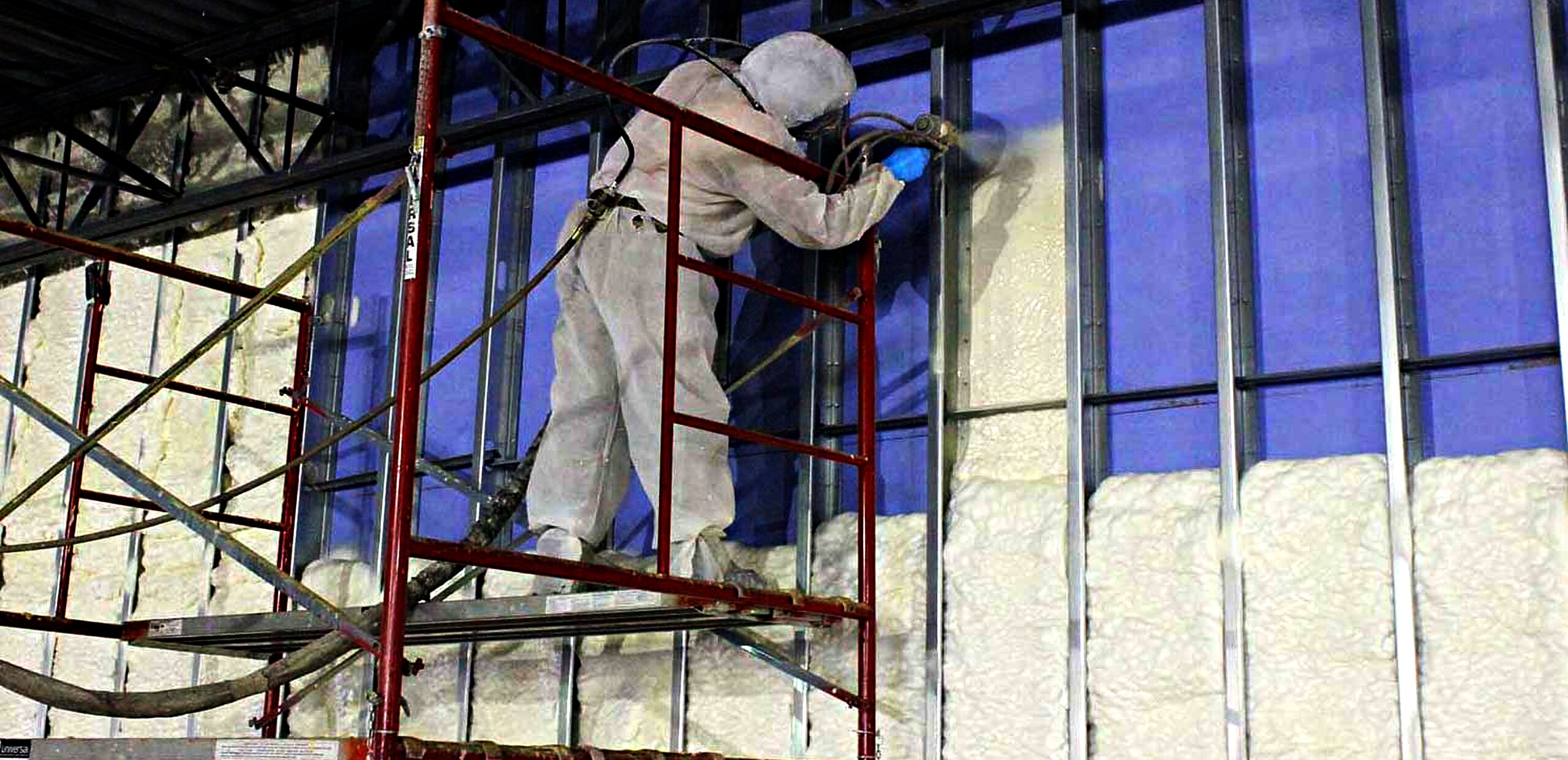
Start a spray foam business
Spray foam for a living.
ArmorThane sets you up to do this work, and you own the business. We make the chemistry, build the rigs, train you hands-on and answer the phone when a job gets difficult. You pay no franchise fee and no royalties. It has been that way since 1989.




- $0
- franchise fees or royalties
- 35+
- years in business
- 50+
- countries with applicators
- 24/7
- technical support
Not sure what R-value you have? We will measure it.
Tell us where the house is, which areas you want insulated (attic, walls, roof deck, crawl space), what is there now and roughly how many square feet. We will connect you with a certified applicator near you.
- City or ZIP code
- Areas to insulate
- Existing insulation and depth
- Approximate square footage
This insulation R-value chart puts every common material on one page: R-value per inch, how much fits in a 2x4 wall, how deep you have to go to reach R-38 or R-60, and the minimum R-values the 2021 IECC sets for each climate zone. We manufacture spray foam, but most of the attics, walls and crawl spaces we look at need a mix of materials, so this guide compares all of them on the same terms. Use the two calculators to convert a target R-value into inches and to check whether the insulation already in your attic meets code for your zone.
Per inch, closed-cell spray foam (about R-6.5) and polyiso board (R-5.0 to R-5.6 for design) insulate best, followed by XPS (R-5), mineral wool and high-density batts (about R-4.3), EPS (R-3.6 to R-4.2), cellulose and open-cell foam (about R-3.6) and blown fiberglass (R-2.2 to R-2.8). For code, the 2021 IECC calls for R-30 attics in zone 1, R-49 in zones 2 and 3 and R-60 in zones 4 through 8. Per-inch numbers only matter when space is tight; in an open attic, cheap blown insulation piled deep usually wins on cost per R.
What an R-value actually measures
R-value is a material's resistance to conductive heat flow. The Department of Energy puts it simply: the higher the R-value, the better the insulation works. Three rules from DOE explain most of the confusion we hear on job sites:
- R-values add up. Two layers of R-19 make R-38. Six inches of old cellulose plus a new layer of blown fiberglass is the sum of both.
- Compressed insulation loses R-value. A batt stuffed into a cavity thinner than it was made for does not deliver the number on the bag.
- Framing leaks heat. Studs, joists and plates conduct heat faster than the insulation between them. DOE calls this thermal bridging, and it is why a wall full of R-21 batts performs below R-21 as a whole.
The number on the label comes from a lab test. Under the FTC's R-value Rule (16 CFR Part 460), manufacturers test at a mean temperature of 75°F with a 50°F temperature difference, using standard ASTM methods. That makes products comparable, but real attics are hotter and colder than that. Building Science Corporation's testing of polyiso is the best-known example: its R-value drops as the outside temperature goes below freezing, so BSC recommends designing with R-5.6 per inch in warm climates and R-5.0 per inch in cold ones.
Insulation R-value chart by material
The table lists the published range for each material and the single value we use in the calculators below. Where a manufacturer chart exists, we used it: blown fiberglass from the Owens Corning AttiCat coverage chart (R-38 at 13.5 inches, so about R-2.8 per inch) and cellulose from the GreenFiber fact sheet (R-38 at 10.5 inches settled, about R-3.6). Click any column header to sort.
| Material | R per inch (range) | Value used | R in a 2x4 cavity (3.5 in) | Inches for R-38 | Inches for R-60 | Stops air? |
|---|---|---|---|---|---|---|
| Blown fiberglass (loose-fill) | 2.2–2.8 | 2.8 | R-9.8 | 13.6 | 21.4 | No |
| Blown rock wool (loose-fill) | 2.8 | 2.8 | R-9.8 | 13.6 | 21.4 | No |
| Fiberglass batt, standard | 3.1–3.7 | 3.4 | R-11.9 (R-13 batt) | 11.2 | 17.6 | No |
| Open-cell spray foam | 3.5–3.7 | 3.6 | R-12.6 | 10.6 | 16.7 | Yes, at full depth |
| Blown cellulose (settled) | 3.6–3.7 | 3.6 | R-12.6 | 10.6 | 16.7 | Slows it (dense-pack) |
| EPS foam board | 3.6–4.2 | 4.0 | R-14.0 | 9.5 | 15.0 | If seams taped |
| Mineral wool batt | 3.1–4.3 | 4.3 | R-15 | 8.8 | 14.0 | No |
| High-density fiberglass batt | 3.8–4.3 | 4.3 | R-15 | 8.8 | 14.0 | No |
| XPS foam board | about 5 | 5.0 | R-17.5 | 7.6 | 12.0 | If seams taped |
| Polyiso foam board | 5.0–5.6 design | 5.6 | R-19.6 | 6.8 | 10.7 | If seams taped |
| Closed-cell spray foam | 6.2–7.0 | 6.5 | R-22.8 | 5.8 | 9.2 | Yes, at about 1 in |
| Radiant barrier foil | No rated R per inch | n/a | n/a | n/a | n/a | No |
For spray foam specifically, including open-cell versus closed-cell and how many inches hit code, see our spray foam R-value guide. Two things jump out of this broader chart. First, the gap between the best and worst materials is more than 2 to 1 per inch, which is why spray foam and foam board dominate where depth is limited: 2x4 walls, cathedral ceilings, rim joists and metal buildings. Second, in an open attic, depth is cheap. Thirteen and a half inches of blown fiberglass reaches the same R-38 as about six inches of closed-cell foam, and on an attic floor there is usually room for both and more.
Radiant barrier foil is in the table because people ask about it constantly. It reflects radiant heat rather than resisting conduction, so it has no R-value per inch of its own; its effect depends on the air space next to it. We cover that in our radiant barrier guide.
R-value thickness calculator
Enter the R-value you want and the depth you have. The tool divides the target by each material's per-inch value from the chart, shows how many inches each one needs, and highlights the materials that fit in your space.
How thick does it need to be?
Inches = target R ÷ R per inch. Uses the "value used" column above. Cavity-only, so framing losses are not included.
R-value requirements by climate zone (2021 IECC)
The 2021 International Energy Conservation Code sets minimum insulation for new homes and additions in its prescriptive R-value table (R402.1.3). Your state or city may still enforce an older edition or its own amendments, so treat this as the national model and call your building department before you buy material. In wall entries, "13+5ci" means R-13 in the cavity plus R-5 of continuous insulation (usually foam board) over the studs.
| Climate zone | Example cities | Ceiling / attic | Wood-frame wall | Floor | Basement wall | Slab edge | Crawl space wall |
|---|---|---|---|---|---|---|---|
| 1 | Miami | R-30 | 13 or 0+10ci | R-13 | None | None | None |
| 2 | Houston, Phoenix | R-49 | 13 or 0+10ci | R-13 | None | None | None |
| 3 | Atlanta, Dallas, Los Angeles | R-49 | 20 or 13+5ci or 0+15ci | R-19 | 5ci or 13 | R-10, 2 ft | 5ci or 13 |
| 4 (except marine) | St. Louis, Springfield MO, Nashville | R-60 | 30 or 20+5ci or 13+10ci or 0+20ci | R-19 | 10ci or 13 | R-10, 4 ft | 10ci or 13 |
| 5 and marine 4 | Chicago, Denver, Seattle | R-60 | 30 or 20+5ci or 13+10ci or 0+20ci | R-30* | 15ci or 19 or 13+5ci | R-10, 4 ft | 15ci or 19 or 13+5ci |
| 6 | Minneapolis, Burlington VT | R-60 | 30 or 20+5ci or 13+10ci or 0+20ci | R-30* | 15ci or 19 or 13+5ci | R-10, 4 ft | 15ci or 19 or 13+5ci |
| 7 and 8 | Duluth, Fairbanks | R-60 | 30 or 20+5ci or 13+10ci or 0+20ci | R-38* | 15ci or 19 or 13+5ci | R-10, 4 ft | 15ci or 19 or 13+5ci |
ENERGY STAR targets for existing homes
The IECC applies to new work. For a house that already exists, ENERGY STAR publishes retrofit targets for attics and floors. If your attic has no insulation, ENERGY STAR's target is R-30 in zone 1, R-49 in zones 2 and 3 and R-60 in zones 4 through 8. If you already have 3 to 4 inches, it recommends adding R-25 in zone 1, R-38 in zones 2 and 3 and R-49 in zones 4 through 8. Floor targets run from R-13 in zones 1 and 2 to R-38 in zones 7 and 8.
The DOE gives a simpler test: if the attic has less than the equivalent of R-30, which it describes as about 10 to 13 inches, you could probably benefit from adding more. Our attic insulation cost guide prices that top-up by material, and our guide to the cost to insulate a house covers walls, crawl spaces and basements too.
Attic insulation code checker
Measure the depth of your existing attic insulation in a few spots (use the lowest typical reading, not the peak of a drift), pick your zone and material, and the tool estimates your current R-value, compares it with the 2021 IECC attic minimum, and works out how much blown fiberglass or cellulose you would add to close the gap.
Does your attic meet code?
Current R = depth × R per inch. Bags are scaled from the AttiCat (19 bags per 1,000 sq ft at R-38) and GreenFiber (60.1 bags per 1,000 sq ft at R-38) coverage charts. Bag sizes differ by brand, so read the chart on the bag you buy.
Which material belongs where
The R-value chart tells you what each material can do per inch. Where it goes depends on space, air leakage, moisture and budget. This is how we would split a typical house.
Blown cellulose or fiberglass
Depth is free here, so the lowest cost per R wins. Air seal the top plates, wiring holes and the hatch first, as DOE advises, then blow to R-49 or R-60. Spray foam on an attic floor rarely pays off.
Closed-cell or open-cell spray foam
Rafter depth limits you, and the roof deck needs an air seal. Closed-cell gets about R-38 in under 6 inches. See our attic foam insulation page for vented versus unvented details.
Batts, dense-pack or foam
Mineral wool or high-density batts give R-15 in a 2x4. Existing finished walls get dense-pack cellulose through drilled holes. Closed-cell foam reaches the highest cavity R and adds rigidity, at a higher price.
Closed-cell foam or foam board
These are the leakiest, dampest spots in most houses. Closed-cell foam air seals and acts as a vapor retarder in one pass. Board works too if every edge is sealed. More in our closed-cell spray foam guide; for the water and heating lines that run through these spaces, see pipe insulation.
Why installed R-value falls short of the chart
Every number in an insulation R-value chart is a best case. Here is where we see the gap open up when we inspect existing homes:
Settling
Loose-fill settles after it is blown. GreenFiber's chart shows R-38 cellulose going in at 11.7 inches and settling to 10.5, which is why the FTC rule requires bags to list both initial and minimum settled thickness. If an installer blows to the settled depth, you end up short.
Compression
A batt rated for 6.25 inches jammed into a 5.5-inch cavity, or flattened under attic storage, loses R-value. DOE is explicit that compressed insulation will not provide its full rated R-value.
Framing and gaps
Studs and joists are thermal bridges. Gaps around wiring, boxes and blocking let air move around the insulation. Continuous insulation over the framing, the "ci" in the code table, is how the IECC deals with it.
Air movement
Fibrous insulation slows heat but does not stop air. Wind washing at the eaves and warm air rising through top-plate gaps carry heat straight past it. That is why air sealing comes first on any attic job.
Temperature
Labels are tested at 75°F mean. Polyiso in particular loses R-value in the cold, which is why Building Science Corporation designs with R-5.0 per inch in cold climates instead of R-5.6.
Need R-38 in a 2x8 roof? Closed-cell gets there.
Our certified applicators spray ArmorFoam closed-cell and open-cell foam in roof decks, walls, rim joists and crawl spaces, and they will tell you when blown insulation is the better buy.
Contractors: become an applicator →
Insulation R-value questions
Which insulation has the highest R-value per inch?
Among common building insulation, closed-cell spray foam is highest at roughly R-6.2 to R-7.0 per inch, followed by polyiso board (designed at R-5.0 to R-5.6) and XPS board (about R-5). Blown fiberglass is lowest at about R-2.2 to R-2.8 per inch.
What R-value do I need in my attic?
The 2021 IECC requires R-30 in climate zone 1, R-49 in zones 2 and 3, and R-60 in zones 4 through 8 for new construction. ENERGY STAR uses the same figures as targets for uninsulated attics in existing homes.
How many inches of insulation is R-38?
It depends on the material. Owens Corning's AttiCat chart lists 13.5 inches of blown fiberglass for R-38, GreenFiber lists 10.5 inches of settled cellulose, and closed-cell spray foam at about R-6.5 per inch needs just under 6 inches.
How many inches of insulation is R-60?
Owens Corning's AttiCat chart lists 20.5 inches of blown fiberglass for R-60, and GreenFiber lists 16.5 inches of settled cellulose. Plan for enough baffles at the eaves to keep that depth from blocking soffit vents.
Can I add R-values of different insulation layers?
Yes. DOE says to add the R-values of the individual layers. Six inches of existing cellulose at about R-3.6 per inch is roughly R-22, and adding R-38 of blown fiberglass on top brings the attic to about R-60.
Does a higher R-value always save more money?
No. Each added inch saves less than the one before it, and air leaks can cancel much of the benefit. ENERGY STAR estimates that sealing and insulating together can save up to 10% on annual energy bills. Seal first, then insulate to the level recommended for your zone.
Is the 2021 IECC the code in my area?
Not necessarily. States and cities adopt energy codes on their own schedule and often amend them. Use the 2021 IECC table as a benchmark and confirm the adopted edition with your local building department before you plan a project.
Do radiant barriers have an R-value?
Not in the usual sense. A radiant barrier reflects radiant heat and its effect depends on an air space beside it. ASTM C1313 defines radiant barrier sheet materials by a surface emittance of 0.1 or less, not by R-value.
What is a good R-value to have?
It depends on climate zone and location in the house. The IECC sets minimums by zone: attics in most U.S. climate zones call for R-38 to R-60, and walls typically R-13 to R-20 plus continuous insulation in colder zones. Use the climate zone table above to find your target.
What happens if you over-insulate?
Adding R-value past the code target has diminishing returns, because each extra inch saves less energy than the one before it. The real risks come from blocking soffit ventilation in a vented attic or trapping moisture, not from the R-value itself. Keep vent baffles clear and control air leaks first.
How many inches of blown insulation is R-30?
It depends on the material. Blown cellulose runs about R-3.2 to R-3.8 per inch and blown fiberglass about R-2.2 to R-2.9 per inch, so R-30 is roughly 8 to 10 inches of cellulose or 10 to 14 inches of fiberglass. Always check the coverage chart on the bag, which lists settled thickness for each R-value.
What is the typical R-value for 4-inch wall insulation?
A 2x4 wall has a 3.5-inch cavity. Fiberglass or mineral wool batts made for it are R-13 to R-15, open-cell spray foam about R-13, and closed-cell spray foam roughly R-20 or more when filled to the same depth.
Sources
- PNNL Building America Solution Center, 2009–2021 IECC and IRC minimum insulation requirements: basc.pnnl.gov
- ENERGY STAR, recommended home insulation R-values: energystar.gov
- ENERGY STAR, seal and insulate: energystar.gov/saveathome/seal_insulate
- U.S. Department of Energy, Insulation: energy.gov/energysaver/insulation
- U.S. Department of Energy, Types of Insulation: energy.gov/energysaver/types-insulation
- U.S. Department of Energy, Where to Insulate in a Home: energy.gov/energysaver/where-insulate-home
- Insulation R-values per inch, DOE data compiled by Oncor: oncor.com
- Federal Trade Commission R-value Rule, 16 CFR Part 460: ecfr.gov
- Owens Corning, AttiCat blown-in insulation fact sheet: owenscorning.com (fact sheet)
- GreenFiber, loose-fill cellulose fact sheet: greenfiber fact sheet
- Building Science Corporation, Info-502, temperature dependence of polyiso R-values: buildingscience.com
- Rmax, ASTM C578 explained (EPS and XPS R-values): rmax.com
- ROCKWOOL Comfortbatt product data: rockwool.com
- ASTM C1313, standard specification for sheet radiant barriers: astm.org
- EPA, asbestos-contaminated vermiculite insulation: epa.gov
Hit your R-value target the first time.
Homeowners get a certified ArmorThane applicator who installs closed-cell and open-cell foam where depth is tight and tells you when blown insulation is the smarter buy. Contractors can add spray foam with no franchise fee and no royalties.
More to read on spray foam
Short reads from ArmorThane on Issuu. Tap one to open it right here.


Start your own coatings business.
Equipment, chemicals, hands-on training and technical support for life, all from one manufacturer that puts its applicators first.
Need a job done?
Tell us where the project is and we’ll connect you with a certified ArmorThane applicator near you.
More in Spray foam & insulation
 Spray foam & insulationFoam Board Insulation
 Spray foam & insulationFoam Wall Insulation
 Spray foam & insulationHot Tub Insulation
 Spray foam & insulationHow Long Does Spray Foam Take to Dry
 Spray foam & insulationInjection Foam Insulation
 Spray foam & insulationInsulating Cinder Block Walls
 Spray foam & insulationMetal Building Insulation
 Spray foam & insulationMineral Wool Insulation