





Commercial Roof Leak Repair: Find It, Fix It Once
How to respond in the first hour, trace water to its real entry point, what each repair costs in 2026, and when a coating restoration beats chasing leaks.
Start a roof coating business
Spray roofs for a living.
ArmorThane sets you up to do this work, and you own the business. We make the chemistry, build the rigs, train you hands-on and answer the phone when a job gets difficult. You pay no franchise fee and no royalties. It has been that way since 1989.




- $0
- franchise fees or royalties
- 35+
- years in business
- 50+
- countries with applicators
- 24/7
- technical support
Commercial roof leak repair goes wrong in a predictable way: someone sees a ceiling tile stain, a roofer patches the closest seam, and the leak comes back with the next storm because the water was getting in thirty feet away at a curb flashing. We manufacture the polyurea, polyurethane and spray foam systems our certified applicators use to repair and restore low-slope and metal roofs, and this guide is how our technical team approaches a leaking commercial roof: what to do in the first hour, how to trace water to its real entry point, what each repair typically costs, when a coating is the right fix and when it is not, and two tools to triage a leak and budget the repair.
Protect people and inventory first, then check whether the roof is under a manufacturer or contractor warranty before anyone cuts or patches it. Most commercial roof leaks come from flashings and penetrations, not the open field, and the drip inside is often far from the hole outside. Have the leak traced (water testing, infrared survey or electronic leak detection), repair the actual entry point with materials compatible with the existing membrane, and replace any wet insulation. If the membrane is aging but the insulation is mostly dry, a full coating restoration can be cheaper than repeated patches; if the insulation is widely saturated or the deck is damaged, plan a recover or replacement.
The first hour of a commercial roof leak
A leak during business hours is a safety problem before it is a roofing problem. The roof can wait an hour; the people and equipment underneath cannot.
Make the space safe
Cordon off wet floor, kill power to any fixture or equipment the water is reaching, and pop saturated ceiling tiles with a drain path into a bucket rather than letting them fall.
Protect inventory and equipment
Poly sheeting over racks, servers and machinery is cheap; damaged contents are usually the costliest part of a commercial leak.
Document everything
Photograph the drip location with something for scale, note the time, the weather (steady rain, wind direction, snowmelt) and whether HVAC units were running. Mark the drip point on a floor plan. Your insurer and warranty holder will ask for it.
Check the warranty before anyone patches
If the roof is under a manufacturer warranty, call the warranty holder or the original installer first. Unauthorized repairs with incompatible materials are a common reason warranty claims get denied. Your roof file should name who to call.
Temporary fixes only, then a real diagnosis
Keep untrained staff off a wet roof. A roofing crew with fall protection can clear a blocked drain or set a temporary patch. Treat that as first aid. The permanent repair comes after the source is confirmed in dry conditions.
Why the drip is rarely under the hole
On a low-slope roof, water that gets past the membrane runs along the top of the insulation, along the deck flutes or down a fastener until it finds a seam or a gap in the deck. We regularly see the entry point 10 to 40 feet from where it shows up inside. That is why patching the nearest seam so often fails.
The industry rule of thumb, repeated in the RCABC maintenance guide, is that flashings, pitch pans, gravel stops and other roof penetrations are the source of most leaks. In our experience the usual suspects, in rough order, are:
- Perimeter and wall flashings. Base flashings that have pulled away from parapets, open coping joints, failed counterflashing and termination bars with dried-out sealant.
- Curbs and penetrations. HVAC curbs, pipe boots, pitch pans that have shrunk away from the pipe, conduit stands and skylight curbs.
- Drains and scuppers. Loose drain clamping rings, cracked drain bowls, and clogged strainers that turn a drain into a pond.
- Seams and laps. Unwelded or poorly welded thermoplastic seams, EPDM seam tape that has let go, open laps in modified bitumen.
- Field damage. Punctures from dropped tools and screws, hail, foot traffic paths to rooftop units, blisters and splits.
- Things that are not the roof. Masonry walls above the roof line, window systems, coping stones and HVAC condensate lines produce leaks that look exactly like roof leaks. If it drips on a dry day, think condensate, plumbing or condensation first.
How professionals trace a leak
When a visual inspection does not find it, there are four proven methods:
Controlled water testing
Isolate one area at a time with a hose, starting low and working up, while someone watches inside. Slow, but it works on any roof and proves which flashing is the source.
Infrared moisture survey
ASTM C1153 covers using infrared imaging to locate wet insulation in built-up and single-ply roofs. Wet insulation holds the day's heat longer and shows up after sunset. Suspect areas are confirmed with core cuts, because not every warm spot is water.
Electronic leak detection
ASTM D7877 is the guide for electronic methods of locating breaches in waterproof membranes. It pinpoints holes in single-ply and fluid-applied membranes. Black EPDM is semi-conductive and needs a conductive layer under the membrane for valid testing.
Core cuts
A small core through the membrane and insulation tells you exactly what is wet, what the layers are, and how many roofs are already on the building. Every core must be patched properly the same day.
Commercial roof leak triage tool
Answer five questions about what you see inside. The tool ranks the most likely entry points using the patterns our applicators see in the field, flags urgency, and suggests the right detection method to ask for. It narrows the search; it does not replace a roof inspection.
Where is the water most likely getting in?
Scores nine common sources against the drip location, the weather that triggers it, the roof type and the roof's history.
Commercial roof leak repair by roof type
The most important rule: repair with materials compatible with what is already there, prepared the way that manufacturer requires. A patch on a dirty or chalky membrane fails in one season.
TPO and PVC
Leaks show up at seams that were never fully welded, at field-fabricated corners and at punctures. Repairs are heat-welded patches of the same membrane after cleaning, and probing every seam in the area.
EPDM
Seam tape and lap sealant failures, shrinkage pulling flashings off walls, and punctures. Repairs use EPDM primer, seam tape and cover strips. Shrinkage at the perimeter usually means the flashings need to be rebuilt, not caulked.
Built-up and mod bit
Blisters, splits, open laps and alligatored surfaces. Cut out wet or blistered areas, dry in with compatible ply sheets or mod bit, and re-flash penetrations.
Metal panel roofs
Exposed fasteners with failed washers, open side and end laps, ridge and eave closures, and rust-through. Fastener replacement, lap sealing and seam treatment fix most leaks; see metal roof leak repair.
Spray foam roofs
Leaks come from punctures, bird pecking and areas where the protective coating has worn through to the foam. Damaged foam is cut out, refilled with foam, and recoated. A worn coating is maintenance, not failure: SPF roofs are designed to be recoated.
What commercial roof leak repair costs in 2026
These are typical installed price ranges from 2026 cost guides. Local labor, access (a crane or a tall building adds real money), and what the tech finds once the roof is open move the number. Click a column heading to sort.
| Repair | Typical cost | Unit | Fixes | Right call when |
|---|---|---|---|---|
| Small membrane patch | $300–$1,200 | under 2 sq ft | Punctures, small splits | Damage is isolated and insulation is dry |
| Drain flashing repair | $400–$1,800 | per drain | Leaks at drain bowls and rings | Leak appears near a drain |
| Curb or penetration re-flash | $500–$2,500 | per penetration | HVAC curbs, pipes, pitch pans | Leak under or near rooftop equipment |
| Large membrane patch | $1,500–$5,000 | 3–25 sq ft | Hail, torn areas, cut-out wet spots | Wet area is contained |
| Seam reseal | $1,800–$7,500 | 50–200 linear ft | Open laps and seams | Seam failure is local, not roof-wide |
| Wet insulation replacement | $1.50–$2.00 | per sq ft | Saturated insulation under repairs | Always, wherever cores show wet |
| Coating restoration, flat roof | $1.00–$4.00 | per sq ft | Weathered membrane, many small leaks | Roof is sound and mostly dry |
| Metal roof silicone restoration | $2.50–$5.00 | per sq ft | Fasteners, seams, surface rust | Panels are structurally sound |
| Membrane overlay (recover) | $4–$7 | per sq ft | Roof at end of life, dry deck | Code allows a recover and wet areas are removed |
Repair, restore or replace: budget estimator
Enter what your inspection or moisture survey found. The estimator prices targeted repairs, a full coating restoration and a membrane recover side by side, using the 2026 ranges in the table above, and applies an age-based rule of thumb. Wet insulation is always priced in, because no repair or coating should go over it.
What will fixing this roof cost?
Repairs = penetrations x $500–$2,500 + drains x $400–$1,800 + seam runs (up to 200 ft each) x $1,800–$7,500 + wet area x $1.50–$2.00. Restoration and recover add $1–$4 or $4–$7 per sq ft of roof.
When a coating is the repair
When a roof has one bad curb, fix the curb. When it has dozens of tired seams, weathered flashings and a new leak every storm, chasing leaks one at a time costs more each year. That is the point where a fluid-applied restoration makes sense: repair the known problems, replace wet insulation, reinforce seams and penetrations, and coat the entire surface as one seamless membrane. The Roof Coatings Manufacturers Association says a properly applied roof coating can extend roof life up to 10 years or more, and most coating systems can be recoated again later.
What has to be true first
- The insulation is dry, or the wet areas are cut out. A coating over saturated insulation traps the water. Get an infrared survey or cores first.
- The deck is sound. Rusted-through metal deck or rotted wood around old leaks gets replaced, not coated.
- The coating bonds. Adhesion is checked on the actual roof. On metal, pull-off adhesion testing under ASTM D4541 is the standard method; on membranes, manufacturers specify their own peel tests.
- The weather cooperates. RCMA's guidance for water-borne coatings is 50°F and rising, with no rain for the next 24 hours.
- The product meets a standard. Acrylic roof coatings are specified under ASTM D6083; silicone and moisture-cured polyurethane coatings over spray foam under ASTM D6694 and ASTM D6947. Ask the contractor which one applies.
Where our systems fit, and where they do not
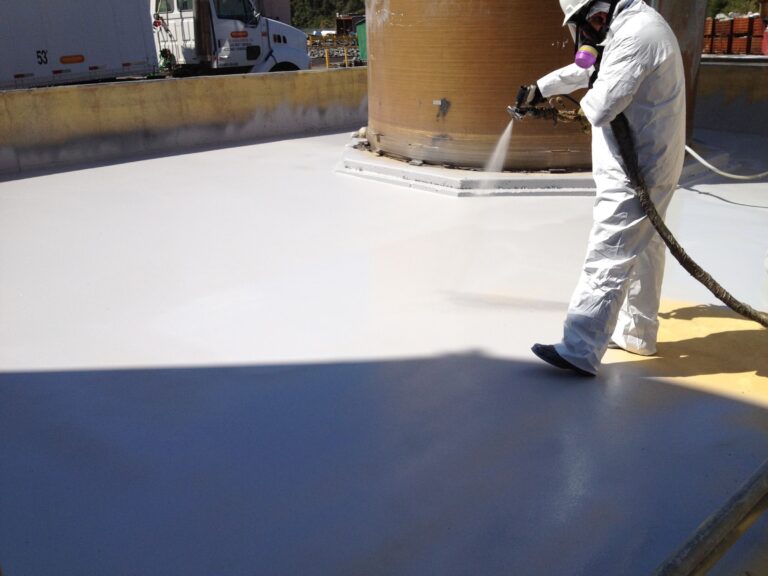
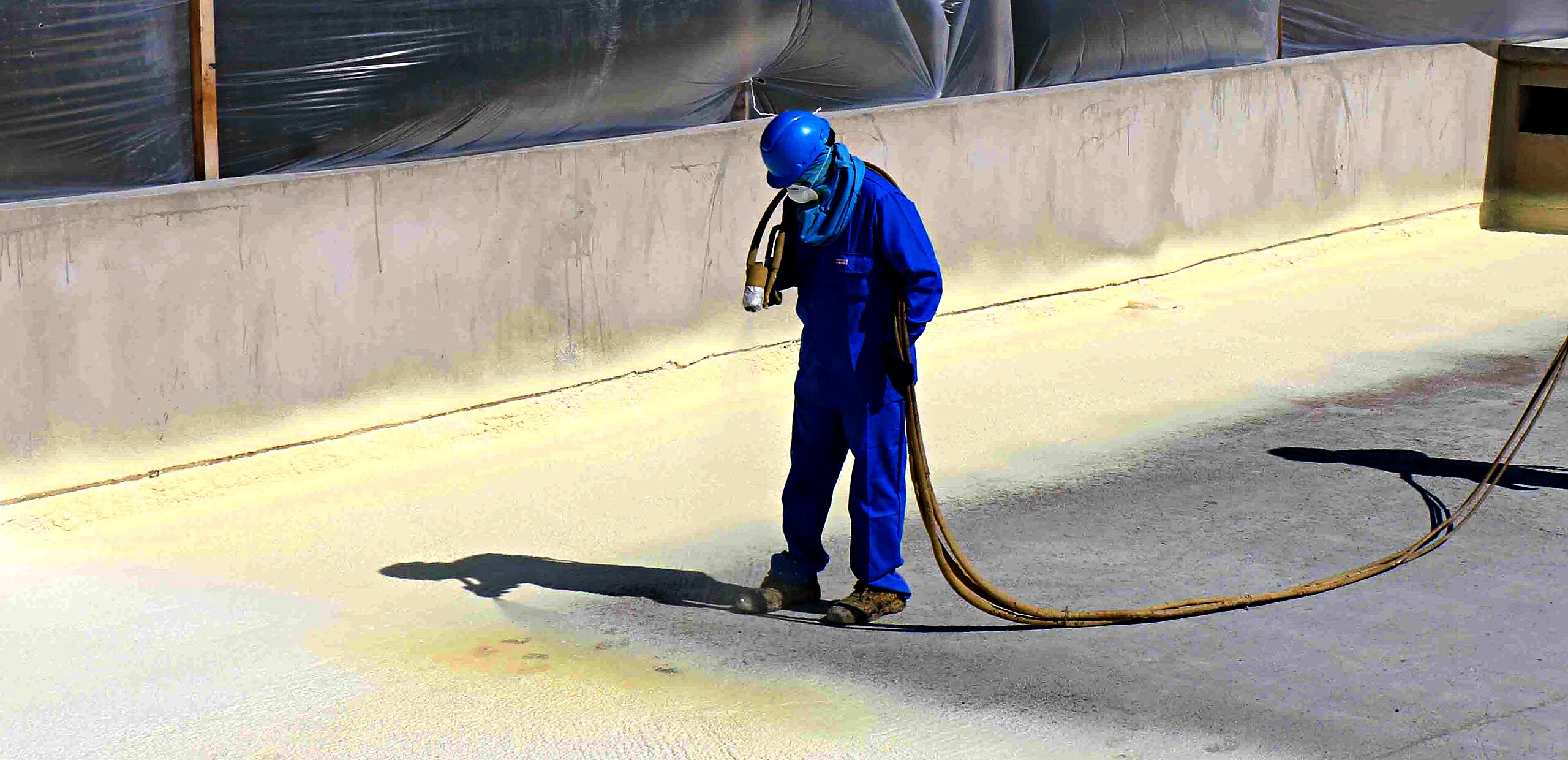
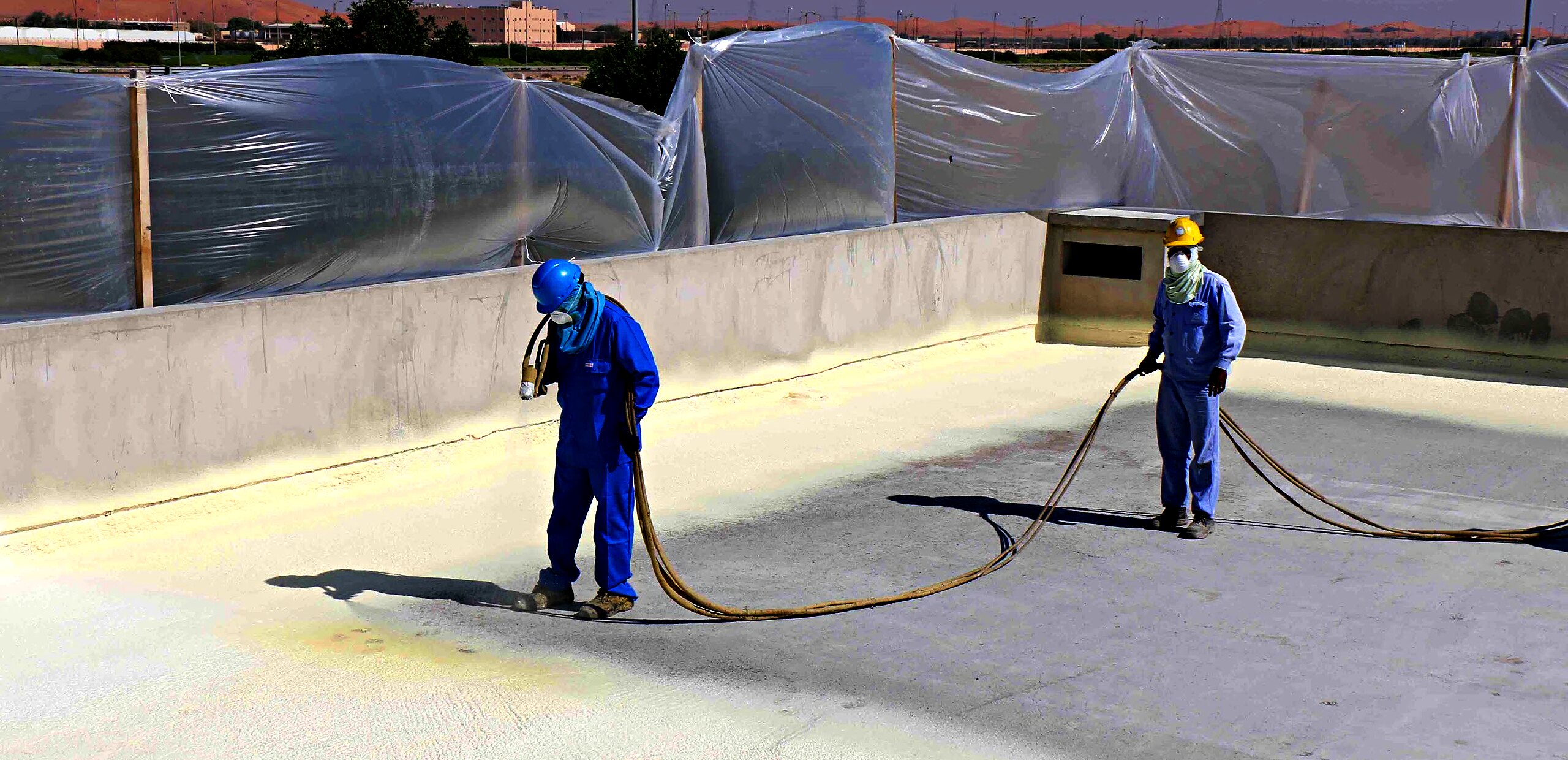
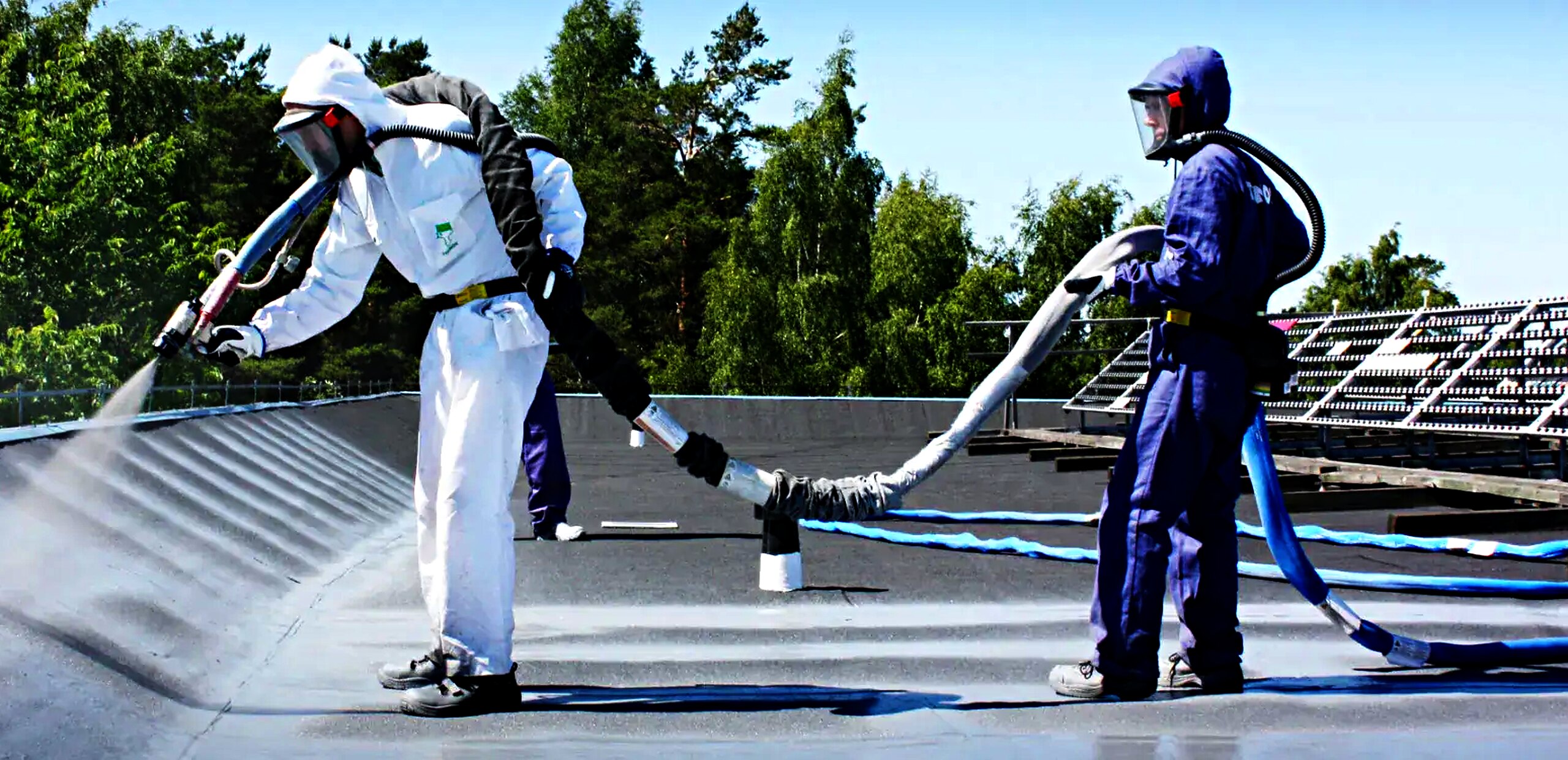
Our certified applicators use spray-applied polyurea such as ArmorSeal 100 AL as a seamless roofing liner over prepared substrates, and ArmorFoam Roof 200 spray foam with UV TopCoat where the building also needs insulation or better drainage. Polyurea cures in seconds, so sections return to service the same day. See our spray foam roofing and flat roof waterproofing pages for how those systems are built.
It is not the right answer for every roof. If an infrared survey shows wet insulation across much of the roof, if the deck is failing, or if the roof is past 20 years with problems everywhere, the money belongs in a recover or replacement. For a single leak on an otherwise healthy roof, a proper spot repair beats coating the whole building. Comparing chemistries? See our roof coating guide and silicone roof coating page.
Find the source, fix it once, then protect the whole roof.
A certified ArmorThane applicator can inspect the roof, repair the entry points and quote a seamless restoration if the roof is a good candidate. Tell us the roof type, size and where it leaks.
Contractors: become an applicator →
Stopping the next leak
Most commercial roof leaks we see were visible from the roof months earlier.
Inspect twice a year and after storms
Spring and fall, plus after hail, high wind or any rooftop construction. Walk every flashing, curb, drain and seam, and photograph the same spots each time so changes are obvious.
Keep drains and scuppers clear
Leaves, bird nests and debris turn drains into dams. NRCA's benchmark is no ponding 48 hours after rain in drying conditions. Membrane roofs are designed for at least 1/4 inch per foot of slope under the model codes; water that sits longer points to clogged drains or a sagging deck.
Control who goes on the roof
HVAC techs, solar installers and sign crews cause a large share of punctures. Keep a roof access log, require walk pads to equipment and inspect after every trade visit.
Keep the roof file
Warranty, as-built drawings, every inspection report, every repair invoice. When a leak happens, the file tells the tech what the roof is made of and who is responsible for fixing it.
Related guides: flat roof repair for ponding and membrane fixes, metal roof condensation for drips on dry days, ice dam prevention for winter leaks at the eaves, and how to choose roof coating contractors.
Commercial roof leak repair questions
How much does commercial roof leak repair cost?
Small membrane patches typically run $300 to $1,200, a leaking curb or penetration $500 to $2,500 each, drain flashing repairs $400 to $1,800, and seam resealing $1,800 to $7,500 for 50 to 200 linear feet, based on 2026 cost guides. Wet insulation found during the repair adds about $1.50 to $2.00 per square foot. Access, building height and what is found under the membrane move the final number.
Why does my roof still leak after it was repaired?
Usually because the repair was made where the water showed up inside, not where it entered. Water travels along insulation and deck flutes before it drips. The second most common reason is an incompatible repair material, such as asphalt roofing cement on a single-ply membrane. Ask for the leak to be traced by water testing, an infrared survey or electronic leak detection before the next repair.
Can a commercial roof be repaired in the rain?
Only temporarily. A crew can clear drains, set an emergency patch or tarp a damaged area to limit interior damage. Permanent repairs need a clean, dry surface so materials bond, so they are done once the roof dries out.
Will a roof repair void my manufacturer warranty?
It can, if the repair is made by someone the manufacturer does not authorize or with materials it does not approve. Check the warranty terms and call the warranty holder or original installer before any work. Many warranties also exclude damage caused by lack of positive drainage.
How do I know if insulation under my roof is wet?
Signs include soft spots underfoot, blistering, and repeated leaks in the same area. An infrared roof moisture survey, done under ASTM C1153 practice, maps likely wet areas at night, and core cuts confirm them. Wet insulation loses insulating value and should be replaced before any repair or coating goes over it.
Should I repair, coat or replace my commercial roof?
Repair when leaks are isolated and the roof is relatively young. Consider a coating restoration when the membrane is weathered and leaking in many small places but the insulation is mostly dry and the deck is sound. Plan a recover or replacement when wet insulation is widespread, the deck is damaged, or the roof is past about 20 years with problems everywhere. Our estimator above compares all three for your roof.
Is my leak from the roof or the HVAC unit?
If it drips on dry days or only while the cooling is running, suspect a clogged or disconnected condensate line, a cracked drain pan or unit panel seams. If it only leaks in rain, look at the curb flashing and the membrane around the unit. Leaks near rooftop units are often a mix of both.
How often should a commercial roof be inspected?
At least twice a year, in spring and fall, and after any major storm or rooftop construction, as the RCABC roof maintenance guide recommends. Keep photos and reports in a roof file so changes are easy to spot and warranty claims are documented.
Sources
- RCABC Guarantee Corp., Roof Maintenance Guide: rcabc.org/wp-content/uploads/Roof-Maintenance-Guide-2012.pdf
- FRSA, Ponding Water and Manufacturer Warranties (NRCA 48-hour definition): floridaroof.com/Ponding-Water-and-Manufacturer-Warranties
- The Roofing Brief, Commercial Roof Repair 2026: Cost and Repair vs. Replace: theroofingbrief.com/commercial-roof-repair-guide
- HomeGuide, Roof Coating and Sealing Cost: homeguide.com/costs/roof-coating-or-sealing-cost
- West Roofing Systems, Cost to Restore a Commercial Metal Roof: westroofingsystems.com/ballpark-cost-restore-commercial-metal-roof
- ASTM C1153, Location of Wet Insulation in Roofing Systems Using Infrared Imaging: astm.org/Standards/C1153
- ASTM D7877, Electronic Methods for Detecting and Locating Leaks in Waterproof Membranes: store.astm.org/d7877-14
- Carlisle SynTec, SpecTips: Electronic Leak Detection: carlislesyntec.com SpecTips: Electronic Leak Detection
- ASTM D4541, Pull-Off Strength of Coatings Using Portable Adhesion Testers: store.astm.org/d4541-22
- ASTM D6083, D6694 and D6947 roof coating specifications: store.astm.org/d6083, store.astm.org/d6694, store.astm.org/d6947
- Roof Coatings Manufacturers Association, FAQs: roofcoatings.org/faqs
- Building Code Trainer, Minimum Roof Slopes by Roofing Material (IRC 2021): buildingcodetrainer.com/minimum-roof-slopes-required-by-roofing-material
Stop chasing roof leaks.
Building owners get a certified ArmorThane applicator who repairs the real entry points and can restore the whole roof with a seamless coating. Contractors can add roof restoration with no franchise fee and no royalties.
 Read it
Protective Roof Coatings & Leak Repair
Flip through the whole brochure right here, or open it full screen on Issuu to share it.
Start your coatings business with ArmorThane.
Tell us what you want to spray and where you are. An ArmorThane specialist will walk you through the equipment, chemicals, training and startup cost for the work you want to do.
- Equipment package matched to your applications
- Hands-on training and applicator certification
- Technical support once you are spraying
Roof leaking again? Fix the source, not the stain.
Tell us the roof type, approximate size, building use and where the water shows up inside. We will connect you with a certified applicator near you.
- Roof type and square footage
- Where and when it leaks
- Roof age and warranty status
- Rooftop units and drains
More to read on roofing
Short reads from ArmorThane on Issuu. Tap one to open it right here.