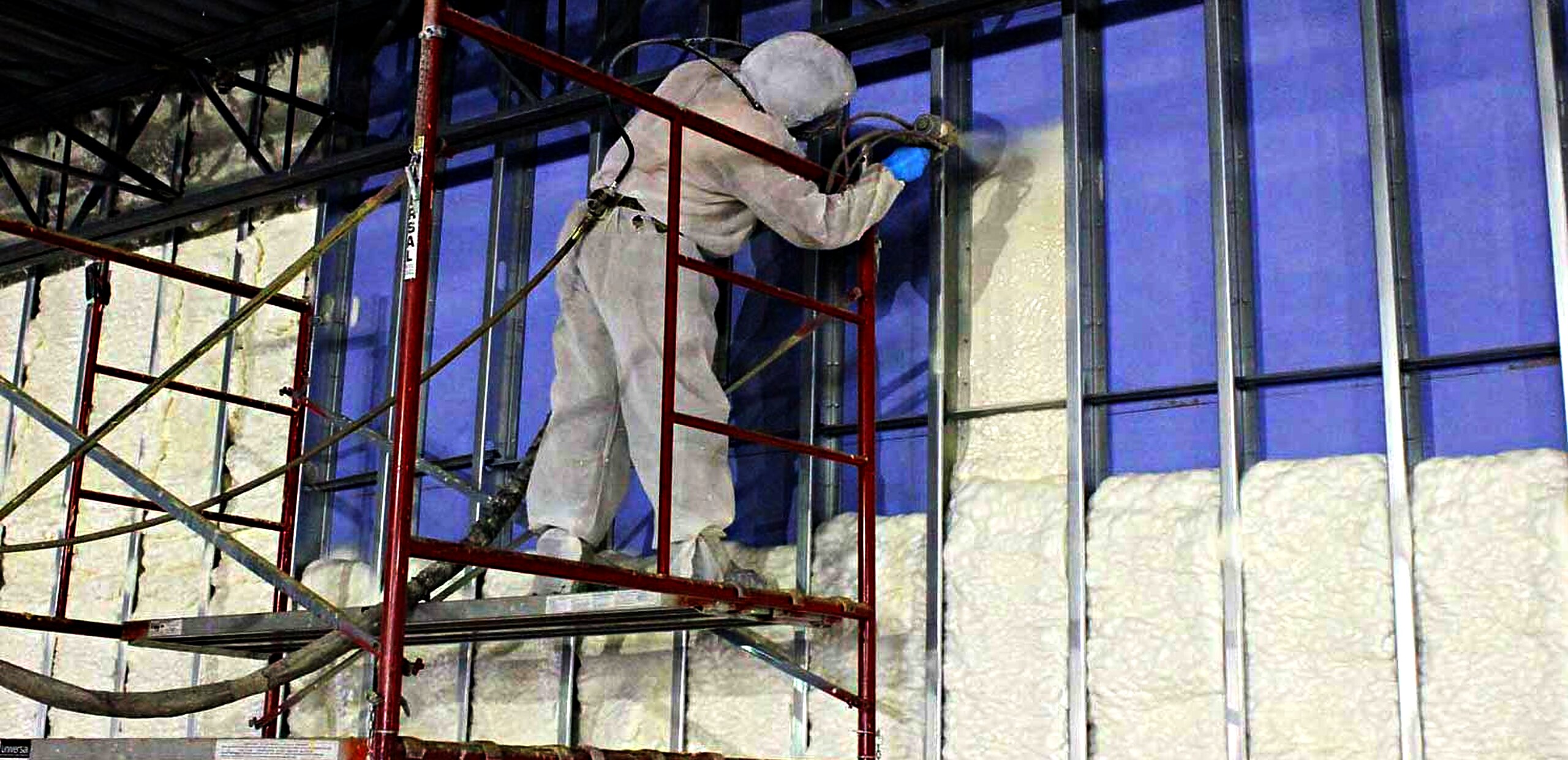
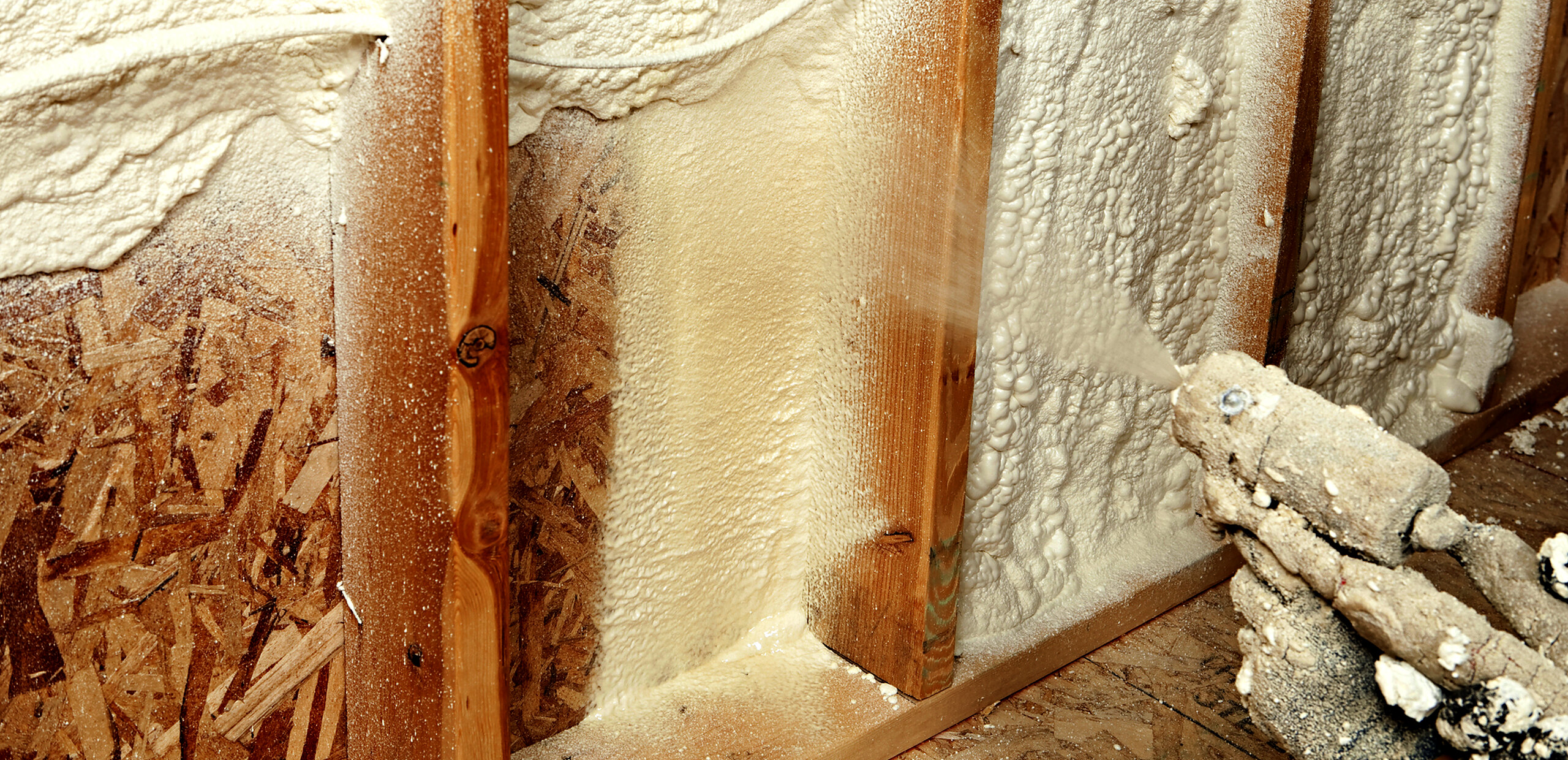
Two-Part Pour Foam: Density & Buoyancy
How 2, 4 and 8 lb two-part foams behave, what a kit really fills, how much flotation a boat needs under the Coast Guard rules, and where pour foam is the wrong tool. Four calculators, math shown.
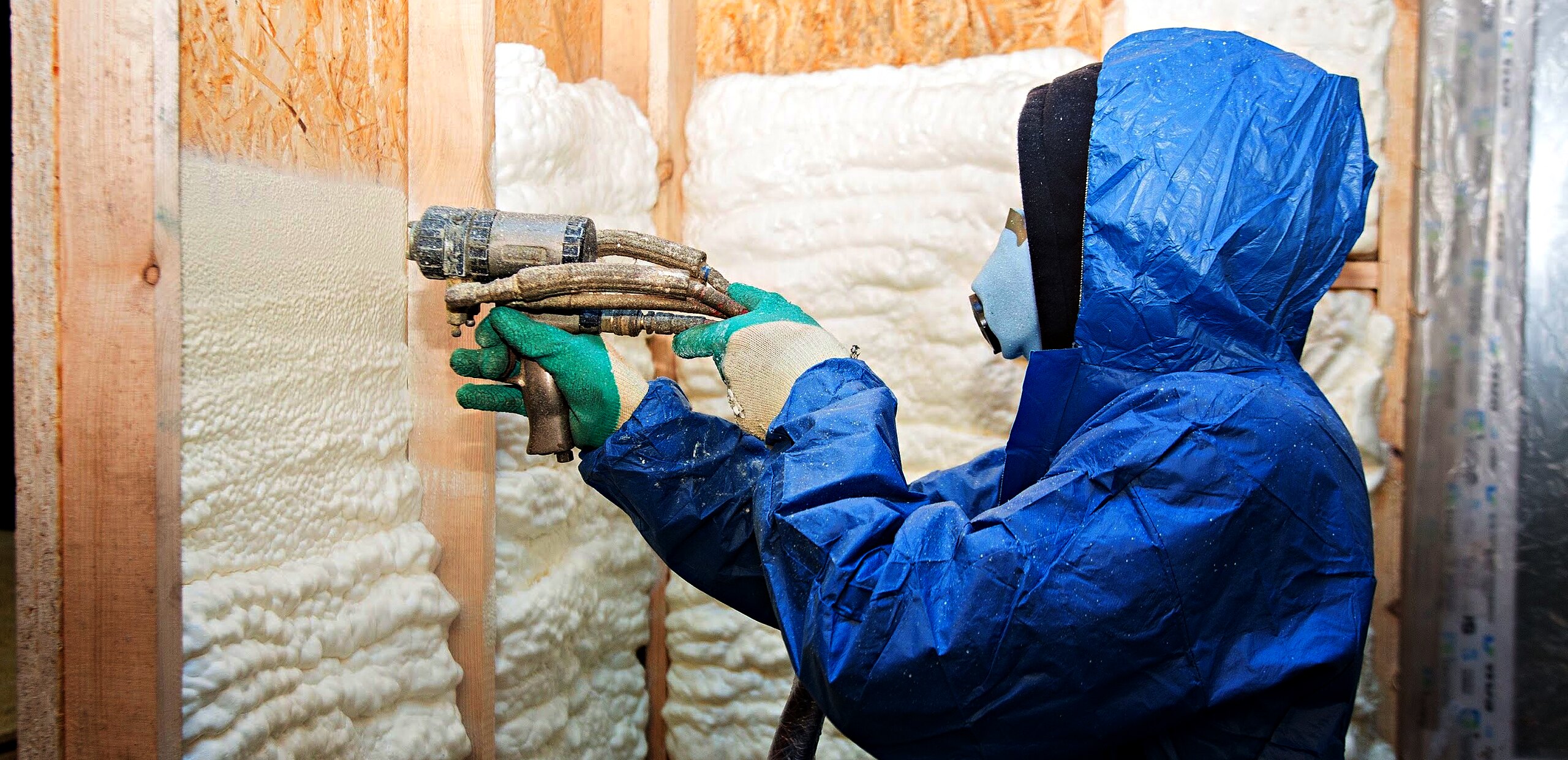
Spray foam for a living.
ArmorThane is the one-stop shop for applicators. We make the chemistry, build the equipment, train you hands-on and back you with technical support, with no franchise fees and no royalties. Applicators have come first here since 1989.
- $0franchise fees or royalties
- 35+years in business
- 50+countries with applicators
- 24/7technical support
Two-part pour foam comes in two jugs. Pour equal parts A and B into a cup, stir hard for half a minute, and it grows 25 to 30 times into rigid, closed-cell foam that fills whatever you poured it into. Boat builders use it for flotation. Fabricators use it to fill voids and stiffen panels. Fence builders set posts with it.
For boat flotation and void fill, use 2 lb/ft³ closed-cell pour foam that its maker says is tested to 33 CFR 183.114. Use 4 lb where the foam also carries load (under a deck, around a fuel tank), and 8 lb or heavier for carving and casting. A kit’s yield is its weight divided by the density: 16 lb of liquid makes about 8 ft³ of 2 lb foam at 80°F, and roughly half that at 50°F. Each cubic foot of 2 lb foam lifts about 60 lb in fresh water. Jump to the pour calculator or the boat flotation calculator.
Most of what ranks for this topic is a product listing: a density chart, a price and a few FAQs. Useful, as far as it goes. It won’t tell you how much foam your 16-footer needs, what a cold garage does to your yield, or if you’re even allowed to foam around a fuel tank. Those answers live in the Coast Guard’s rules and the makers’ data sheets, so that’s where we got them. Math shown. Two-part pour foam is the same family of polyurethane foam used in spray insulation, mixed by hand and poured into a cavity, and two-part pour foam densities run from light flotation grades to rigid structural fills.
We’ve made two-component polyurethane and polyurea in Springfield, Missouri, for 35+ years. One thing up front, because it matters: our ArmorFoam products are spray-applied, not pour kits. For a few cubic feet of flotation, buy a marine pour kit. Where we do fit comes near the end.
- 1What two-part pour foam is
- 22 lb vs 4 lb vs 8 lb: picking a density
- 3How much you need (calculator)
- 4How much flotation a boat needs (calculator)
- 5Coast Guard rules: bilges, fuel tanks, water (checker)
- 6Is my old foam waterlogged? (weight check)
- 7How to pour it, step by step
- 8Fence posts, docks, casting and lifting
- 9Common mistakes
- 10Spray foam and polyurea from ArmorThane
- 11Two-part foam FAQ
What is two-part pour foam?
Two-part pour foam is a liquid polyurethane system sold as an A side (the isocyanate) and a B side (a polyol blend). Mixed 1:1 by volume, the two react, give off heat and carbon dioxide, and expand into rigid, mostly closed-cell foam. US Composites rates its 2 lb flotation foam at 95–98% closed cell; TotalBoat rates its marine foam at 94%.
How the reaction works, in plain English
Every polyurethane starts with an isocyanate. OSHA calls isocyanates “the raw materials that make up all polyurethane products.” The B side carries the polyol, the catalysts and whatever makes the gas. In the pour foams we looked at, that gas is carbon dioxide: US Composites says its foam “will out gas carbon dioxide when expanding,” which is why every maker tells you to pour outdoors or somewhere well ventilated. The gas inflates millions of small cells while the polymer sets around them, and because the cells close off from one another, the cured foam doesn’t wick water like a sponge.
What changes from product to product is how much gas you get per pound of liquid. More gas, bigger cells, lighter and weaker foam. Less gas, heavier and stronger foam that doesn’t grow as much. US Composites lists about 25–30x expansion for its 2 lb foam and 4x for its 16 lb foam. Same chemistry, very different material.
Pour foam vs. spray foam vs. canned foam
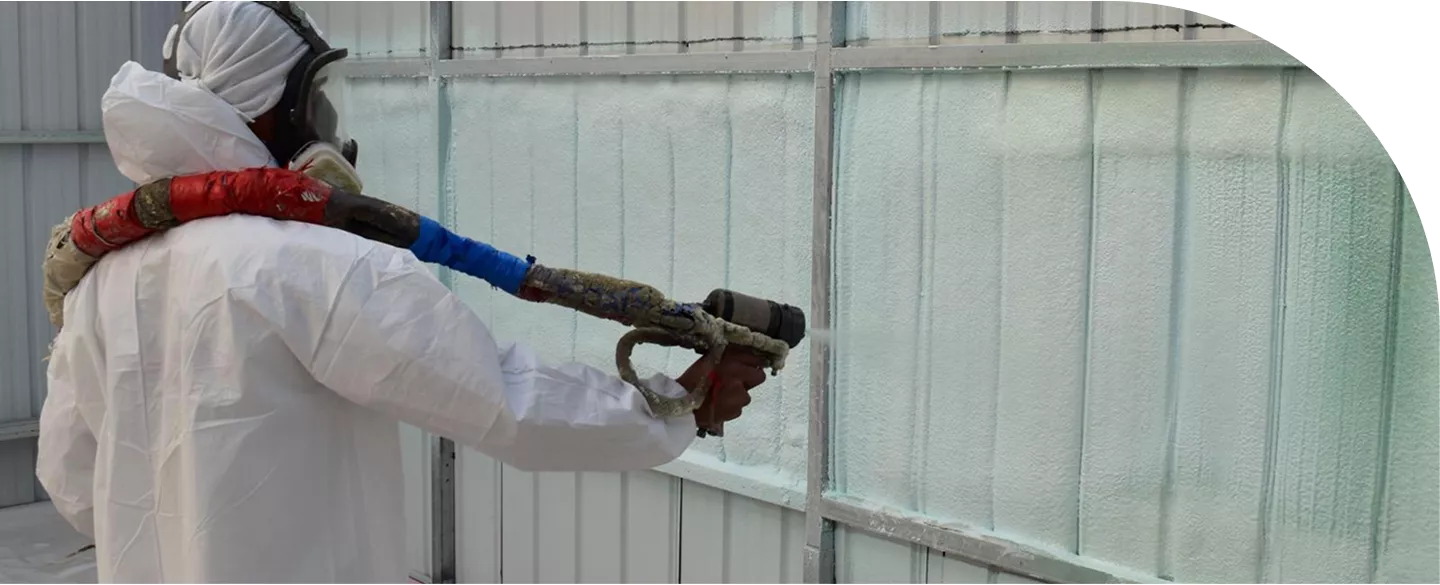
All three are polyurethane. They’re built for different jobs, and mostly the difference is time: how long you have before the liquid turns to foam.
| Two-part pour foam | Two-component spray foam | Canned one-part foam | |
|---|---|---|---|
| How it’s mixed | Jugs, measured 1:1 by volume, stirred by hand or drill | Heated proportioner and spray gun (pro rig), or a disposable two-tank kit | Nothing to mix; cures from moisture in the air |
| Time before it foams | About 45 seconds (US Composites; TotalBoat cream time 45 s) | Cream 2–3 seconds, rise 12–16 seconds (ArmorFoam closed-cell) | Depends on humidity |
| Best at | Filling enclosed voids, flotation, casting | Coating surfaces: walls, roofs, rim joists, tanks | Gaps and cracks |
| Densities | 2–16 lb (US Composites); 3–26 lb casting foams (Smooth-On) | 0.5 lb open-cell to 8 lb (ArmorFoam and UltraThane) | n/a |
| Typical yield | 16 lb kit ≈ 8 ft³ of 2 lb foam | ≈5,000 board feet (≈417 ft³) per 55-gal set, ideal (ArmorFoam closed-cell) | ≈20 board feet (≈1.7 ft³) per can |
| Marine flotation | Sold tested to 33 CFR 183.114 (US Composites, TotalBoat) | Only if the data sheet says so; ours doesn’t claim it | Moisture cure is a poor fit for deep, closed fills |
That 45-second window is the whole point of pour foam. It gives you time to mix, carry the cup to the hole and pour it into the lowest point of a cavity, where it can flow and fill before it rises. Spray foam reacts in seconds, so it sticks where it lands. Great on a wall. Useless for filling the inside of a closed hull section through a 2 in. hole.
Canned foam is a different animal. Our closed-cell guide puts a one-part can at roughly 20 board feet, and because it needs air moisture to cure, it isn’t made for deep, enclosed fills. Covering a surface instead of filling a cavity? Our DIY spray foam insulation guide compares the two-tank spray kits.
2 lb vs 4 lb vs 8 lb pour foam: which density?
Use 2 lb for flotation and non-structural void fill, 4 lb where the foam also supports something (a deck, a fuel tank, a decoy), and 8 lb or heavier for carving, casting and parts that take a beating. Density is the weight of one cubic foot of cured foam. Heavier foam is stronger, fills fewer cubic feet per kit, and floats a little less.
| Density | Expansion | Lift per ft³, fresh / salt | Compressive strength | ft³ per 16 lb of liquid | $ per ft³ | Typical use |
|---|---|---|---|---|---|---|
| 2 lb | 25–30x | 60.4 / 62.0 lb | 40 psi | 8 | $9.88 | Flotation and void fill; nonstructural |
| 3 lb | 20x | 59.4 / 61.0 lb | 60 psi | 5 | $15.40 | Light carving, some casting |
| 4 lb | 15x | 58.4 / 60.0 lb | 90 psi | 4 | $19.25 | Flotation that supports a deck; around fuel tanks; decoys |
| 6 lb (TotalBoat) | – | 56.4 / 58.0 lb | 55–80 psi | 3 per 2-gal kit | $38.33 | Heavier loads, buoys |
| 8 lb | 8x | 54.4 / 56.0 lb | 250 psi | 2 | $38.50 | Carving, signs, rigid supports; “like a soft wood” |
| 16 lb | 4x | 46.4 / 48.0 lb | 580 psi | 1 | $77.00 | Hard castings; “as hard as a rock” |
The density on the jug is free-rise density
US Composites and TotalBoat both define density as the weight of a cubic foot of expanded foam. That number comes from foam rising freely in an open container. Pour the same mix into a closed cavity and it can’t rise freely, so it packs tighter and weighs more per cubic foot than the label. That’s one reason the same kit fills less in a closed space, and why US Composites says to mix “no more than 10% extra foam than what your cavity will hold” when you can only pour once. Our calculator adds that 10% when you pick a closed cavity.
How much weight does a cubic foot of pour foam float?
Buoyancy is the weight of the water the foam pushes aside, minus the weight of the foam. Fresh water weighs 62.4 lb per cubic foot; that’s the figure the Coast Guard writes into 33 CFR 183.105, and USGS gives 62.3–62.4 depending on temperature. Seawater runs about 64. So a cubic foot of 2 lb foam lifts about 60.4 lb in a lake and 62 in the ocean. US Composites publishes 60, 59, 58, 54 and 46 lb for its 2, 3, 4, 8 and 16 lb foams, which matches the math.
What the higher densities buy you
Compressive strength climbs much faster than density. Going from 2 lb to 4 lb doubles the weight but more than doubles the crush strength (40 to 90 psi); 8 lb is over six times as strong as 2 lb. That’s why US Composites points to 4 lb for flotation that also “supports” a deck or gas tank, and why both makers call 2 lb nonstructural. At 8 and 16 lb you’re buying a carving and casting material, and paying roughly $31–$106 per cubic foot for it.
How much pour foam do I need? Volume and kit calculator
Work out the cavity in cubic feet, multiply by the foam’s density to get pounds of liquid, then add waste and correct for temperature. A 48 x 24 x 12 in. void is 8 ft³. At 2 lb density that’s 16 lb of liquid on a warm day, and about 19 lb at 75°F with 10% waste. The calculator does boxes, pontoon tubes and post holes.
How much liquid, how many kits, how many pours
Kit plans use US Composites and TotalBoat published yields and prices (Sept. 2026). Temperature correction is our interpolation between the two points US Composites publishes: full expansion at 80°F, about half at 50°F.
Volume: 48 x 24 x 12 in. ÷ 1,728 = 8.00 ft³. Liquid = volume x 2 lb/ft³ x 1.10 (10% waste) ÷ 0.92 temperature factor at 75°F = 19.2 lb. Buoyancy: 60.4 lb per ft³ in fresh water (496 lb in salt water).
≈$106.00 in kits
- 1 x 16 lb kit (8 ft³ each, $79.00)
- 1 x 4 lb kit (2 ft³ each, $27.00)
- Buys 20 lb of liquid for the 19.2 lb you need: $13.25 per ft³ filled.
≈$167.98 in kits
- 1 x 2-gallon kit (8 ft³, $114.99)
- 1 x 2-quart kit (2 ft³, $52.99)
- Rated 10.00 ft³ at 70–80°F for the 9.60 ft³ you need after waste and temperature.
- Temperature OK. 75–80°F is the sweet spot on every data sheet we checked.
- 2 lb is flotation foam. Makers list it as nonstructural. Under a deck people stand on, use 4 lb or heavier.
- Pour in lifts. 5 mixes at your batch size. Wait 15–20 minutes between lifts; big single masses can overheat and split (Smooth-On).
How we calculated this: box = L x W x H ÷ 1,728; cylinder = π x (D ÷ 2)² x length; post hole = (hole area − post area) x depth. Liquid = volume x density x (1 + waste + 10% for closed cavities) ÷ temperature factor. Gallons use about 8.9 lb per gallon (US Composites: a 16 lb kit is about 1.8 gal). Kit yields are the makers’ ratings in warm conditions. Estimates only.
Expansion math, shown
The one formula worth remembering: cubic feet of foam = pounds of liquid ÷ density. It’s exactly how US Composites rates its kits. An 80 lb kit makes 40 ft³ of 2 lb foam, 20 ft³ of 4 lb, 10 ft³ of 8 lb. The expansion ratio is the same fact in volume terms: a gallon of liquid weighs about 8.9 lb, so in theory it makes about 4.4 ft³ (33 gallons) of 2 lb foam. US Composites quotes 25–30x in practice. Rated yields assume warm liquids, a good mix and a free rise, so real jobs come in under them.
Temperature changes everything
Cold chemicals react slowly, make less gas and give you denser, smaller foam. US Composites rates its expansion at 80°F and says that at 50°F “you would probably only get half the normal expansion.” TotalBoat says anything under 75°F lowers expansion. Warm the jugs, and the cavity if you can.
| Liquid and air temperature | Expansion vs. rated | What a 16 lb kit of 2 lb foam fills |
|---|---|---|
| 80°F or warmer | 100% | 8.0 ft³ |
| 75°F | ≈92% | ≈7.3 ft³ |
| 70°F | ≈83% | ≈6.7 ft³ |
| 65°F | ≈75% | ≈6.0 ft³ |
| 60°F | ≈67% | ≈5.3 ft³ |
| 50°F | ≈50% | ≈4.0 ft³ |
What pour foam costs per cubic foot
| Product | Kit | Rated yield | Price | Per ft³ |
|---|---|---|---|---|
| US Composites 2 lb | 4 lb kit | 2 ft³ | $27.00 | $13.50 |
| US Composites 2 lb | 16 lb kit | 8 ft³ | $79.00 | $9.88 |
| US Composites 2 lb | 80 lb kit | 40 ft³ | $319.00 ($307.00 each for 5+) | $7.98 ($7.68) |
| US Composites 4 lb | 16 lb / 80 lb kit | 4 / 20 ft³ | $77.00 / $311.00 | $19.25 / $15.55 |
| US Composites 8 lb | 80 lb kit | 10 ft³ | $311.00 | $31.10 |
| TotalBoat 2 lb | 2-quart / 2-gallon | ≈2 / ≈8 ft³ | $52.99 / $114.99 | ≈$26.50 / ≈$14.37 |
| TotalBoat 6 lb | 2-quart / 2-gallon | ≈¾ / ≈3 ft³ | $52.99 / $114.99 | ≈$70.65 / ≈$38.33 |
| Fiberglass Warehouse 2 lb | 2 / 10 gallon | Not stated | $112.95 / $525.00 | – |
| Handi-Foam Slow Rise (froth) | II-12 / II-41 disposable | 12.7 / 41.7 ft³ | Not listed | – |
Buy by the biggest kit you’ll actually use. Per cubic foot, US Composites’ 80 lb kit of 2 lb foam costs about 60% of the 4 lb kit. But US Composites also says to buy only what you’ll use in about three months, and half-used jugs pick up moisture. For big floats, the disposable froth kits (Handi-Foam lists 12.7 and 41.7 ft³ sizes) skip the mixing cups entirely.
How much flotation foam does a boat need?
Enough to float the swamped boat plus a share of its rated load. For an outboard over 2 hp, the Coast Guard’s test load is half the first 550 lb of persons capacity, an eighth of the rest, a quarter of any leftover weight capacity, and the swamped motor and battery. Add the hull’s own underwater weight, then divide by 60.4 for 2 lb foam in fresh water.
How many cubic feet of foam will float my boat?
Uses the loading rules in 33 CFR 183 and the swamped motor weights in Table 183.75. Persons capacity and maximum weight capacity are on the boat’s capacity plate. An estimate for restorers, not a certification.
Load standard: outboard over 2 hp (33 CFR 183.220). Hull: 450 lb x (1 − 1/2.70) = 283 lb submerged. 35.0–64.9 hp: swamped motor 255 lb and battery 25 lb from Table 183.75. Persons load: 50% of the first 550 lb of persons capacity + 12½% of the rest = 281 lb. Dead-weight load: 10 lb. Foam lifts 62.4 − 2 = 60.4 lb per ft³ in fresh water. 855 ÷ 60.4 = 14.2 ft³ before margin.
- All of it must sit below the waterline when swamped. Foam that ends up above water adds weight, not lift, which is one reason to carry a margin.
- Placement decides whether it floats level. The outboard test (§183.225) wants the swamped boat within 10° of level with one end above water. Foam only in the bottom of the bilge floats a boat, but not necessarily upright.
- This is an estimate, not a certification. Builders prove flotation by swamp testing. A restorer should aim to replace at least what the factory installed, ideally in the same locations.
How we calculated this: underwater weight = hull x (1 − 1 ÷ specific gravity) + swamped motor and battery (Table 183.75, columns 4 and 7) + the load weights of the rule you picked + 85% of other dense gear. Foam volume = that total ÷ (water density − foam density), plus your margin. Wood stringers and decks mostly float themselves, so the 1.5 default for fiberglass hulls errs on the heavy side. Fuel floats; full tanks are part of the Coast Guard test, and we leave them out.
What the Coast Guard flotation rules actually cover
- Which boats: monohulls under 20 ft. Inboards, sterndrives and airboats need basic flotation (Subpart F, §183.101). Outboards rated over 2 hp need level flotation (Subpart H, §183.201). Manual boats and outboards of 2 hp or less fall under Subpart I (§183.301). Sailboats, canoes, kayaks and inflatables are excluded.
- Who they bind: builders. The boat is loaded, swamped for 18 hours, then has to float with part of it above water. An outboard boat also has to float within 10° of level with one reference area above the surface and the opposite one no more than 6 in. under (§183.225).
- The load: for outboards over 2 hp, half the first 550 lb of persons capacity plus 12½% of the rest, plus a quarter of whatever’s left of the maximum weight capacity after the motor allowance and persons (§183.220). Inboards carry 2/15 of persons capacity plus a quarter of the dead weight (§183.105).
- Where to find your numbers: every monohull under 20 ft is marked with its persons capacity and maximum weight capacity (§183.21, §183.23). That plate is your input.
| Rated horsepower | Swamped motor and controls | Battery, submerged | Total motor allowance (col. 9) |
|---|---|---|---|
| 7.0–10.9 hp | 94 lb | 11 lb | 185 lb |
| 23.0–34.9 hp | 167 lb | 25 lb | 350 lb |
| 35.0–64.9 hp | 255 lb | 25 lb | 459 lb |
| 65.0–94.9 hp | 392 lb | 25 lb | 628 lb |
| 105.0–144.9 hp | 469 lb | 25 lb | 723 lb |
| 145.0–194.9 hp | 501 lb | 25 lb | 762 lb |
| 210.0–300.0 hp | 624 lb | 25 lb | 914 lb |
Hull weight underwater: why aluminum boats need more foam
A hull weighs less in the water than on the trailer, by the weight of the water it pushes aside. The fraction left over is 1 − 1 ÷ specific gravity. Aluminum (2.7) keeps about 63% of its weight underwater, a glass-fiber laminate (about 1.5) about a third, and steel (7.82) about 87%. So a 450 lb aluminum hull needs about 283 lb of lift just to stay at the surface, before you count the motor or anybody’s cooler. The same weight in fiberglass needs about 150.
Where the foam goes matters as much as how much
A swamped boat floats on its foam, and it floats around the foam. Pack it all low in the bilge and the boat stays up, but it can roll or settle bow-down with the heavy motor dragging the stern. That’s why level-flotation designs carry buoyancy up high and outboard, not just under the floor. If you’re restoring, photograph and measure where the old foam came out, then put at least that much back in the same places. Our calculator tells you how much; the builder’s layout tells you where.
Boat flotation foam rules: bilges, fuel tanks and water
Foam in a boat’s bilge must lose no more than 5% of its buoyancy after 24-hour soaks in gasoline, oil and bilge cleaner; engine rooms get 30-day tests (33 CFR 183.114). Foam around a metal fuel tank must be polyurethane of at least 2.0 lb/ft³, can’t be the tank’s only support, and can’t hold water against it.
| Where the foam is | Tests it must pass (§183.114) | Limit |
|---|---|---|
| Bilge (not a sealed compartment) | 24-hour soaks in gasoline (ASTM D471 reference fuel B), No. 2 reference oil, and bilge cleaner (5% trisodium phosphate) | ≤5% loss of buoyant force in each, measured by ASTM D2842 |
| Engine room bilge | 30-day soaks in the same gasoline, oil and bilge cleaner | ≤5% each |
| Engine room, unless open to the atmosphere | 30 days in saturated gasoline vapor at 38°C (about 100°F) or more | ≤5% |
| Sealed compartment | None required (§183.112, §183.222, §183.322) | – |
Foam around fuel tanks: the five rules
- Density and water pickup (§183.516): foam that encases a metal tank can’t change volume more than 5% or dissolve after 24 hours in fuel, oil or bilge cleaner, can’t absorb more than 0.12 lb of water per ft² of cut surface, and, if it’s polyurethane, must be at least 2.0 lb/ft³.
- Not the only support (§183.550(f)): foam can’t be the sole support for a metal tank. If it’s the sole support for a plastic tank, it has to meet the same density or strength rules (§183.550(g)).
- No trapped water (§183.552(b)): “water must not collect between the plastic and the surface of the tank or be held against the tank by capillary action.”
- Access (§183.552(a)): connections, fittings and labels stay reachable.
- No structural duty (§183.550(c)): a fuel tank must not support a deck, bulkhead or other structure.
US Composites recommends its 4 lb foam for filling around gas tanks. That clears the 2.0 lb/ft³ floor with room to spare and handles the load of a deck above it better than 2 lb.
What “Coast Guard approved” means on a jug
The regulation is a set of tests, not a list of approved products. Makers word it differently: US Composites and TotalBoat say their foams were “tested in accordance with” 33 CFR 183.114, FSI says its flotation foams “meet or exceed” it, and one retailer calls its foam “Coast Guard approved.” The useful question is which of the seven tests the foam passed. A foam documented only for the 24-hour bilge tests isn’t documented for an engine room.
Can I use pour foam here, and which density?
Answers come from 33 CFR 183 and the makers’ own guidance, cited in each card.
- Aluminum hull
Good use of pour foam
- Must pass the §183.114 bilge tests (24-hour gasoline, oil and bilge-cleaner soaks, no more than 5% buoyancy loss) unless it sits in a sealed compartment. Buy a foam whose maker says it’s tested to 33 CFR 183.114.
- Use 4 lb where the foam also has to hold up the floor.
Don’t trap water against the metal
- The Coast Guard bans foam that holds water against a metal fuel tank (§183.552(b)). We apply the same logic to an aluminum hull: keep limber holes and drain paths open, and never pour over standing water.
- Pour foam bonds hard. If you might need to reach a rivet or seam later, cast blocks in a mold and fit them instead of pouring in place.
Keep it out of standing water
- Closed-cell foam shrugs off splashes and days of wet (US Composites). It isn’t built to sit in bilge water for years. Keep the bilge pump and drains working.
Summary of 33 CFR 183 and maker guidance. Your boat builder’s original spec, the product data sheet and local rules govern.
Is my boat’s flotation foam waterlogged?
Weigh a sample. Cut a small block of the old foam, measure it, and put it on a kitchen scale. A 4 x 4 x 2 in. block of dry 2 lb foam weighs about 0.6 oz; anything much heavier is carrying water. Every pound of water per cubic foot costs you a pound of lift and adds a pound of weight.
How much water is in my foam, and how much lift is gone?
Cut a clean-sided block, measure all three sides, and weigh it before it dries out.
Wet: find out why Sample: 4 x 4 x 2 in. = 32.0 in³ (0.0185 ft³), weighing 0.188 lb, so it’s 10.1 lb/ft³ against 2.0 lb/ft³ new. Each cubic foot carries about 8.1 lb of water and now lifts 52.3 lb instead of 60.4. 10.0 ft³ like this holds roughly 81 lb of water. The Coast Guard soak tests allow new marine foam no more than 5% buoyancy loss (§183.114); the 20% cutoff between “wet” and “waterlogged” is our rule of thumb. One core tells you about one spot. Test a few, including the lowest point of the bilge.
How we calculated this: sample density = weight ÷ (L x W x T ÷ 1,728); water per ft³ = sample density − original density; buoyancy lost = water per ft³ ÷ (water density − original density). The 5% line is the most buoyancy a new marine foam may lose in the §183.114 soak tests. The 20% line between “wet” and “waterlogged” is our rule of thumb, not a standard.
Why closed-cell foam still gets wet
Closed cells resist water. They aren’t immune to it. US Composites says its foam is fine in contact with water for “hours/days/weeks and even months,” but “should never be submerged in contact with water permanently,” because over years the water “can begin to soften the foam and cause it to lose its closed-cell status.” TotalBoat’s listing carries the same warning. In an old boat, a leaking deck fitting or a clogged drain can keep foam wet for years at a time, and cut or crushed foam has open cells at the surface to begin with.
Replacing old flotation foam
- Photograph the capacity plate and every foam location before you cut anything. The layout matters as much as the volume.
- Pull the deck, cut out the old foam, and keep track of the volume that comes out, so you know what to put back.
- Dry the hull. Fix the leaks that soaked it: deck fittings, drains, rivets. Replace soft wood and stringers, and on aluminum, check for corrosion where the wet foam sat.
- Size the new foam with the flotation calculator, and put back at least what came out, in the same places.
- Pour in lifts with the drains and limber holes kept open, or cast blocks in a mold and fit them.
- Seal the deck, and keep the bilge draining. Foam that stays dry keeps floating.
How to pour two-part foam, step by step
Warm both parts to 75–80°F, measure equal volumes, mix hard for about 25–30 seconds, and pour within the next 20 seconds. Start with no more than a quart of each part per mix, and wait 15–20 minutes between lifts. Wear gloves and eye protection, and work where the gas can clear.
Measure and plan the pours
Get the volume from the calculator, decide your mix size, and count your lifts. For a closed cavity, drill a vent hole at the high point so trapped air and gas have somewhere to go.
Warm the liquids
US Composites wants both parts at 80°F or more; a heated room or a bucket of warm water works. TotalBoat calls 75–80°F optimal and says don’t let the jugs freeze. Cold foam is dense foam, and dense foam is short foam.
Protect everything nearby
US Composites says its foam “will stick to virtually everything except slick plastics.” Mask what you want to keep. Surfaces should be clean and dry. For molds, use a wax release; Smooth-On warns that silicone release can collapse its foam.
Measure 1:1, accurately
Both US Composites and TotalBoat call accurate measuring “extremely critical.” Use graduated cups and separate stir sticks, so the A and B jugs never cross-contaminate.
Mix fast and hard
US Composites says stir “as vigorously as possible” for at least 25 seconds; Fiberglass Warehouse says about 30. Past a gallon, use a drill mixer at 1,500–2,000 rpm (US Composites). A lazy stir gives lazy foam.
Pour right away, at the low point
Pour as soon as the mix turns cloudy (Fiberglass Warehouse). Smooth-On’s advice for molds works for cavities too: pour in one spot at the lowest point and let it find its level. US Composites says the liquid only flows about 5 ft before it gels.
Let it rise, then lift again
Full expansion takes about 5 minutes (US Composites) to 7 minutes (Fiberglass Warehouse), and it’s fairly hard at about 15. Wait 15–20 minutes before the next lift. Big single masses can overheat and split, which is why Smooth-On says to step-pour.
Trim, seal and cover
Once cured, it cuts and sands, and it can be laminated with polyester, epoxy or vinyl ester (US Composites, TotalBoat). Clean up uncured spills with acetone; cured foam only comes off mechanically.
Safety: what the data sheets ask for
- Air. Work outdoors or in a well-ventilated space: the foam outgasses carbon dioxide while it rises (US Composites).
- Eyes and hands. Gloves and eye protection are “strongly recommended” (US Composites). Sika tells PostFix users to wear safety goggles and chemically resistant gloves.
- Isocyanates. OSHA lists occupational asthma, other lung problems and eye, nose, throat and skin irritation as the main effects of hazardous exposure. Read the SDS for your kit and wear the respirator it calls for.
- Dust. Sanding or machining cured foam calls for a NIOSH-approved respirator (Smooth-On).
- Pouches. With bag-mixed post foam, don’t mix past the stated 15 seconds: Sika warns the pouch can burst and spray.
Other jobs for two-part foam: fence posts, docks, casting, lifting
Two-part foam also sets fence posts, fills dock floats, casts decoys and carvings, and lifts sunken concrete. Contractors also inject it to fill voids behind failing seawalls; see our seawall repair guide. Each job has its own product (pre-packed post pouches, froth kits for big floats, 4–16 lb casting foams, injected lifting foams) and its own line you shouldn’t cross, like using post foam on a structural pole.
Fence, gate and mailbox posts
Bag-mixed post foam is the same chemistry in a pouch. Sika’s PostFix makes about 0.7 ft³ per pouch, sets in 3–5 minutes and reaches final set in 2 hours. The hole must be dry, and the pouch needs 2 hours at 65–77°F first. Sika is blunt about limits: not for deck posts, playground posts, basketball or flag poles, and “not recommended for any type of structural application.”
Dock floats
Foam-filled float shells are standard, and big ones are a job for froth kits rather than cups: Handi-Foam lists its 2 lb slow-rise froth for “buoyancy for floating docks,” in disposable kits up to 41.7 ft³. Check your lake first. At Lake of the Ozarks, Ameren Missouri says “all docks and breakwaters, including additions, modifications and refoaming activities must be completed by a Certified Dock Builder.” Dock decks and floats take our polyurea marine coatings well.
Casting, carving, decoys and taxidermy
US Composites says 2 lb is for flotation only; use at least 3–4 lb for sculpting, and 4 or 8 lb for decoys. Smooth-On’s casting foams run from 3 to 26 lb, and FSI makes a high-density foam specifically for taxidermy forms. Seal porous molds, use a wax release, and step-pour anything thick.
Lifting sunken slabs
Polyurethane lifting foam is two-part foam injected through small holes under a slab. Our ArmorFoam Lift 200 is a 2.50 pcf hydrophobic foam for residential slabs; Lift 300 is 3.75 pcf for heavier commercial loads. It goes in with a pump, not a cup, so it’s a pro job. See mudjacking vs. polyjacking and our foam concrete lifting page.
Pontoon and float tubes
You can foam a pontoon, says US Composites, if it’s “completely dry” and known holes are repaired first. Their worked example: an 18 in. x 14 ft tube holds about 24.7 ft³. It’s a closed cavity, so vent it, pour in batches and don’t overfill. Once it’s full, you’ve also lost the easy way to find the next leak.
Trench breakers and industrial fill
On pipeline jobs, sprayed polyurethane foam builds the trench breakers that keep a backfilled ditch from washing out; see spray foam for pipeline trench breakers. FSI lists pour-in-place systems for everything from door cores to live wells. Same chemistry, sized for a factory.
Post foam: how many pouches per hole
| Post | Hole diameter | Hole depth | Pouches (Sika) | Hole volume around the post (our math) |
|---|---|---|---|---|
| 2 in. round | 6 in. | 46 in. | 1 | 0.67 ft³ |
| 4x4 | 8 in. | 36 in. | 1 | 0.79 ft³ |
| 4x4 | 10 in. | 36 in. | 2 | 1.38 ft³ |
| 6x6 | 10 in. | 48 in. | 2 | 1.34 ft³ |
Common pour foam mistakes
- Pouring cold. At 50°F you get about half the foam you paid for. Warm the jugs to 75–80°F.
- Mixing too much at once. US Composites says start with no more than a quart of each part. A big batch sets in the cup before it’s in the cavity.
- Guessing the ratio. 1:1 by volume, measured. Off-ratio foam is weak foam.
- Overfilling a closed cavity. Expanding foam pushes hard on thin walls. Vent it, pour in batches, and stay within 10% of the volume.
- One giant pour. Heat builds in big masses and can split the foam. Step-pour in lifts 15–20 minutes apart.
- Using 2 lb foam as structure. It’s rated nonstructural. Use 4 lb or heavier where it carries load.
- Burying a fuel tank. Foam can’t be a metal tank’s only support, can’t trap water against it, and must leave fittings and labels accessible.
- Foaming over wet or rotten wood. You seal the problem in. Dry it and fix it first.
- Trusting a buoyancy number above 62.4 lb/ft³. It isn’t possible in fresh water.
- Using post foam for a deck or flag pole. The maker says no structural use.
- Keeping half-used jugs for a year. Buy what you’ll use in about three months (US Composites).
When a pour kit isn’t the answer: spray foam and polyurea
Straight answer first: ArmorThane doesn’t sell a pour-in-place flotation kit. Our ArmorFoam line is spray-applied: 0.5 lb open-cell, 2 lb closed-cell, UltraThane at 4, 6 and 8 lb, a roofing foam, and Lift 200 and 300 for raising concrete. Even the product we call ArmorFoam 1:1 expanding foam is a spray system for walls, attics and crawl spaces. If your job is a few cubic feet of flotation under a console, buy a marine pour kit tested to 33 CFR 183.114. You don’t need us for that.
Where we do fit is protecting and building around the foam. Our polyurea marine coatings go on decks, docks, pilings, buoys, bilges and hulls as a barrier coat (it isn’t an antifouling; that’s a separate topcoat). Houseboat roofs get the same seamless polyurea. On land, closed-cell ArmorFoam tests at R-6.5 per inch aged (our closed-cell guide has the full data sheet), and UltraThane’s 4–8 lb foams are sprayed in ½–1 in. passes to rigidize flat or curved surfaces. An ArmorThane-certified applicator can quote any of it.
Marine barrier coatings
Decks, docks, pilings, buoys, bilges and hull barrier coats. Antifouling goes on top where you need it.
ArmorFoam closed-cell
Aged R-value, ASTM C518. Sprayed insulation for buildings, not a flotation pour.
UltraThane
High-density spray foam for rigidizing panels and structural reinforcement.
Foam fills the hull. Polyurea protects it.
Boat and UTV dealers add polyurea for decks and hulls; dock and marine contractors add docks, pilings and floats; foam contractors add all of it to one rig. We make the chemistry, build the rigs and train your crew. Not a franchise: no franchise fee, no royalties, and startup packages from $25,000.
See the rigs: mobile spray foam rigs →
Two-part pour foam FAQ
What is two-part foam?
Two-part foam is a liquid polyurethane sold as an A side (isocyanate) and a B side (polyol blend). Mixed 1:1 by volume, the two react, release carbon dioxide and expand into rigid foam that's mostly closed-cell: US Composites rates its 2 lb foam at 95–98% closed cell. Pour versions give you about 45 seconds before they start to foam, which is enough to fill an enclosed cavity.
How much does pour foam expand?
It depends on density. US Composites lists about 25–30x for 2 lb foam, 20x for 3 lb, 15x for 4 lb, 8x for 8 lb and 4x for 16 lb. In weight terms, cubic feet of foam = pounds of liquid ÷ density, so 16 lb of liquid makes about 8 ft³ of 2 lb foam at 80°F. Expect about half that at 50°F.
How much pour foam do I need?
Measure the cavity in cubic feet (inches: L x W x H ÷ 1,728), multiply by the density for pounds of liquid, then add waste and correct for temperature. An 8 ft³ void takes 16 lb of 2 lb foam in ideal conditions, or about 19 lb at 75°F with 10% waste. Our pour foam calculator handles boxes, pontoon tubes and post holes and prices the kits.
How much flotation foam does a boat need?
Enough to support the hull's underwater weight, the swamped motor and battery, and a share of the rated load. For outboards over 2 hp, the Coast Guard test load is half the first 550 lb of persons capacity plus 12½% of the rest, plus 25% of any leftover weight capacity (33 CFR 183.220). Divide the total by about 60.4 lb/ft³ for 2 lb foam in fresh water, or run the flotation calculator.
Should I use 2 lb or 4 lb pour foam?
Use 2 lb for flotation and void fill that carries no load; both US Composites and TotalBoat call it nonstructural. Use 4 lb where the foam also supports a deck or surrounds a fuel tank: it's rated at 90 psi compressive versus 40 psi for 2 lb (US Composites). The trade-off is volume: a kit of 4 lb foam fills half the cubic feet.
Does pour foam absorb water?
Closed-cell pour foam resists water, but it isn't immune. US Composites says contact for days, weeks or months is fine, but its foam should never be permanently submerged, because over years water can soften it and break down the closed cells. For boats, look for foam tested to 33 CFR 183.114, which limits buoyancy loss to 5% after fuel, oil and bilge-cleaner soaks.
What's the difference between pour foam and spray foam?
Timing and purpose. Pour foam gives you about 45 seconds to mix and pour it into a cavity, where it flows to the low point and rises. Spray foam from a plural-component rig creams in 2–3 seconds and rises in 12–16 (ArmorFoam closed-cell), so it sticks to whatever surface it hits. Pour foam fills enclosed voids; spray foam covers walls, roofs and tanks.
Can I use Great Stuff or canned foam for boat flotation?
We wouldn't. Canned one-part foam cures from moisture in the air, so deep enclosed fills are a poor fit, and a can makes only about 20 board feet (under 2 ft³). Flotation in a bilge has to survive the fuel, oil and bilge-cleaner tests in 33 CFR 183.114, so use a two-part marine pour foam whose maker says it's tested to that rule.
Does two-part foam work for fence posts?
For light posts, yes. Sika PostFix makes about 0.7 ft³ per pouch, sets in 3–5 minutes and reaches final set in 2 hours; one pouch handles a 4x4 in an 8 in. x 36 in. hole. The hole must be dry. Sika says it's not for deck posts, playground posts, basketball or flag poles, or any structural application.
Can I pour foam around a boat fuel tank?
Yes, with conditions. Polyurethane foam around a metal tank must be at least 2.0 lb/ft³ and absorb no more than 0.12 lb of water per ft² of cut surface (33 CFR 183.516). It can't be the tank's only support, it can't hold water against the tank, and fittings and labels must stay accessible (§183.550, §183.552). US Composites recommends its 4 lb foam there.
Can I pour foam in cold weather?
You can, but you'll get less foam. US Composites rates expansion at 80°F and says at 50°F you'd probably get only half, and TotalBoat says anything under 75°F lowers expansion. Warm the jugs to 75–80°F in a heated room or a bucket of warm water, and work in a heated space if you can.
Can I fiberglass or epoxy over pour foam?
Yes, once it's fully cured. US Composites and TotalBoat both say cured foam can be laminated with polyester, epoxy or vinyl ester resin. Trim and sand it to shape first; uncured foam cleans up with acetone, but cured foam only comes off mechanically.
Can I refill my pontoons or dock floats with foam?
Pontoons, yes, if they're completely dry and known holes are repaired first (US Composites); vent them and pour in batches, since they're closed cavities. Dock floats depend on your lake: at Lake of the Ozarks, Ameren Missouri requires refoaming to be done by a Certified Dock Builder. Big floats are easier with froth kits like Handi-Foam Slow Rise, which lists floating-dock buoyancy as a use.
Written from manufacturer data sheets, the Coast Guard's flotation rules in 33 CFR 183 and 35+ years of making two-component polyurethane. Last updated September 26, 2026.
Methodology and sources
Product data and prices come from each maker’s or seller’s site as of September 2026. Regulations are quoted from 33 CFR Part 183. Water densities: USGS (fresh) and Engineering ToolBox (seawater). Calculations are ours: estimates for planning, not a flotation certification or a substitute for the product data sheet.
- 33 CFR 183.105, quantity of flotation required (Cornell LII): law.cornell.edu/cfr/text/33/183.105
- 33 CFR 183.114, test of flotation materials (Cornell LII): law.cornell.edu/cfr/text/33/183.114
- 33 CFR 183.220, preconditioning for tests, outboards over 2 hp (Cornell LII): law.cornell.edu/cfr/text/33/183.220
- 33 CFR 183.320, preconditioning for tests, manual and 2 hp or less (Cornell LII): law.cornell.edu/cfr/text/33/183.320
- 33 CFR 183.75 and Table 183.75, outboard motor weights (Cornell LII): law.cornell.edu/cfr/text/33/183.75
- 33 CFR 183.516, cellular plastic used to encase fuel tanks (Cornell LII): law.cornell.edu/cfr/text/33/183.516
- 33 CFR 183.550, fuel tanks: installation (Cornell LII): law.cornell.edu/cfr/text/33/183.550
- 33 CFR 183.552, plastic encased fuel tanks: installation (Cornell LII): law.cornell.edu/cfr/text/33/183.552
- USGS Water Science School, water density: usgs.gov/special-topics/water-science-school/science/water-density
- Engineering ToolBox, seawater properties: engineeringtoolbox.com/sea-water-properties-d_840.html
- Engineering ToolBox, densities of solids: engineeringtoolbox.com/density-solids-d_1265.html
- OSHA, isocyanates: osha.gov/isocyanates
- US Composites, urethane pour foam (2–16 lb densities, prices): uscomposites.com/foam.html
- US Composites, polyurethane foam FAQ: uscomposites.com/faq_foam.html
- TotalBoat, 2-part polyurethane marine flotation foam: totalboat.com/products/2-part-polyurethane-marine-flotation-foam
- Fiberglass Warehouse, 2 lb polyurethane pour foam: fiberglasswarehouse.com/products/2lb-polyurethane-pour-foam
- Fiberglass Warehouse, 4 lb polyurethane pour foam: fiberglasswarehouse.com/products/4lb-polyurethane-pour-foam
- Smooth-On, FOAM-iT! 4: smooth-on.com/products/foam-it-4/
- Handi-Foam, Slow Rise (HFO): handifoam.com/product/handifoam-slow-rise-hfo/
- FSI, boating and marine foams: fsi.co/markets/boating-marine/
- FSI, pour-in-place foam systems: fsi.co/products/pour-in-place-foam/
- Sika, PostFix fence post mix: usa.sika.com/retail/en/products-catalog/post-setting/sika-postfix.html
- Sika, PostFix product data sheet (PDF): usa.sika.com/dms/getdocument.get/6e83ab6d-ec44-471c-b184-8a2a2b1a2619/
- Ameren Missouri, Lake of the Ozarks dock requirements: ameren.com/property/lake-of-the-ozarks/dock-requirements
- ArmorThane, ArmorFoam products: armorthane.com/products/armorfoam-products/
- ArmorThane, ArmorFoam 1:1 polyurethane expanding foam: armorthane.com/products/armorfoam-products/armorfoam-11-polyurethane-e
- ArmorThane, ArmorFoam UltraThane: armorthane.com/products/armorfoam-products/ultrathane/
- ArmorThane, ArmorFoam Lift 200: armorthane.com/products/armorfoam-products/lift-200/
- ArmorThane, closed-cell spray foam guide: armorthane.com/closed-cell-spray-foam/
- ArmorThane, marine coatings: armorthane.com/protective-coatings/marine/
Start your coatings business with ArmorThane.
Tell us what you want to spray and where you are. An ArmorThane specialist will walk you through the equipment, chemicals, training and startup cost for the work you want to do.
- Equipment package matched to your applications
- Hands-on training and applicator certification
- Technical support once you are spraying
Bigger job than a kit? Talk to a certified ArmorThane applicator.
Tell us what you're protecting or insulating: a deck, a dock, a hull, a tank or a building. We'll connect you with an ArmorThane-certified applicator for polyurea coatings or spray foam, quoted in writing.
- Polyurea for boat decks, bilges, docks and pilings
- Seamless polyurea houseboat roofs
- Closed-cell and high-density ArmorFoam spray foam
- Contractors: ask about rigs and startup packages