
Skip to content
Urethane Cement Flooring

Urethane Cement Flooring: Thickness, Heat Limits and Cost

How the three-part system works, which thickness handles which hot-water and steam duty, where it beats epoxy and where it does not, and a selector that prices floor and cove for your room.
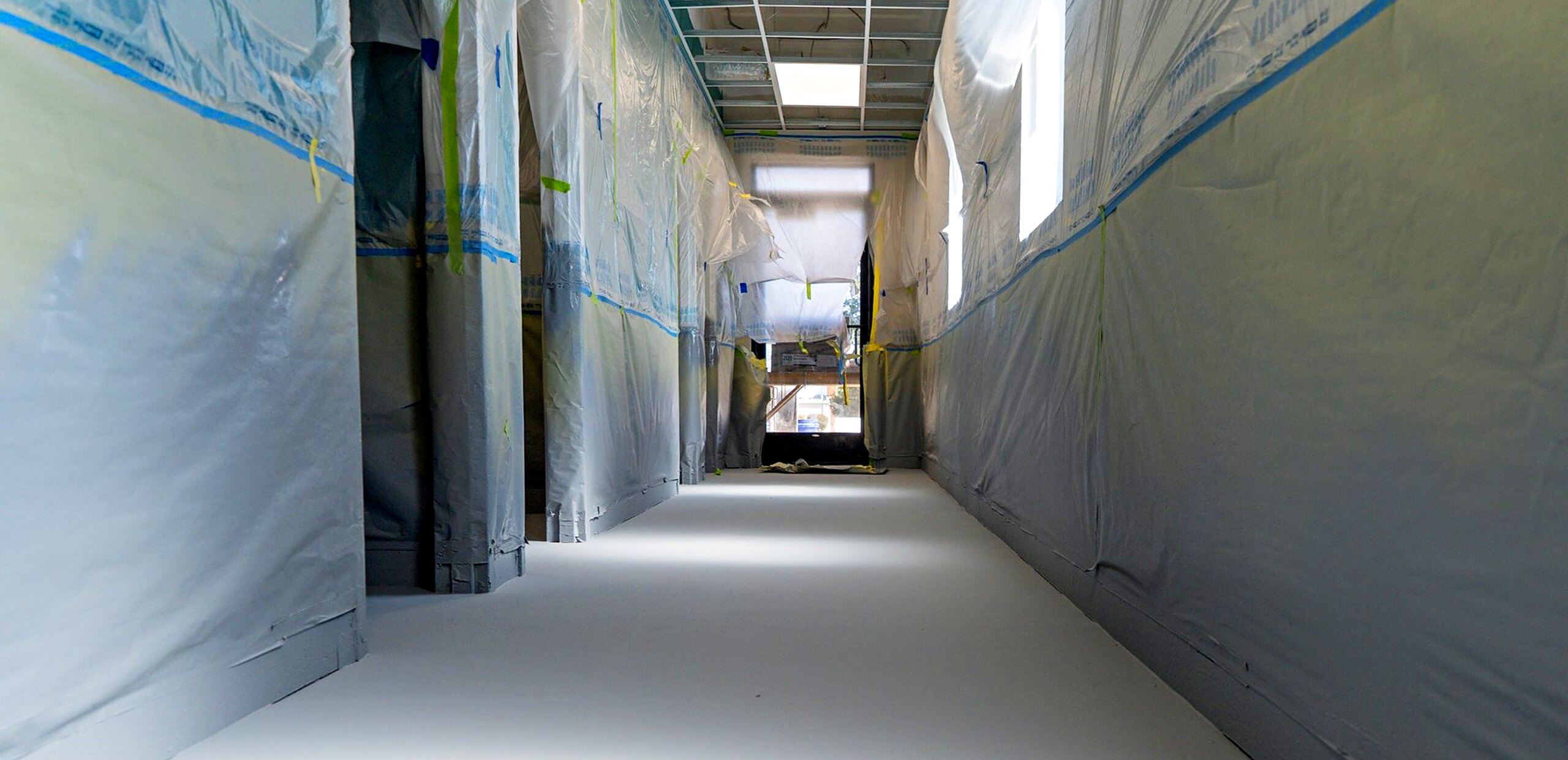
Corridor at McClure Veterinary Clinic with freshly sprayed AquaSafe polyurea flooring
Start a floor coating business

Coat floors for a living.

ArmorThane is the one-stop shop for applicators. We make the chemistry, build the equipment, train you hands-on and back you with technical support, with no franchise fees and no royalties. Applicators have come first here since 1989.

  • $0franchise fees or royalties
  • 35+years in business
  • 50+countries with applicators
  • 24/7technical support
-50 to 235°F
Service range of a 1/4 to 3/8 in heavy-duty system
Ucrete HF data sheet
220°F
Steam or hot water cleaning it resists, at up to 2,500 psi
Same data sheet
7–10 days
Age of new concrete it can go over
Versus 28 days for most epoxies
$7–15
Installed cost per sq ft by thickness
Contractor pricing, 2026

Urethane cement flooring is what plants and kitchens end up with after an epoxy floor has cracked, lifted or blistered around the fryers and the washdown hoses. It looks plain, usually a matte or lightly textured surface in a handful of colors. What it does well is take heat, water and acids day after day on a slab that may never fully dry.

Quick answer

Urethane cement flooring is a three-part system of polyurethane resin, hardener and cement-based aggregate, installed 1/8 to 3/8 inch thick by self-leveling or troweling. It resists thermal shock, hot water and steam cleaning, many acids and damp young concrete far better than thin epoxy. Typical installed cost is about $7 to $15 per sq ft, rising with thickness.

The material

What urethane cement actually is

Three components go into the mixer: a polyol resin, an isocyanate hardener and a bag of graded cement, aggregate and pigment. The resin and hardener form polyurethane; the cement reacts with water already in the mix. The result is a dense, heavy mortar that behaves much more like concrete than a coating does.

Why it survives heat

Moves with the slab

A thin epoxy film is stiff and expands at a different rate than the concrete under it. Dump boiling water on it often enough and the bond line fails. Urethane cement is thicker and moves closer to the way concrete moves, so thermal shock does not shear it off.

Why it tolerates damp

Breathes, within limits

Systems such as Ucrete HF go over properly prepared concrete only 7 to 10 days old, and Sika rates PurCem for higher-moisture substrates. That can take weeks off a new-build schedule. Rising water from a slab with no vapor barrier is still excluded by manufacturers.

The trade-off is looks and flexibility of design. You get solid colors, sometimes a quartz or flake broadcast, and a surface that most manufacturers expect to darken or yellow in sunlight. Nobody picks urethane cement for a showroom. For how urethane and polyurethane chemistry differ in general, see urethane vs polyurethane.

Build options

Urethane cement flooring by thickness

Thickness is the main dial. More material means more heat capacity at the surface, more impact resistance and more cost. Pick it from the hottest thing that routinely hits the floor, not the average day.

SystemThicknessTypical $/sq ftHeat dutyTypical use
Self-leveling (SL)1/8–3/16 in$7–12Wet, warm washdownDry storage, packaging, coolers, light kitchens
Medium duty (MD)3/16–1/4 in$9–13Hot water; about 176°F at 4 mm, 194°F at 6 mm for one productRestaurant kitchens, bakeries, beverage lines
Heavy duty trowel (HF)1/4–3/8 in$10–15Steam cleaning and hot oil, to about 235°FMeat and poultry, dairies, breweries, fryer lines
Decorative quartz or flakeVaries$15–20Depends on base thicknessFront-of-house, food halls, labs
Prices from a 2026 Chicago contractor guide; heat ratings from Sika PurCem and Ucrete HF data sheets. Your product's data sheet governs. Tap a column heading to sort.
Do not forget the coveAn integral cove, the same material curved 4 to 6 inches up the wall, is what keeps washdown water out from behind the base. The FDA Food Code calls for coved, closed floor-wall junctures where floors are cleaned by water flushing. Price it by the linear foot along with the floor.
Selector

Thickness, cost and material weight

Pick the hottest service the floor sees. The selector sets a thickness from the published product ratings, then prices the floor and cove at typical installed rates and works out how many pounds of mixed material the crew will be placing.

Spec and budget

Urethane cement selector

Thickness tiers follow Sika's PurCem ratings (176°F at 4 mm, 194°F at 6 mm) and Ucrete HF (to 235°F at 1/4–3/8 in). Price bands: $7–12 up to 3/16 in, $9–13 to 1/4 in, $10–15 above. Weight uses Sika's yield of about 1.9 kg per m² per mm, which is about 9.9 lb per sq ft per inch. Cove is priced as area, which usually understates its labor.

0
Thickness selected
0
Typical heat rating
0
Installed estimate, floor + cove
0
Mixed material to place

Still deciding between systems for a food space? Our commercial kitchen flooring guide compares urethane cement with quarry tile, epoxy and polyaspartic.

Fit check

Where urethane cement belongs

Strong fit

Meat, poultry and dairy plants

Hot washdown, blood, fats, lactic acid and constant water. Ucrete HF is USDA accepted for federally inspected meat and poultry plants.

Strong fit

Commercial kitchens

Fryer lines, dish rooms and walk-in thresholds where hot grease and boiling water hit the floor every shift.

Strong fit

Breweries and beverage

Caustic CIP chemicals, hot rinses, sugars and acids, plus forklift traffic around tanks.

Good fit

Coolers and freezers

Rated well below zero, and the transition from freezer to warm dock is where thin coatings crack.

Think twice

Dry warehouses

It works, but you are paying for heat and chemical resistance you will not use. A commercial floor coating or epoxy system costs less.

Poor fit

Sunlit or decorative floors

Limited colors, matte texture and yellowing under UV. Showrooms and patios want an aliphatic polyaspartic or polyurea instead.

For chemical splash areas that are not hot, a chemical resistant coating may be enough, and for floors in other industrial settings, see our industrial flooring page.

Installation

How urethane cement goes down

  1. Shot blast or scarify the slab

    Urethane cement wants a heavier profile than a thin coating, often CSP 4 to 6. Remove old coatings, sealers and contaminated concrete, and check pull-off strength; Sika asks for at least 1.5 MPa (about 218 psi).

  2. Cut anchor grooves at every free edge

    Saw-cut keyways at walls, drains, doors, equipment pads and joints so the edges are locked into the slab. Unkeyed edges are where urethane cement floors start to curl and lift.

  3. Fix the slope first

    Ponding in a wet room is a slope problem, not a coating problem. Build pitch to drains with a mortar layer before the finish goes down.

  4. Place the cove, then the floor

    Trowel the integral cove up the wall, then the scratch coat and the body. Self-leveling grades are poured and spiked; heavy grades are troweled.

  5. Honor the moving joints

    Expansion and isolation joints in the slab get carried through the floor and filled with a flexible sealant. Fill them rigid and they crack anyway.

  6. Cure, then return to service

    Many systems take foot traffic in about 12 hours and full service in 12 to 24 hours at 70°F, longer in cold rooms. Kitchens are often done over a weekend.

Application temperature mattersMost urethane cements are mixed and placed in a narrow temperature window. One Ucrete data sheet lists about 54 to 77°F for the slab and 64 to 77°F for the material. Installing in a freezer or a hot summer dock without conditioning the space is asking for trouble. Prep details are in our surface preparation guide.
Hot, wet floors

Stop recoating the fryer line. Spec it once.

A certified ArmorThane applicator can test your slab, set a thickness for your heat and washdown, and quote floor, cove and drains together.

Contractors: become an ArmorThane applicator

FAQ

Urethane cement flooring questions

What is urethane cement flooring?

It is a three-component floor made from polyurethane resin, a hardener and a cement-based aggregate powder. Installed 1/8 to 3/8 inch thick, it cures into a dense, seamless surface that handles hot water, steam cleaning, thermal shock and many food acids, which is why food plants and kitchens use it.

How thick is urethane cement flooring?

Self-leveling grades are usually 1/8 to 3/16 inch, medium-duty systems 3/16 to 1/4 inch, and heavy-duty troweled systems 1/4 to 3/8 inch. Thicker floors handle more heat and impact. Areas with steam cleaning or hot oil are normally specified at 1/4 inch or more.

How much does urethane cement flooring cost?

Typical installed pricing runs about $7 to $12 per sq ft for self-leveling, $9 to $13 for medium duty and $10 to $15 for heavy duty, with decorative quartz systems higher. Small rooms, slope correction, drains, cove base and working around equipment all push the price up.

Is urethane cement better than epoxy?

For hot, wet and acidic floors, usually yes. It tolerates thermal shock, steam cleaning and damp concrete that make thin epoxy crack or lift. For dry floors, decorative finishes or tight budgets, epoxy is often the better value. The service conditions decide it, not the brand.

Can urethane cement go over new concrete?

Often sooner than other resins. Ucrete HF can go over properly prepared concrete 7 to 10 days old, where many epoxies want 28 days. The slab still needs sound, clean concrete and no rising moisture from below. Follow the specific product's rules.

Is urethane cement flooring slippery?

Not usually. Most systems have a textured or aggregate-filled surface built for wet use, and textures can be specified heavier in areas with grease. Ask for the product's slip rating and a sample of the exact texture, because a rougher floor is also harder to clean.

AT
Written by the ArmorThane technical team. We have manufactured polyurea, polyurethane and polyaspartic coatings and plural component spray equipment in Springfield, Missouri since 1989. Ranges here are typical; always follow the urethane cement manufacturer's data sheet and installation guide.

Sources

  1. BASF (now Sika), Ucrete HF product data sheet (thickness, temperature, steam cleaning, USDA). dciflooring.com/wp-content/uploads/2015/06/BASF_Ucrete_HF_PDS.pdf
  2. Sika, Sikafloor PurCem HS-21 system data sheet (temperature by thickness, yield, cure). nzl.sika.com/dam/dms/nz01/4/sikafloor_purcemhs-21.pdf
  3. Sika, Ucrete MF product data sheet (application temperatures, damp substrates). gcc.sika.com/dam/dms/gcc/d/pds-sika-ucrete-mf.pdf
  4. CustomCrete, Cost of Urethane Cement (installed pricing by system). customcrete.net/blog/cost-of-urethane-cement-chicago-illinois
  5. U.S. Food and Drug Administration, FDA Food Code (floor and wall junctures, section 6-201.13). fda.gov/food/retail-food-protection/fda-food-code

Built for the hot, wet side of the plant.

Owners get a certified ArmorThane applicator who preps, keys and finishes the floor to a written spec. Contractors can add industrial floors and polyurea with our equipment and training, with no franchise fee and no royalties.

United States 417-831-5090 · Canada 780-444-6200
Cover of the ArmorThane brochure: Commercial & Industrial Floor Coatings
Brochure

Commercial & Industrial Floor Coatings

Flip through the whole brochure right here, or open it full screen on Issuu to share it.

Become an applicator

Start your coatings business with ArmorThane.

Tell us what you want to spray and where you are. An ArmorThane specialist will walk you through the equipment, chemicals, training and startup cost for the work you want to do.

  • Equipment package matched to your applications
  • Hands-on training and applicator certification
  • Technical support once you are spraying
Step 1 of 3

We want to help you find the best ArmorThane applicator for your protective coating project. Please either fill out the request form below or call us toll free at 417-831-5090, any time Monday-Friday, 8:00 a.m. to 5:00 p.m. Central Standard Time.

Floor taking heat and washdown? Get it specified right.

Tell us what runs across the floor and how hot it gets. We will connect you with an ArmorThane applicator who can test the slab, recommend a thickness and quote floor, cove and drains together.

  • Room type: kitchen, plant, brewery, cooler
  • Hottest water, oil or steam on the floor
  • Area plus linear feet of wall for cove
  • How long the space can be shut down
Become an applicator

Start your coatings business

Choose “becoming an Applicator / Dealer” and add your details. Our team will call you to talk through markets, equipment and budget.

1Choice
2Contact Information
3Location

Rather talk now? (417) 831-5090 · About the opportunity