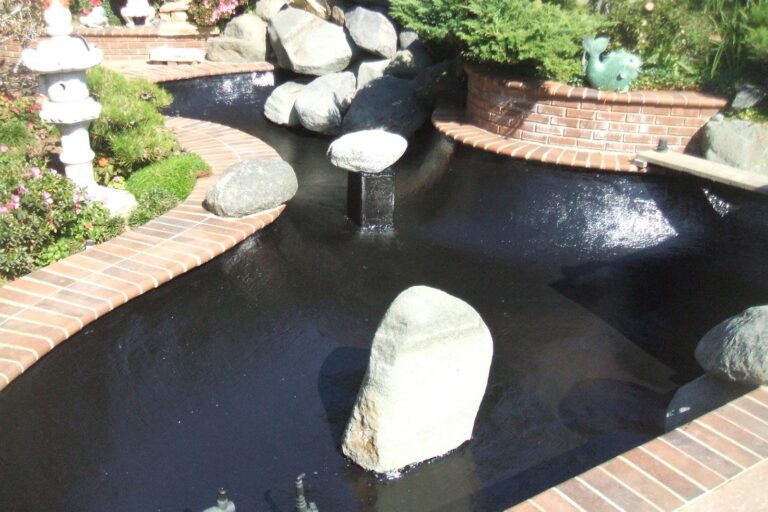

Dog Kennel Flooring: Options & Costs
Sealed concrete, epoxy, polyaspartic, polyurea, rubber, raised grates, gravel and turf, compared on urine, disinfection, drainage, paws and cost, with the USDA rules and four calculators from a coatings manufacturer.
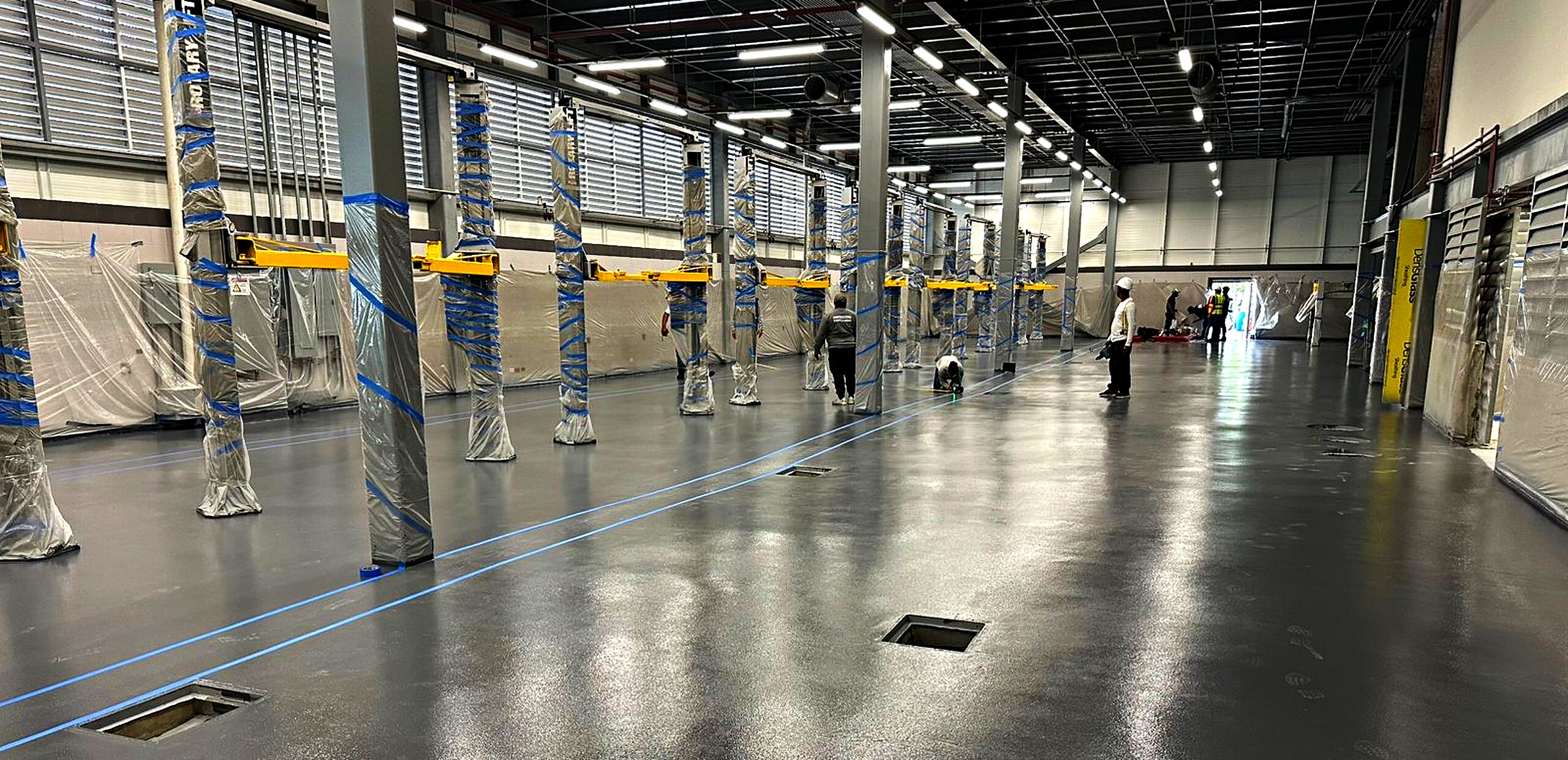
Start a floor coating business
Coat floors for a living.
ArmorThane sets you up to do this work, and you own the business. We make the chemistry, build the rigs, train you hands-on and answer the phone when a job gets difficult. You pay no franchise fee and no royalties. It has been that way since 1989.




- $0
- franchise fees or royalties
- 35+
- years in business
- 50+
- countries with applicators
- 24/7
- technical support
A kennel floor gets hosed, scrubbed, bleached, peed on, scratched and chewed. Some days all before lunch. Pick the wrong surface and the run smells by the end of the first summer. Pick the right one and it's the easiest thing in the building to keep clean.
For a kennel you hose down and disinfect, the best floor is sealed, seamless and sloped: concrete that falls at least 1% to a drain, coated with a resinous system (polyaspartic, polyurea or epoxy) with a quartz texture and a coved base. The Association of Shelter Veterinarians recommends a "sealed, impermeable" resin floor for exactly this reason. For a backyard run you rinse and spot-clean, sealed concrete with a rubber resting mat, raised plastic panels or pea gravel can all work. Gravel, dirt and turf drain well but can't be disinfected. Try the floor picker or the cost calculator.
Most kennel flooring articles list seven products and rate their cost in dollar signs. We'd rather give you dollars. This guide prices every common option per square foot with its source, quotes what USDA actually says about kennel floors, and gives you the drain slope that research animal facilities are built to. It also shows where each surface fails, because every one of them fails somewhere.
We're ArmorThane, and we've made polyurea and polyaspartic coatings in Springfield, Missouri for 35+ years. So yes, we think a coated floor is the right answer for most commercial kennels. We'll also tell you when a $300 sealer, a stack of plastic panels or a load of pea gravel is the smarter buy.
- 1Best dog kennel flooring, compared
- 2What a kennel floor has to survive
- 3Which floor fits your kennel? (picker)
- 4Every option, one by one
- 5What USDA, shelter vets and states require
- 6How big a run needs to be (USDA calculator)
- 7What kennel flooring costs (calculator)
- 8Slope and drains (planner)
- 9How a coated kennel floor is built
- 10Traction for paws and people
- 11Do antimicrobial floors work?
- 12Outdoor dog runs on a budget
- 13Mistakes to avoid
- 14Dog kennel flooring FAQ
What is the best flooring for a dog kennel?
It comes down to one question: do you have to disinfect it? If you do (boarding, breeding, shelters, vet clinics), the floor has to be impervious and seamless, which in practice means a coated, sloped concrete slab. If it's a family dog run you rinse and spot-clean, sealed concrete, raised plastic panels or pea gravel can each be the right call. Filter the table by where the floor goes.
| Floor | Cost / sq ft | Published life | Impervious? | Disinfectable? | Urine & odor | Drainage | Wet traction | Paws & comfort | Sun & outdoors |
|---|---|---|---|---|---|---|---|---|---|
| Polyaspartic flake or quartz system | $5–$12 installed | 10–20+ yrs | Yes, seamless | Yes | One data sheet rates urine and bleach "excellent" | Follows the slab | Wet DCOF 0.63 over full flake (one tested system) | Hard; add a bed or mat | Aliphatic, UV-stable |
| Spray polyurea + aliphatic topcoat, coved | $7–$12 installed | 15–20+ yrs | Yes, seamless up the wall | Yes | Thick film; ammonia and sanitizers are its normal barn diet | Follows the slab | With aggregate or textured spray | Hard; texture is sprayed in | Needs the aliphatic topcoat |
| Epoxy coating | $4–$10 installed | 5–10 yrs (3–20 by type) | Yes | Yes | Resists while intact | Follows the slab | Slick when wet unless textured | Hard | Ambers and chalks in sun |
| Sealed concrete | $1–$3 installed | Acrylic: reseal every 1–3 yrs | Only while the sealer holds | Surface yes; worn areas absorb | Slows absorption | Good if sloped | Depends on finish | Hard, cold in winter | Fine |
| Rubber mats or rolls | $1.83–$2.93 material | No published figure | Mat yes; seams no | Top only; lift to clean under | Seeps under seams | Blocks slab drainage | Excellent | Best cushion | Holds heat |
| Raised plastic flooring | $5.52–$6.10 panels only | No published figure | Panel yes; floor below still gets it | Panels yes; clean underneath too | Drains through to the slab | Excellent | Good | Off the wet floor; gaps matter for small dogs | Fine |
| Pea gravel | $1.00–$3.19 installed | Replace soiled stone as needed | No | No (ASV) | Soaks into the base | Excellent | Good | Some dogs dislike it; tracks | Outdoors only |
| Pet artificial turf | $10–$25 installed | 15–25 yrs | No | Rinse only | Relies on drainage and infill | Good with drainage base | Good | Soft | Outdoors |
| Bare concrete | $6–$8 (new 4-in. slab) | – | No, it's porous | Surface only | Soaks in | Good if sloped | Broom finish helps | Hard | Freeze-thaw wear |
| Dirt or grass | ≈$0 | – | No | No (ASV) | Soaks in | Turns to mud | Poor when wet | Soft when dry | – |
Two columns in that table decide most kennel floors, and nobody else prints them. Can you disinfect it? The ASV's shelter guidelines say it's "impossible to disinfect gravel, dirt, and grass surfaces," and the Merck Veterinary Manual says parvovirus can persist outdoors "for many months and possibly years" when it's shaded and damp. Is it impervious? USDA requires the floors of indoor kennels, and anything dogs touch, to be "impervious to moisture" (9 CFR 3.2(d)). Bare concrete is porous, which is the whole reason concrete coatings exist.
What does a kennel floor have to survive?
Urine, disinfectants, water and claws, every day. The floor has to shed liquid instead of absorbing it, live with bleach or peroxide cleaners, dry fast, give traction when wet and, outdoors, handle sun and freeze-thaw. Most "best kennel floor" advice skips the chemistry. Here's what each exposure does.
Soaks into anything porous
Dog urine is typically acidic and normally smells slightly of ammonia (Merck). On bare concrete, which absorbs liquid, it goes into the slab instead of sitting on top where a hose and a disinfectant can reach it. A sealed or coated surface keeps it on the surface.
Bleach 1:32, KPMS or AHP
Parvovirus resists many common cleaners. Merck lists bleach diluted 1:32, potassium peroxymonosulfate (KPMS) and accelerated hydrogen peroxide (AHP) as effective, and says quaternary ammonium products aren't reliable against it. Your floor has to tolerate whichever one you use, at the label's contact time.
Hot water and live steam
USDA's sanitizing methods are live steam, hot water of at least 180°F with detergent, or detergent plus disinfectant (9 CFR 3.11). Steam is hard on resin floors: our own technical notes say polyurea can debond from thermal shock under repeated blasts of live steam. If steam is your protocol, get the floor's rating in writing.
It has to leave, fast
The ASV requires dry surfaces before animals go back in, because drying helps inactivate pathogens. That's a slope and drain problem before it's a coating problem. A flat slab puddles no matter what's on it.
Scratching, chewing, digging
Rubber gets chewed, and plastic grates can wear down under destructive dogs (RACS; The Dog Kennel Collection). Thin films scratch through. For scale, NIH specifies resin floors 3/16–1/4 in. thick in large-animal rooms, and a typical DIY epoxy kit goes down about 3 mils per coat.
UV and freeze-thaw
Sunlight ambers and chalks epoxy, and aromatic polyurea ambers too, which is why outdoor floors get an aliphatic topcoat (our polyurea vs. epoxy guide). Rubber holds heat. Porous concrete that stays wet is more prone to cracking and spalling in freeze-thaw cycles.
Which kennel flooring fits your dogs?
Answer seven questions. The picker scores eight floors against your facility type, location, existing surface, cleaning method, dogs, budget and DIY plans, and it rules out options your situation doesn't allow, with the reason and the source. The logic is ours; the rules behind it are USDA's, the ASV's and Missouri's.
Rank the floor options for your kennel
Scores are a screening aid, not a lab test. Change any answer and the ranking updates.
Polyaspartic flake or quartz system
$5–$12/sq ft installed (HomeGuide, 2024)
- Seamless and disinfectable for daily turnover
- Hose, detergent and disinfectant reach every inch
Spray polyurea + aliphatic topcoat, coved
$7–$12/sq ft installed (ArmorThane, 2026)
- Built for daily wash-down (our barn-floor spec)
- Hose, detergent and disinfectant reach every inch
Epoxy coating
$4–$10/sq ft installed (HomeGuide, 2026)
- The ASV lists resinous epoxy for shelter floors
- Hose, detergent and disinfectant reach every inch
- Sealed concrete (score 3)
- Raised plastic flooring (score 0): The surface under the panels needs cleaning too
- Rubber mats or rolls over concrete (score -1): Mats must be lifted to wash under
- Pet artificial turf (score -5): Rinse only
- Pea gravel: Not an indoor floor
Screening logic by ArmorThane; rules quoted from 9 CFR Part 3, the ASV Guidelines (2022) and Missouri 2 CSR 30-9. Get a kennel floor quote from a certified applicator.
How the picker works: each floor starts from a base score for wash-down kennel use, then gains or loses points for each answer (for example, epoxy loses points in full sun because it ambers and chalks; gravel is ruled out indoors and in shelter runs because the ASV says it can't be disinfected). Costs shown are the sourced ranges from the table above. Your code official, inspector and installer have the final word.
Dog kennel flooring options, one by one
Every option below is somebody's right answer. The coatings win on sanitation and life; mats, grates and gravel win on price and simplicity; turf wins on looks. What matters is matching the floor to how you clean and who uses the run.
Sealed concrete: the budget baseline
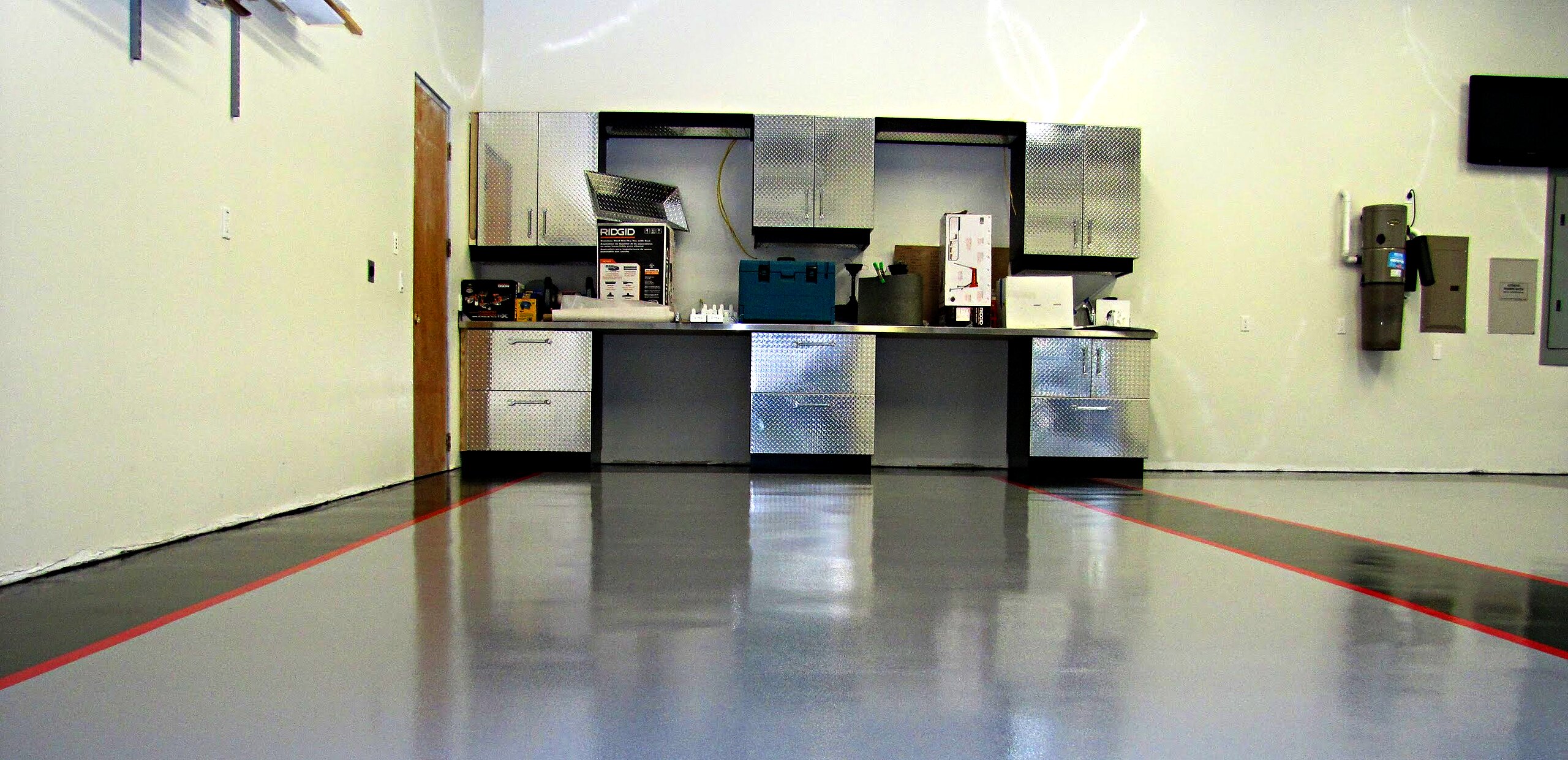
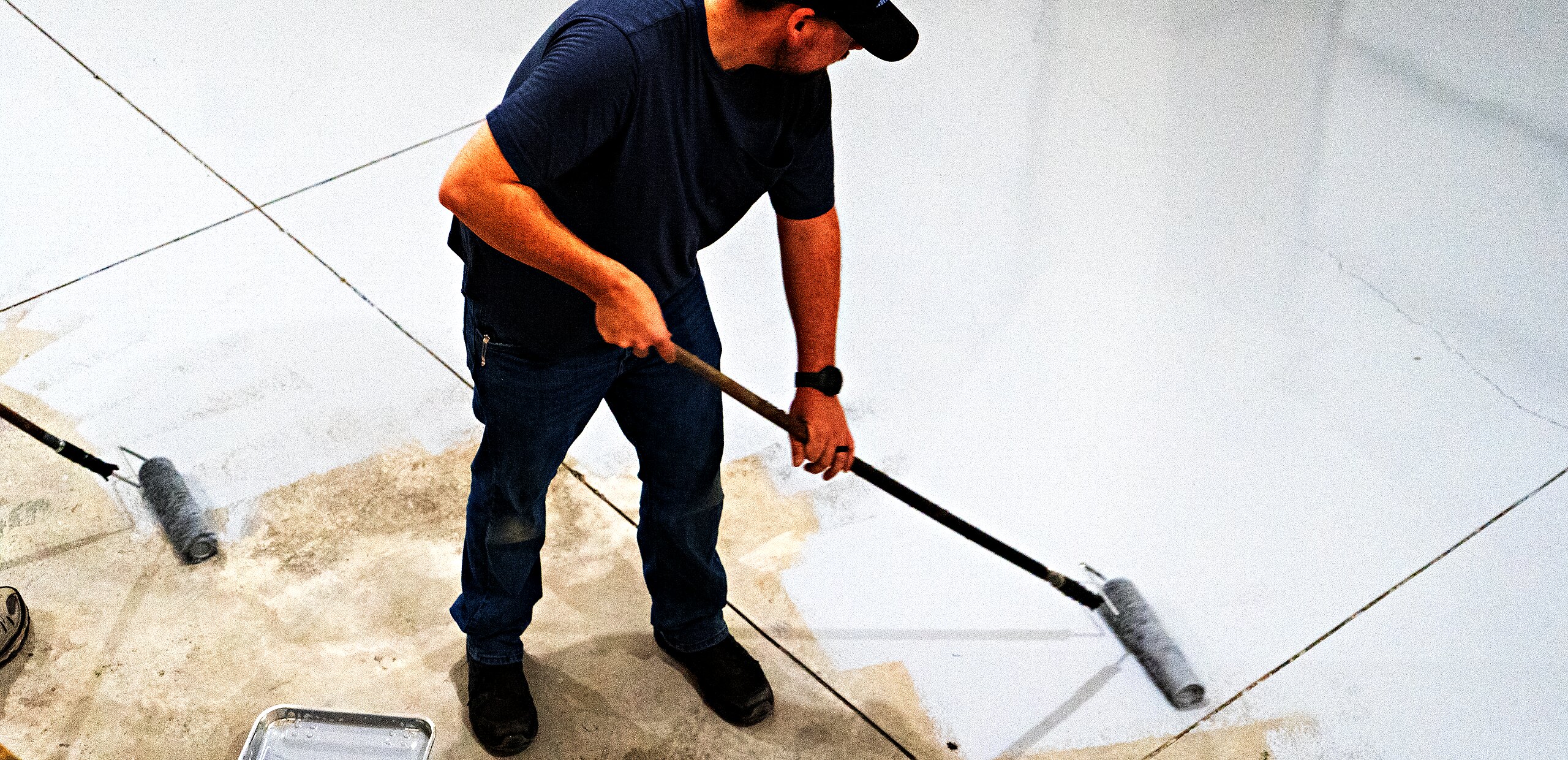
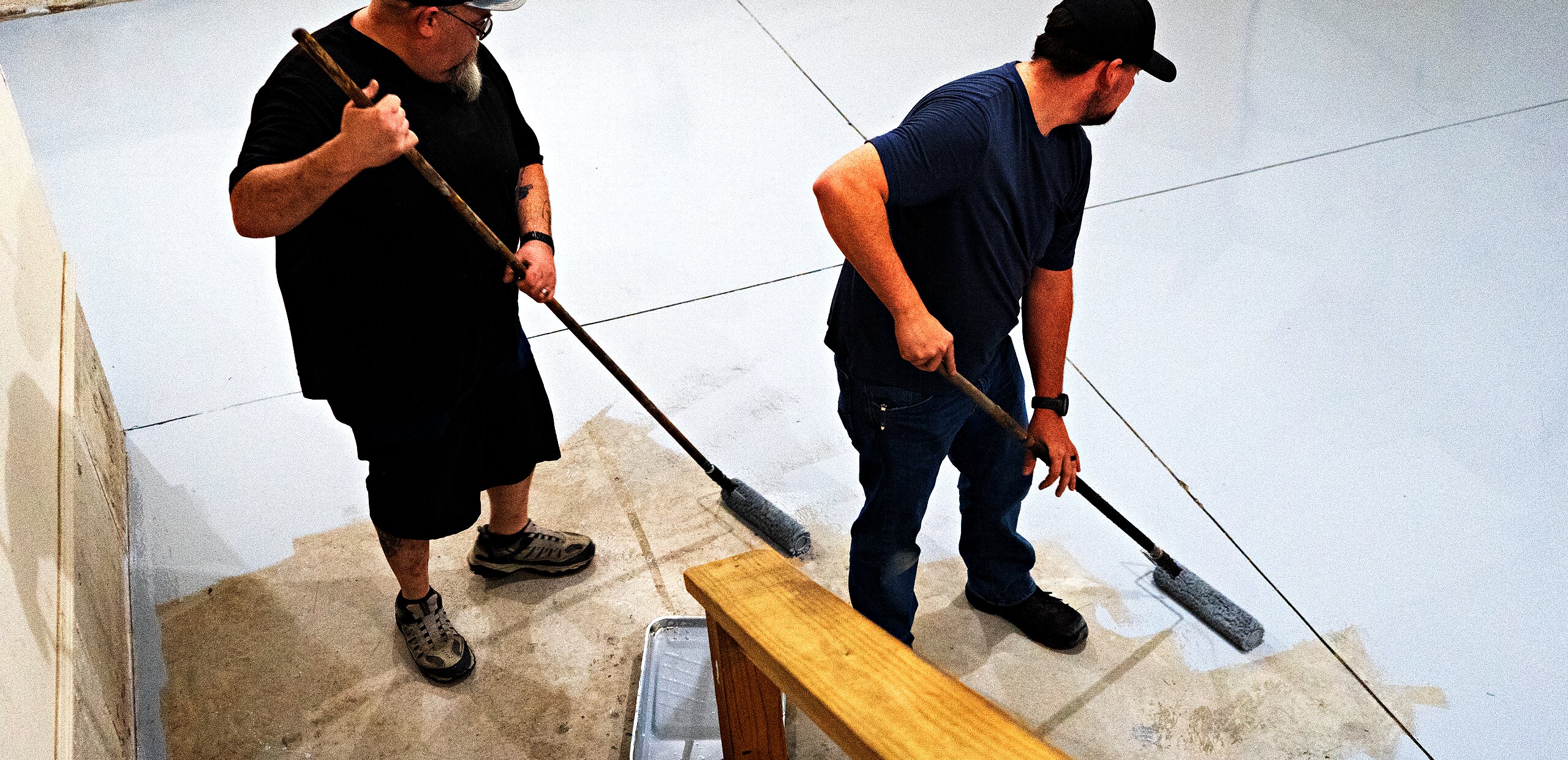
A broom-finished slab poured with fall to a drain sits under almost every good kennel floor. Bare, it's porous. A sealer slows absorption and makes hosing easier, and HomeGuide puts professional sealing at $1–$3 per sq ft (penetrating sealers $1–$3, acrylic $1–$2), with acrylics needing a fresh coat every 1–3 years (Nov 2025). For a home run, that's the best money you'll spend. For a licensed kennel, remember USDA's word is "impervious," and a sealer worn through at the gate and the drain isn't. Concrete floor paint, which Google suggests a lot, is the thinnest film of all; in a hose-down kennel we'd skip it.
Epoxy: seamless and affordable, best indoors
Epoxy gives you a seamless, hard, cleanable floor for $4–$10 per sq ft installed (HomeGuide, Feb 2026), and the ASV names "resinous epoxy" as a recommended shelter floor. It's a solid indoor choice. Its weak spots are well known: it ambers and chalks in sunlight, it's rigid, so it tends to crack at moving joints and over a moving slab (our agricultural coatings guide), and a smooth epoxy is slick when wet unless it gets a broadcast texture. Watch the thickness on DIY kits. Rust-Oleum's water-based garage kit is about 3 mils per coat, a paint film next to the 1/8-in. resin floors NIH specifies for animal rooms. HomeGuide lists water-based epoxy at 3–5 years and solid epoxy at 10–20; our own planning number is 5–10.
Polyaspartic flake or quartz: the common kennel coating
A polyaspartic is an aliphatic polyurea that rolls on in thin, UV-stable coats and cures in hours instead of days. Over a base coat with a full broadcast of flake or quartz, it's the system most flooring contractors will quote for a kennel. HomeGuide lists $5–$12 per sq ft installed and 10–20+ years in homes (Nov 2024). One published data sheet rates it "excellent" against urine, bleach and Betadine and measures a wet DCOF of 0.63 over full flake (Simiron). The honest limits: each coat is thin (3–10 mils per pass), so the build comes from the base coat and the broadcast, and its short pot life makes it a poor DIY product. Our polyaspartic floor coating guide covers slab testing, cure times and system builds, and polyaspartic vs. epoxy covers the head-to-head.
Spray polyurea with an aliphatic topcoat: the heavy-duty build
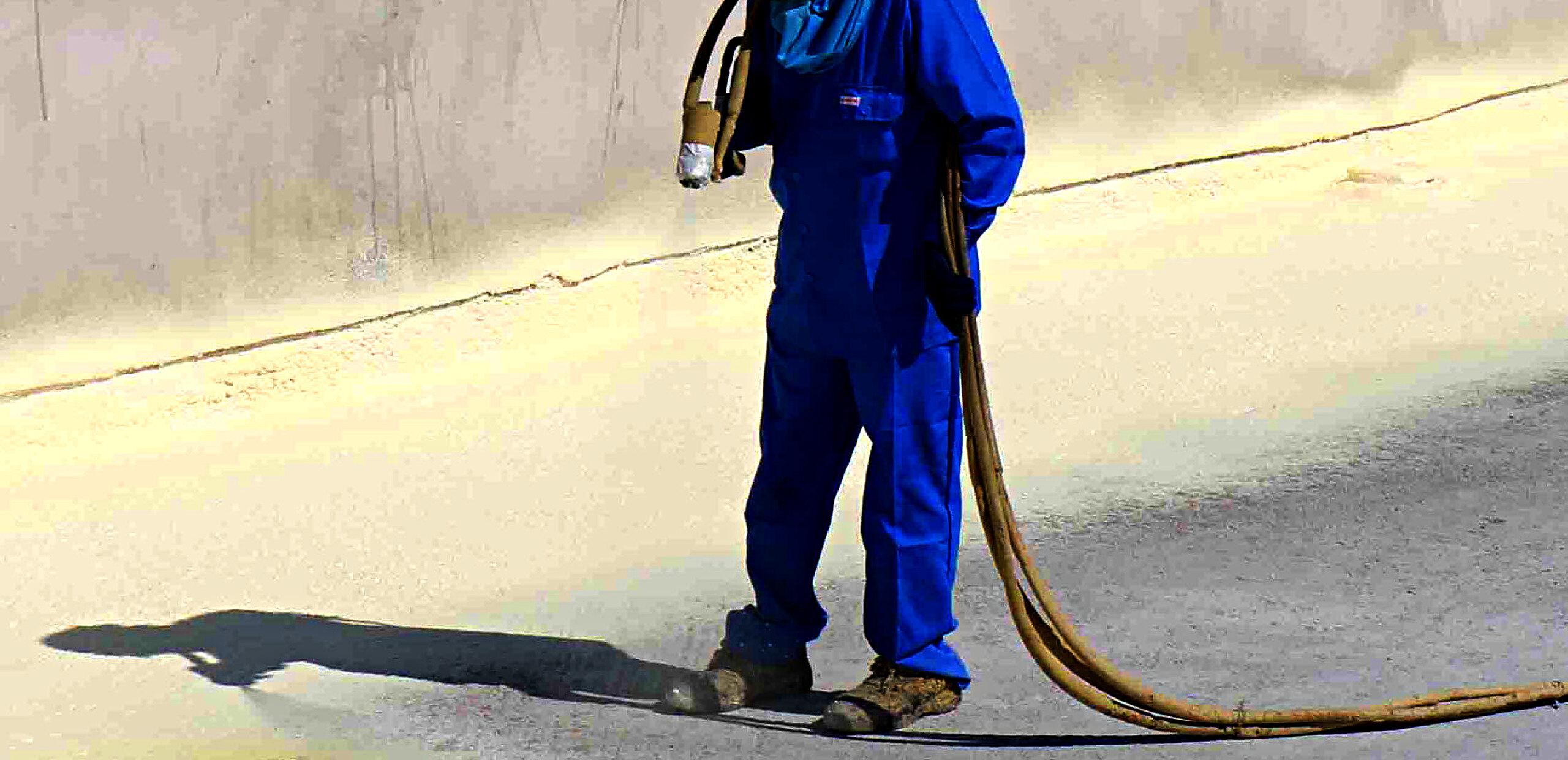
This is the floor for a facility that washes down every day. A plural-component polyurea goes on 60–125 mils thick over profiled concrete, runs up the walls as a coved base and gets an aggregate broadcast for grip. That's the spec on our agricultural page for barn floors and animal contact surfaces that see ammonia, sanitizers and twice-daily wash-down. Polyurea builds 20–120 mils in a single pass, bridges hairline cracks that would telegraph through epoxy, and sets in seconds. Two honest caveats. Aromatic polyurea ambers in the sun, so outdoor runs need an aliphatic topcoat. And it costs more: $7–$12 per sq ft installed by our own numbers, applied only by a trained crew with a heated spray rig.
Urethane cement: the commercial alternative
Large resin-flooring manufacturers also sell urethane cement systems for kennels (Sherwin-Williams lists a textured, self-leveling one), and the ASV names "resinous urethane" alongside epoxy. You'll see it bid on big commercial and veterinary jobs. Ask for its chemical-resistance chart and thermal-shock data the same way you would for any system, ours included.
Rubber mats and rolls: the comfort layer
Rubber is cushioned, warm and grippy, which is why daycare play areas use it. Rolled rubber runs about $1.83–$2.93 per sq ft for material (Greatmats, September 2026). The catch is underneath. Liquid gets through seams and sits between mat and slab, so mats have to be lifted and the floor washed; RACS, a kennel-floor maker, says rubber traps moisture and retains odor, and the ASV says seams make any floor harder to sanitize. Dogs chew edges, and rubber holds heat in the sun. Our take: rubber makes a great resting spot on top of a sealed or coated floor. It's a poor floor by itself.
Vinyl kennel mats
Sheet vinyl mats such as G-Floor's 5x10-ft kennel mat run about $1.63–$1.90 per sq ft (Greatmats, 2026). Greatmats' 10x10 guide suggests two of them for a 10x10 space. We'd treat them as a floor protector under crates and pens, not as a wash-down kennel floor.
Raised plastic flooring: dry dogs, with conditions
Interlocking polypropylene panels on a frame lift dogs off wet concrete or ground. Lakeside's Double L panels are 2x4 ft with 3/4-in. openings and 55% open area, sit on 2x4 or 2x6 supports every 2 ft, and cost $265 for 48 sq ft (about $5.52 per sq ft). K9 Kennel Store's kits work out to about $6.10 per sq ft. Drainage is excellent and dogs stay dry. But the waste goes somewhere: through the panel to the surface below, which still needs cleaning, and gaps can be a problem for small dogs (The Dog Kennel Collection). USDA allows slatted floors only if feet can't pass through the openings (9 CFR 3.6(a)(2)). The ASV goes further: slatted floors in shelter primary enclosures are "unacceptable because they can cause pain, discomfort, and injury." Best use: a home or outdoor run, over a sloped slab.
Pea gravel: cheap drainage you can't disinfect
Pea gravel costs $28–$45 a ton, and one ton covers 40–50 sq ft at 4 in. deep, or about $1.00–$3.19 per sq ft installed (HomeGuide, Dec 2025). A 10x10 run at 4 in. takes 2–2.5 tons. USDA allows gravel in sun-exposed outdoor areas, as long as it's raked and the contaminated stone is replaced (9 CFR 3.3(e), 3.4(c), 3.11). The problem is disease: the ASV says gravel can't be disinfected, and parvovirus can hang on outdoors for months to years (Merck). Some dogs don't like it underfoot, and it tracks (The Dog Kennel Collection). For one healthy family dog, it's reasonable. For boarding or shelter runs, we'd keep gravel to play yards.
Artificial turf: soft and good-looking, not disinfectable
Pet-grade turf uses drainage backing and odor-control infill. HomeGuide puts artificial grass at $10–$25 per sq ft installed, adds $1,000–$4,000+ for a drainage system, and gives it 15–25 years with maintenance (Oct 2025). It's soft and it looks like a lawn. Treat it the way the ASV treats grass: rinse it and pick up waste, but don't count on disinfecting it. Good for yards; a tough sell for runs used every day.
Dirt, grass and plywood
Dirt and grass turn to mud and can't be disinfected, and Missouri's kennel rules say outdoor floors "may not be of bare dirt or sand" (2 CSR 30-9.030). Unsealed plywood soaks up urine and rots. A plywood floor in a kennel building or dog trailer can be coated, though; polyurea bonds to properly prepared wood as well as concrete.
What do USDA and shelter vets require of kennel floors?
If you're USDA-licensed, indoor floors and any surface dogs touch must be "impervious to moisture," surfaces must be readily cleaned and sanitized, and waste and water must drain away so dogs stay dry. Sun-exposed outdoor areas can be gravel, dirt or grass if you keep them clean and replace contaminated material. Shelters are held to the ASV's stricter guidelines, and states add their own.
| Source | What it says | What it means for the floor |
|---|---|---|
| 9 CFR 3.1(c) | Surfaces must be made of materials that "allow them to be readily cleaned and sanitized, or removed or replaced when worn or soiled." Hard surfaces are spot-cleaned daily; dirt, sand, gravel or grass floors are raked or spot-cleaned. | Seamless, non-absorbent surfaces make daily cleaning realistic. |
| 9 CFR 3.1(f) | Waste and water must be "rapidly eliminated and animals stay dry." Closed drainage systems need traps that prevent gas backflow and sewage backup onto the floor. | Slope to drains, trapped drains, no ponding. |
| 9 CFR 3.2(d) | Floors and walls of indoor housing facilities, and surfaces in contact with animals, "must be impervious to moisture." | Indoors: coated or reliably sealed, including the wall base. |
| 9 CFR 3.3(e) | Sheltered housing: indoor floors, and outdoor floors that are shaded or made of a hard material such as concrete, must be impervious. Sun-exposed outdoor floors may be compacted earth, bedding, sand, gravel or grass. | A covered concrete run is held to the impervious standard. |
| 9 CFR 3.4(c) | Outdoor facility floors may be compacted earth, absorbent bedding, sand, gravel or grass, and "must be replaced if there are any prevalent odors, diseases, insects, pests, or vermin." | Gravel is allowed outside, with upkeep. |
| 9 CFR 3.6(a)(2) | Floors must protect feet and legs from injury; mesh or slatted floors can't let feet pass through; suspended metal strands must be over 1/8 in. (9 gauge) or coated. | Raised floors: check the opening size against your smallest dog. |
| 9 CFR 3.11(b) | Primary enclosures are sanitized at least every 2 weeks by live steam, hot water of at least 180°F with detergent, or detergent plus disinfectant. | The floor has to take your chosen method, repeatedly. |
| ASV Guidelines, 2nd ed. (2022) | "A sealed, impermeable surface, such as resinous epoxy or resinous urethane, is recommended for shelter flooring." Wall-floor joints sealed; floors "gently sloped" to drains; removable drain covers; slatted or wire-mesh enclosure floors "unacceptable"; gravel, dirt and grass can't be disinfected. | Shelters: resin floor, coved or sealed base, sloped to drains. |
| Missouri 2 CSR 30-9.030 | Indoor floors "must be impervious to moisture"; outdoor floors "may not be of bare dirt or sand" and must drain; wire-strand flooring is prohibited for large commercial breeders under RSMo 273.345. | An example of a state going beyond USDA. Check yours. |
| NIH Design Requirements Manual (2024) | Animal-facility floors are monolithic with a 6-in. minimum integral cove; hose-down areas slope to drains at 1% minimum; resin systems 1/8 in. thick, 3/16–1/4 in. in large-animal rooms; "skid-resistant without excessive abrasiveness." | Not a kennel rule, but the most detailed published spec for wash-down animal floors. |
| OSHA 1910.22(a)(2) | Where wet processes are used, drainage must be maintained and "dry standing places, such as false floors, platforms, and mats" provided where feasible. | Staff aisles need drainage and traction too. |
One gap worth knowing about: none of these rules lists approved materials. They set performance words like "impervious" and "readily cleaned and sanitized." Whether a sealed slab meets that is a call your inspector makes on the day, and a sealer that has worn through at the gate won't help your case. A coated floor with a coved base takes the question off the table. If you're building or expanding, ask your state department of agriculture for its kennel rules before you pour.
How big should a dog kennel floor be?
USDA's minimum for licensed facilities is the dog's length in inches plus 6, squared, then divided by 144, in square feet per dog, with at least 6 in. of headroom over the tallest dog. A 30-in. dog needs 9 sq ft. That's a floor, not a goal. The ASV wants every dog able to sit, sleep and eat away from where it eliminates.
Minimum floor space and height for one enclosure
Measure each dog from the tip of the nose to the base of the tail. Leave unused dogs at 0.
Dog 1: (30 + 6)² ÷ 144 = 9.0 sq ft. Interior height: at least 30 in. (2 ft 6 in.), 6 in. above the tallest dog’s head. Meets the USDA minimum Your 4 x 10 ft run has 40 sq ft, 4.4 times the minimum. This is the federal minimum for licensed facilities (9 CFR 3.6(c)); some states require more, and the ASV wants room to rest and eat away from the elimination area. Carry your run size into the cost calculator.
How we calculated this: 9 CFR 3.6(c)(1): (length in inches + 6)² ÷ 144 = square feet, summed for each dog in the enclosure; height = tallest head height + 6 in. (3.6(c)(1)(iii)). Nursing mothers and some states add more.
| Dog length (nose to tail base) | USDA minimum, one dog | Two dogs this size sharing | Dogs at the minimum in a 4x10 (40 sq ft) |
|---|---|---|---|
| 20 in. | 4.7 sq ft | 9.4 sq ft | 8 |
| 25 in. | 6.7 sq ft | 13.3 sq ft | 5 |
| 30 in. | 9.0 sq ft | 18.0 sq ft | 4 |
| 35 in. | 11.7 sq ft | 23.3 sq ft | 3 |
| 40 in. | 14.7 sq ft | 29.4 sq ft | 2 |
| 45 in. | 18.1 sq ft | 36.1 sq ft | 2 |
Why a flooring guide cares about space: the run size sets the square footage you're coating, the length the floor has to drain, and how many runs share one trench. Missouri's Canine Cruelty Prevention Act, for example, multiplies the federal space minimum for large commercial breeders, so a state rule can change your floor plan and your flooring budget at the same time.
How much does dog kennel flooring cost?
From about $1 per sq ft for a sealer on an existing slab to $7–$12 for a sprayed polyurea system, installed. A 10x10 run comes to roughly $100–$300 sealed, $400–$1,000 in epoxy, $500–$1,200 in polyaspartic and $700–$1,200 in polyurea, before a new slab ($6–$8 per sq ft for 4 in.) or a coved base. Run your own layout below.
Price every option for your runs and aisle
Ranges use the sourced per-square-foot figures in the table below. Cove base is added as extra coated area for the resin systems.
Floor: 1 run x 10 x 10 ft = 100 sq ft. No cove base priced; licensed kennels and shelters usually want the wall-floor joint sealed (ASV). Coatings assume sound concrete; crack repair, moisture mitigation and drains are extra. Get a written quote from a certified applicator.
| Floor | Your total | Per year of life | Rate / sq ft | Area priced |
|---|---|---|---|---|
| Sealed concrete | $100–$300 | $33–$300/yr | $1–$3 installed | 100 sq ft |
| Epoxy | $400–$1,000 | $40–$200/yr | $4–$10 installed | 100 sq ft |
| Polyaspartic system | $500–$1,200 | $25–$120/yr | $5–$12 installed | 100 sq ft |
| Spray polyurea system | $700–$1,200 | $35–$80/yr | $7–$12 installed | 100 sq ft |
| Rolled rubber | $183–$293 | — | $1.83–$2.93 material only | 100 sq ft |
| Raised plastic panels | $552–$610 | — | $5.52–$6.10 panels only | 100 sq ft |
| Pea gravel | $100–$319 | — | $1.00–$3.19 installed | 100 sq ft |
| Pet artificial turf | $1,000–$2,500 | $40–$167/yr | $10–$25 installed | 100 sq ft |
How we calculated this: floor = runs x width x length + aisle length x aisle width. Cove length = runs x (2 x run length + run width), assuming walls on three sides of each run, plus one aisle wall; cove area = cove length x cove height. Cost = area x the low and high rate. Cost per year of life = total ÷ published service life (no figure is shown where no life is published). Slab cost isn't included in cost per year. Small jobs may carry a minimum charge; ask.
The per-square-foot numbers behind it
| Floor | Rate | What it covers | Service life used | Source (date) |
|---|---|---|---|---|
| Concrete sealer | $1–$3 / sq ft | Installed; acrylic $1–$2, penetrating $1–$3 | 1–3 yrs (acrylic reseal) | HomeGuide (Nov 2025) |
| Epoxy | $4–$10 / sq ft | Installed; materials $1–$5, labor $3–$5 | 5–10 yrs | HomeGuide (Feb 2026); life: ArmorThane |
| Polyaspartic system | $5–$12 / sq ft | Installed; materials $2–$6, labor $3–$6 | 10–20 yrs | HomeGuide (Nov 2024) |
| Spray polyurea system | $7–$12 / sq ft | Installed | 15–20 yrs | ArmorThane (2026) |
| Rolled rubber | $1.83–$2.93 / sq ft | Material only | Not published | Greatmats (Sept 2026) |
| Raised plastic panels | $5.52–$6.10 / sq ft | Panels only; lumber frame extra | Not published | Lakeside; K9 Kennel Store (Sept 2026) |
| Pea gravel | $1.00–$3.19 / sq ft | Installed; bulk $28–$45 a ton | Replace as soiled | HomeGuide (Dec 2025) |
| Pet artificial turf | $10–$25 / sq ft | Installed; drainage system extra | 15–25 yrs | HomeGuide (Oct 2025) |
| New 4-in. concrete slab | $6–$8 / sq ft | Installed | – | HomeGuide (Feb 2026) |
Where the money actually goes on a coated kennel: surface prep, crack repair, the cove and the drain details. A 10x10 garage-style flake floor and a 10x10 kennel run with a 6-in. cove on three walls aren't the same job, even at the same square footage. Ask every bidder to list thickness, texture, cove height and how they'll treat the drain edges, and compare those lines, not just the total.
How should a kennel floor slope and drain?
Toward a drain, steadily, with no flat spots. NIH builds hose-down animal rooms at a 1% minimum slope, about 1/8 in. per foot, and asks for more in large-animal holding areas; kennel troughs get at least 2%. Over a 10-ft run, 1% is 1.2 in. of fall. The ASV says "gently sloped," and wants floors dry before dogs go back in.
- Coved base at least 6 in. high (NIH), so the wall-floor joint is sealed (ASV).
- Coating stack: primer, polyurea or resin base, quartz or aggregate broadcast, aliphatic topcoat where sun reaches.
- Slab pitched 1% or more toward the drain, with no bird-baths.
- Trench drain with a removable cover (ASV) and a trap (9 CFR 3.1(f)); the trough itself falls 2% or more (NIH).
- Gate at the low side, so wash water and waste leave the run without crossing another one.
- Aisle slopes to the same trench or its own drain.
How much fall does your run need?
Enter the longest distance water travels to the drain. For a front trench that's the run length; for a center drain, the distance from a far corner to the drain.
Over 10 ft at 1%, the high end of the floor sits 1.20 in. above the drain edge. That meets NIH’s 1% minimum; NIH suggests more than 1% in large-animal holding areas to prevent ponding. Front trench: each run drains toward its own gate, so waste doesn’t cross into the next run (ASV). Trench: 24 ft per outlet at 2% gains 5.76 in. of depth along its length. That’s a deep trough; more outlets shorten each section. Coordinate the fall with door sills so thresholds stay level (NIH), and trap every closed drain (9 CFR 3.1(f)).
How we calculated this: fall (in.) = distance (ft) x 12 x slope ÷ 100; 1% = 0.12 in. per foot. Trench depth gained = trench length ÷ outlets x 12 x trench slope ÷ 100. The 1% floor minimum and 2% trough minimum come from the NIH Design Requirements Manual (2024), written for research animal facilities; no USDA rule sets a number.
Front trench, back trench or center drain?
A trench across the front of a row of runs is the common layout for a reason: each run drains toward its own gate, and waste doesn't cross from one run into the next, which the ASV asks drainage design to prevent. A center floor drain means pitching the run in four directions, which is harder to form, and it puts the grate in the middle of the floor. A back-wall trench keeps the grate away from the gate and the aisle, but hosing pushes waste toward the dogs' end of the run. Whichever you pick, drain covers should be removable for cleaning and designed so they can't injure a paw or let a dog escape (ASV), and closed drain lines need traps (9 CFR 3.1(f)).
A coating can't fix a flat slab
Sprayed and rolled films follow the concrete, so a slab poured flat stays flat under a 60-mil coating. Trowel-applied resin mortars and self-leveling systems can correct low spots and add some pitch, which our grow-room guidance mentions as one of the advantages of resin floors, but major slope has to be formed in the slab. Check with a long level and a hose before anyone coats anything.
How a coated kennel floor is built
Slope and drains first, then moisture testing, grinding, crack and joint repair, the coved base, the base coat, a texture broadcast and the topcoat. Then the floor cures before dogs come back. Most coating failures in kennels trace back to the first three steps, not the product.
Get the slope and drains right
Pour or correct the slab so every run falls at least 1% to a trapped, covered drain. On a new pour, NIH calls for a continuous under-slab vapor barrier beneath floors that will get a high-performance finish.
Let new concrete cure and test the moisture
New slabs need about 28 days before coating (Simiron system guide). Test moisture with ASTM F1869 (calcium chloride) or F2170 (in-slab RH); NIH also lists the ASTM D4263 plastic-sheet check. Limits come from the coating maker. Outdoor slabs without a vapor retarder can push moisture seasonally, which shows up as blisters and pinholes.
Grind, don't etch
Diamond-grind or shot-blast to a CSP 2–3 profile. Acid etching and pressure washing don't give a reliable mechanical key. Our surface preparation guide covers why, and our barn-floor spec calls for CSP 3 under heavy polyurea.
Repair cracks and respect the joints
Fill cracks and spalls. Moving joints get detailed and honored; sawcut joints can be filled and coated, but the coating may crack there if the slab keeps moving (Simiron).
Build the cove
Run the floor up the wall as an integral cove, 6 in. minimum in NIH's spec, with the top edge sealed, so the wall-floor joint can't collect urine and hair.
Base coat, broadcast, topcoat
Prime, apply the base (sprayed polyurea at 60–125 mils in our barn-floor spec, or a resin base for a flake system), broadcast quartz or aggregate for traction, then topcoat. Outdoors, the topcoat must be aliphatic.
Cure before the dogs come back
Published polyaspartic data sheets put full chemical resistance at 5–7 days, and HomeGuide says solid epoxy takes about 7 days to fully cure. Keep dogs out until the installer confirms it, then do the first wash with your normal disinfectant.
Is a coated kennel floor slippery when wet?
It can be, if it's smooth. Roll-on coatings are glossy and "may become slick when wet," as our own texturing page puts it. Grip comes from a quartz or aggregate broadcast, or a textured spray. For people, ANSI A326.3 calls for a wet DCOF of at least 0.42 on level interior floors that get wet. There's no equivalent test for paws.
So you're balancing two things. Too smooth, and wet dogs skid and staff fall. Too coarse, and the floor is hard on pads and hard to clean. NIH's spec says it well: "skid-resistant without excessive abrasiveness that damages mops and resists sanitation." Our non-slip coatings page lists kennels and veterinary clinics among its uses, and it warns that where bare feet are common, aggregate "can cause more problems than it solves," so a non-aggregate textured spray is used instead. Paws are bare feet. We'd lean toward fine grades of texturing aggregate in runs and save coarse grit for ramps and aisles.
For the toughest wet areas, SureGrip is our soft polyurea with the highest coefficient of friction of any of our coatings. And don't forget the people: OSHA wants drainage and dry standing places wherever wet processes run (1910.22), which is part of why kennel aisles get the same texture as the runs. More on the broader topic in our safety coatings overview. Whatever system you buy, ask for the tested slip-resistance number, not the word "textured."
Do antimicrobial kennel floors actually work?
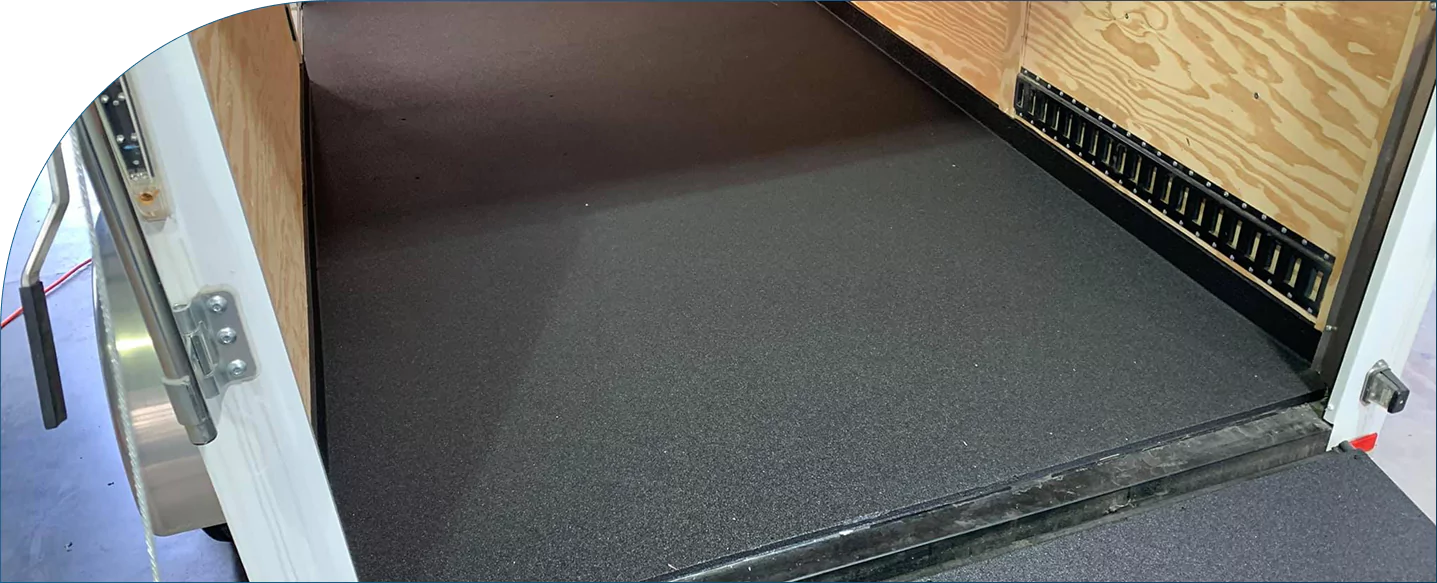
They help between cleanings. They don't replace disinfection. Our antimicrobial polyurea carries a silver-ion additive, and our testing showed it reduces the growth of MRSA and E. coli by up to 99.99% over two hours. That's bacteria on a clean surface. It isn't a claim against parvovirus in organic soil, and USDA's sanitizing schedule still applies.
Three things keep antimicrobial claims honest. First, the federal exemption that lets manufacturers add an antimicrobial to a coating without registering the coating as a pesticide covers additives that protect "the article or substance itself" (40 CFR 152.25(a)); treat any germ claim on a floor as a bonus. Second, NIH lists antimicrobial finishes as something to "consider," not a requirement. Third, the virus that matters most in kennels is the hardest one to kill: parvovirus resists many disinfectants and survives indoors for at least two months (Merck). What protects dogs is a seamless, nonporous floor that lets bleach 1:32, KPMS or AHP reach every square inch, then dries. An antimicrobial additive sits on top of that, not in place of it.
Outdoor dog run flooring on a budget
For one or two family dogs, the cheapest floor that works is a sloped concrete pad, sealed, with a rubber mat or raised cot to lie on. Pouring new, that's about $700–$1,100 for a 10x10 at HomeGuide's rates ($6–$8 slab plus $1–$3 sealer). On an existing patio, it's the sealer and a mat. Gravel is cheaper still, if you accept its limits.
Seal an existing slab
About $100–$300 for 100 sq ft professionally (HomeGuide), less DIY. Clean it, let it dry, seal it, and pitch a hose across it first to find the puddles. Add a rubber mat or raised cot for the dog to lie on, and lift the mat to wash under it.
Raised panels over concrete
About $552–$610 in panels for 100 sq ft at Lakeside and K9 Kennel Store prices, plus lumber supports every 2 ft. Dogs stay off the wet slab; you still hose the slab underneath. Check the openings against your smallest dog's feet.
Pea gravel with a solid resting pad
A 10x10 at 4 in. deep takes 2–2.5 tons: $56–$113 if you haul it at $28–$45 a ton (HomeGuide). Edge it so it stays put, scoop daily, rake often and replace soiled stone. Give the dog a raised or solid spot to rest on.
Coat it once, when you're ready
If the run gets heavy use, or you board a few dogs, a polyaspartic or polyurea floor on that same slab is the step up: $500–$1,200 for 100 sq ft at the published rates. Pair it with shade: USDA requires protection from direct sun in outdoor kennels (9 CFR 3.4(b)), and it keeps any floor cooler.
What we'd skip, even on a budget: bare dirt (mud, and in Missouri a licensed kennel can't use it), untreated plywood, concrete floor paint in a run you hose daily, and wall-to-wall rubber over a slab with no drain. Each one looks fine for a month.
Dog kennel flooring mistakes to avoid
- Pouring the slab flat. A sprayed or rolled coating won’t add slope. Aim for 1% or more to the drain.
- Coating over damp concrete. Test moisture first; outdoor slabs without a vapor retarder are the usual suspects.
- Acid etching instead of grinding. It doesn't give the coating a reliable key.
- Stopping the floor at the wall. The wall-floor joint is where urine and hair collect. Cove it or seal it.
- Glossy and smooth in a wet run. Specify a texture and ask for the tested slip number.
- Epoxy in full sun. It ambers and chalks. Outdoors, finish with an aliphatic topcoat.
- Rubber as the whole floor. Great to lie on; a problem when urine sits under it for weeks.
- Gravel or turf in runs that must be disinfected. Neither can be, per the ASV.
- Letting dogs back in early. Wait for the full cure the product's data sheet gives.
- Relying on an antimicrobial label instead of a cleaning protocol. Parvovirus doesn't read labels.
Kennel floor coatings from ArmorThane applicators
For a kennel that hoses down daily, here's what we'd have an applicator quote: slab profiled to CSP 3, cracks and joints detailed, a sprayed polyurea base at 60–125 mils run up the walls as a cove, an aggregate broadcast for grip, and ArmorFloor aliphatic polyaspartic on top wherever sun reaches. Our antimicrobial additive is an option for clinics and shelters that want it.
And where we're not the answer: a rented building you'll leave in a year (use mats), a gravel play yard, a single-dog run where a $300 sealer does the job, or a facility committed to live steam until you've seen a thermal-shock rating you trust. Say so to an applicator and a good one will agree.
Barn-floor polyurea spec
Over CSP 3 concrete, coved edges, aggregate broadcast.
Per spray pass
Polyurea builds thickness in one pass; polyaspartic tops at 3–10 mils.
Antimicrobial option
MRSA and E. coli growth reduction over two hours, in our testing.
Kennels wash down daily. That's steady coating work.
Kennels, vet clinics and shelters are the same slope, cove and wash-down work as dairy parlors and food plants. We make the polyurea and polyaspartic, build the spray rigs and train your crew. Not a franchise: no franchise fee, no royalties, and startup packages start at $25,000.
Questions first? Call (417) 831-5090 in the US or 780-444-6200 in Canada.
Dog kennel flooring FAQ
What is the best flooring for a dog kennel?
For a kennel you hose down and disinfect, a sloped concrete slab with a seamless resinous coating (polyaspartic, polyurea or epoxy), a textured finish and a coved base. The Association of Shelter Veterinarians recommends a "sealed, impermeable surface, such as resinous epoxy or resinous urethane." For a family dog run, sealed concrete with a rubber resting mat, raised plastic panels or pea gravel can be enough. The floor picker ranks them for your situation.
What should I put on the ground in an outdoor dog kennel?
The easiest outdoor floor to keep clean is a concrete pad pitched at least 1% to a drain, sealed or coated with an aliphatic, UV-stable topcoat. Pea gravel and raised plastic panels are cheaper and drain well, but gravel can't be disinfected (ASV) and panels need cleaning underneath. Avoid bare dirt: it turns to mud, and Missouri's rules for licensed kennels don't allow bare dirt or sand as an outdoor floor.
What type of flooring is resistant to dog urine?
Seamless, nonporous floors: coated concrete, and to a lesser degree sealed concrete while the sealer holds. One published polyaspartic data sheet rates its resistance to urine and bleach as excellent after a full cure (Simiron). Bare concrete, wood, gravel and turf absorb urine or let it into the base, and rubber mats let it seep under the seams.
Is epoxy flooring good for dog kennels?
Indoors, yes: it's seamless and cleanable, costs about $4–$10 per sq ft installed (HomeGuide, 2026), and the ASV names resinous epoxy as a recommended shelter floor. It needs a broadcast texture so it isn't slick when wet. Outdoors it ambers and chalks in sunlight, and because it's rigid it tends to crack over moving joints, so an aliphatic polyaspartic or a polyurea system with an aliphatic topcoat is the better outdoor choice.
Is epoxy or polyaspartic safe for dogs?
Keep dogs out during application and until the floor is fully cured. Published polyaspartic data sheets give 5–7 days for full chemical resistance, and HomeGuide says solid epoxy takes about 7 days to fully cure. Ask your installer for the Safety Data Sheet and the manufacturer's return-to-service time before the dogs come back.
How do you seal a concrete dog kennel?
Clean and degrease the slab, let it dry, check that water runs to the drain, then apply a penetrating or acrylic sealer per the label. HomeGuide puts professional sealing at $1–$3 per sq ft, with acrylic sealers needing a fresh coat every 1–3 years (Nov 2025). If you need a truly impervious floor for a licensed kennel, a coating with a coved base is the more durable answer.
How much slope does a kennel floor need?
NIH's design manual for animal facilities requires hose-down floors to slope to drains at 1% minimum, about 1/8 in. per foot, and asks for more in large-animal holding areas; drain troughs get at least 2%. A 10-ft run at 1% falls 1.2 in. The slope planner works out your runs and trench.
How much does it cost to floor a 10x10 dog kennel?
At published rates, a 10x10 (100 sq ft) runs about $100–$300 to seal, $400–$1,000 in epoxy, $500–$1,200 in polyaspartic, $700–$1,200 in sprayed polyurea, $100–$319 in installed pea gravel and $1,000–$2,500 in pet turf. A new 4-in. slab adds about $600–$800 (HomeGuide). The cost calculator adds cove base and multiple runs.
Is raised kennel flooring good?
It keeps dogs off wet ground and drains well, and panels run about $5.52–$6.10 per sq ft plus a frame. USDA allows slatted floors only if feet can't pass through the openings, and the ASV calls slatted floors unacceptable for shelter primary enclosures because they can cause pain and injury. Waste still lands on the surface below, which needs cleaning too.
Is pea gravel good for a dog run?
For one healthy family dog, it's a reasonable budget floor: $28–$45 a ton, one ton covers 40–50 sq ft at 4 in. (HomeGuide, Dec 2025). It can't be disinfected, and parvovirus can persist outdoors for months to years (Merck), so we'd keep it out of boarding and shelter runs. Scoop daily, rake often and replace soiled stone.
Are rubber mats good for dog kennels?
As a resting pad, yes: they're cushioned and grippy, and rolled rubber costs about $1.83–$2.93 per sq ft (Greatmats, 2026). As the whole floor, they trap urine and water underneath, get chewed at the edges and hold heat in the sun. Put them on a sealed or coated floor and lift them to wash under.
Do antimicrobial kennel floor coatings kill parvo?
Don't count on it. Our antimicrobial polyurea tested at up to 99.99% reduction of MRSA and E. coli growth over two hours, which is bacteria, not parvovirus. Merck lists bleach diluted 1:32, potassium peroxymonosulfate and accelerated hydrogen peroxide as effective against parvovirus; a seamless floor just lets them reach every surface. More on our antimicrobial coatings page.
Can I coat a kennel floor myself?
You can seal concrete and roll a DIY epoxy kit, but DIY kits go on thin (about 3 mils per coat for a common water-based kit), and grinding, moisture testing and cove work are where kennel floors fail. Polyaspartic has a short pot life, and sprayed polyurea needs a heated plural-component rig and training. For a wash-down kennel, find a certified applicator.
Written from USDA and shelter-veterinary standards, manufacturer data sheets and 35+ years of making polyurea floor coatings. Last updated September 26, 2026.
Methodology and sources
Rules are quoted from the eCFR (9 CFR Part 3, Subpart A), the ASV Guidelines for Standards of Care in Animal Shelters (2nd ed., 2022), Missouri 2 CSR 30-9.030, OSHA 1910.22 and 40 CFR 152.25; design figures from the NIH Design Requirements Manual Rev. 2.1 (2024). Prices are dated national averages and list prices, not quotes. Calculations are ours: screening tools, not a substitute for your inspector, engineer or installer.
- eCFR, 9 CFR Part 3 Subpart A, dogs and cats (3.1–3.11): ecfr.gov/current/title-9/chapter-I/subchapter-A/part-3/subpart-A
- eCFR, 9 CFR 3.1 housing facilities, general: ecfr.gov/current/title-9/chapter-I/subchapter-A/part-3/subpart-A/secti
- eCFR, 9 CFR 3.2 indoor housing facilities: ecfr.gov/current/title-9/chapter-I/subchapter-A/part-3/subpart-A/secti
- eCFR, 9 CFR 3.3 sheltered housing facilities: ecfr.gov/current/title-9/chapter-I/subchapter-A/part-3/subpart-A/secti
- eCFR, 9 CFR 3.4 outdoor housing facilities: ecfr.gov/current/title-9/chapter-I/subchapter-A/part-3/subpart-A/secti
- eCFR, 9 CFR 3.6 primary enclosures: ecfr.gov/current/title-9/chapter-I/subchapter-A/part-3/subpart-A/secti
- eCFR, 9 CFR 3.11 cleaning, sanitization, housekeeping and pest control: ecfr.gov/current/title-9/chapter-I/subchapter-A/part-3/subpart-A/secti
- Association of Shelter Veterinarians, Guidelines for Standards of Care in Animal Shelters, 2nd ed. (2022): doi.org/10.56771/ASVguidelines.2022
- NIH Design Requirements Manual, Rev. 2.1 (Aug 2024, PDF): orf.od.nih.gov/TechnicalResources/Documents/DRM/DRM2.108022024.pdf
- Missouri 2 CSR 30-9, animal care facilities rules (PDF): sos.mo.gov/cmsimages/adrules/csr/current/2csr/2c30-9.pdf
- OSHA 1910.22, walking-working surfaces: osha.gov/laws-regs/regulations/standardnumber/1910/1910.22
- eCFR, 40 CFR 152.25, exemptions for pesticides (treated articles): ecfr.gov/current/title-40/chapter-I/subchapter-E/part-152/subpart-B/se
- Merck Veterinary Manual, canine parvovirus: merckvetmanual.com/digestive-system/diseases-of-the-stomach-and-intest
- Merck Veterinary Manual, urinalysis: merckvetmanual.com/clinical-pathology-and-procedures/diagnostic-proced
- Sherwin-Williams, guide to slip resistance in resinous flooring (ANSI A326.3): industrial.sherwin-williams.com/na/us/en/resin-flooring/media-center/a
- Sherwin-Williams, dog and pet kennel floors: industrial.sherwin-williams.com/na/us/en/resin-flooring/industry/anima
- Simiron Polyaspartic HS product data sheet (PDF): simiron.com/wp-content/uploads/2020/09/SIM_Polyaspartic-HS_ProductData
- Simiron SimFlake SB 1-Day Polyurea system guide (PDF): simiron.com/wp-content/uploads/2024/07/SIM_SimFlake-SB_1-Day-Polyurea_
- Rust-Oleum EpoxyShield water-based garage floor coating TDS: rustoleum.com/~/media/DigitalEncyclopedia/Documents/RustoleumUSA/TDS/E
- ASTM F1869, moisture vapor emission rate of concrete: store.astm.org/f1869-16a.html
- ASTM F2170, relative humidity in concrete slabs: store.astm.org/f2170-19a.html
- HomeGuide, concrete sealing cost (Nov 2025): homeguide.com/costs/concrete-sealing-cost
- HomeGuide, epoxy flooring cost (Feb 2026): homeguide.com/costs/epoxy-flooring-cost
- HomeGuide, polyaspartic floor coating cost (Nov 2024): homeguide.com/costs/polyaspartic-floor-coating-cost
- HomeGuide, concrete slab cost (Feb 2026): homeguide.com/costs/concrete-slab-cost
- HomeGuide, artificial grass cost (Oct 2025): homeguide.com/costs/artificial-grass-cost
- HomeGuide, gravel prices (Dec 2025): homeguide.com/costs/gravel-prices
- Greatmats, dog daycare and kennel flooring (prices, Sept 2026): greatmats.com/dog-daycare-flooring.php
- Greatmats, what flooring works best for 10x10 dog kennels: greatmats.com/what-flooring-works-best-for-10x10-dog-kennels.php
- Lakeside Products, Double L kennel flooring 6-pack: lakesideproducts.com/double-l-kennel-flooring-overlapping-6-pack/
- K9 Kennel Store, raised flooring systems: k9-kennelstore.com/accessories/kennel-flooring/raised-flooring-systems
- The Dog Kennel Collection, dog kennel flooring ideas (June 2026): thedogkennelcollection.com/blog/dog-kennel-flooring-ideas/
- RACS, best thing for the bottom of a dog kennel: racs.net/what-is-the-best-thing-to-put-in-the-bottom-of-a-dog-kennel/
- ArmorThane, polyurea vs. epoxy floor coatings: armorthane.com/polyurea-vs-epoxy-floor-coatings-which-is-better/
- ArmorThane, agricultural coatings: armorthane.com/protective-coatings/agricultural-coatings/
- ArmorThane, antimicrobial coatings: armorthane.com/protective-coatings/antimicrobial-coatings/
- ArmorThane, non-slip coatings: armorthane.com/products/non-slip/
- ArmorThane, texturing aggregate: armorthane.com/products/texturing-aggregate/
- ArmorThane, grow room floor coatings: armorthane.com/protective-coatings/grow-room-floor-coatings/
- ArmorThane, concrete coatings: armorthane.com/protective-coatings/concrete-coatings/

Coating a kennel, run or clinic? Get a quote from a certified applicator.
Tell us how many runs, indoor or outdoor, and how you clean them. We'll connect you with an ArmorThane-certified applicator who will quote the system, thickness, texture and cove base in writing.
- Boarding, breeding, shelter and vet kennels
- Indoor runs, outdoor runs and wash-down aisles
- Cove base, slip texture and drain details on the quote
- Contractors: ask about polyurea rigs and training
More to read on floors and decks
Short reads from ArmorThane on Issuu. Tap one to open it right here.