
Spalled Concrete Repair: Causes, Methods & Cost
Why concrete spalls, how to size up the damage, the saw-cut-and-patch method the industry uses, and what spall repair costs.
Start a floor coating business
Coat floors for a living.
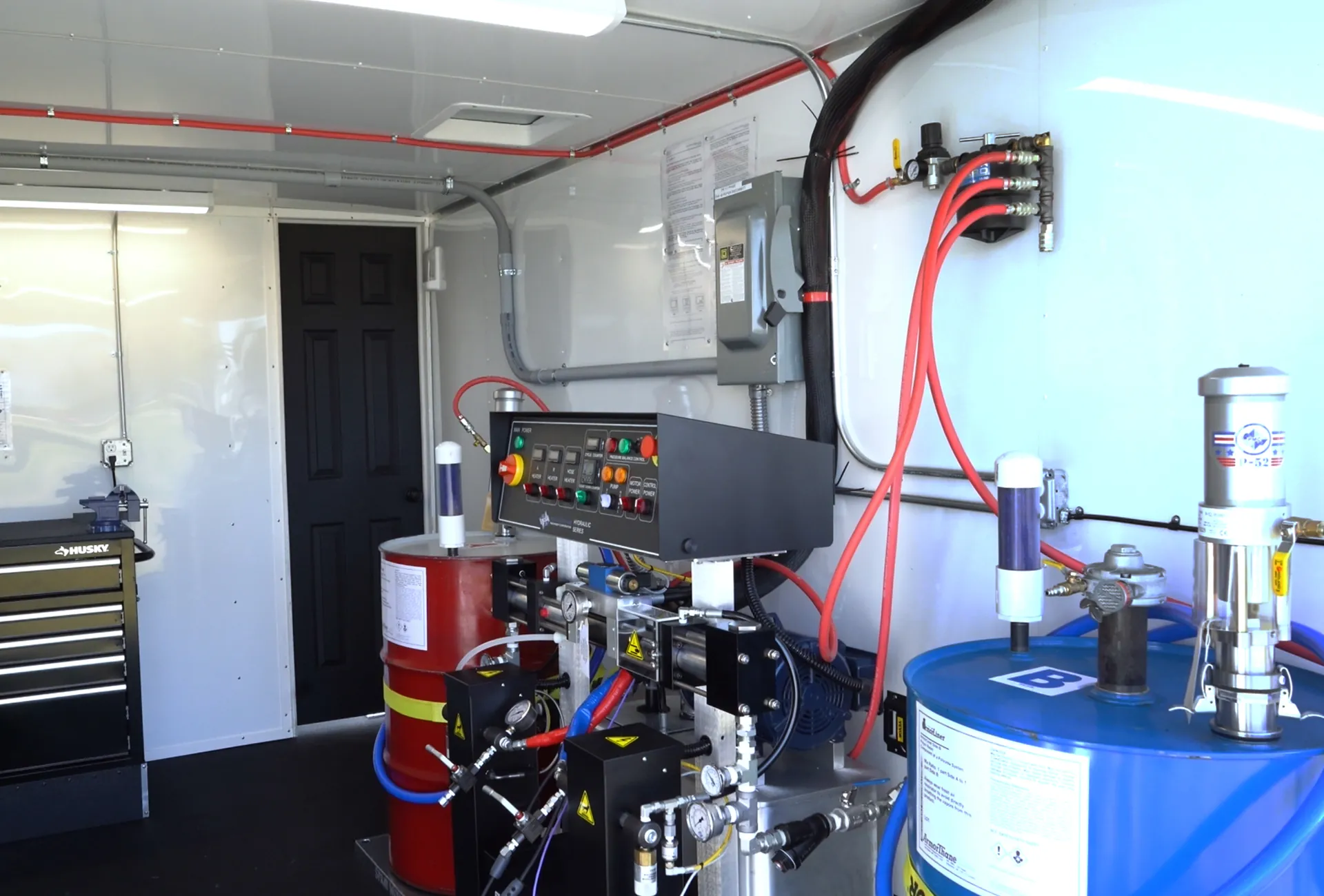
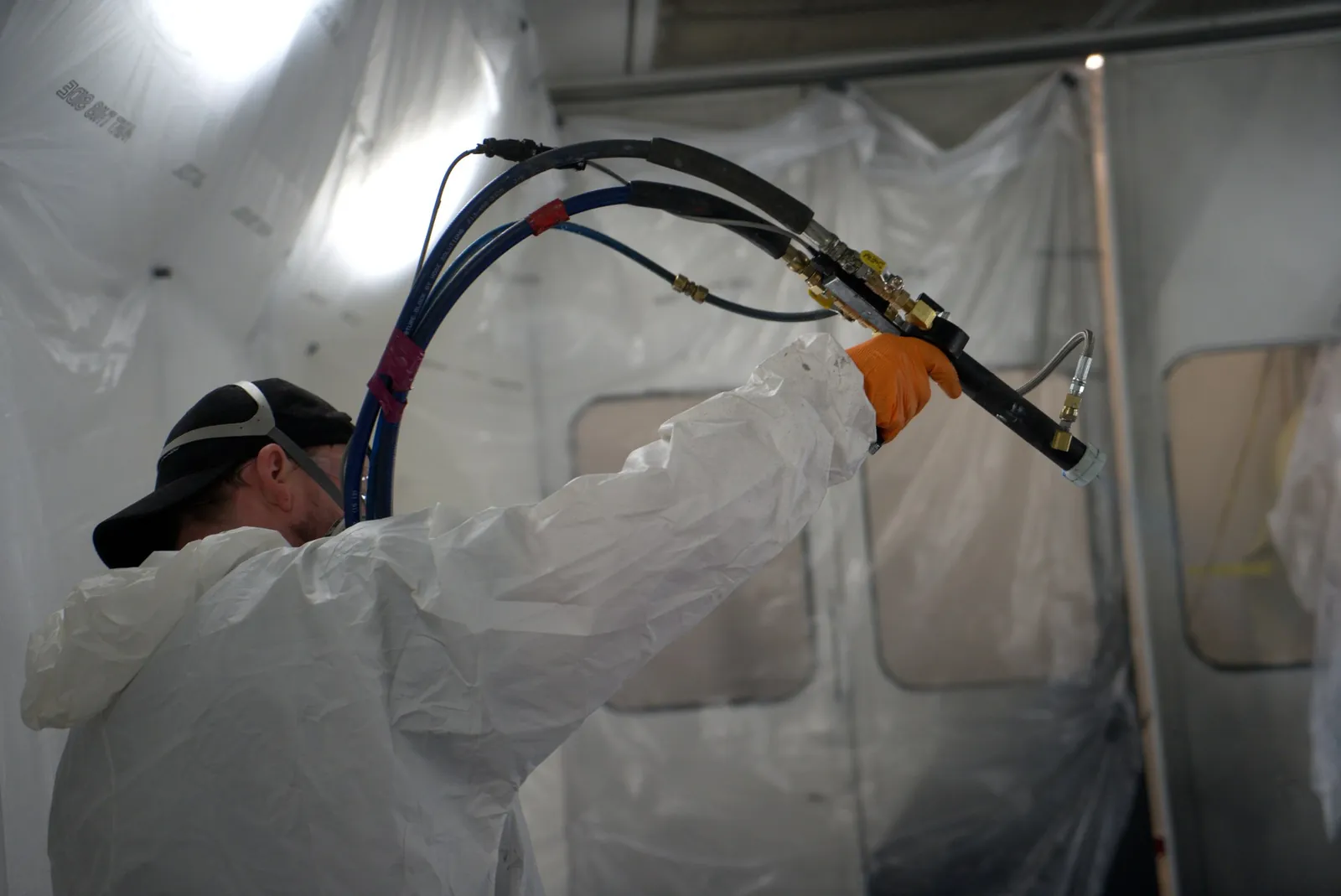
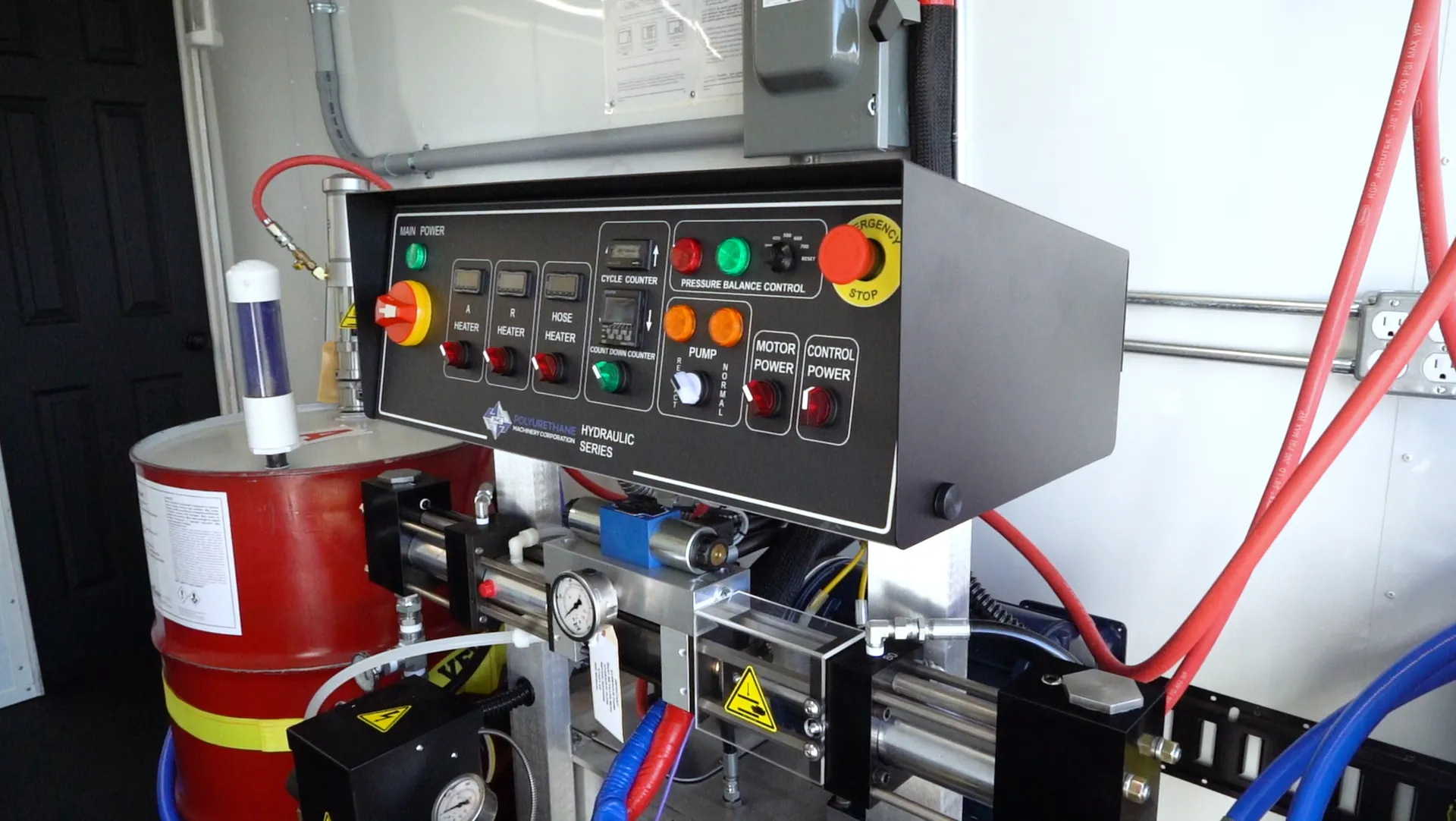
ArmorThane sets you up to do this work, and you own the business. We make the chemistry, build the rigs, train you hands-on and answer the phone when a job gets difficult. You pay no franchise fee and no royalties. It has been that way since 1989.
- $0
- franchise fees or royalties
- 35+
- years in business
- 50+
- countries with applicators
- 24/7
- technical support
Spalled concrete repair is mostly demolition. The patch material is the easy part; the work is finding every bit of delaminated concrete, cutting it out to sound material with square edges, and dealing with whatever caused the spall in the first place. Skip that, and the patch pops out with the next freeze or the next season of rust. This guide covers why concrete spalls, how to size up the damage, the repair sequence the industry uses, and what it costs.
Sound the area with a hammer or chain and mark everything that sounds hollow. Saw-cut a square outline at least 1/2 in deep so the patch has no feathered edges. Chip out to sound concrete; if rebar is exposed and rusted, remove concrete all the way around it with about 3/4 in of clearance and blast the steel clean. Pre-wet to saturated surface-dry, place a polymer-modified repair mortar, and cure it wet. Shallow surface scaling without exposed steel can usually be handled with a bonded resurfacer instead.
What causes spalled concrete
Spalling is concrete breaking away in chips or chunks, usually from the surface or a corner. People use "spalling" for everything from light flaking to fist-sized holes over rusted bar, so it helps to separate the causes, because each one needs a different repair.
Rebar or mesh corrosion
Chlorides from deicing salt or seawater reach the steel. The FHWA notes corrosion generally starts once chloride ions pass about 1.2 lb per cubic yard of concrete, and the rust occupies three to six times the volume of the original steel. That expansion cracks the concrete, the crack runs parallel to the surface, and the cover pops off.
Freeze-thaw and deicers
Water in the surface paste freezes and expands. Non-air-entrained or poorly cured concrete loses its top layer in flakes; this is usually called scaling and is shallower than a true spall.
Finishing and curing faults
Finishing with bleed water on the surface, adding water to the top, or letting the slab dry too fast leaves a weak layer that later delaminates in patches.
Joint edges and impact
Unfilled joints under hard wheels break down at the edges. Steel wheels, forklift traffic and dropped loads chip arrises and corners.
How corrosion turns into a spall
The FHWA describes four stages: chloride contamination and corrosion initiation, cracking when corrosion stresses exceed the concrete's tensile strength, delamination when those cracks run parallel to the surface, and spalling when freeze-thaw and traffic break the delaminated piece loose. By the time you see a spall, the delamination around it is almost always bigger than the hole. That is why sounding matters.
Cover depth is the main defense. ACI 318, as summarized by the CRSI, calls for 1-1/2 in of cover over #5 and smaller bars and 2 in over #6 and larger in concrete exposed to weather, and 3 in where concrete is cast against earth. Driveways and patios with mesh lying near the surface rarely have that, which is why rust-stained spalls are so common on residential flatwork.
Spalled concrete assessment tool
Enter what you measured at the worst spall. If steel is showing, the tool works out how deep you need to remove concrete: cover to the bar, plus the bar diameter, plus 3/4 in of clearance behind it (the ACI RAP 7 and TxDOT figure).
How bad is the spall, and what repair does it need?
Classes the damage by depth and steel involvement, estimates removal depth, and flags when an engineer should be involved.
Spalled concrete repair by depth and cause
TxDOT's concrete repair manual splits spalls into minor, intermediate and major repairs and assigns different materials to each: neat epoxy or epoxy mortar for minor spalls, proprietary bagged repair materials for intermediate ones, and batched concrete similar to the parent material for major ones. Our version for buildings and flatwork follows the same logic.
| Damage | Typical depth | Steel involved | Removal and prep | Material | Wet cure |
|---|---|---|---|---|---|
| Surface scaling | Under 1/4 in | No | Remove loose paste, profile, pressure wash | Bonded cement resurfacer or coating system | 24–48 hrs (resurfacer) |
| Shallow spall or pop-out | 1/4 to about 1 in | No | Saw-cut square, 1/2 in min; chip to sound concrete | Epoxy mortar or polymer-modified patch | Per data sheet |
| Spall to the steel | To and around the bar | Yes, rust | Remove 3/4 in behind bar; blast steel; profile to CSP 6 | Polymer-modified repair mortar | 72 hrs min (TxDOT) |
| Structural slab, balcony, deck | Often past the bar | Yes, section loss | Engineer's repair plan; possible shoring and supplemental bars | Repair mortar or batched concrete | 7 days min (ACI RAP 7) |
| Broken joint edges | Edge of joint | Usually no | Saw-cut back to sound concrete both sides | Rapid-set repair, then semi-rigid joint filler | Hours (rapid-set) |
Two shortcuts to avoid. Do not smear patch over a feather edge; thin edges dry out, debond and break first. And do not patch over rusty steel without cleaning it. TxDOT calls for abrasive blasting of exposed reinforcing; ACI RAP 7 allows high-pressure water or abrasive blasting. Rust left on the bar keeps working under the new patch. Where bars have visibly lost section, RAP 7 says to bring in a structural engineer.
How to repair spalled concrete
This is the partial-depth repair sequence for a spall on a slab, step or deck, drawn from ACI RAP Bulletin 7 and the TxDOT intermediate spall procedure, with the field notes our applicators add.
Sound and mark
Tap with a hammer or drag a chain over the whole area (ASTM D4580 is the chain-drag method RAP 7 cites). Outline every hollow area in paint and extend the outline into sound concrete.
Saw-cut a square perimeter
Cut straight lines, at least 1/2 in deep per TxDOT, but never deeper than the cover over the steel, per RAP 7. Square shapes are easier to form and fill than ragged outlines.
Remove to sound concrete
Chip out with a light chipping hammer, not a big breaker, so you do not fracture the concrete you are keeping. Where bars are exposed and corroded, remove concrete all the way around them with about 3/4 in of clearance, or 1.5 times the largest aggregate if that is more, per TxDOT. A practical check: you should be able to wrap your fingers around the bar.
Clean the steel and the cavity
Blast the bars to remove rust. Profile the concrete to roughly a 1/8 in amplitude (CSP 6), which is also what SikaRepair-224 calls for. Blow out dust and debris.
Bring it to saturated surface-dry
TxDOT soaks the cavity for at least 15 minutes. You want damp concrete with no standing water when the mortar goes in; a dry substrate pulls water out of the patch and kills the bond.
Place the repair mortar
Scrub a bond coat of the mortar into the surface, then fill and compact. Build in lifts the data sheet allows; SikaRepair-224, a vertical and overhead mortar, lists 3/8 in to 2 in per lift on vertical surfaces. Extend horizontal mixes with clean pea gravel where the data sheet allows for deep holes.
Finish and cure wet
Match the surrounding texture. Cure under wet burlap, polyethylene or a compatible curing compound. TxDOT asks for at least 72 hours; RAP 7 asks for at least 7 days on structural repairs.
Patch it once, then protect it. Get a pro on it.
Certified ArmorThane applicators repair spalls and broken joints and then seal or coat the slab so chlorides and water stay out.
Contractors: become an applicator →
Spall repair material and cost calculator
Repair mortars are sold by the bag and quoted by yield. SikaRepair-224, for example, yields about 0.40 cubic feet per bag neat and about 0.58 cubic feet when extended with 25 lb of aggregate. For budgeting a whole driveway, Fixr's 2025 guide puts spalling repair at $2.50 to $4 per sq ft, or $1,400 to $2,300 for a 24 x 24 ft driveway, against $5 to $24 per sq ft to replace.
Patch volume, bags and saw-cut length
Volume = patches x length x width x depth. Bags = volume / yield, plus waste. Saw-cut = square perimeter of each patch. Slab cost uses Fixr's spalling and replacement ranges.
Preventing the next spall
A spall repair fixes one hole. The chlorides and water that caused it are still in the slab around the patch, and that surrounding concrete is often next. Here is where we put our effort after the repair.
Seal or coat the slab
A penetrating concrete sealer on driveways and walks, or a full membrane on balconies and parking decks, cuts how much salt water reaches the steel.
Treat cracks before they spall
Cracks wider than the ACI tolerable width for deicer exposure let chlorides straight in. Our concrete crack repair guide covers fillers.
Choose deicers carefully
Concrete in Practice guidance warns never to use ammonium sulfate or ammonium nitrate deicers, and to keep salts off concrete in its first year.
Protect joint edges
Industrial floors need semi-rigid joint filler so wheels do not chip the arrises; it is the cheapest spall prevention there is.
Where polyurea fits
We make polyurea and polyurethane coatings, and on structures with recurring corrosion spalls, a seamless elastomeric membrane over the repaired concrete is often the right final layer. It bridges fine cracks and blocks water and chlorides that a penetrating sealer only slows. Our corrosion prevention page covers those systems, and seawall repair covers the marine version of the same problem. A coating is not a substitute for the repair underneath, though. Coating over delaminated or rust-packed concrete just traps the problem.
On driveways and patios with widespread shallow scaling but few true spalls, it is often cheaper to patch the deep spots and put a bonded overlay over the whole slab. See concrete resurfacing for when that works. And if the spalled concrete also shows white crusty deposits, that is moisture moving through it; our guide to efflorescence explains what that means.
Spalled concrete repair questions
What is spalled concrete?
Spalled concrete is concrete that has broken away from the surface in flakes, chips or chunks. Common causes are corroding reinforcing steel, freeze-thaw damage with deicing salts, weak surfaces from poor finishing or curing, and impact at joints and edges.
Is spalling concrete dangerous?
On a driveway it is mostly a trip hazard and a sign of ongoing deterioration. On balconies, parking structures, ceilings and anything overhead, spalling can drop concrete on people and can indicate loss of reinforcing steel, so it should be inspected by an engineer promptly.
Can you just patch over spalled concrete?
Not reliably. Patches smeared over loose concrete and feathered edges debond quickly. The industry procedure is to saw-cut a square outline at least 1/2 in deep, remove concrete to sound material, clean any exposed steel, and place repair mortar on a saturated surface-dry substrate.
How much does it cost to repair spalled concrete?
Fixr's 2025 guide lists driveway spalling repair at $2.50 to $4 per sq ft, about $1,400 to $2,300 for a 24 x 24 ft driveway. Structural spall repair on balconies and parking decks is priced per job and depends on the engineer's scope.
What is the best product for spalled concrete repair?
For shallow spalls without steel, an epoxy mortar or a polymer-modified patching mortar. For spalls to the reinforcing, a polymer-modified structural repair mortar rated for the depth and orientation. TxDOT uses neat epoxy or epoxy mortar for minor spalls and bagged repair materials for intermediate ones.
How deep do you cut out around rebar?
Remove concrete all the way around the corroded bar with about 3/4 in of clearance behind it, or 1.5 times the largest aggregate size if that is greater, per TxDOT. ACI RAP Bulletin 7 also uses roughly 3/4 in.
How long does a spall repair last?
A properly prepared repair can last as long as the surrounding concrete. The usual failure is new corrosion in the chloride-contaminated concrete right next to the patch, which is why sealing or coating the slab after repair matters.
Can I coat over spalled concrete?
Only after the spalls are repaired and cured. Coatings bond to sound, profiled concrete. Over delaminated concrete or rusting steel, a coating will lift with the concrete under it.
Sources
- FHWA, Materials and methods for corrosion control of reinforced and prestressed concrete structures: highways.dot.gov/media/7506
- ACI RAP Bulletin 7, Spall repair by partial removal and replacement of concrete: icri.org/.../aci-rap-7.pdf
- TxDOT Concrete Repair Manual, Intermediate spall repair procedure: txdot.gov/manuals/brg/crm/...intermediate-spall-repair
- TxDOT Concrete Repair Manual, Selecting an appropriate repair procedure: txdot.gov/manuals/brg/crm/...selecting-an-appropriate-repair-procedure
- Sika USA, SikaRepair-224 product data sheet: usa.sika.com/.../sikarepair_-224.pdf
- Fixr, Concrete driveway repair cost (2025): fixr.com/costs/concrete-driveway-repair
- iRebar / CRSI, US concrete cover specifications (ACI 318): irebar.com/USConcreteCoverSpecifications.html
- Concrete in Practice 2, Scaling concrete surfaces: concreteanswers.org/CIPs/CIP2.htm
Repair the spall, then stop the next one.
Property owners get a certified ArmorThane applicator who repairs concrete and seals or coats it against water and salt. Contractors can add repair and coatings with no franchise fee and no royalties.
 Read it
Concrete Structure Rehabilitation
Flip through the whole brochure right here, or open it full screen on Issuu to share it.
Start your coatings business with ArmorThane.
Tell us what you want to spray and where you are. An ArmorThane specialist will walk you through the equipment, chemicals, training and startup cost for the work you want to do.
- Equipment package matched to your applications
- Hands-on training and applicator certification
- Technical support once you are spraying
Chunks coming off your concrete? Get it repaired and protected.
Tell us where the spalling is (driveway, steps, garage floor, balcony, deck), how many spots, and whether you can see rusty steel. A certified applicator near you will follow up.
- Driveway, step and patio spalls
- Garage and shop floor joint edges
- Repair plus sealer or coating
- Referral to an engineer when needed
More to read on concrete repair
Short reads from ArmorThane on Issuu. Tap one to open it right here.
 Quick readThe Cost Savings Of In House Polyurea Spraying For Municipalities
- Quick readReviving Concrete Structures: The Power Of Polyurea Rehabilitation
- Quick readCritical Infrastructure Under Threat – ArmorThane Blast Protection
- Quick readCritical Infrastructure Series | BESS Blast Mitigation & Polyurea Protection



More in Floors & concrete
 Floors & concreteBest Garage Floor Coating
 Floors & concreteBrewery Floor Coating
 Floors & concreteCar Parks & Parking Garage Coatings
 Floors & concreteCommercial Floor Coating
 Floors & concreteCommercial Kitchen Flooring
 Floors & concreteConcrete Coatings
 Floors & concreteConcrete Coatings Near Me
 Floors & concreteConcrete Crack Repair: Methods, Materials & Cost