





PVC Roofing: Cost, Lifespan & When to Restore
What a PVC roof costs, how long it lasts, why restaurants choose it, and how to tell whether yours needs a new membrane or a coating restoration.
Start a roof coating business
Spray roofs for a living.
ArmorThane sets you up to do this work, and you own the business. We make the chemistry, build the rigs, train you hands-on and answer the phone when a job gets difficult. You pay no franchise fee and no royalties. It has been that way since 1989.




- $0
- franchise fees or royalties
- 35+
- years in business
- 50+
- countries with applicators
- 24/7
- technical support
PVC roofing is a single-ply membrane made from polyvinyl chloride, with seams fused by hot air into one continuous sheet. It's the flat-roof membrane owners choose when grease, oils or chemicals land on the roof, and it's priced at the upper end of single-ply.
A professionally installed PVC roof typically costs $6,250 to $27,500, or roughly $5 to $15 per square foot depending on roof size, according to Angi. Labor is 40 to 60 percent of that. Expect 20 to 30 years from a good installation. If an older PVC roof is dry underneath and the sheet is still flexible, a coating restoration at about $1 to $4 per square foot can push replacement out. Once the insulation is soaked or the sheet is brittle, replace it.
Get a PVC roof checked near you, matched by ZIP
ArmorThane doesn't install membranes. We make the coatings and spray equipment certified applicators use to restore commercial roofs. If your PVC roof is aging or leaking, send a request and the nearest certified ArmorThane applicator will follow up.
Request a PVC roof assessment
Enter your ZIP or postal code and a few details. We route the request to the nearest certified ArmorThane applicator; nothing is shared with anyone else.
Enter your ZIP or postal code to see where your request goes.
What PVC roofing is and why it's built that way
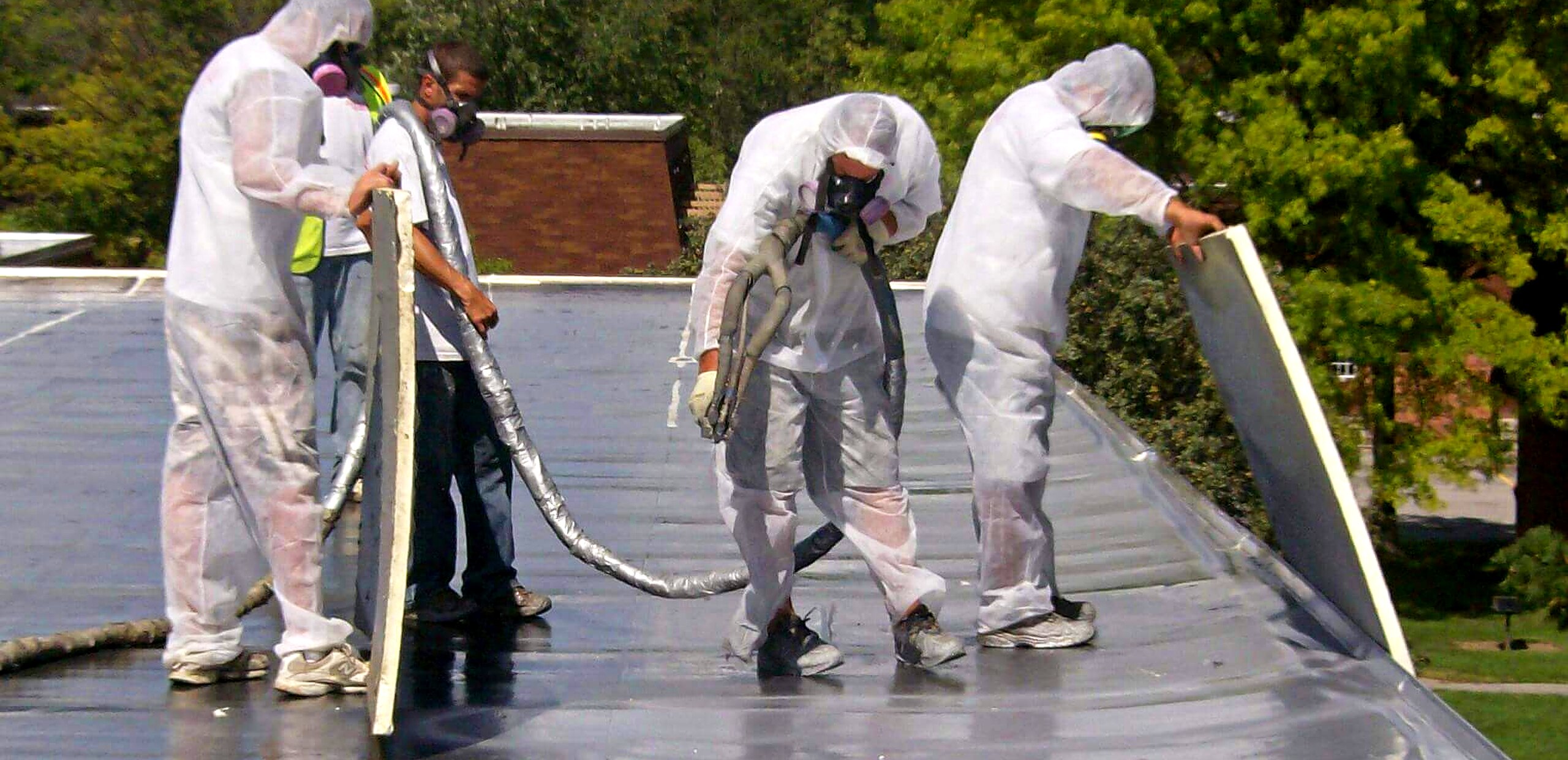
PVC membranes are thermoplastic: heat softens them, and two softened sheets pressed together fuse as they cool. Instead of glue or tape at the laps, the installer runs a hot-air welder along every seam and the two sheets become one piece of plastic that never needs re-sealing.
The sheet itself is PVC resin blended with plasticizers that keep it flexible, usually built around a polyester reinforcing scrim for tear strength. Most PVC goes down white or light gray, either fully adhered, mechanically fastened through the insulation into the deck, or, less often, ballasted.
Heat-welded laps
Once a weld cools, the roofer probes the seam edge to find gaps. Ask how seams are checked and whether test welds are run at the start of each day, because air temperature and wind change how a welder behaves.
Grease and chemical resistance
Kitchen exhaust throws grease onto the roof, and fats and oils attack many roofing materials. PVC is the membrane most often specified for restaurants, food plants and chemical exhaust. Resistance isn't immunity, so fans still need grease containment.
A reflective surface
Light-colored PVC reflects much of the sun's heat, which helps cooling loads. Angi cites the National Roof Certification and Inspection Association: TPO and PVC have superior UV resistance and energy efficiency, while EPDM performs well in cold climates.
PVC vs TPO vs EPDM
All three are single-ply membranes that can last decades. They differ in chemistry, seams and the buildings they suit. Costs below are installed prices from recent published guides.
| Membrane | Installed cost per sq ft | Typical life | Seams | Usually the right pick for |
|---|---|---|---|---|
| PVC | $5–$15 (Angi) | 20–30 years | Hot-air welded | Restaurants, food plants, chemical exhaust, reflective roofs |
| TPO | $4–$10 (This Old House) | 15–30 years | Hot-air welded | Reflective roofs on a tighter budget, offices, warehouses |
| EPDM | $7.43–$13.00 (Angi) | 25–30 years | Taped or adhered | Cold climates, simple roofs with few penetrations |
Where PVC earns its price
- Any roof that collects grease, oils or chemical fallout from exhaust fans
- Owners who want welded seams and a bright, reflective surface
- Buildings where a leak shuts down a kitchen or production line
Where TPO is the better value
- Plain office, retail and warehouse roofs with no grease exposure
- Budgets where the lower installed cost matters most
- Owners who want a sheet made without plasticizers
Comparing in more depth? See our guides to TPO roofing and EPDM roofing.
What a PVC roof costs and where the money goes
Angi puts professional PVC installation between $6,250 and $27,500, which works out to roughly $5 to $15 per square foot depending on the size of the roof. Small roofs land at the high end per square foot because mobilization and flashing details don't shrink with the roof. Angi breaks the budget into four lines.
Labor: $3–$7 per sq ft
Welding seams and flashing curbs, drains and walls is skilled work, and it's where a PVC roof succeeds or fails.
Tear-off and prep: $1–$4 per sq ft
Several layers or wet material underneath push this higher.
Insulation: $0.50–$3 per sq ft
New board stock, or replacement of wet boards found during tear-off, is its own line. More on that in our roof insulation guide.
Permits: $250–$500
Most jurisdictions require a permit for a full re-roof. Your roofer usually pulls it and builds the fee into the bid.
Scale that up and the numbers move fast. Even at the low end of Angi's range, a 10,000 sq ft restaurant roof is about $50,000 for a new membrane. That's the number a coating restoration has to beat.
Where PVC roofs start to fail
A PVC roof rarely fails in the middle of a clean field sheet. Trouble starts at edges, seams, penetrations and anywhere water or grease sits.
Shrinkage and stiffening
As plasticizers leave the sheet, it shrinks and pulls at the perimeter. You'll see the membrane bridging across wall transitions and flashings tenting at curbs.
Seam and flashing separation
Cold welds, wrinkles and rushed detail work open up first. Pipe boots, curb flashings and drain clamps account for a large share of leaks.
Punctures
HVAC service, dropped screws and hail all puncture membranes. Walkway pads to the units cost little compared with chasing leaks.
Ponding
Low spots over a sagging deck or crushed insulation hold water and dirt, which speeds wear. See ponding water on flat roofs.
Grease buildup
PVC tolerates grease better than most membranes, but years of saturation around an exhaust fan still take a toll. Keep containment boxes in place and emptied.
Wet insulation
A small leak can soak insulation across a wide area before a ceiling stain shows. The sheet can look fine while the boards under it are saturated.
Chasing an active leak? Start with our commercial roof leak repair guide.
Replace or restore? Run your PVC roof's numbers
Restoring a PVC roof makes sense when the insulation is dry, the sheet is still flexible and the seams can be repaired. Enter what you know and compare a new membrane with a coating restoration.
New membrane or coating restoration?
Replacement uses Angi's $5–$15 per sq ft installed range (July 2026), with tear-off and prep shown as its own $1–$4 line. Restoration uses $1–$4 per sq ft, or $4.50–$8 when leaks or wet areas make it repair-heavy (HomeGuide 2026, via our roof coating cost guide). The verdict is a rule of thumb, not an inspection.
Want the coating numbers by product type? See the full roof coating cost guide.
How to coat a PVC roof so the coating stays put
PVC is one of the harder roofing surfaces to coat. The sheet is slick, often dirty or chalky, and plasticizers at the surface can interfere with adhesion. That doesn't rule it out. It means prep and primer decide the job, and the adhesion test comes before the contract.
Survey for moisture first
An infrared or meter survey, confirmed with core cuts, shows whether the insulation is dry. A coating seals moisture in; it never dries a roof out.
Cut out and replace wet insulation
Every wet board comes out, new insulation goes in, and the opening is closed with welded PVC before anything else happens.
Repair seams, flashings and drains
Open laps are re-welded or patched, curbs and pipe boots are re-flashed, and low spots are corrected where the budget allows.
Clean and degrease
The roof is washed with a cleaner the coating maker approves. Areas around exhaust fans get a dedicated degreaser, then everything dries completely.
Prime with a PVC-approved primer
Use the primer the coating's data sheet calls for on PVC, at the stated coverage. Generic primers are a common reason coatings peel off single-ply.
Run an adhesion test patch
Small test areas of primer and coating cure, then get pulled. If the coating peels off cleanly, the job stops there and the plan changes.
Apply to the specified thickness, then inspect
Seams and details are reinforced first, then the field is coated to the specified dry film thickness and checked with a gauge. Get the system, thickness and any warranty terms in writing.
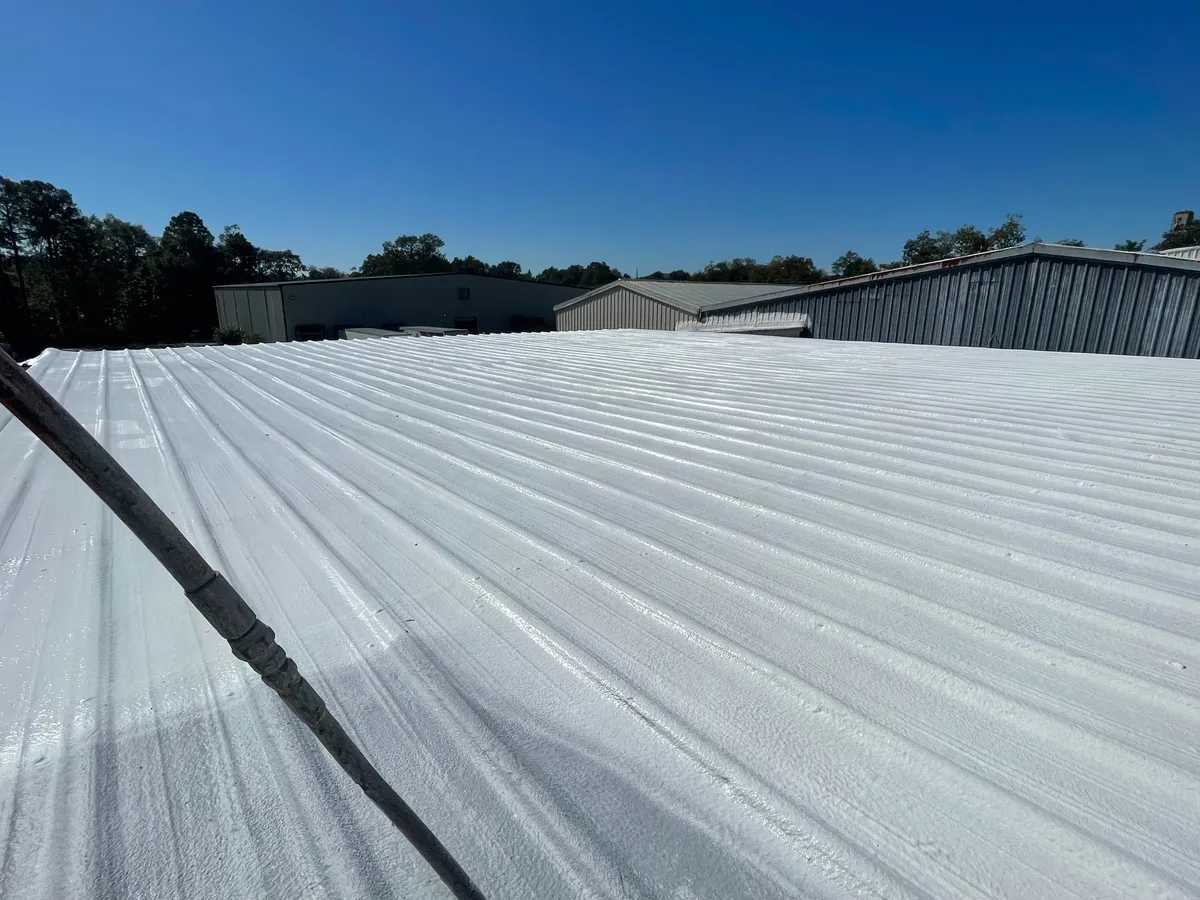
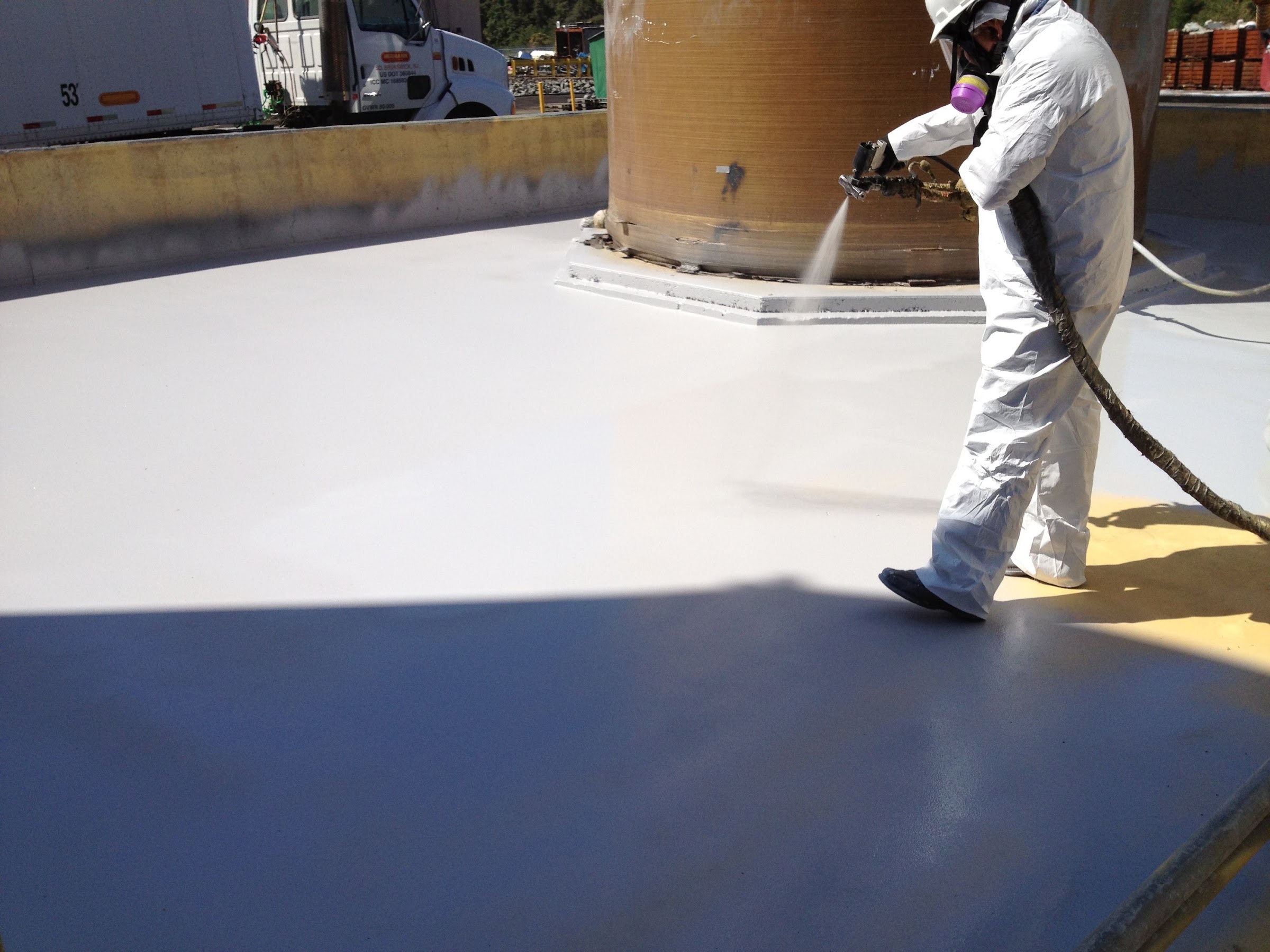
Silicone, acrylic and polyurethane coatings are all used over PVC with the right primer. Where foot traffic or hail is a concern, a sprayed polyurea or polyurethane system builds a thicker, tougher film; see polyurea roof coating and our ArmorSeal 100 AL roofing liner. Prep is close to TPO roof waterproofing.
Find out if your PVC roof can be restored.
A certified ArmorThane applicator near you can survey the roof for moisture, run an adhesion test and put the system, thickness and price in writing.
PVC roofing questions
What is PVC roofing made of?
PVC roofing is a single-ply membrane made from polyvinyl chloride resin with plasticizers for flexibility, usually reinforced with a polyester scrim. The sheets are joined by heat welding, so the seams fuse into one continuous membrane.
How much does a PVC roof cost?
Angi's July 2026 data puts professional installation at $6,250 to $27,500, roughly $5 to $15 per square foot depending on roof size. Labor runs $3 to $7 per square foot, tear-off and prep $1 to $4, insulation $0.50 to $3, and permits $250 to $500.
How long does a PVC roof last?
Angi puts the life of a PVC roof at 20 to 30 years. Installation quality, foot traffic, ponding water, grease exposure and how well the seams and flashings are maintained decide where a roof lands in that range.
Is PVC roofing better than TPO?
It depends on the roof. PVC costs more but handles grease and chemical exposure better, which is why it's common on restaurants. TPO usually costs less and doesn't rely on plasticizers. For a plain office or warehouse roof, TPO is often the value pick; for a kitchen roof, PVC usually is.
Can you coat a PVC roof?
Yes, if the roof is dry underneath and the membrane is still flexible. The surface needs cleaning, a primer approved for PVC and an adhesion test before the full job. Coating restorations generally run $1 to $4 per square foot, or $4.50 to $8 or more when heavy repairs are needed.
Why do restaurants use PVC roofing?
Kitchen exhaust fans deposit grease and oils on the roof, and those attack many roofing materials. PVC holds up to that exposure better than most membranes. It still needs grease containment at each fan and regular cleaning to reach its full life.
Sources
- Angi, PVC roofing cost guide (updated July 9, 2026): installed range, line items and lifespan. angi.com
- This Old House, TPO roofing material guide (updated June 5, 2026): TPO cost and lifespan. thisoldhouse.com
- Angi, EPDM roofing cost (updated Aug. 3, 2026) and What is EPDM roofing (updated July 9, 2026). angi.com
- ArmorThane, Roof coating cost guide (HomeGuide 2026 installed ranges and commercial restoration bands). armorthane.com/roof-coating-cost
Get more years from the PVC roof you have.
If the roof is dry underneath and the sheet is still flexible, a coating restoration by a certified ArmorThane applicator can put off a full replacement.
 Read it
Protective Roof Coatings & Leak Repair
Flip through the whole brochure right here, or open it full screen on Issuu to share it.
Start your coatings business with ArmorThane.
Tell us what you want to spray and where you are. An ArmorThane specialist will walk you through the equipment, chemicals, training and startup cost for the work you want to do.
- Equipment package matched to your applications
- Hands-on training and applicator certification
- Technical support once you are spraying
Get your PVC roof checked by a pro.
Tell us about the building and a certified ArmorThane applicator near you will follow up to inspect the roof and quote repairs or a coating restoration.
- Building address or ZIP code
- Approximate roof size
- Roof age, if you know it
- Where it leaks, ponds or collects grease
More to read on roofing
Short reads from ArmorThane on Issuu. Tap one to open it right here.