




Spray Foam Roofing Cost: 2026 Guide
Per square foot, by roof size and over 30 years, with the math shown. We make ArmorFoam Roof 200 and polyurea topcoats, so we’ll show you what drives a foam roof quote, including when a membrane is cheaper.
Start a spray foam business
Spray foam for a living.
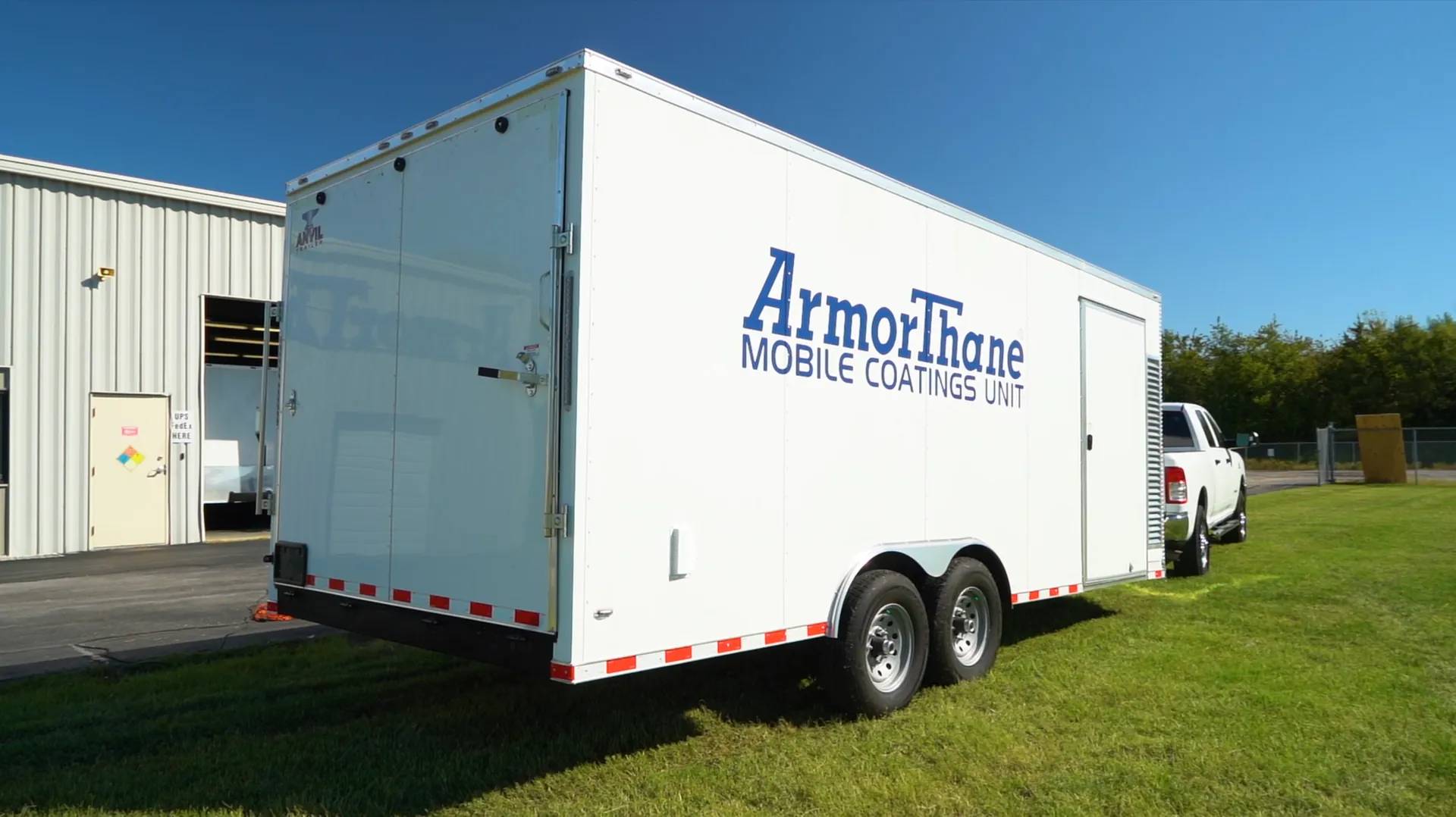
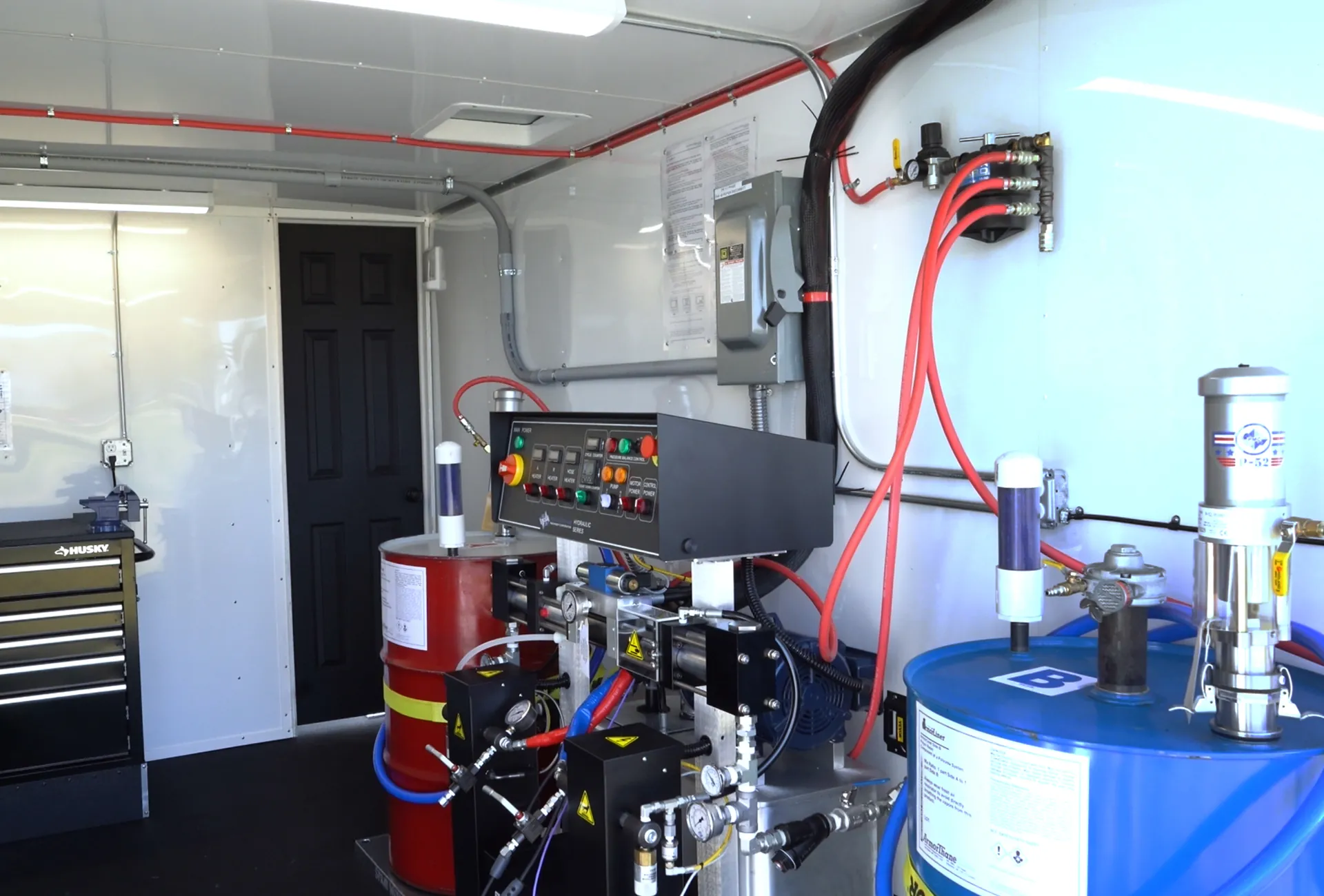
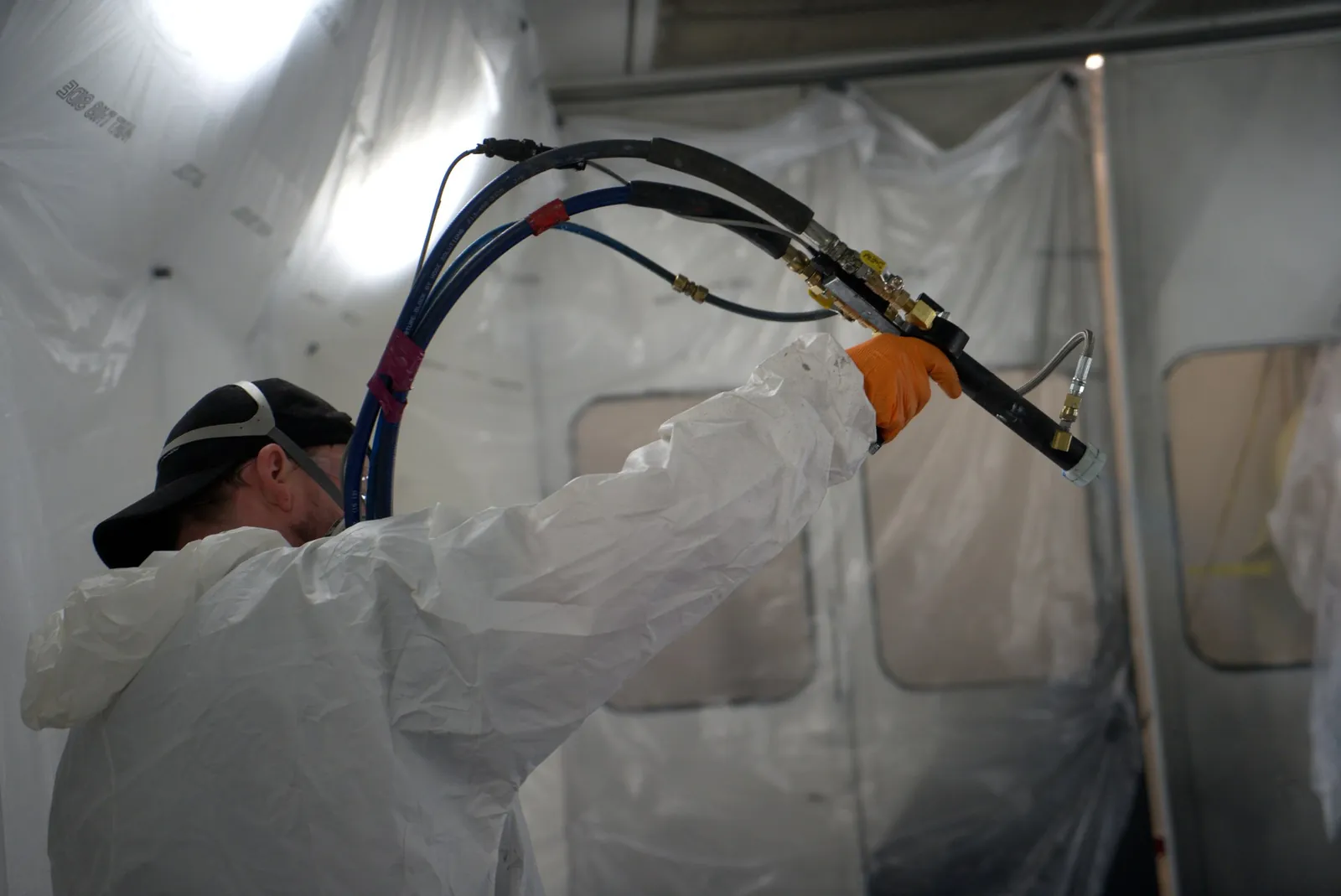
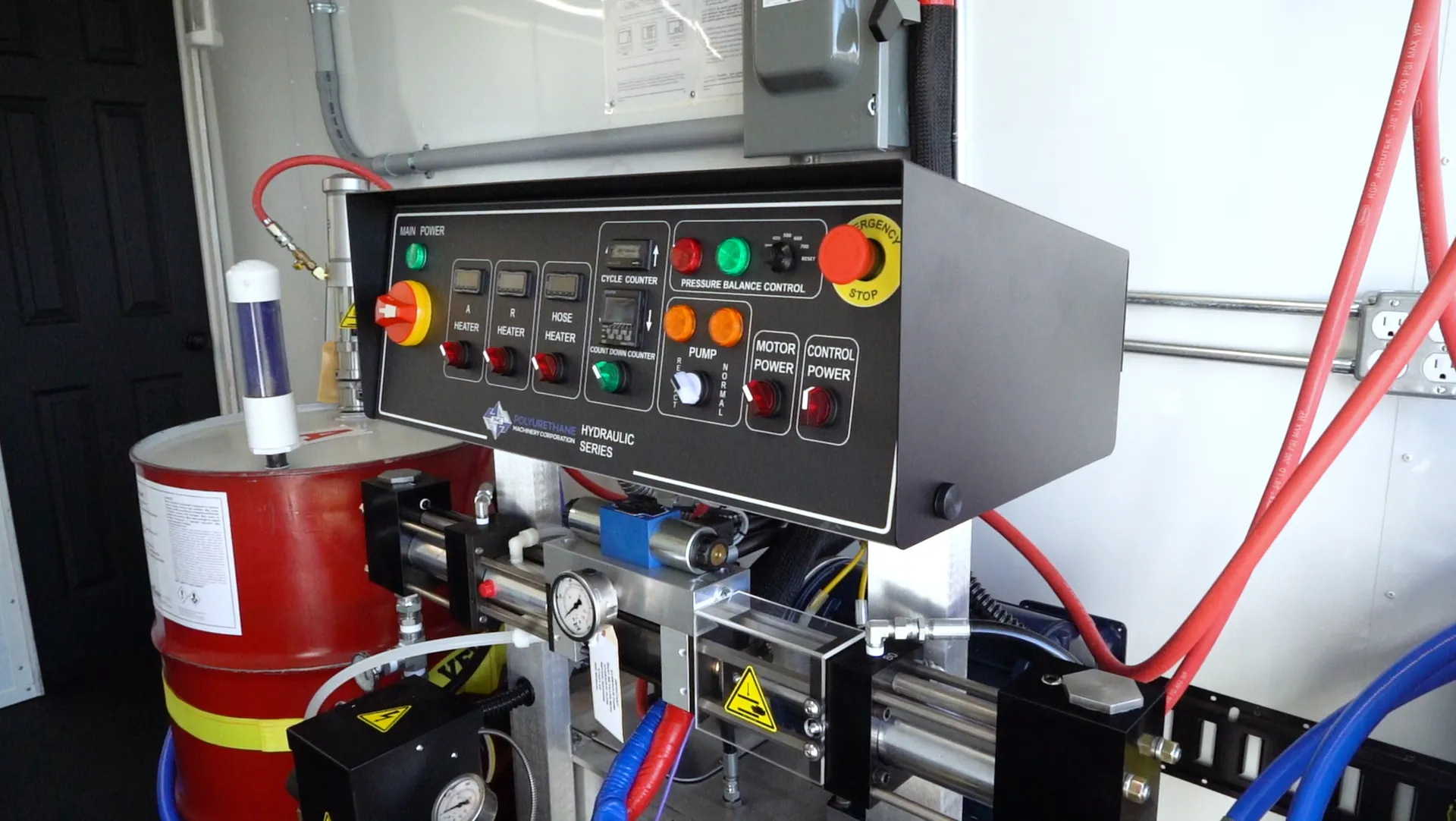
ArmorThane sets you up to do this work, and you own the business. We make the chemistry, build the rigs, train you hands-on and answer the phone when a job gets difficult. You pay no franchise fee and no royalties. It has been that way since 1989.
- $0
- franchise fees or royalties
- 35+
- years in business
- 50+
- countries with applicators
- 24/7
- technical support
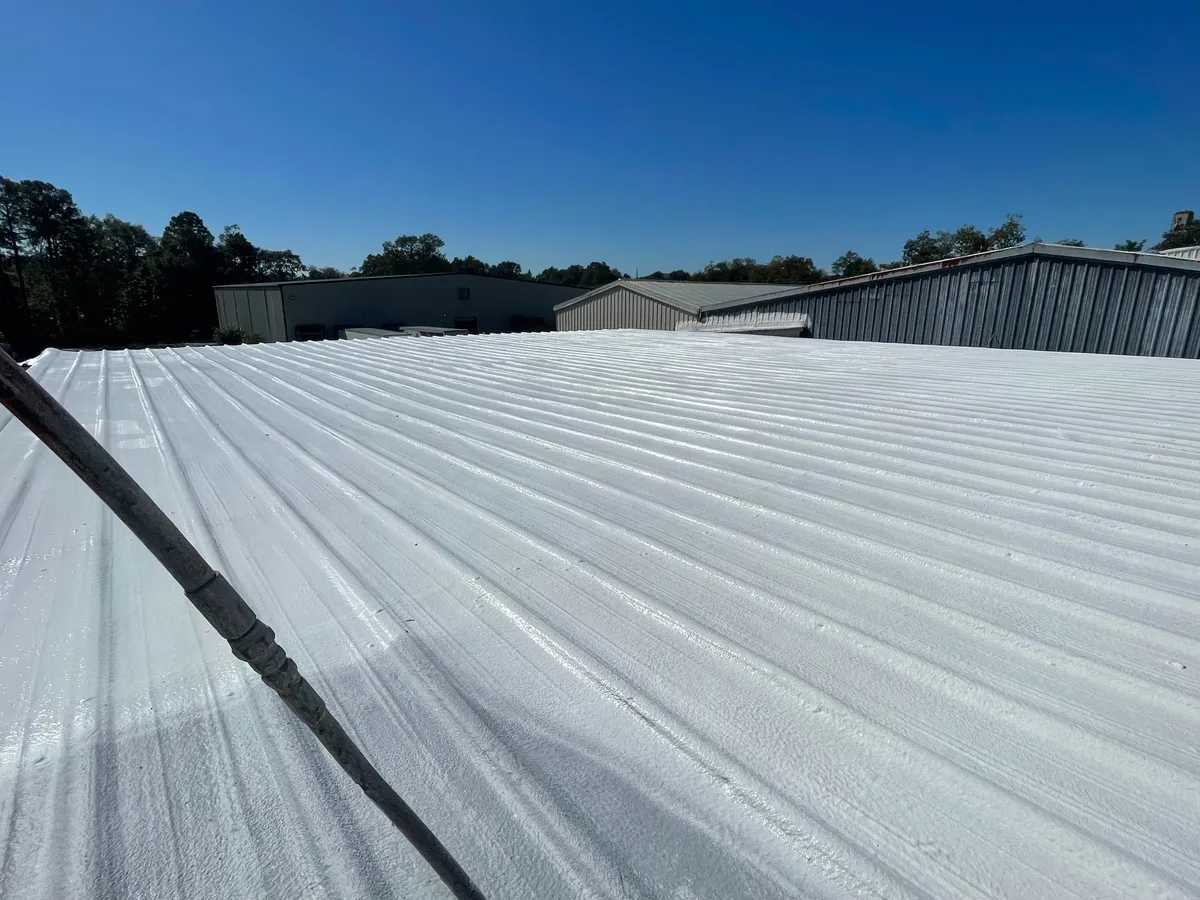
A spray foam (SPF) roof costs about $4 to $7 per square foot installed in 2026. That's the median of seven published ranges; the full spread runs $2 to $8. A 10,000 sq ft roof lands around $40,000–$70,000. Add $1–$3 per square foot where the old roof has to come off, and budget a recoat every 10 to 15 years at roughly $1.50–$3.00 per square foot. Run your roof in the calculator.
Foam roof prices look all over the place because the published ranges leave out the three things that move them most: how thick the foam is, which coating goes on top, and whether the old roof stays or goes. A quote at $4.50 and one at $8.00 can both be honest. One is an inch of foam and an acrylic coat over a dry roof; the other is a tear-off, tapered foam for drainage and a thicker coating with a longer warranty.
So this page prices a foam roof the way a quote is built: foam by the board foot, labor, topcoat, prep, tear-off and wet areas, each with a sourced number. Then it answers what owners of flat and low-slope roofs actually ask next. What will the recoats cost? And is this cheaper than tearing off and putting down TPO or EPDM?
We manufacture ArmorFoam Roof 200 roofing foam and polyurea topcoats in Springfield, Missouri, and supply the applicators who spray them. We don't make silicone. We'll still tell you when silicone, or a plain membrane, is the better buy.
- 1Spray foam roofing cost calculator
- 22026 cost per square foot
- 3What you're paying for
- 4Recover or tear off?
- 5What moves the price
- 6Which topcoat: acrylic, silicone, urethane or polyurea
- 7Recoat cost and schedule (planner)
- 8SPF vs TPO, EPDM and other roofs: life-cycle cost
- 9Is your quote fair? (checker)
- 10Pros, cons and when it's the wrong roof
- 11Can you DIY a foam roof?
- 12ArmorFoam Roof 200 and where we fit
- 13Spray foam roofing cost FAQ
Spray foam roofing cost calculator
Enter the roof size, what's on it now, and the foam and coating you're considering. The calculator prices each part of the job from published 2026 component costs, shows the line items, and flags the code issues that change the scope, like a second roof layer or a lot of wet insulation.
Estimate an SPF roof, line by line
Foam at $1.00–$1.50 per board foot, labor at $2–$4 per sq ft, and topcoat, primer, removal and permit prices from the sources below. An estimate for budgeting, not a bid.
| Line item | Basis | Low–high | Per sq ft (typical) |
|---|---|---|---|
| Roofing foam | 15,000 bf at $1.00–$1.50/bf | $15,000–$22,500 | $1.88 |
| Labor, setup and application | $2.00–$4.00/sq ft | $20,000–$40,000 | $3.00 |
| Silicone topcoat | $1.40–$2.50/sq ft | $14,000–$25,000 | $1.95 |
| Primer (non-metal) | $0.15–$0.30/sq ft | $1,500–$3,000 | $0.23 |
| Permit | $250–$500 | $250–$500 | $0.04 |
| Total | 10,000 sq ft | $50,750–$91,000 | $7.09 |
R-value added: about R-9.8 at 1.5 in average foam (R-6.5 per inch, aged). Foam weight: about 0.34 lb/sq ft at 2.7 pcf. Same roof by topcoat (typical): Acrylic $5.59 · Silicone $7.09 · Urethane $8.59 · Polyurea $8.59 per sq ft. The median of published 2024–2026 ranges is $4.00–$7.00 per sq ft ($40,000–$70,000 here); this estimate sits above it. Most published ranges don’t say how thick the foam is or which coating is on it.
- No taper. New foam roofs need a ¼ in per foot design slope (IBC 1507.14.1). Re-roofs are exempt if the roof already drains (IBC 1511.1, exception 1), but ponding is the classic reason to add taper.
- Silicone handles ponding best, but once a roof is silicone, only silicone sticks to it at recoat time.
- Not included: structural or deck repairs, new drains or scuppers, curbs, crane or lift time, and manufacturer warranty fees. Send these numbers to a certified ArmorThane applicator for a written quote.
How we calculated this: board feet = area x average foam thickness (thickness plus half the taper rise). Foam uses Angi's high-density price of $1.00–$1.50 per board foot and labor of $2–$4 per sq ft (May 2026), which matches HomeGuide's installed-minus-materials spread. Topcoats: Angi's silicone $1.40–$2.50 and acrylic $0.15–$0.75; urethane and polyurea are silicone plus $0.50 to $2.50, our derivation from published coating price tables. Primer and granules from EcoWatch (2022), removal $1–$3 and permits $250–$500 from Angi. The complexity factor is our assumption. R-value at R-6.5 per inch, aged.
Spray foam roofing cost per square foot in 2026
Installed spray foam roofing runs about $4.00 to $7.00 per square foot in the middle of the market, with a midpoint near $5.50. We pulled every dated range we could find from cost guides, a coating manufacturer, a contractor and our own roof coating guide, then took the median of the low ends and the median of the high ends.
Published ranges, side by side
| Source (date) | Installed $/sq ft | Also says |
|---|---|---|
| Angi, spray foam roofing cost (May 2026) | $2.50–$8.00 | Average project $11,500 ($4,300–$21,500); recoat every 10–15 years; 20–30 year life |
| Angi, pros and cons (Jul 2026) | $4–$7 | Average project $6,000; 25–30 year life |
| HomeGuide, flat roof replacement (Nov 2025) | $3.50–$7.00 | Materials alone $1.50–$3.00; 40–50 year life |
| HomeGuide, roof coating cost (Apr 2024) | $2.00–$6.00 | SPF line in its coating table |
| American WeatherStar, SPF guide (Jan 2026) | $5.00–$8.00 | 30–40 year life; recoat every 10–15 years |
| Reimagine Roofing, Phoenix (Sep 2025) | $4–$7 | 2,000 sq ft for $8,000–$14,000; recoat $1–$2/sq ft |
| ArmorThane roof coating guide (Mar 2026) | $4.00–$8.00 | Foam plus polyurea topcoat; recoat $1.50–$3.00/sq ft every 10–15 years |
| Median band | $4.00–$7.00 | Midpoint $5.50 |
What's inside the price
Angi is the only published source that breaks a foam roof into parts, so the calculator uses its numbers. They line up with HomeGuide's split between materials ($1.50–$3.00 per sq ft) and the installed price ($3.50–$7.00), which leaves about $2 to $4 for labor, equipment and overhead.
| Component | Published price | Source (date) |
|---|---|---|
| High-density roofing foam | $1.00–$1.50 per board foot | Angi (May 2026) |
| Labor and application | $2–$4 per sq ft | Angi (May 2026) |
| Silicone topcoat | $1.40–$2.50 per sq ft | Angi (May 2026) |
| Acrylic topcoat | $0.15–$0.75 per sq ft | Angi (May 2026) |
| Primer | $0.50–$0.80 metal; $0.15–$0.30 other roofs | EcoWatch (2022) |
| Granules | $0.05–$0.10 per sq ft | EcoWatch (2022) |
| Old roof removal | $1–$3 per sq ft ($1–$2 per HomeGuide) | Angi (May 2026); HomeGuide (Nov 2025) |
| Permit | $250–$500 | Angi (May 2026) |
Cost by roof size
Here's the median band applied to common roof sizes. Treat the small-roof rows with care: crews have fixed setup costs, so a 1,500 sq ft roof tends to price higher per foot than a warehouse does.
| Roof area | Low ($4.00/sq ft) | Mid ($5.50/sq ft) | High ($7.00/sq ft) | Recoat later ($1.50–$3.00) |
|---|---|---|---|---|
| 1,500 sq ft (home or small shop) | $6,000 | $8,250 | $10,500 | $2,250–$4,500 |
| 5,000 sq ft | $20,000 | $27,500 | $35,000 | $7,500–$15,000 |
| 10,000 sq ft | $40,000 | $55,000 | $70,000 | $15,000–$30,000 |
| 25,000 sq ft | $100,000 | $137,500 | $175,000 | $37,500–$75,000 |
| 50,000 sq ft | $200,000 | $275,000 | $350,000 | $75,000–$150,000 |
| 100,000 sq ft | $400,000 | $550,000 | $700,000 | $150,000–$300,000 |
What you're paying for: how a foam roof is built
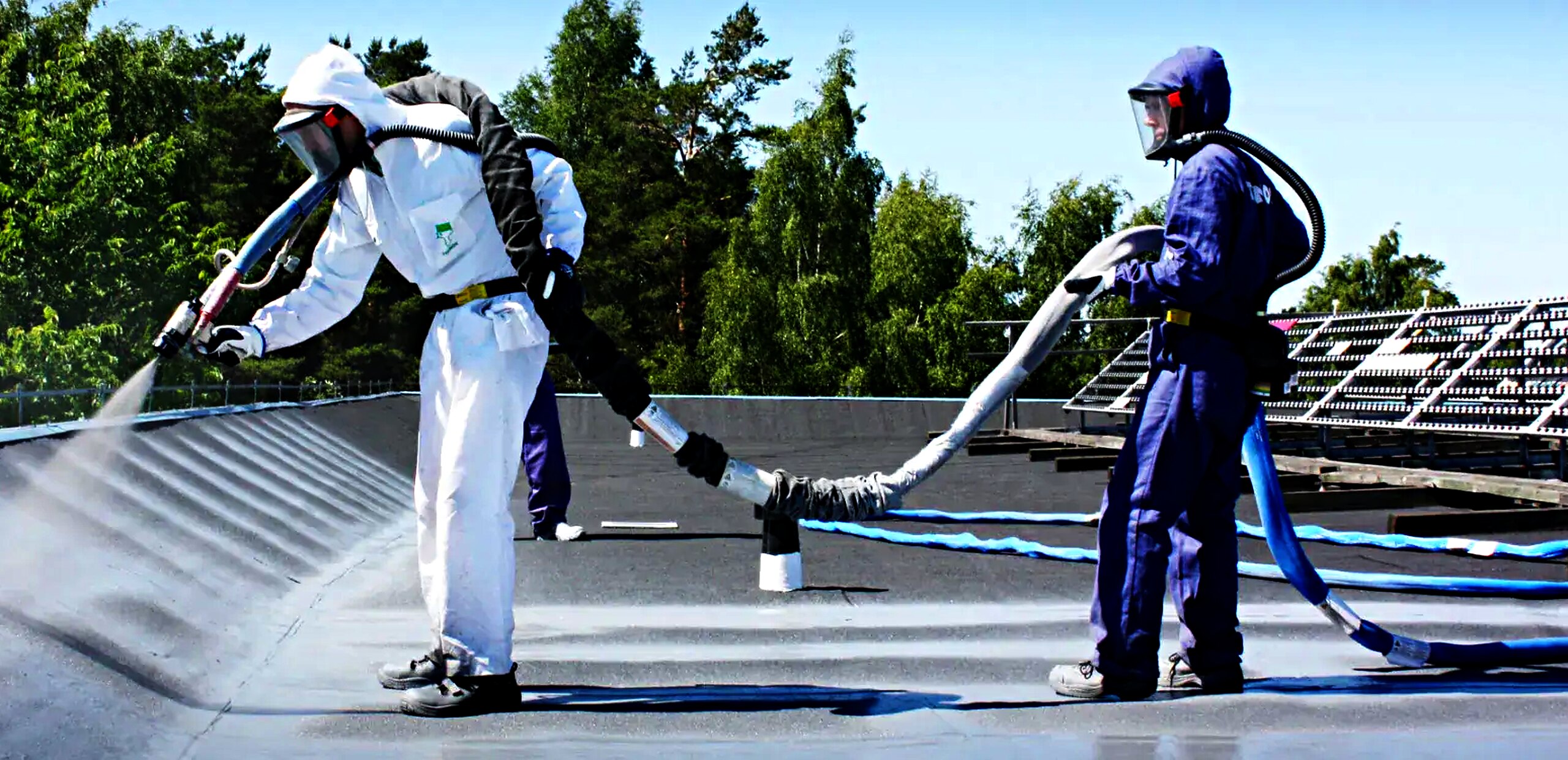
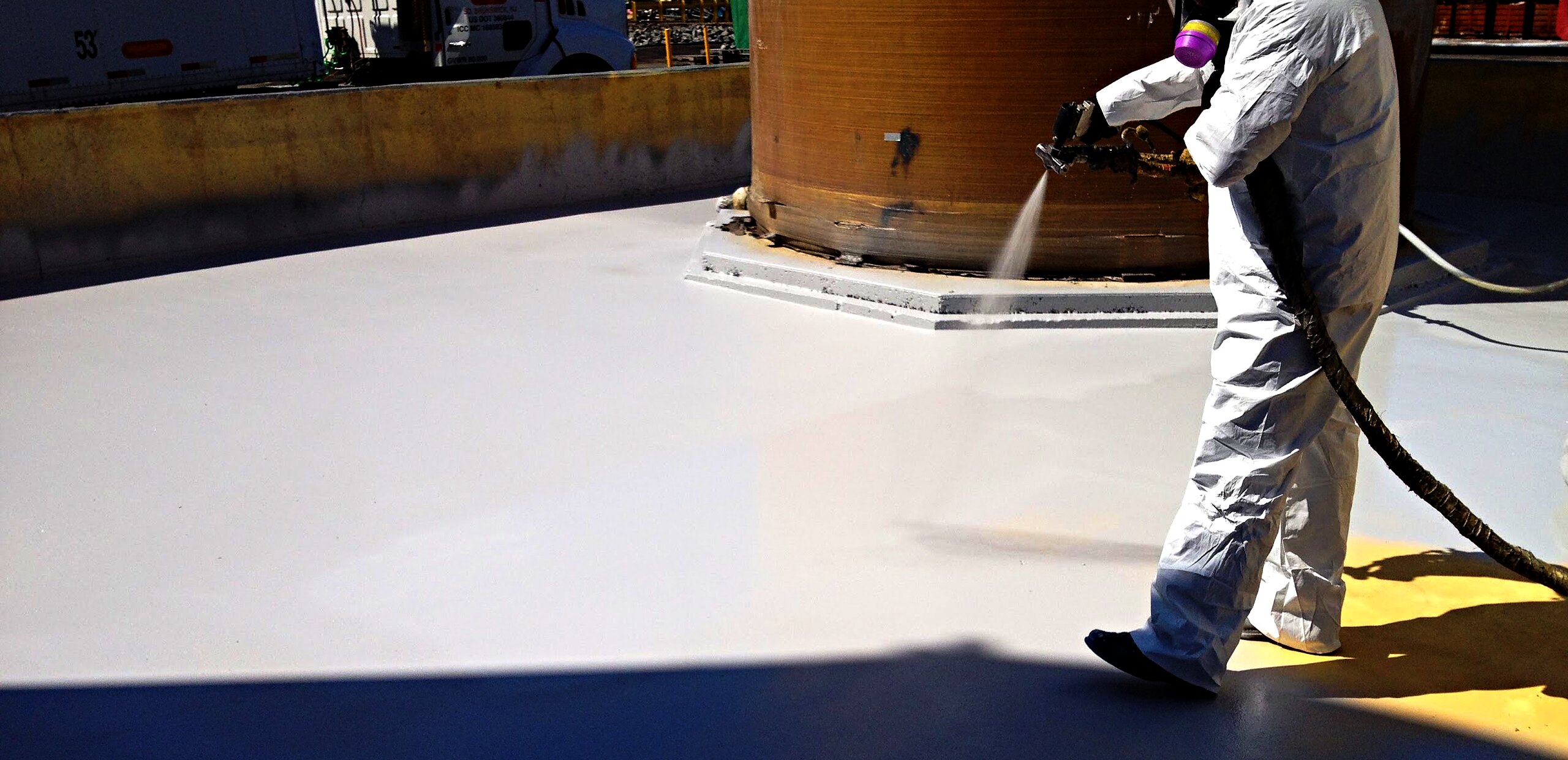
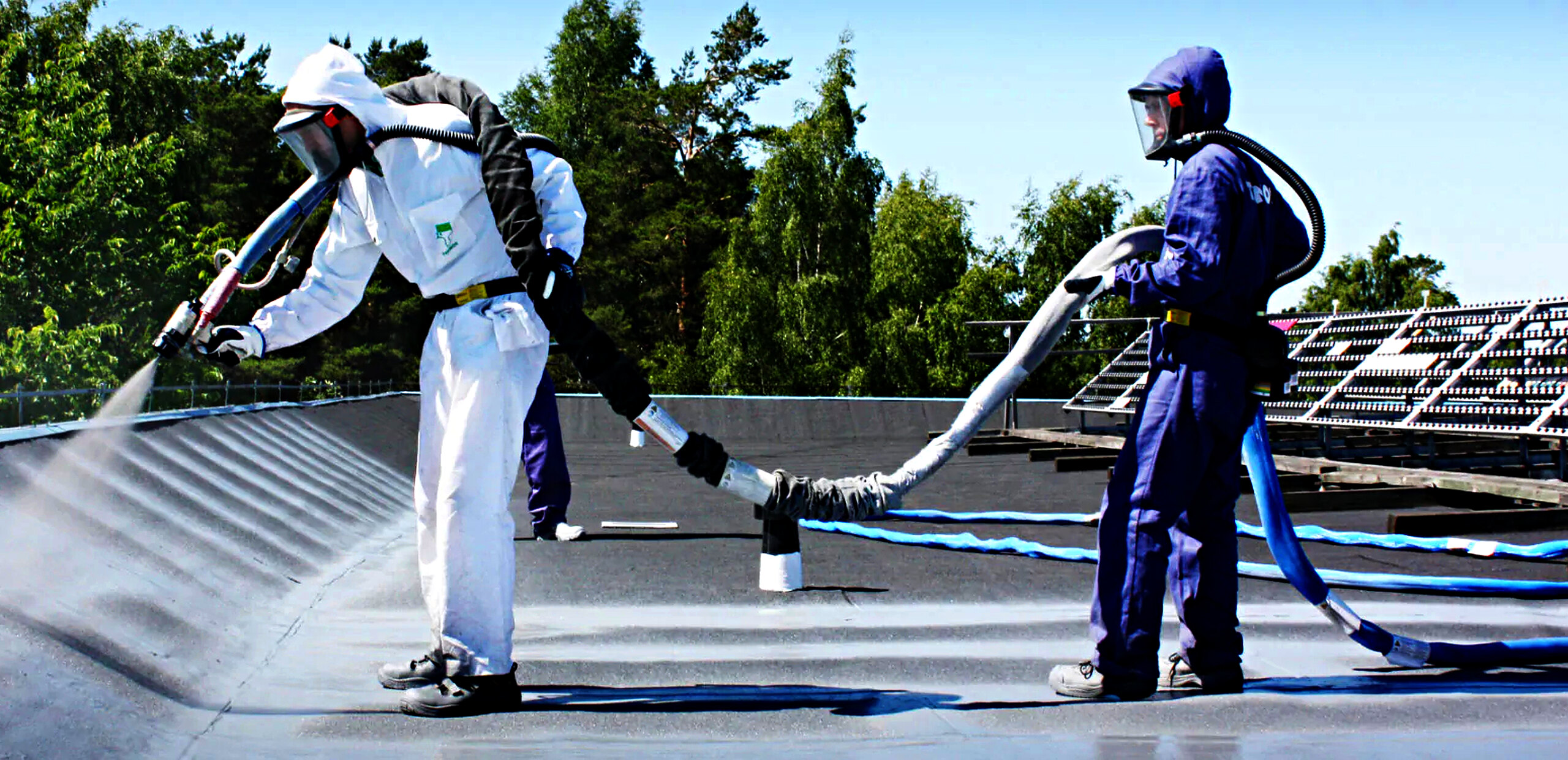
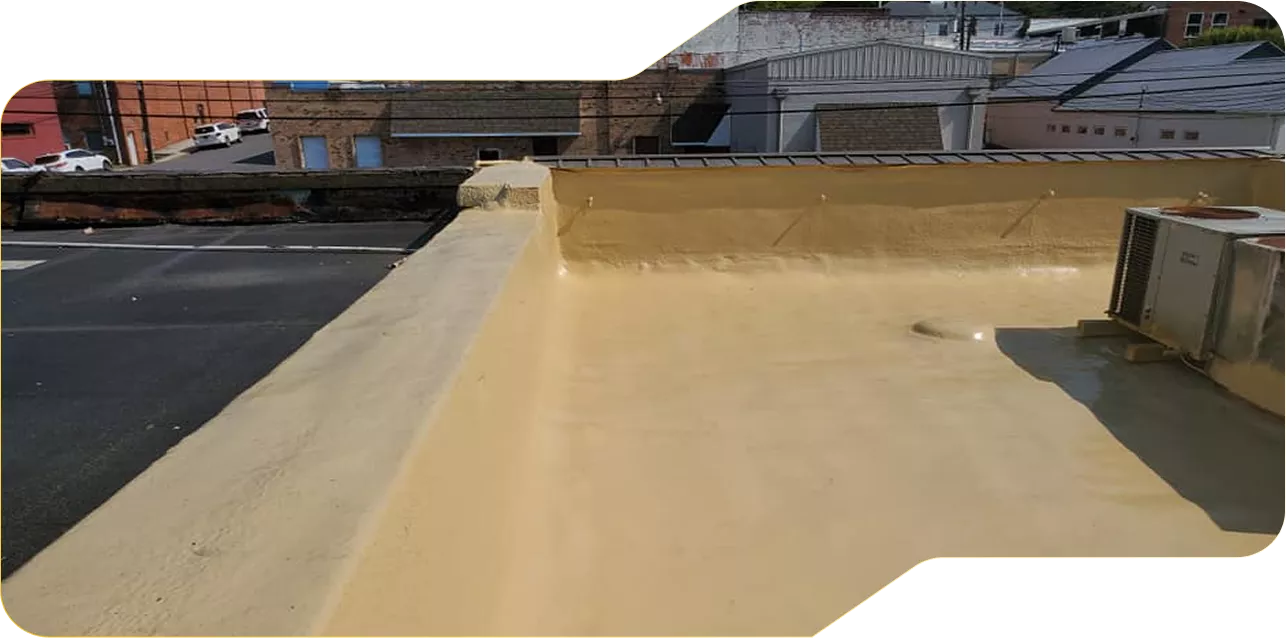
A spray foam roof is two layers. First, closed-cell polyurethane foam sprayed as a liquid that rises into a seamless, fully adhered insulation layer. Then an elastomeric coating that keeps UV off the foam and takes the weather. The foam sets the R-value and the drainage; the coating decides how long you go between recoats. Our spray foam roofing page covers the system's benefits; this section covers what drives the price.
The foam
Roofing foam is denser than wall insulation. One roofing foam's data sheet lists 2.7–3.4 lb per cubic foot, an aged R-6.5 at 1 in, 53.7 psi compressive strength and 98.2% closed cells. A coating maker's guide puts walkable roofing foam at 2.7–3.0 lb and calls anything under 2.5 too soft to walk on. Code wants foam that meets ASTM C1029 Type III or IV, or ASTM D7425 (IBC 1507.14.2).
Thickness is your choice, within limits. One coating maker's guide treats 1 in as the minimum, and one foam's data sheet calls for passes of ¾ to 1½ in. Every added inch adds R-6.5 and one board foot per square foot. Foam also self-flashes around curbs and pipes and can be sprayed thicker toward high points to move water to drains, which is often the real reason to choose it.
| Foam thickness | R-value (aged) | Board feet per 1,000 sq ft | Foam weight at 2.7 pcf | At 3.0 pcf |
|---|---|---|---|---|
| 1 in | R-6.5 | 1,000 | 0.23 lb/sq ft | 0.25 lb/sq ft |
| 1.5 in | R-9.8 | 1,500 | 0.34 lb/sq ft | 0.38 lb/sq ft |
| 2 in | R-13 | 2,000 | 0.45 lb/sq ft | 0.50 lb/sq ft |
| 3 in | R-19.5 | 3,000 | 0.68 lb/sq ft | 0.75 lb/sq ft |
| 4 in | R-26 | 4,000 | 0.90 lb/sq ft | 1.00 lb/sq ft |
The coating
The building code lists three protective coatings for foam roofs: acrylic (ASTM D6083), silicone (ASTM D6694) and moisture-cured polyurethane (ASTM D6947), in IBC Table 1507.14.3. Polyurea topcoats are used too, under the foam-and-coating system's own approvals. The coating goes on in more than one pass, and its dry thickness in mils is what a coating warranty is written against. Twenty dry mils is the common floor for a 10-year term.
The 2-to-72-hour rule, and the weather
Code requires the coating within 2 to 72 hours of spraying the foam (IBC 1507.14.3). Bare foam weathers fast in sunlight, so a crew that foams on Friday and coats "next week" is a red flag. Weather sets the pace: one roofing foam can be sprayed down to 45°F on dry substrates and not within 5°F of the dew point, and one coating maker's guide says 50°F. Wind carries overspray, so expect windscreens, masking and some days lost to wind. As a scale reference, that guide estimates about two weeks for a 20,000 sq ft roof, weather permitting.
Spray foam over an existing roof: recover or tear off?
Most foam roofs go right over the existing roof, and that's where the savings come from: no tear-off, no landfill fees, no exposed deck. Code allows a recover when the new covering follows the manufacturer's instructions, but not over a roof that's water-soaked or deteriorated, not over slate or tile, and not where two or more roof coverings are already in place (IBC 1511.3.1.1).
When code says tear off
- Two or more roof coverings already. A third layer isn't allowed. Budget $1–$3 per square foot to strip to the deck, then more foam to replace the insulation you removed.
- Water-soaked or deteriorated roof. If the old roof isn't a sound base, it comes off.
- Slate, clay, cement or asbestos-cement tile. Not a foam-roof situation.
One helpful exception: putting a new protective coating on an existing foam roof is allowed without tear-off (IBC 1511.3.1, item 4). That's what makes foam roofs renewable. The same rule exists for houses in the IRC (R908.3.1).
Wet insulation: the moisture survey pays for itself
Old built-up and single-ply roofs can hide wet insulation you can't see from the surface. Foam sprayed over it traps the water. A good contractor surveys the roof first, confirms with core cuts, and prices removal and refill of the wet areas as a separate line. The calculator does the same. If a survey finds a large share of the roof wet, get a tear-off price alongside the recover price; we use 25% as a planning threshold, but it's our rule of thumb, not a code number.
Ponding water and taper
New foam roofs need a design slope of at least ¼ in per foot (IBC 1507.14.1). A re-roof doesn't have to meet that if the roof already drains (IBC 1511.1, exception 1). If water stands on your roof now, foam is one of the cheaper ways to fix it, because the crew can build taper toward drains as it sprays. Taper isn't free: at ¼ in per foot over a 20 ft run, the foam is 5 in thicker at the high point and 2.5 in thicker on average. Often the fix is crickets or saddles at the low spots rather than taper across the whole roof. Our flat roof waterproofing page covers the leak side of low-slope roofs.
What makes a spray foam roof cost more or less
Foam thickness and taper
Each inch adds $1.00–$1.50 per sq ft in foam. Taper to drains can double the average thickness on a ponding roof.
The existing roof
Tear-off adds $1–$3 per sq ft. Wet areas add removal plus refill. Metal needs a pricier primer than most other roofs.
Topcoat and mils
Acrylic is the cheapest, silicone the ponding specialist, urethane and polyurea the tough ones. More mils mean a longer warranty and a bigger coating bill.
Warranty type
A material warranty covers the coating. A no-dollar-limit (NDL) system warranty covers the roof and costs more: one coating maker charges $0.05–$0.20 per sq ft for 5 to 20 years.
Penetrations and access
Curbs, pipes, parapets, skylights and a crane for material all slow crews down. The calculator's complexity setting adds 15–30% to labor.
Roof size, season and site
Setup costs the same for a small roof as a big one. Cold, wind, and parked cars or neighbors near the building add masking, screening and weather days.
Which topcoat for a foam roof: acrylic, silicone, urethane or polyurea?
Match the coating to the roof, not the brochure. Silicone is usually the best value on flat roofs that hold water. Acrylic is the cheapest choice for roofs that drain well in mild climates. Urethane and polyurea cost more and earn it where there's foot traffic, hail or mechanical abuse. Whatever you pick now decides what can go on at the first recoat.
| Topcoat | Code standard | Topcoat price | Volume solids (example) | Ponding water | Foot traffic | Recoat with |
|---|---|---|---|---|---|---|
| Acrylic | ASTM D6083 | $0.15–$0.75/sq ft (Angi) | 55% (one high-build acrylic) | Poor: softens | Fair | Acrylic, silicone, others with primer |
| Silicone | ASTM D6694 | $1.40–$2.50/sq ft (Angi) | 95% (one solvent-free silicone) | Best | Fair; slick when wet | Silicone only |
| Urethane (aromatic base, aliphatic top) | ASTM D6947 (moisture-cured) | ≈$1.90–$5.00/sq ft (derived) | 70–77% | Good | Good | Urethane, silicone, others with primer |
| Polyurea (aliphatic for exposure) | Not in the code table; system approvals | ≈$1.90–$5.00/sq ft (derived) | 100% (ArmorFlex UV) | Mixed data; fix slope | Best | Polyurea, silicone, others with primer |
Silicone: best on ponding roofs, with a catch
Silicone shrugs off standing water and is high-solids, so fewer gallons build the same mils. The catch is at recoat time: only silicone bonds reliably to cured silicone. Our roof coating guide puts it bluntly: "once a silicone roof, always a silicone roof." We don't make silicone, and on a flat foam roof with drainage problems we'd still often pick it. Our silicone roof coating guide has the pros, cons and mils math.
Acrylic: cheapest up front
Water-based, reflective and forgiving, but it softens under ponding water and needs more gallons for the same dry mils because it's roughly half water. Good for sloped or well-drained foam roofs in dry climates.
Urethane and polyurea: for roofs people walk on
Where HVAC techs cross the roof weekly, where hail is common, or where the roof sees chemicals or grease exhaust, tougher coatings earn their premium. For an exposed polyurea coat, use an aliphatic grade such as ArmorFlex UV, a 100% solids, color-stable aliphatic polyurea. Aromatic urethanes and polyureas chalk and yellow in sunlight and need an aliphatic topcoat. Honest note: polyurea sprays on fast and thick but needs a plural-component rig, and it isn't the cheapest answer to a ponding problem. Fix the slope or pick silicone.
Foam roof recoat cost and schedule
Plan on recoating a foam roof every 10 to 15 years. Published recoat prices run about $1.00 to $3.00 per square foot, and our roof coating guide uses $1.50–$3.00. The recoat is the maintenance that keeps foam from weathering; skip it and you'll eventually be paying for new foam instead of new coating.
Mils and warranty terms
| Coating warranty | Dry mils (typical) | What sources say |
|---|---|---|
| 10 years | ≈20 mils | "10-year warranty with 20 [mils]" (Applied Roofing, 2024); 20 mils = 10 years (distributor guide, 2026); 18 mils on one silicone metal-roof spec |
| 15 years | ≈26 mils | 26 dry mils on one silicone metal-roof spec |
| 20 years | ≈30–34 mils | 30 mils = 20 years (distributor guide); 34 dry mils on one silicone metal-roof spec |
| Maintenance recoat | 20–40 mils | Our roof coating guide; one coating maker recommends at least 20 mils of silicone on foam, up to 40 |
Scope, gallons and cost for your next recoat
Checks coating compatibility, prices cleaning and foam repair, and sets the mils for the warranty term you want.
| Line | Low–high | Per sq ft (typical) |
|---|---|---|
| Silicone recoat, 20 mils | $15,000–$25,000 | $2.00 |
| Cleaning / pressure wash | $1,500–$6,000 | $0.38 |
| Foam repair (2% of roof) | $500–$1,050 | $0.08 |
| Total | $17,000–$32,050 | $2.45 |
Compatible
- Silicone over silicone works after cleaning, with abrasion or a tie-coat if the coating maker calls for it.
Clean and recoat
- Exposed, weathered or damaged foam (200 sq ft): remove the degraded surface to sound foam, patch, prime.
- Pressure wash and let it dry. Repair budget assumes 1.5 in deep patches.
- Coat to 20 dry mils: 21.1 wet mils at 95% volume solids = 1.31 gal per 100 sq ft, plus 10% for foam texture and edges.
Next recoat around year 22
- Inspect twice a year and after hail or high winds; reseal small punctures right away.
- Budget the next recoat about 10 years out, at today’s $1.50–$2.50/sq ft.
- Ask for core samples to measure the coating left before you pick a warranty term.
How we calculated this: wet mils = dry mils ÷ volume solids; gallons per 100 sq ft = wet mils ÷ 16.04; plus your texture allowance (one coating maker adds 10%). Recoat prices: acrylic $0.65–$1.75, silicone $1.50–$2.50 and urethane $2–$5 per sq ft (Angi roof coating cost, Aug 2026); polyurea $1.50–$3.00 (our roof coating guide's foam-roof recoat range). Cleaning $0.15–$0.60 (EcoWatch, 2022). Foam repair uses the calculator's removal and foam prices. Mils per term are planning numbers from the table above.
What a recoat involves
- Inspect and core-sample to see how much coating is left and whether any foam is wet.
- Cut out wet or damaged foam and refill it with new foam.
- Pressure wash and let the roof dry.
- Remove weathered foam down to sound foam where the coating has worn through, then prime.
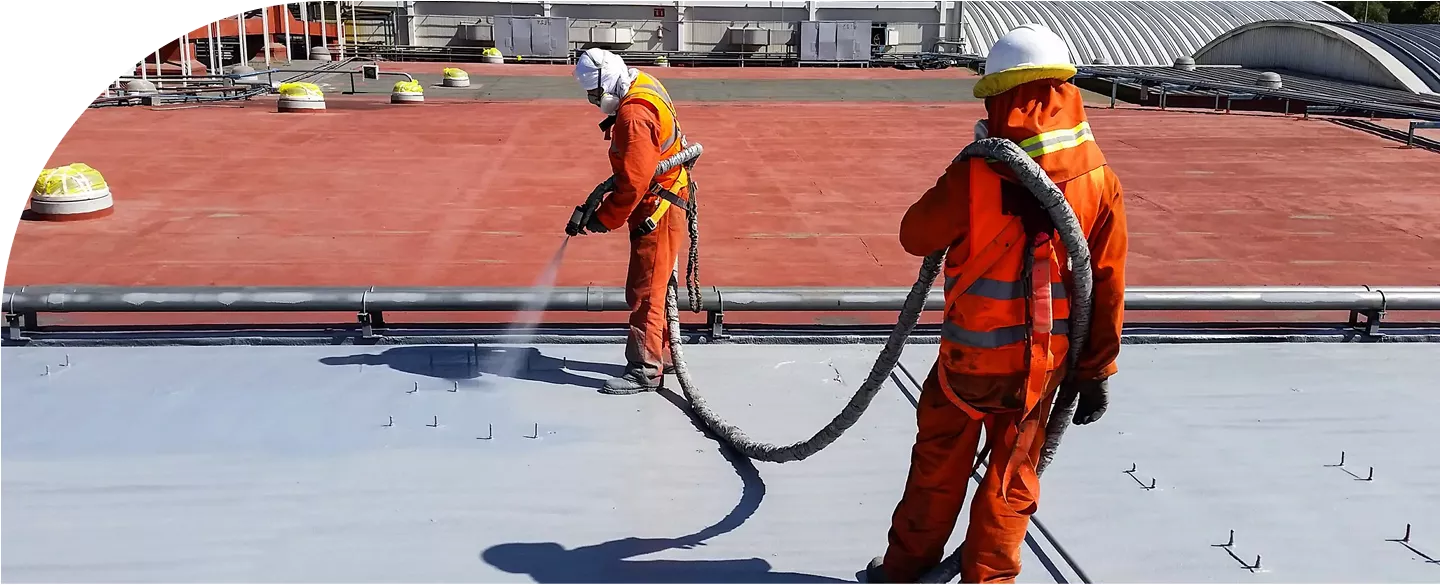
- Apply the coating in passes to the specified dry mils, with extra at seams, penetrations and edges.
No tear-off is needed; code allows a new protective coating over an existing foam roof (IBC 1511.3.1). And if you're on your second or third recoat, the foam under it has been working the whole time.
Inspection schedule
Walk the roof twice a year and after hail or high winds. Look for punctures, blisters, bare or weathered foam, and ponding that wasn't there before, and seal small holes right away. Keep drains clear. Published repair costs run about $200–$500 for minor fixes, far less than cutting out and replacing wet foam later.
Spray foam roof vs TPO, EPDM and other replacements: life-cycle cost
Up front, a foam recover usually costs the same or a little less than a single-ply replacement: HomeGuide lists $3.50–$7.00 per sq ft for foam against $4–$10 for TPO or EPDM, plus $1–$2 to tear off the old roof. The difference grows over time. A membrane is torn off and replaced at the end of its life. A foam roof is recoated, and the foam stays. In our model that usually favors foam over 20 years or more, as long as it's maintained and the building is yours long enough to see the recoats pay off.
| Roof system | Installed $/sq ft | Life (years) | At the end of its life |
|---|---|---|---|
| Spray foam + coating | $3.50–$7.00 | 40–50 (HomeGuide); 20–30 (Angi) | Recoat every 10–15 years; foam stays |
| TPO | $4–$10 | 10–25 | Tear-off ($1–$2) and replace |
| EPDM | $4–$10 | 15–25 | Tear-off and replace |
| PVC | $5–$12 | 20–30 | Tear-off and replace |
| Built-up (BUR) | $3.50–$7.50 | 20–30 | Tear-off and replace |
| Modified bitumen | $4.00–$7.50 | 10–20 | Tear-off and replace |
Foam roof vs membrane replacement, over the years you'll own it
Membrane prices and lives are HomeGuide's (Nov 2025); pick the low end, midpoint or high end. Enter your own foam quote if you have one.
- Year 0: foam + topcoat over the existing roof, $70,000
- Year 12: recoat, $25,000
- Year 24: recoat, $25,000
TPO at $7.00/sq ft + $1.50 tear-off, replaced every 18 years: 2 installs in 30 years. Totals are in today’s dollars, not discounted. Each system gets credit for the life left at year 30 (straight-line). Heating savings from the foam’s added R-9.8 over R-10 in Springfield, MO (4,277 HDD): $671/yr (50.7 MMBtu), counted in the SPF total. Cooling savings aren’t modeled. Membrane replacements often add insulation too; if yours does, compare that quote’s R-value.
How we calculated this: each system's costs are added year by year (and discounted if you enter a rate). Membranes: install plus tear-off at year 0 and again at the end of each life (HomeGuide midpoint life, rounded). Foam: install at year 0, a recoat at your interval, and a full re-foam over the old foam at the age you pick. "Credit remaining life" subtracts the unused share of the last install or recoat, straight-line. Heating savings = area x (1/R before − 1/R after) x 24 x heating degree days (NOAA 1991–2020 normals), at EIA's 2025 commercial prices ($10.97 per thousand cubic feet of gas, about $1.06 a therm, and 13.41¢/kWh). Furnace efficiency and heat-pump COP are assumptions. Cooling isn't modeled.
When a membrane is the better buy
- You're selling soon. Set the horizon to 10 years. Foam's advantage lives in the recoat years.
- The roof has to come off anyway and nobody will maintain it. An unmaintained foam roof is a bad foam roof.
- No experienced foam contractor nearby. Foam roofing is less widely available than single-ply, and workmanship is everything.
- Heavy rooftop traffic with no plan for walkways. Foam is tough, but a dropped tool or a careless tech punctures it. Walk pads, or a tougher coating, fix that.
Weighing a coating over your existing membrane instead? That's cheaper still, but adds no insulation and needs a sound roof. See our pages on coating EPDM rubber roofs and TPO roof waterproofing.
Energy savings: what's real
Two things save energy on a foam roof: the insulation, and a reflective coating. The DOE says a reflective roof can stay more than 50°F cooler than a conventional one in the sun, and that foam-roof coatings are usually reflective already. It also warns that cool roofs can raise energy costs in cold climates if the winter heating penalty outweighs summer savings. You'll see claims of 20%, 40% or even 50% off energy bills from foam roofing. We couldn't trace any of them to a primary study, so we don't use them. The tool models only heating savings from added R-value, which is conservative in hot climates.
If you're replacing a roof, ask your building department whether the job triggers current energy-code insulation levels. It changes both quotes: a membrane replacement may need new insulation board underneath (HomeGuide lists polyiso at $0.50–$3.00 per sq ft), while foam adds R-6.5 per inch as part of the roof itself.
Is your spray foam roof quote fair?
Enter what's on the quote. The checker converts it to price per square foot and per board foot, compares it with our component estimate at the same foam thickness and coating, and lists what to ask before you sign.
Normalize a foam roof quote and find the gaps
Tick only what the quote actually states in writing.
In range Competitive: between the low and typical estimate for these specs. Estimate assumes a recover over a sound roof, 1.5 in of foam, silicone topcoat, non-metal primer and a permit. Published 2024–2026 ranges run about $2–$8/sq ft overall.
- A 15-year warranty at 20 mils is light. Ask for the manufacturer’s spec sheet that shows the mils required for that term; we use about 26 mils as a planning number.
- No moisture survey on a recover. Wet insulation left under foam keeps the roof wet, and code bars recovering a water-soaked roof (IBC 1511.3.1.1).
- Get it in writing that the coating goes on within 2 to 72 hours of the foam (IBC 1507.14.3).
- No walk pads at equipment and service paths. Foot traffic is where foam roofs get punctured.
Questions to ask a spray foam roofing contractor
- Which foam, at what density, and can I see the data sheet?
- How thick, minimum and average, and how will you verify it?
- Which coating, how many dry mils, and in how many passes?
- Will the coating go on within 72 hours of the foam?
- Did you survey for wet insulation, and how are wet areas priced?
- How will you handle drainage where water ponds today?
- What's the warranty, material or NDL, and who issues it?
- How will you control overspray on cars, windows and neighbors?
- What does the first recoat cost, and when?
- Can I see foam roofs you did 10 or more years ago?
Red flags in a foam roof quote
- No thickness or mils in writing. Thin foam and thin coating are how a low bid gets low.
- Acrylic over a silicone roof, or any non-silicone coating over silicone.
- No moisture survey on a recover.
- Price below every published range with nothing to explain it.
Is spray foam roofing worth it? Pros, cons and when it's the wrong roof
For a flat or low-slope commercial roof you plan to keep, usually yes: it's seamless, adds insulation, fixes drainage and renews with a recoat instead of a tear-off. It's the wrong roof when nobody will maintain it, when the building sells soon, or when you can't find a contractor with a long track record.
- Seamless and self-flashing around curbs and pipes
- Adds R-6.5 per inch as part of the roof
- Usually goes over the existing roof, no tear-off
- Taper fixes ponding as it's sprayed
- Renewed by recoating, which code allows without tear-off
- Light: about ¼ to ½ lb per sq ft of foam at 1–2 in
- Needs a recoat every 10–15 years, and skipped recoats get expensive
- Punctures from tools, foot traffic and hail need prompt patching
- Quality rides on crew skill and weather on the day
- Overspray risk near cars and neighbors
- Less widely available than single-ply contractors
- A silicone topcoat locks future recoats to silicone
On houses, foam roofing is a flat-roof product; you'll see it most on flat-roofed homes in the Southwest. On a pitched shingle roof, most owners want shingles, and spraying foam under the roof deck is an insulation job, not a roofing job. For that, see spray foam insulation cost. On metal buildings, foam on the outside of the roof is one option; foam on the inside is another, covered in our metal building insulation guide.
Can you DIY a spray foam roof?
Not a whole roof. Roofing foam is sprayed with a heated plural-component rig, and one coating maker puts a spray foam rig at upwards of $100,000. What you can DIY is a repair: high-density roof foam kits are sold for patching damaged foam, and the patch then needs a coat, because bare foam weathers in sunlight.
The numbers explain why. One high-density (3.1 pcf) roof foam kit sells for $869 for 340 board feet, about $2.56 per board foot, and a 60 board-foot kit is $279, about $4.65. Foaming 1,000 sq ft at 1.5 in takes 1,500 board feet: about five of the big kits, or roughly $4,300 of foam before coating, primer, safety gear or a single mistake. At the median band a pro installs the whole roof for $4,000–$7,000.
ArmorFoam Roof 200 and where we fit
ArmorFoam Roof 200 is our closed-cell roofing foam for low-slope, pitched and barrel roofs, in 2.5, 2.7 or 3.0 pcf, with a low-GWP HFO or an HFC-245fa blowing agent. It goes over primed metal, built-up roofs, structural concrete, plywood and OSB, DensDeck, polyiso, existing spray foam, and many fully adhered, primed membranes. It meets UL 790 fire classification, and coated Roof 200 systems carry 10-, 15- and 20-year warranties when an approved applicator installs them.
We also make polyurea coatings, including aliphatic, color-stable grades like ArmorFlex UV for exposed surfaces; our roof coating guide calls polyurea the default topcoat where a roof takes traffic. We don't make silicone, so if a silicone topcoat is right for your roof, your applicator will use one from a silicone maker. An applicator whose rig is set up for both foam and polyurea can foam the roof, coat it, and come back for the recoats.
ArmorFoam Roof 200
Closed-cell roofing foam. Builds slope, self-flashes and covers fasteners and joints.
Coated roof warranties
Available on Roof 200 systems installed by approved applicators.
Franchise fee
No franchise fee and no royalties. Foam, coatings, rigs and training from one manufacturer.
Every foam roof comes back. Recoats are repeat work.
A foam roof needs a recoat every 10 to 15 years, and the crew that sprayed it is the natural choice. We supply ArmorFoam Roof 200, polyurea coatings, matched rigs and on-site training. Not a franchise: no franchise fee, no royalties, and startup packages from $25,000.
Roofing market outlook: flat roof waterproofing opportunities →
Spray foam roofing cost FAQ
How much does spray foam roofing cost per square foot?
About $4 to $7 per square foot installed in 2026, the median of seven published ranges; the full spread runs roughly $2 to $8. Foam thickness, the topcoat, tear-off and wet insulation move the price most. Plan on a recoat every 10 to 15 years at about $1.50–$3.00 per square foot.
How much does it cost to spray foam a 10,000 sq ft roof?
About $40,000–$70,000 at the published median band, before tear-off, deck repairs or warranty fees. Our calculator's typical estimate for 1.5 inches of foam over a sound, single-layer roof is about $71,000 with a silicone topcoat and about $56,000 with acrylic. Run your own numbers.
How much does a spray foam roof cost on a house?
Angi puts the average at $11,500 (range $4,300–$21,500) and $5,000–$16,000 for a 2,000 sq ft roof; a Phoenix roofer quotes $8,000–$14,000 for the same size. Foam roofs on homes are almost always flat or low-slope roofs. Spraying foam under a pitched roof deck is an insulation job, priced in our spray foam insulation cost guide.
How much does it cost to recoat a foam roof?
Usually $1.50–$3.00 per square foot, plus cleaning and any foam repair. Published installed coating prices run $0.65–$1.75 for acrylic, $1.50–$2.50 for silicone and $2–$5 for urethane (Angi, 2026). A silicone roof has to be recoated with silicone.
How often does a spray foam roof need to be recoated?
Every 10 to 15 years for most coatings, usually matching the coating warranty. About 20 dry mils is the common floor for a 10-year term, and more mils buy a longer one. Inspect the roof twice a year and after hail or high winds.
How long does a spray foam roof last?
As long as it's kept coated. The Spray Polyurethane Foam Alliance says more than 20 years with regular care and 40 or more with inspection and recoating; HomeGuide lists 40–50 years and Angi 20–30. The foam lasts as long as the coating keeps sunlight and water off it.
Can spray foam roofing go over an existing roof?
Usually, and that's where much of the savings comes from. Code allows a recover over a sound roof, but not over a water-soaked or deteriorated roof, slate or tile, or a roof that already has two or more coverings (IBC 1511.3.1.1). A moisture survey decides how much wet insulation must come out first.
Is spray foam roofing cheaper than TPO?
Up front it's similar or a little lower: HomeGuide lists $3.50–$7.00 per square foot for foam against $4–$10 for TPO, plus $1–$2 to tear off the old roof. Over 20 to 30 years foam usually costs less because it's recoated instead of replaced. A membrane can come out ahead if you'll sell soon or nobody will maintain the roof.
What are the disadvantages of a spray foam roof?
It needs a recoat every 10 to 15 years, punctures need prompt patching, and quality depends heavily on the crew and the weather on the day. Overspray has to be controlled, and there are fewer foam roofing contractors than single-ply roofers. A silicone topcoat also locks future recoats to silicone.
Can you DIY a spray foam roof?
Not a whole roof. It takes a heated plural-component rig, which one coating maker puts at upwards of $100,000. High-density patch kits, such as a 340 board-foot kit for $869, handle small repairs, and the patch then needs a coat.
Does a spray foam roof save energy?
It adds about R-6.5 per inch of insulation, and the coating is usually reflective. The DOE says a reflective roof can stay more than 50°F cooler in the sun but can add a heating penalty in cold climates. We couldn't trace the 20–50% savings claims you'll see to a primary study; our life-cycle tool estimates heating savings for your city instead.
Can you spray foam over a metal roof?
Yes, metal is a common foam roof substrate. The foam encapsulates fasteners and laps in one layer, after rust is cleaned and primed; one guide prices metal primer at $0.50–$0.80 per square foot. See our metal roof waterproofing page.
How much do spray foam roof repairs and removal cost?
Published guides put minor foam roof repairs at about $200–$500. Removing a roof runs $1–$3 per square foot (Angi) or $1–$2 (HomeGuide). Wet or damaged foam can usually be cut out and replaced in sections instead of removing the whole roof.
Written from manufacturer data sheets, code text and dated cost surveys by a company that makes roofing foam and polyurea, but not silicone. Last updated September 26, 2026.
Methodology and sources
Installed price bands are the median of the low and high ends of seven published ranges dated 2024–2026; they're our synthesis, not a survey, and we'll re-pull them each January. Component prices are Angi's (May 2026) unless noted. Code references are the 2018 IBC and 2015 IRC as published in Seattle's adopted codes; section numbers shift in later editions, and your jurisdiction's adopted code governs. R-values use R-6.5 per inch, aged. Calculators are estimates for budgeting, not bids.
- Angi, spray foam roofing cost (May 2026): angi.com/articles/spray-foam-roofing-cost.htm
- Angi, pros and cons of spray foam roofing (Jul. 2026): angi.com/articles/spray-foam-roof-pros-and-cons.htm
- Angi, roof coating cost per square foot (Aug. 2026): angi.com/articles/how-much-does-roof-coating-cost-square-foot.htm
- HomeGuide, flat roof replacement cost (Nov. 2025): homeguide.com/costs/flat-roof-replacement-cost
- HomeGuide, roof coating cost (Apr. 2024): homeguide.com/costs/roof-coating-or-sealing-cost
- American WeatherStar, spray foam roofing guide (Jan. 2026): americanweatherstar.com/insights/spray-foam-roofing-the-complete-guide
- Reimagine Roofing, cost of foam roofing (Sep. 2025): reimagineroofing.com/blog/the-cost-of-foam-roofing-is-it-worth-the-inv
- Applied Roofing Services, how long spray foam roofing lasts (Feb. 2024): appliedroofingservices.com/how-long-spray-foam-roofing-last/
- EcoWatch, foam roof cost (2022): ecowatch.com/roofing/types/foam-roof
- Spray Polyurethane Foam Alliance, SPF roofing: sprayfoam.org/roofing
- GacoRoofFoam F2733RHFO product data sheet (Dec. 2024, PDF): gaco.com/wp-content/uploads/2024/04/PDS-GACOROOFFOAM%E2%84%A2-F2733-SP
- GacoFlex S42 sales sheet and data (PDF): gaco.com/wp-content/uploads/2020/05/GacoFlex-S42-Sales-Sheet.pdf
- GacoFlex S42 over metal roof, 10-year spec MR-S42-18-10 (PDF): gaco.com/wp-content/uploads/2021/03/MR-S42-18-10_-_GACOFLEX_S42_SERIES
- GacoFlex S42 over metal roof, 15-year spec MR-S42-26-15 (PDF): gaco.com/wp-content/uploads/2021/03/MR-S42-26-15_-_GACOFLEX_S42_SERIES
- GacoFlex S42 over metal roof, 20-year spec MR-S42-34-20 (PDF): gaco.com/wp-content/uploads/2021/03/MR-S42-34-20_-_GACOFLEX_S42_SERIES
- Gaco warranty pricing guide (Jun. 2025, PDF): gaco.com/wp-content/uploads/2019/04/Gaco_Warranty_Pricing_Guide.pdf
- American WeatherStar High-Build Acrylic 212 data sheet (PDF): americanweatherstar.com/doc-library/product-data-sheets/product-data-s
- American WeatherStar Aromatic Urethane 508 data sheet (PDF): americanweatherstar.com/doc-library/product-data-sheets/product-data-s
- American WeatherStar Aliphatic Urethane 510-CA data sheet (PDF): americanweatherstar.com/doc-library/product-data-sheets/product-data-s
- US Made Supply, elastomeric roof coating guide (May 2026): usmadesupply.com/resources/guides/what-is-an-elastomeric-roof-coating
- HandiFoam High Density roof foam kits (Energy Efficient Solutions): energyefficientsolutions.com/products/handi-foam-spf-roof-patch-spray-
- 2018 IBC Chapter 15 as adopted in the Seattle Building Code (PDF): seattle.gov/documents/Departments/SDCI/Codes/SeattleBuildingCode/2018S
- 2015 IRC Chapter 9 as adopted in the Seattle Residential Code (PDF): seattle.gov/documents/Departments/SDCI/Codes/SeattleResidentialCode/20
- U.S. DOE Energy Saver, cool roofs: energy.gov/energysaver/cool-roofs
- U.S. EIA, natural gas prices (2025 annual): eia.gov/dnav/ng/ng_pri_sum_dcu_nus_a.htm
- U.S. EIA, Electric Power Monthly Table 5.3 (2025 annual): eia.gov/electricity/monthly/epm_table_grapher.php?t=epmt_5_3
- NOAA NCEI 1991–2020 climate normals data service: ncei.noaa.gov/access/services/data/v1
- OSHA, Isocyanates: osha.gov/isocyanates
- ArmorThane, roof coating guide: armorthane.com/knowledge-center/roof-coating-guide/
- ArmorThane, ArmorFoam Roof 200: armorthane.com/products/armorfoam-products/roof-200/
- ArmorThane, ArmorFlex UV: armorthane.com/products/armorline-products/high-pressure/armorflex-uv/

Pricing a flat or low-slope roof? Get a quote from a certified applicator.
Tell us the roof size, what's on it now and where the building is. We'll connect you with an ArmorThane-certified applicator who will put foam thickness, coating mils and warranty in writing.
- Warehouses, plants, retail and multifamily roofs
- Recovers over metal, built-up, mod bit and single-ply
- Foam thickness, coating mils and warranty in writing
- Contractors: ask about Roof 200 and spray rigs
More to read on roofing
Short reads from ArmorThane on Issuu. Tap one to open it right here.