Mobile Home Roof Coating & Repair Guide
Acrylic, silicone, aluminum or sprayed polyurea? We make coatings, so we show the label math others skip: gallons, dry mils, 2026 costs, what survives standing water, and four calculators.
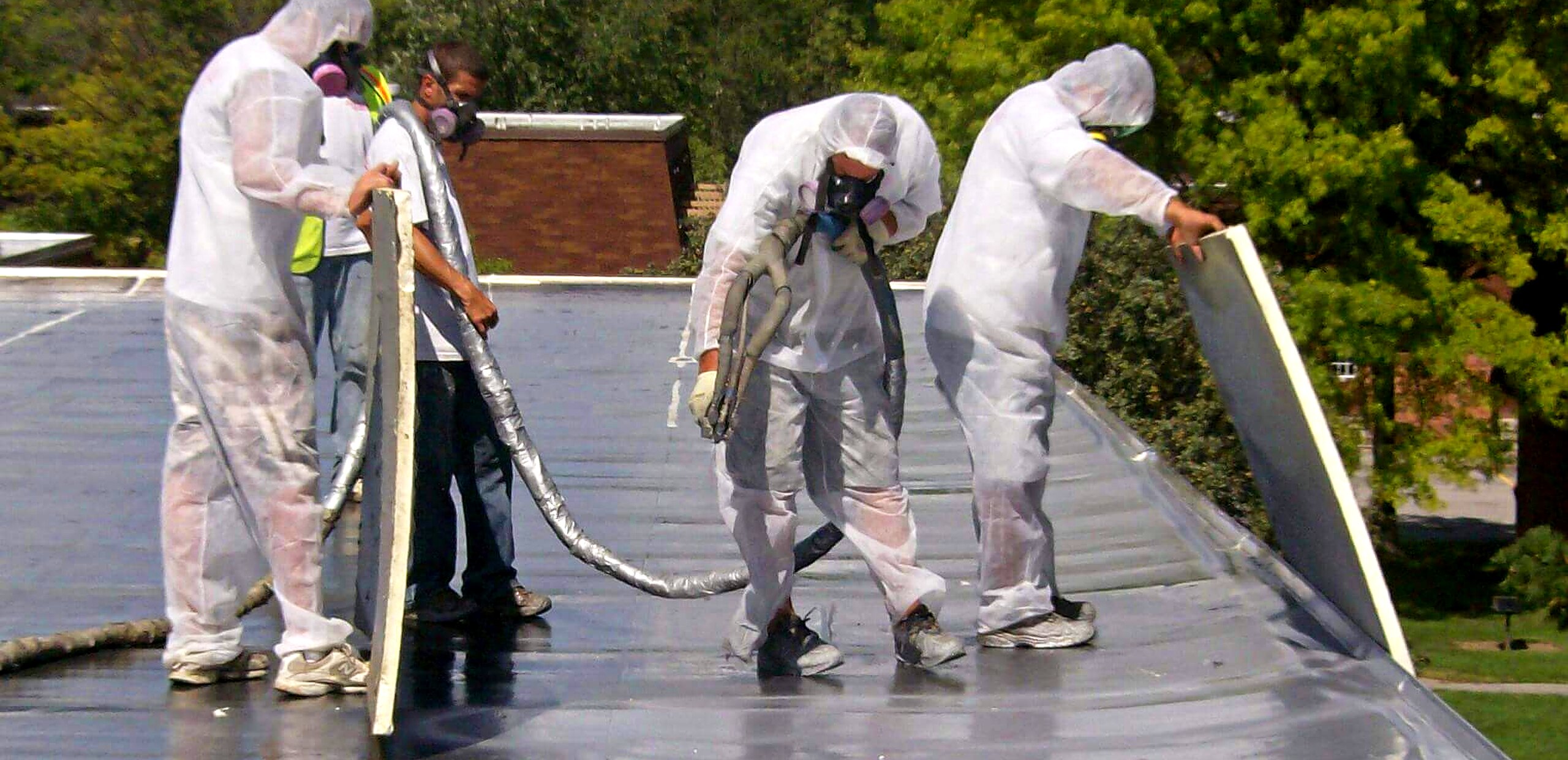
Spray roofs for a living.
ArmorThane is the one-stop shop for applicators. We make the chemistry, build the equipment, train you hands-on and back you with technical support, with no franchise fees and no royalties. Applicators have come first here since 1989.
- $0franchise fees or royalties
- 35+years in business
- 50+countries with applicators
- 24/7technical support
A mobile home roof has a hard life. It's big, low and nearly flat, it bakes all summer, and the metal moves every time the sun comes up or goes down. The right coating keeps it tight for years. The wrong one traps water, peels in sheets, or makes every future repair a compatibility problem.
Most mobile home roofs can be coated if they're metal, membrane or spray foam, structurally sound, and drain within 48 hours after rain. Shingled roofs can't. Use a 100% silicone where water stands, a two-coat acrylic elastomeric where it drains, and a sprayed polyurea membrane from a certified applicator when you're done recoating. Fix leaks, seams and rust first. A coating isn't a repair.
We make coatings, so this guide runs on data sheets, not star ratings: coverage, film thickness, rain times and warranty fine print, with four calculators to do the math. We don't make the retail products compared here. Our sprayed polyurea systems get their own section at the end, trade-offs included.
- 1What kind of roof your home has
- 2Can it be coated? A 60-second check
- 3Mobile home roof repair: find the leak first
- 4Coating types compared
- 5Roof sealant vs roof coating
- 6Coating selector (tool)
- 7Gallons and cost calculator (tool)
- 8Wet vs dry mils checker (tool)
- 9How to coat it, step by step
- 10Will a white roof cool the home?
- 11What it costs in 2026
- 12Coat, roof-over or replace: 20-year costs (tool)
- 13How long it lasts and what warranties cover
- 14Safety before you go up
- 15The permanent option: sprayed polyurea
- 16Mobile home roof coating FAQ
What kind of roof does your mobile home have?
Mobile home roofs come in four main types: low-slope metal (flat or bowstring), pitched asphalt shingle, a membrane or metal roof-over, and spray foam. Metal, membrane and foam can usually be coated. Shingles can't. The home's age matters too, because June 15, 1976 changed the rules.
Mobile home vs manufactured home: the 1976 line
To HUD, a manufactured home, "formerly known as a mobile home," is built to the federal HUD Code (24 CFR Part 3280). Every one built after June 15, 1976 is certified, with a label on each section (the "HUD tag") and a data plate inside whose maps show the roof-load and wind zones it was built for.
| HUD zone | Design value | Where / what it means |
|---|---|---|
| Roof load, North | 40 psf live load | Listed Maine counties and all of Alaska |
| Roof load, Middle | 30 psf | Listed northern states and counties |
| Roof load, South | 20 psf | Everywhere else |
| Wind Zone II / III | 100 / 110 mph | Roof tie-downs at 24 in / 16 in or less |
Flat and bowstring metal roofs
The classic roof is a galvanized steel or aluminum sheet fastened at the perimeter J-rail with butyl tape and sheet-metal screws, and left "loose everywhere else so it can expand and contract" (Foremost). That's why Foremost says to check the existing rumble buttons, the fasteners in rows across some roofs, and not add more. Older flat roofs "required a lot of maintenance and recoating because water could not easily drain off," as one roofer's history puts it.
Pitched shingle roofs
Field roof coatings are off the table. Henry calls its 887 silicone "not recommended over shingles of any kind," Kool Seal's elastomerics are "not for use on roof shingles," and FarmPaint excludes shingled roofs. See roof waterproofing methods compared for the alternatives.
Roof-overs: TPO, EPDM, metal and spray foam
A roof-over puts a new roof on the old one: a TPO or EPDM membrane, metal over 2x4 framing, a pitched conversion, or sprayed polyurethane foam (SPF). Membranes can usually be coated after cleaning and an adhesion test. Foam must be: the IRC calls for a protective coating 2 to 72 hours after the foam goes on, and allows recoating a foam roof without tear-off. Our spray foam roofing page covers foam roof-overs with ArmorFoam Roof 200, a closed-cell roofing foam at 2.5–3.0 pcf.
Can your mobile home roof be coated?
Yes, if it's sound, dry underneath, not shingled, and sheds water within 48 hours. A coating waterproofs a surface. It doesn't restore one. Soft spots, rust-through, wet insulation or two old roofs stacked up mean you're into repair or replacement. If the insulation needs work too, see our mobile home insulation guide.

| What you find | What it means | Rule source |
|---|---|---|
| Asphalt shingles | No field roof coating | Henry, Kool Seal, FarmPaint labels |
| Soft or spongy spots | Deck or framing damage: repair first | IRC R908.3.1.1 |
| Wet insulation | Dry out or replace; a coating seals water in | IRC R908.3.1.1 |
| Two or more roof coverings | No more re-covers: tear off | IRC R908.3.1.1 |
| Rust-through, holes, open seams | Repair first | Nationwide |
| Water standing 48+ hours | Fix the sag or drainage first | Kool Seal; HUD 3280.305(h)(2) |
| Thick old fibered coating | Don't sand or grind; test it | ASTM D2823 (withdrawn); EPA |
| Sound metal, membrane or foam that drains | Good candidate | Use the selector |
Ponding is a structural problem
HUD requires roofing membranes "of sufficient rigidity to prevent deflection which would permit ponding of water" (24 CFR 3280.305(h)(2)). So water that sits for days usually means something sagged: a truss, the joint between sections, or the sheet itself. Coating the puddle doesn't fix it, and Kool Seal requires drains "or other corrective measures" for ponding that lasts beyond 48 hours.
Will a coating overload the roof?
Not a roll-on one. Two coats of acrylic add roughly 0.14 lb per sq ft dry (our math from Nationwide's 11.9 lb/gal and 60% weight solids), against HUD roof live loads of 20–40 psf. For thicker sprayed systems, ask for the density on the data sheet and the weight at your specified thickness.
Mobile home roof repair: find the leak first
Most mobile home roof leaks start at the edges and openings, not the middle of the sheet. Foremost's checklist: "The J-rail. The flashing around vents, pipes and skylights. The seams and roof sealant. All existing rumble buttons (don't add anymore!). Any rusted or worn-looking areas." Fix those, then decide whether the roof needs a coating at all.
Walk it safely. Keep your weight on the trusses (typically 16 or 24 inches on center) or the edges, on a board "at least ½ inch thick, two feet wide and four feet long" (Foremost). Henry says to check the owner's manual first. Stay off wet metal.
| What you see | Likely source | Fix |
|---|---|---|
| Stain along an outside wall | J-rail: dried butyl tape, loose screws | Remove failed sealant, reset or replace screws, reseal with a sealant compatible with the coating to follow. |
| Stain around a vent, stack or skylight | Flashing or sealant at the penetration | Clean and reseal. HUD: penetrations must be "properly flashed and sealed." |
| Drip line along a seam | Open or failed seam | Reinforce with polyester fabric or seam tape set in sealant (Kool Seal, Nationwide). |
| Spot leak mid-roof | Rumble button or screw backed out | Tighten or replace and seal the head. Don't add new ones. |
| Rust spots or pinholes | Corrosion | Wire-brush, rust-prime, patch with patching cement lapped 1 inch past the damage (Foremost). |
| Water standing 48+ hours | Sag in the sheet, trusses or marriage line | Structural repair before any coating. |
| Soft underfoot | Wet or rotted decking or insulation | Repair or replace. Don't coat. |
| Ceiling stain, roof looks fine | Water entered upslope and traveled | Trace it back; the method in our RV roof repair guide works on any low-slope roof. |
If the repair list keeps growing, that's information too. A roof with dozens of rusted fasteners and failing seams is a restoration job; see repairing leaking metal roofs.
Mobile home roof coating types compared
Four families cover the shelf: acrylic (elastomeric), silicone, aluminum/asphalt and urethane-enhanced. Professionals add spray polyurea. On a mobile home they differ most in whether they survive standing water, how cold it can be when they go on, and what can go over them later.
| Type | Standing water | Min. temp | Rain-safe | Coverage per coat | Warranties | Recoat with | Pro $/sq ft | DIY |
|---|---|---|---|---|---|---|---|---|
| Acrylic elastomeric | No: softens | 45–50°F | 2–6 hr | 50–150 sq ft/gal | 5–12 yr | Acrylic or silicone | $0.65–$1.75 | Yes |
| 100% silicone | Yes | 35°F | 15–60 min | 50–100 sq ft/gal | Lifetime limited | Silicone only | $1.50–$2.50 | Yes |
| Fibered aluminum / asphalt | No | 50°F | 4–24 hr | 50–100 sq ft/gal | 3–12 yr | Acrylic (base coat) or silicone | $1.25–$2.50 | Yes, slow |
| Urethane-enhanced white | Yes | – | – | 100 sq ft/gal | 25 yr limited | Check maker | $2–$5 | Yes |
| Spray polyurea | Yes | -20°F (SureGrip) | Tack-free 15–90 sec | 60–125 mils, 1–2 passes | By applicator | Test first | $3.00–$6.00 | No |
Acrylic (elastomeric) coatings
Water-based, affordable, easy to roll, bright white when new. Nationwide's Mobile Home Roof Coating, Henry's 287/587/687 and Kool Seal's elastomerics are all acrylics. The category spec, ASTM D6083, called for at least 50% volume solids, 100% elongation and 200 psi tensile when new, per IIBEC's 2001 summary; the standard has since been revised (D6083/D6083M-24). The weak spot is water: acrylics "will soften and eventually fail under prolonged standing water" (US Made Supply). More in our elastomeric coating guide.
Silicone coatings
Silicone's selling point is ponding. Henry markets 887 Tropi-Cool with "permanent ponding water resistance" for "RV, trailer, and mobile home roofs": one coat at 1.5 gal per 100 sq ft, 35°F to 120°F, rain-safe in 15 minutes. The catch comes later. Acrylic "does not reliably bond to cured silicone, and the field result is peeling in sheets," so once a roof is silicone, plan on silicone. One park owner on a Mobile Home University forum reported Henry silicone still performing after five years across 100 homes (an anecdote, not a test).
Aluminum and asphalt coatings
The old silver standby, and Foremost still recommends an aluminum-base coating for patch work. Cheap, but slow and short-lived: Kool Seal's fibered aluminum is 45% volume solids, can't go on below 50°F, needs 3–5 days between coats and carries a 3-year warranty. Jetcoat's says "Do not apply to roofs which hold water." Henry's rubberized 869 is the long-warranty exception at 12 years.
Urethane-enhanced and spray polyurea
Henry 817 Roof Guard is a urethane-enhanced white at 1 gal per 100 sq ft with a 25-year limited warranty and a ponding-resistance claim. Spray polyurea is a different animal: two components mixed at the gun and sprayed hot, building 60–125 mils of dry film in one or two passes (our roof coating guide) against 16–20 from a two-coat roller job. It's professional-only; see the polyurea section.
What goes over what: recoat compatibility
The most expensive mistake on a coated roof is a new coating that won't stick to the old one.
| Existing surface | New acrylic | New silicone | New aluminum | Sprayed polyurea |
|---|---|---|---|---|
| Bare galvanized or aluminum | Yes; prime rust | Yes | Yes | Yes (ArmorFlex UV lists metal) |
| Old aluminum / asphalt coating | Yes, with base coat | Yes (Henry) | Yes | Adhesion test first |
| Old acrylic / elastomeric | Yes (Kool Seal) | Yes (Kool Seal) | – | Adhesion test first |
| Old silicone | No: "peeling in sheets" | Yes, abraded or tie-coated | – | Unverified: test required |
| TPO or EPDM | EPDM (Kool Seal) | Aged single-ply (Henry) | – | Yes (our RV roof page) |
| Spray foam | ASTM D6083 (IRC) | ASTM D6694 (IRC) | – | SPF + polyurea systems |
| Asphalt shingles | No | No | No | – |
Mobile home roof sealant vs roof coating
Roof sealant is for joints: seams, the J-rail, vents, pipes and screw heads. Roof coating is for the field, the whole sheet between them. A bead of sealant can stop a leak at a vent but can't protect a rusting roof, and a coating can't bridge an open seam. Most roofs need sealant work first, then coating.
| Job | What to use | Source |
|---|---|---|
| J-rail and edge | Butyl tape under the rail, compatible sealant over edge and screws | Foremost |
| Vents, stacks, skylights | Sealant compatible with the roof and the coating | HUD 3280.305(h)(4) |
| Seams | Polyester fabric or seam tape set in sealant or base coat | Kool Seal; Nationwide |
| Holes and rust | Rust primer, then patching cement lapped 1 inch | Foremost |
| The whole roof | Coating: see the selector | – |
Two rules. First, compatibility: HUD asks for "a compatible sealant" at joints between dissimilar materials, one that can "accommodate expansion and contraction" (24 CFR 3280.307). Silicone caulk under an acrylic coating has the same problem as a silicone roof. Second, let sealant cure before coating over it. Our RV roof sealant guide compares common lap sealants and tapes by data sheet, including those wait times.
Which mobile home roof coating should you use?
It depends on four things more than brand: what's on the roof now, whether water stands on it, how long you'll keep the home, and who's doing the work. Answer six questions and the selector sorts the options into best fit, also works and avoid, with a reason and source for each.
Match the coating to your roof, drainage and timeline
Rules come from manufacturer labels, the HUD Code and the IRC. Always read the label of the exact product you buy.
Acrylic elastomeric, 2 coats
Two coats over clean, primed metal is the standard budget system.
- 1 gal/100 sq ft per coat (Henry); 50–150 sq ft/gal on other labels
- Apply at 45–50°F and up; 2–6 hours before rain
- Warranties 5–12 years by grade (Henry, Kool Seal)
100% silicone
One coat covers it, and it bonds to clean metal.
- 1.5 gal/100 sq ft in one coat (Henry 887), or two coats at 100 sq ft/gal (Kool Seal Tundra)
- 35–120°F; rain-safe in 15 minutes (Henry 887)
- Lifetime limited warranty (Henry 887, Kool Seal Tundra); future recoats are silicone only
Urethane-enhanced white (e.g., Henry 817)
A middle tier with a longer warranty.
- 1 gal/100 sq ft (Henry 817)
- 25-year limited warranty
- “Permanent ponding water resistant” (Henry)
Fibered aluminum coating
Fine for a low-cost refresh; Foremost recommends an aluminum-base coating for patch work.
- 50–100 sq ft/gal per coat (Kool Seal); 1.25–2 gal/100 sq ft (Henry 555)
- 50°F and up; 3–5 days between coats (Kool Seal)
- 3–12-year warranties (Kool Seal, Henry)
Sprayed polyurea membrane
ArmorFlex UV bonds to metal and forms a seamless membrane over seams and fasteners. Needs professional plural-component spray equipment, so it’s a hire-out even if you do the prep.
- 60–125 mils of dry film (ArmorThane roof coating guide)
- Gels in 3–15 seconds; walk-on in under an hour
- $3.00–$6.00 per sq ft installed; 15–25-year service life (roof coating guide)
- Warranty set by the certified applicator
- Fix open seams, loose fasteners and rust spots first: “Leaks must be repaired before any coating is applied” (Nationwide). Patch holes with patching cement lapped 1 inch past the damage (Foremost).
- Reattach or replace loose screws; don’t add new rumble buttons (Foremost).
- Wire-brush rust and prime it with a rust primer (Kool Seal, Nationwide).
- On galvanized metal, check adhesion on a test patch after 48 hours (Nationwide).
- Pick a dry window above the label’s minimum temperature (most acrylics and aluminums: 50°F; Henry 887: 35°F).
Hot climate: a white or reflective finish earns its keep here. In Florida field tests, a double-wide with a white-coated metal roof saved 22% on air conditioning (FSEC).
Next: work out gallons and cost for your pick, or get a sprayed-roof quote to compare.
How much roof coating does a mobile home need?
At 1 gallon per 100 sq ft per coat, two coats on a 16x80 single-wide (about 1,280 sq ft) take roughly 26 gallons before waste. A one-coat silicone at 1.5 gallons per 100 sq ft takes about 19. Your number depends on the label rate, the coats and the real roof size, so let the calculator do it.
Roof area, gallons, pails, cost and film thickness
Picking a system fills in its label coverage, coats, pail size and, where we checked it, the shelf price. Every field stays editable.
Area: 1,280 sq ft plan x slope factor 1.0009 = 1,281 sq ft. Film: 1,604 ÷ 100.0 = 16.0 wet mils per coat, about 8.0 dry at 50% volume solids, so 16.0 dry mils over 2 coats. Before coating, inspect and reseal about 192 linear ft of J-rail and roof edge.
Defaults: Coverage assumed at Henry’s acrylic rate (1 gal/100 sq ft per coat); $79.98 per 5 gal observed at Home Depot, Sept. 2026. 50% volume solids is the ASTM D6083 minimum, not a Lanco figure. Acrylics need a roof that drains within 48 hours; they soften under standing water.
Rather not recoat every few years? Compare a sprayed membrane over 20 years.
| Product (type) | Label coverage per coat | Coats | Wet mils per coat | Pail, price seen |
|---|---|---|---|---|
| Henry 887 Tropi-Cool (silicone) | 1.5 gal/100 sq ft | 1 | 24.1 | 4.75 gal, $369.00 |
| Kool Seal Tundra (silicone) | 50 or 100 sq ft/gal | 1–2 | 32.1 or 16.0 | 5 gal |
| Henry 287/587/687 (acrylic) | 1 gal/100 sq ft | – | 16.0 | – |
| Kool Seal Elastomeric (acrylic) | 50–100 sq ft/gal | Base + 2 | 16.0–32.1 | – |
| Nationwide (acrylic) | 100–150 sq ft/gal | 2 | 10.7–16.0 | – |
| FarmPaint 7-Year (elastomeric) | 250–350 sq ft per pail | 2 | 21.8–30.5 | 4.75 gal, $75.68 |
| Kool Seal Fibered Aluminum | 50–100 sq ft/gal | 2 | 16.0–32.1 | – |
| Henry 555 (fibered aluminum) | 1.25–2 gal/100 sq ft | – | 20.1–32.1 | – |
| Jetcoat Cool King (aluminum) | 70–100 sq ft/gal on metal | – | 16.0–22.9 | – |
| ArmorThane spray polyurea | ≈26.7 at 60 mils; ≈13.4 at 120 | 1–2 passes | 60–125 (= dry) | Applicator |
Why other calculators disagree: some online guides assume 30–40 sq ft per gallon for every coating, which puts two coats on a 1,000 sq ft roof at 50–67 gallons. At the rates the makers publish, it's 13–40 gallons depending on the product. Overbuying two to four times over is an expensive way to learn to read a label.
Wet mils vs dry mils: how thick is your roof coating?
A gallon is 231 cubic inches. Spread 1 mil (0.001 inch) thick, it covers 1,604 sq ft. So wet mils = 1,604 ÷ the label's sq ft per gallon, and dry mils = wet mils x volume solids. At 100 sq ft per gallon and 50% volume solids, each coat dries to about 8 mils. Few labels print it; Nationwide's warranty does, requiring 16 dry mils (20 with its primer).
Turn a label's coverage rate into film thickness
Start from a product or type in your own label. If the data sheet doesn't list volume solids, leave it blank for wet mils only.
Your 2 coats leave about 16.0 dry mils (0.016 in), about 26% of 1/16 inch. To reach 20 dry mils in 2 coats at this solids level, you’d need about 80 sq ft per gallon per coat (1.25 gal per 100 sq ft). Formula: wet mils = 1,604 ÷ sq ft per gallon; dry mils = wet mils x volume solids.
Benchmarks: Nationwide warranty minimums (16 and 20 dry mils); the 20-mil film ASTM D6083 uses for its permeance test (IIBEC); supplier guidance of 20/25/30 dry mils at 1.5/2/2.5 gal per 100 sq ft (US Made Supply, an industry guide); 30–40 mils for "parts-counter" RV coatings and our 120-mil RV roof spec (ArmorThane RV roof business page); 60–125 mils for sprayed polyurea (our roof coating guide). For 100%-solids polyurea, wet and dry film are the same. A wet-film gauge lets you check each coat as you roll it.
How to coat a mobile home roof, step by step
Pick a dry stretch above the label's minimum temperature, fix leaks and seams, pressure-wash and dry the roof, prime where the label says, detail the seams, then roll two coats at the label rate in opposite directions. Most coating failures are prep failures, not product failures.
Pick your weather window
Most acrylics and aluminums need 50°F or warmer (Nationwide allows 45°F); Henry 887 goes on from 35°F. Match the forecast to the rain-safe time in the table below. Our piece on how weather affects coating application covers dew point.
Find and mark the leaks
Work the J-rail, penetrations, seams, rumble buttons and rust with the leak finder, staying on the trusses. Chalk-mark each spot so none get lost after washing.
Clean it
Pressure-wash at 1,500 psi or more with water and chlorine (Nationwide) or 2,000 psi (Kool Seal). Treat mildew with diluted bleach, then rinse with strong detergent (Foremost); Henry suggests TSP or a TSP substitute. Let it dry at least 12 hours.
Repair
"Leaks must be repaired before any coating is applied" (Nationwide). Reattach loose screws, reinforce open seams with fabric or tape, and patch holes with patching cement lapped 1 inch.
Prime where the label says
Rusted metal gets a rust primer. On galvanized or previously coated metal, Nationwide says to test adhesion after 48 hours; its optional primer raises the warranty minimum to 20 dry mils.
Detail the seams and flashings
Brush coating onto seams, the J-rail, vent flanges and patches first, embedding fabric where the label calls for it.
First coat at the label rate
Work in sections (Nationwide suggests 1,000 sq ft) with a 1-inch-nap roller, or an airless sprayer of 1 GPM or more with a .021–.025 tip. Check wet mils with a gauge: Nationwide's warranty depends on a minimum dry film, so too thin can cost you the warranty.
Second coat crosswise, then inspect
Wait out the recoat window below, roll the second coat at right angles to the first, and walk the cured roof for pinholes and thin spots. After that, Henry recommends inspecting and cleaning mobile home roofs three to four times a year.
| Product | Minimum temperature | Rain-safe | Between coats |
|---|---|---|---|
| Henry 887 silicone | 35°F (to 120°F) | 15 min | One coat |
| Kool Seal Tundra silicone | – | 60 min | 6 hr; full cure 72 hr |
| Nationwide acrylic | 45°F | 2–4 hr | 12 hr+ |
| Kool Seal Elastomeric | – | 4–6 hr | 24 hr |
| Kool Seal Fibered Aluminum | 50°F | 4–6 hr | 3–5 days |
| Jetcoat Cool King | 50°F for the next 12 hr | 24 hr | – |
| ArmorThane sprayed polyurea | -20°F (SureGrip) | Tack-free 15–90 sec | Walk-on under 1 hr |
Will a white roof coating cool your mobile home?
In hot climates, measurably. In a Florida Solar Energy Center field study, whitening roofs cut air-conditioning energy by an average of 19%, and a double-wide manufactured home with a corrugated metal roof saved 22%. Savings fade as the white weathers, and in cold climates a white roof can cost more in heating than it saves in cooling.
| Finding | Number | Source |
|---|---|---|
| AC savings, 9 whitened buildings | Avg 19% (2–43%); peak 22% | FSEC-PF-293-95 |
| Double-wide, metal roof | 22% AC savings | FSEC, Site 8 |
| Roof surface temperature | 150°F+ dark; 50°F+ cooler if reflective | U.S. DOE |
| Peak cooling demand | 11–27% lower | U.S. EPA |
| Indoor max temp, no AC | 2.2–5.9°F lower | U.S. EPA |
| Reflectance aging, sample product | 0.87 new, 0.77 at 3 years | DOE cool roof guidelines |
FSEC also saw reflectance degrade after a year outdoors, and DOE says "most weathering or soiling occurs during the first year or two." In cold climates, DOE warns cool roofs "can increase energy costs" when the heating penalty beats the cooling savings; a gray or tan (Henry sells 887 in both) is a fair compromise up north.
Shopping notes: ENERGY STAR stopped certifying roof products in June 2022, so look for a Cool Roof Rating Council listing, which reports initial and aged reflectance and emittance. And bigger claims you'll see online, like 20–70% savings or "a third of your heat comes through the roof," we couldn't trace to a study, so we don't use them.
How much does mobile home roof coating cost in 2026?
Professional mobile home roof coating runs about $0.50 to $4.50 per sq ft (HomeGuide 2024; Angi 2026), mostly depending on chemistry. DIY materials run about $0.32 per sq ft for two coats of a budget acrylic and $1.17 for one coat of a premium silicone. A sprayed polyurea membrane is about $3 to $6 per sq ft installed.
| DIY material (Sept. 2026) | Shelf price | Rate used | Per sq ft | 16x80 roof, 10% waste |
|---|---|---|---|---|
| Lanco White-Seal acrylic, 2 coats | $79.98 / 5 gal | 1 gal/100 sq ft (assumed) | $0.32 | 6 pails, about $480 |
| FarmPaint 7-Year, 2 coats | $75.68 / 4.75 gal | 250–350 sq ft per pail | $0.43–$0.61 | 9–12 pails, $681–$908 |
| Henry 887 silicone, 1 coat | $369.00 / 4.75 gal | 1.5 gal/100 sq ft | $1.17 | 5 pails, about $1,845 |
| Pro installed, per sq ft | Angi (Aug. 2026) | HomeGuide (Apr. 2024) | ArmorThane guide | 16x80 single-wide* | 32x60 (1,920 sq ft)* |
|---|---|---|---|---|---|
| Acrylic / elastomeric | $0.65–$1.75 | $0.50–$3.00 | $1.50–$4.00 | $832–$2,240 | $1,248–$3,360 |
| Silicone | $1.50–$2.50 | $1.50–$4.50 | $2.50–$5.50 | $1,920–$3,200 | $2,880–$4,800 |
| Polyurethane | $2–$5 | $1.50–$4.00 | – | – | – |
| Spray foam + coating | – | $2.00–$6.00 | $4.00–$8.00 | – | – |
| Sprayed polyurea | – | – | $3.00–$6.00 | $3,840–$7,680 | $5,760–$11,520 |
Replacing instead? HomeGuide puts mobile home roof replacement at $3–$8 per sq ft, or $1,500–$9,600 for a single-wide and $3,000–$16,000 for a double-wide. Metal runs $5–$16 per sq ft (30–80-year life), TPO and EPDM $4–$10 (10–25 years). A roof-over is $800–$2,900 as a DIY kit or $1,000–$4,500 installed, and tear-off adds $1–$2 per sq ft.
Coat, roof-over or replace? 20-year cost comparison
Over 20 years, a DIY acrylic recoated every seven years is usually cheapest on paper, as long as your own labor is free. A sprayed polyurea membrane costs more up front and wins on labor, disruption and seams, not always on dollars. The comparator runs the recoat cycles for your roof and how long you'll stay.
What each option costs over the years you'll own the home
Each option is bought again whenever its service life runs out. Every cost and life is editable.
| Option | Cost per cycle | Life (yr) | Default source |
|---|---|---|---|
| DIY acrylic, 2 coats | $/sq ft | Lanco price, 2 coats; Henry 287 7-yr warranty | |
| DIY 100% silicone, 1 coat | $/sq ft | Henry 887 price; HomeGuide 10–15 yr | |
| DIY fibered aluminum, 2 coats | $/sq ft | Enter your price; 3–7-yr warranties | |
| Pro acrylic | $/sq ft | Angi midpoint; our guide 10–15 yr | |
| Pro silicone | $/sq ft | Angi midpoint; 15 yr | |
| Sprayed polyurea (applicator) | $/sq ft | Midpoints of $3–$6 and 15–25 yr (our guide) | |
| Membrane roof-over (TPO / EPDM) | $ per roof | HomeGuide $1,000–$4,500 midpoint | |
| Metal roof replacement | $/sq ft | HomeGuide $5–$16, 30–80 yr |
Cost per year of protection
Each option is paid for again whenever its life runs out, starting today. Cheapest on paper is DIY acrylic, 2 coats, but that’s 3 rounds of your own washing, repairs and coating in 20 years, and your labor isn’t counted. Sprayed polyurea is bought once in this horizon. No credit is given for life left over at the end (see the last column). DIY fibered aluminum, 2 coats: enter a cost and life to include it.
Market ranges from HomeGuide (Apr. 2024), Angi (Aug. 2026) and ArmorThane; excludes repairs, permits and inflation. Get a written quote.
| Option | Cost per cycle | Cycles | Total, 20 yr | Per year | Life left at year 20 |
|---|---|---|---|---|---|
| DIY acrylic, 2 coats Lowest | $410 | 3 | $1,230 | $61 | 1 yr |
| DIY 100% silicone, 1 coat | $1,499 | 2 | $2,998 | $150 | 10 yr |
| Pro acrylic | $1,537 | 2 | $3,074 | $154 | 0 |
| Pro silicone | $2,562 | 2 | $5,124 | $256 | 10 yr |
| Sprayed polyurea | $5,765 | 1 | $5,765 | $288 | 0 |
| Membrane roof-over | $2,750 | 2 | $5,500 | $275 | 10 yr |
| Metal roof replacement | $13,451 | 1 | $13,451 | $673 | 20 yr |
Read it honestly. DIY acrylic usually wins on dollars, but that's three rounds of washing, repairs and two coats on a roof you have to walk safely each time. Sprayed polyurea wins when you count your time, the seams it removes and how long you'll stay. Selling within three years? Don't buy a 20-year roof.
How long does mobile home roof coating last, and what does the warranty cover?
Product warranties run from 3 years (fibered aluminum) through 5–12 years (acrylics) and 25 years (Henry 817) to "lifetime limited" (Henry 887, Kool Seal Tundra). That beats the old "recoat every two years" advice as a guide. But read the remedy: most retail warranties replace the product, not the labor, and some exclude leaks outright.
| Product | Warranty | Remedy and conditions |
|---|---|---|
| Kool Seal Fibered Aluminum | 3 yr | Product or refund only; "Labor or costs associated with labor not included" |
| Jetcoat Cool King | 3-yr "protection" | – |
| Henry 555 / 558 aluminum | 7 yr limited | – |
| Henry 287 / 587 / 687 acrylic | 7 / 10 / 12 yr limited | – |
| Kool Seal Elastomeric | 5–12 yr by grade | 12-yr grade "Meets ASTM D 6083 and Title 24" |
| FarmPaint 7-Year White | 7 yr | Not for gravel, "dead level (flat)" or shingled roofs |
| Nationwide | 10-yr written | Leaks not covered; 16 dry mils minimum (20 with primer) |
| Henry 869 rubberized aluminum | 12 yr limited | – |
| Henry 817 urethane-enhanced | 25 yr limited | – |
| Henry 887 / Kool Seal Tundra | Lifetime limited | – |
| ArmorThane sprayed polyurea | Set by the applicator | Get terms and film thickness in writing |
Note FarmPaint's flat-roof exclusion if your roof is flat or bowstring. Real-world life depends on film build, drainage and sun: HomeGuide lists 7–20 years for acrylic and 10–15 for silicone, and our roof coating guide gives sprayed polyurea 15–25. Inspect three to four times a year (Henry), recoat on condition (chalking, thin spots, bare metal), and keep receipts, batch numbers and dated photos for any warranty claim.
Safety notes for mobile home roof work
Four hazards come with this job: falls, old coatings that may contain asbestos, lead dust from old paint, and solvent-based products. None is a reason to skip the work. All are reasons to plan it.
- Lead. Kool Seal's aluminum data sheet warns about lead dust when removing old paint. Don't dry-sand it.
- Falls. Dry days only, trusses and edges only, a spreader board, and a harness where you can anchor one.
- Solvents. Asphalt and aluminum coatings can carry Prop 65 warnings (Jetcoat's does). Follow the label's ventilation and PPE instructions.
The permanent option: a sprayed polyurea roof
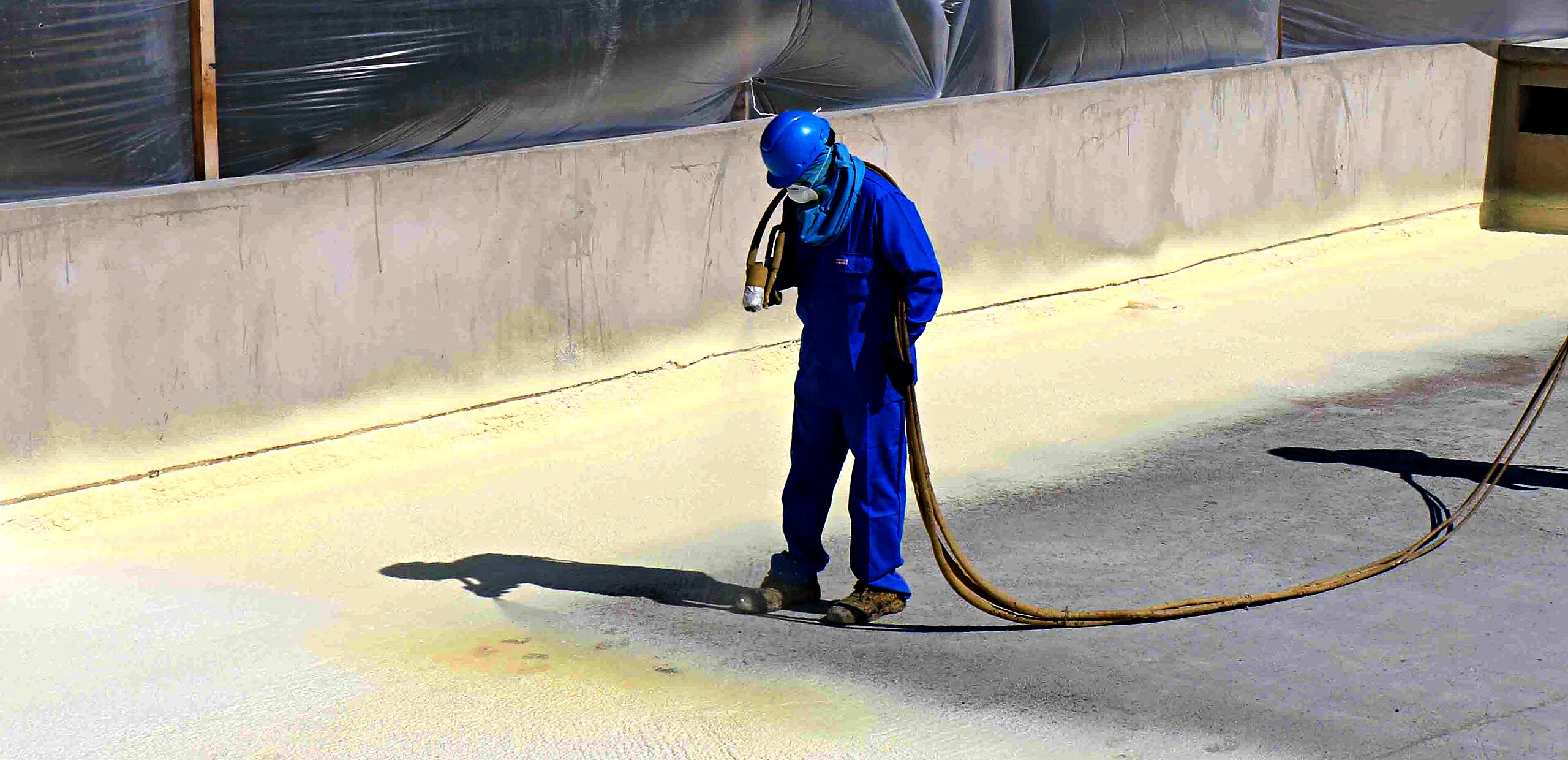
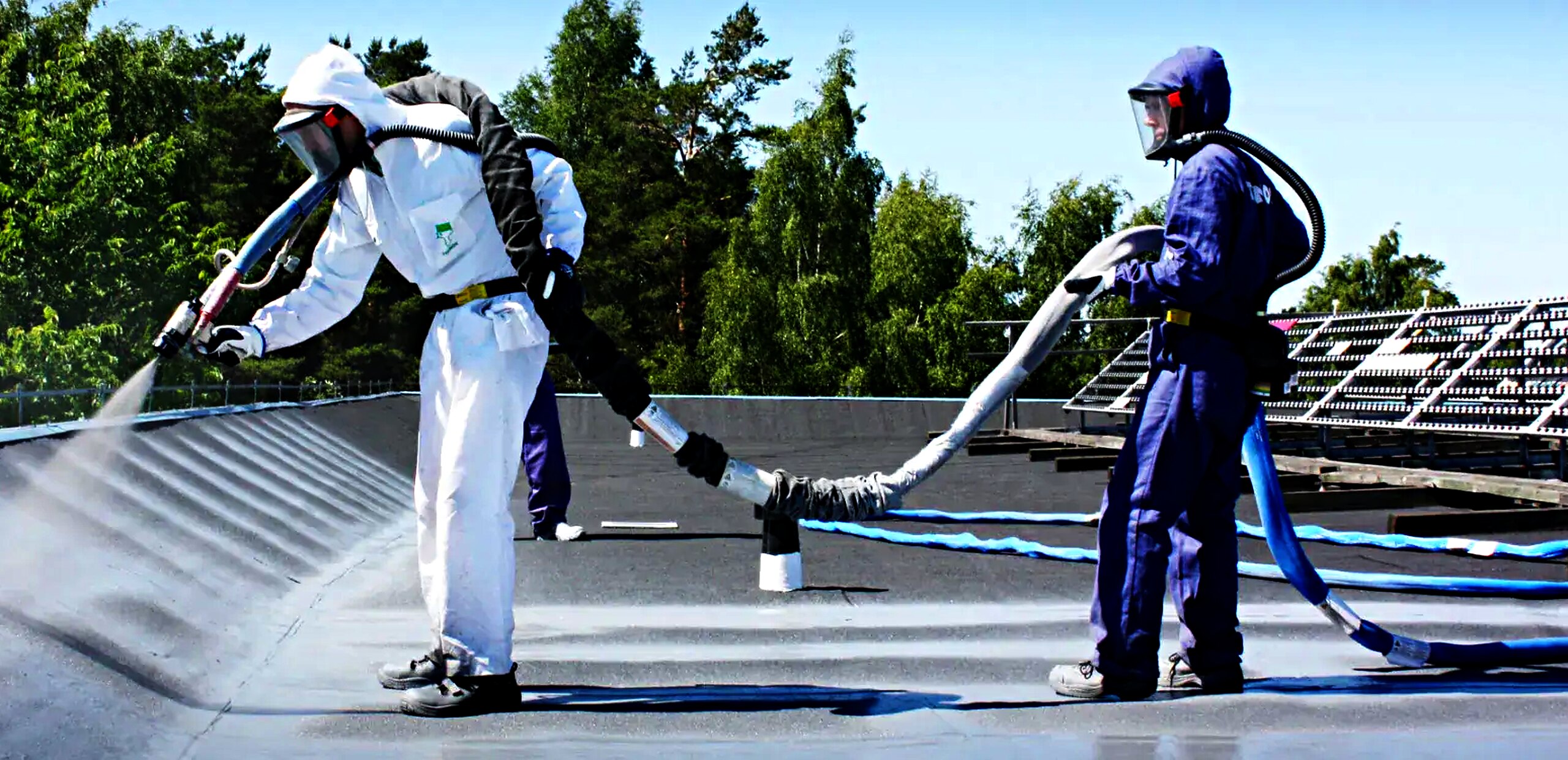
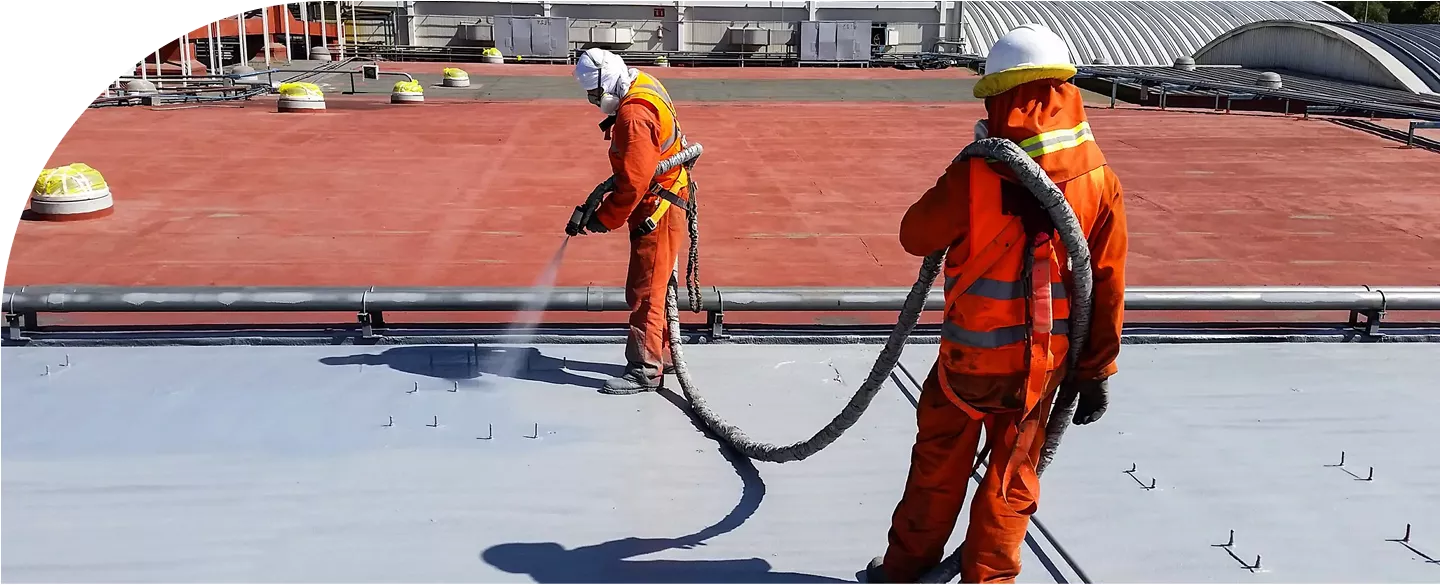
Every coating above is a maintenance cycle. A sprayed polyurea membrane is closer to a new roof: two components mixed at the gun, sprayed hot, gelling in seconds into one seamless skin over the sheet, the seams, the J-rail and every penetration.
For most mobile home roofs we'd point to ArmorFlex UV, a "two-component, 1:1 ratio, 100% solids, fast-set" aliphatic polyurea formulated to stay color-stable. It "forms a continuous, seamless membrane of any desired thickness" on metal, fiberglass, wood and more, and our ArmorLine index lists it at 740% elongation. The two-step alternative is SureGrip soft polyurea under ArmorDeck Topcoat, the pairing we spec for RV roofs.
Dry film thickness
Range in our roof coating guide; our RV roof spec is 120. A two-coat roller job dries to about 16–20.
Gel time
Tack-free in 15–90 seconds and walkable in under an hour. No multi-day wait between coats.
Installed cost
With a 15–25-year service life (our roof coating guide). About $3,840–$7,680 on a 16x80.
What to ask for
Thickness is the applicator's call for your roof, and it belongs on the quote, along with how it's checked (our roofing page lists ASTM D7091 for thickness and ASTM D4541 for adhesion). Over existing silicone, insist on the adhesion test; we haven't verified polyurea bonding to silicone as a blanket rule. Ask for the data sheet, including density, so you know what the film adds. And fix any sag first. A seamless membrane doesn't straighten a truss.
Why it isn't DIY
Polyurea "requires professional-grade plural component spray equipment" (our polyurea RV roof coatings page). It's heated to about 150–160°F and sprayed at 2,000–3,000 psi, and it gels in seconds, so equipment and technique decide whether it bonds.
The honest trade-offs
- It costs more up front: about $3,840–$7,680 on a 16x80, against roughly $480 in DIY acrylic materials.
- Payback depends on how long you stay. Under three years, it rarely makes sense. Run the 20-year comparison.
- Warranties come from the applicator, so get them in writing.
- ArmorSeal 100 AL, our aluminized roofing liner, is aromatic: outdoors it needs a UV topcoat or ColorCoat within 12 hours.
For park owners and landlords
Coating a row of homes is a different job from coating one: one crew and rig moving home to home, one written spec for every roof, one contact for warranty questions. Ask an applicator about scheduling a block of homes; price depends on access, prep and each roof's condition. See ArmorFlex UV aliphatic polyurea for the system and metal roof waterproofing for larger buildings.
Add sprayed mobile home roofs to your services.
Many mobile home roofs are low-slope metal or membrane, the kind of surface a sprayed membrane is made for. If you already do RV roofs, it's the same equipment. No franchise fees, no royalties; we supply equipment, material and training, with starter packages from $25,000 for low pressure.
Mobile home roof coating FAQ
What is the best coating for a mobile home roof?
There's no single best one; it depends on drainage and what's on the roof now. Where water stands more than 48 hours, use a 100% silicone (Henry markets 887 with "permanent ponding water resistance") or have a sprayed polyurea membrane installed. On a well-drained metal roof, a two-coat acrylic elastomeric is the budget pick. Never coat asphalt shingles: Henry and Kool Seal both exclude them, and the coating selector sorts out the rest for your roof.
How often should you recoat a mobile home roof?
Older advice says every two years (Foremost), but current products carry 7- to 12-year (acrylic), 25-year (urethane-enhanced) or lifetime-limited (silicone) warranties, per Henry's 2024 catalog. Inspect and clean the roof three to four times a year, as Henry recommends, and recoat when you see chalking, thin spots or bare metal rather than on a calendar.
How many gallons of roof coating does a single-wide need?
A 16x80 roof is about 1,280 sq ft (HomeGuide). At 1 gallon per 100 sq ft per coat, two acrylic coats need about 26 gallons before waste, and a one-coat silicone at 1.5 gallons per 100 sq ft needs about 19. Add roughly 10% for waste and run the calculator for your size and product.
How much does it cost to coat a mobile home roof?
HomeGuide (2024) and Angi (2026) both put professional mobile home roof sealing at $0.50–$4.50 per sq ft. DIY materials run about $0.32 per sq ft for two coats of an $80 five-gallon acrylic, or about $1.17 per sq ft for one coat of a $369 silicone (prices observed September 2026). A sprayed polyurea membrane runs about $3–$6 per sq ft installed, per our roof coating guide.
Can I put elastomeric (acrylic) roof coating over silicone?
No. Acrylic doesn't reliably bond to cured silicone and tends to peel in sheets, according to industry guidance. Recoat silicone with silicone after cleaning and abrading it, or have an applicator run an adhesion test before any other system goes on.
Aluminum or white roof coating: which is better on a mobile home?
Fibered aluminum coatings are cheap, but the ones we checked carry 3- to 7-year warranties and can't sit under standing water (Kool Seal, Jetcoat). White acrylic or silicone reflects more sunlight, and the U.S. Department of Energy says a reflective roof can stay more than 50°F cooler. In cold climates, though, a white roof can add heating cost (DOE).
Will a roof coating lower my cooling bill?
In a Florida Solar Energy Center field study, whitening roofs cut air-conditioning energy an average of 19%, and a double-wide manufactured home with a metal roof saved 22%. Results ranged from 2% to 43%, and reflectance dropped after the first year of weathering. Savings are largest in hot, sunny climates.
Can you coat a shingled mobile home roof?
Not with a field roof coating. Henry says its silicone is "not recommended over shingles of any kind," and Kool Seal's coatings are "not for use on roof shingles." Repair or replace the shingles, or have a roofer look at a system rated for your slope.
What temperature do you need to apply mobile home roof coating?
Most acrylic and aluminum products need 50°F or warmer and no rain in the forecast (Foremost, Kool Seal, Jetcoat); Nationwide allows 45°F. Henry 887 silicone can go on from 35°F to 120°F and is rain-safe in 15 minutes. Professionally sprayed polyurea such as ArmorThane SureGrip can be applied down to -20°F.
Do I have to fix ponding water before coating?
Yes. Manufacturers require correcting water that stands more than 48 hours (Kool Seal), and the HUD Code requires roof membranes rigid enough to prevent ponding (24 CFR 3280.305(h)(2)). On a manufactured home, ponding usually means a sag in the framing or roof sheet. Repair it, then use a ponding-rated coating such as silicone.
Is a roof-over better than a roof coating?
A roof-over (TPO, EPDM or metal on new framing) replaces the surface and costs about $1,000–$4,500 installed, or $800–$2,900 as a DIY kit (HomeGuide 2024). A coating is cheaper per cycle but needs periodic renewal. The 20-year comparison shows which wins for how long you'll own the home.
What's the best mobile home roof sealant?
The one that's compatible with your roof and with whatever coating goes over it. Use butyl tape under the J-rail with a compatible sealant over the edge and screws, a compatible sealant at vents and stacks, and polyester fabric or seam tape at seams. Skip silicone caulk if an acrylic coating will ever go on the roof, since acrylic doesn't reliably bond to cured silicone. Our RV roof sealant guide compares common lap sealants by data sheet.
Where do mobile home roofs usually leak?
At the edges and openings. Foremost's checklist is the J-rail, the flashing around vents, pipes and skylights, the seams and old roof sealant, existing rumble buttons, and any rusted or worn areas. Water can travel before it shows up on the ceiling, so trace a stain upslope before you seal anything.
Does a roof coating warranty cover leaks?
Usually not. Retail coating warranties typically replace the product or refund its price and exclude labor; Kool Seal's says "Labor or costs associated with labor not included." Nationwide's 10-year warranty excludes leaks and requires a minimum dry film thickness. With a sprayed polyurea roof, the certified applicator sets the warranty terms, so get them in writing.
Written from manufacturer data sheets, code text and 35+ years of spraying and supporting applicators. Last updated September 26, 2026.
Methodology and sources
Product figures come from each maker's data sheet, product page or catalog. Film thickness, per-square-foot costs and worked examples are our math. Retail prices were seen on September 26, 2026. HUD Code text is from 24 CFR Part 3280; IRC text is from the 2015 edition (Seattle), used as context only.
- HUD, manufactured home resources: hud.gov/hud-partners/manufactured-home-resources
- 24 CFR 3280.305, structural design requirements (eCFR): ecfr.gov/current/title-24/subtitle-B/chapter-XX/part-3280/subpart-D/se
- 24 CFR 3280.307, exterior coverings and sealants (eCFR): ecfr.gov/current/title-24/subtitle-B/chapter-XX/part-3280/subpart-D/se
- 2015 IRC chapter 9 as published in the Seattle Residential Code (PDF): seattle.gov/documents/Departments/SDCI/Codes/SeattleResidentialCode/20
- IIBEC, ASTM D6083: what it says and what it means (2001): iibec.org/publication-post/astm-d-6083-standard-specification-for-liqu
- ASTM D6083/D6083M-24: store.astm.org/d6083_d6083m-24.html
- ASTM D2823, asbestos-containing asphalt roof coatings (withdrawn): store.astm.org/d2823_d2823m-05r11e01.html
- U.S. EPA, learn about asbestos: epa.gov/asbestos/learn-about-asbestos
- U.S. DOE Energy Saver, cool roofs: energy.gov/energysaver/cool-roofs
- U.S. DOE, guidelines for selecting cool roofs (2010, PDF): energy.gov/sites/prod/files/2013/10/f3/coolroofguide.pdf
- U.S. EPA, using cool roofs to reduce heat islands: epa.gov/heatislands/using-cool-roofs-reduce-heat-islands
- Florida Solar Energy Center, FSEC-PF-293-95: fsec.ucf.edu/en/publications/html/FSEC-PF-293-95/index.htm
- Cool Roof Rating Council, home and building owners: coolroofs.org/resources/home-building-owners
- Henry retail product catalog (06/24, PDF): dam.carlisle.com/asset/1a7b0464-4df2-41c3-b0f0-74a1feb6431d/Retail-Pro
- Henry 887 Tropi-Cool sell sheet (PDF): dam.carlisle.com/asset/da72c3c5-e8e8-4976-99c8-679763990f3d/887-Tropi-
- Henry 887 Tropi-Cool product page: henry.com/residential/products/residential-roof-coatings/white-roof-co
- Henry RV, trailer and mobile home roof brochure (PDF): dam.henry.com/asset/ee8e2bbc-87cb-4fe2-b7f7-27c83c23badb/RV-Trailer-an
- Kool Seal Elastomeric Finish Coat, 5-year: koolseal.com/product/elastomeric-finish-coat-5yr/
- Kool Seal Premium Elastomeric Finish Coat, 12-year: koolseal.com/product/premium-elastomeric-finish-coat-12yr/
- Kool Seal Tundra silicone roof coating: koolseal.com/product/tundra-silicone-rubberized-white-roof-coating/
- Kool Seal fibered aluminum KS0024300 data sheet (PDF): koolseal.com/wp-content/uploads/2018/03/KS0024300-PDS.pdf
- Nationwide Coatings, Mobile Home Roof Coating: nationwidecoatings.com/pl/mobile-home-roof-coating
- Nationwide Coatings, how to apply mobile home roof coatings (2024): nationwidecoatings.com/blog/Everything-You-Need-to-Know-About-Mobile-H
- Jetcoat, Cool King fibered aluminum: jetcoatinc.com/products/cool-king-3-year-fibered-aluminum-roof-and-mob
- FarmPaint, 7-Year White Elastomeric: barnandfencepaint.com/product.php?productid=16180&cat=252&page=1
- Home Depot, mobile home roof coatings (prices observed Sept. 26, 2026): homedepot.com/b/Building-Materials-Roofing-Commercial-Roofing-Roof-Coa
- Foremost, mobile home roof coating guide: foremost.com/learning-center/coating-your-roof/
- Foremost, repairing a metal roof: foremost.com/learning-center/repairing-a-metal-roof.asp
- Resilient Roofing, mobile home roofing options (2022): resilientroofing.com/blog/mobine-home-roofing-options
- Mobile Home University forum, best roof solutions: forum.mobilehomeuniversity.com/t/best-roof-solutions-for-mobile-homes/
- US Made Supply, what is an elastomeric roof coating (2026): usmadesupply.com/resources/guides/what-is-an-elastomeric-roof-coating
- HomeGuide, roof coating cost (Apr. 2024): homeguide.com/costs/roof-coating-or-sealing-cost
- HomeGuide, mobile home roof replacement cost (Apr. 2024): homeguide.com/costs/mobile-home-roof-replacement-cost
- Angi, roof coating cost per square foot (Aug. 2026): angi.com/articles/how-much-does-roof-coating-cost-square-foot.htm
- ArmorThane, roof coating guide: armorthane.com/knowledge-center/roof-coating-guide/
- ArmorThane, roof waterproofing guide: armorthane.com/protective-coatings/roofing/
- ArmorThane, metal roof waterproofing: armorthane.com/protective-coatings/metal-roof-waterproofing/
- ArmorThane, RV roof coatings: armorthane.com/protective-coatings/rv-roof-coatings/
- ArmorThane, RV roof repair guide: armorthane.com/rv-roof-repair-guide/
- ArmorThane, how to start an RV roof business: armorthane.com/start-an-rv-roof-repair-business/
- ArmorThane, ArmorLine product index: armorthane.com/products/armorline-products/
- ArmorThane, ArmorFlex UV: armorthane.com/products/armorline-products/high-pressure/armorflex-uv/
- ArmorThane, SureGrip soft polyurea: armorthane.com/products/armorline-products/high-pressure/suregrip-soft
- ArmorThane, ArmorSeal 100 AL: armorthane.com/products/armorline-products/high-pressure/armorseal-100
- ArmorThane, ArmorFoam Roof 200: armorthane.com/products/armorfoam-products/roof-200/
Done patching the same leaks? Get a quote from a certified applicator.
Tell us about the home and the roof. We'll connect you with an ArmorThane-certified applicator who can look at it and quote a seamless sprayed membrane, with the film thickness in writing.
- Single-wides, double-wides and park homes
- Metal, TPO and EPDM roofs
- Film thickness and warranty on the quote
- Park owners: ask about coating several homes