




Trailer Undercoating: Stop Frame Rust on Any Trailer
What to put under utility, cargo, boat, horse, dump and overland trailers, how long galvanizing really lasts, and tools to estimate material, weight, cost and galvanized frame life.
Start a spray-on bedliner business
Spray bedliners for a living.
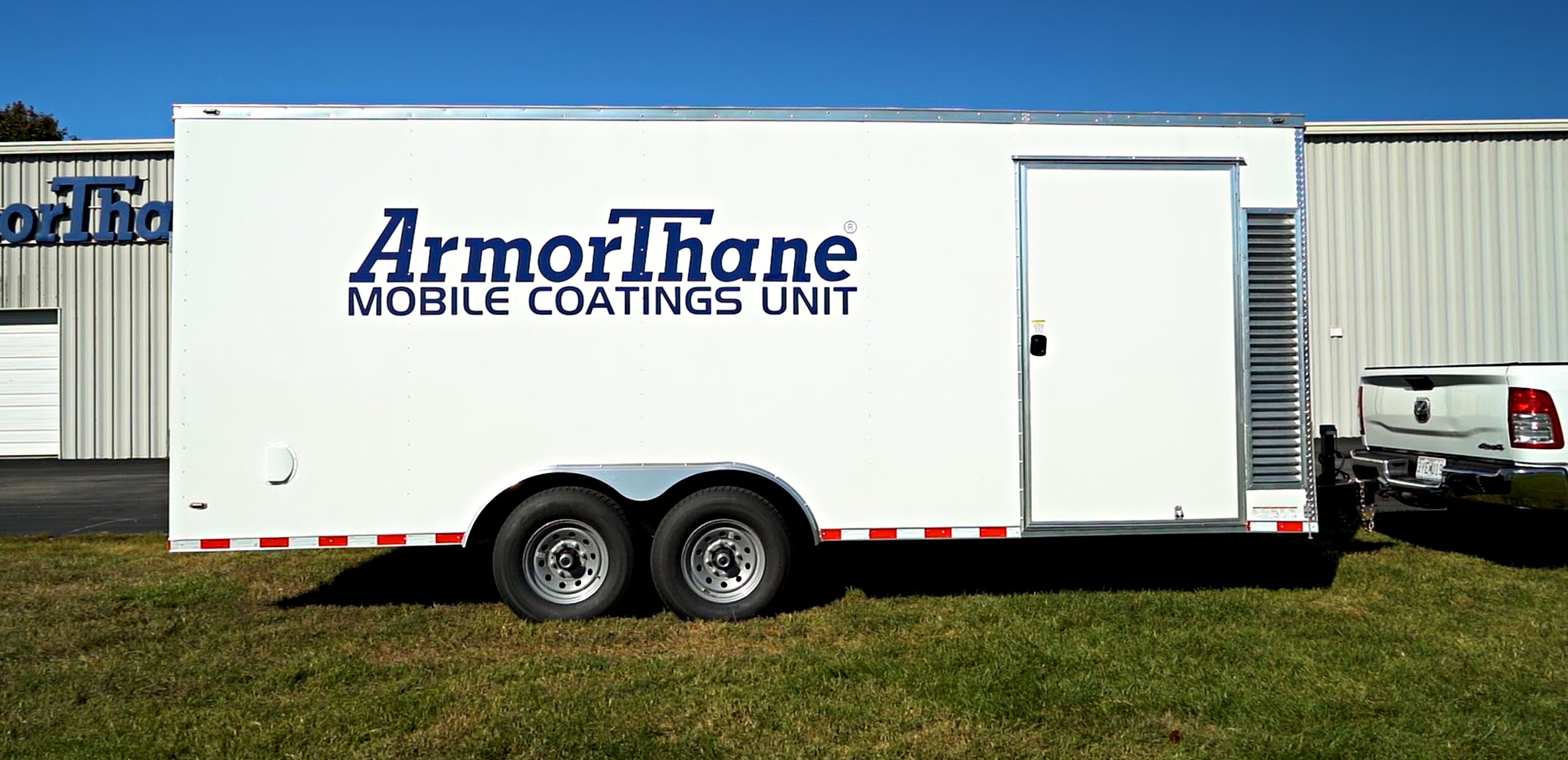
ArmorThane sets you up to do this work, and you own the business. We make the chemistry, build the rigs, train you hands-on and answer the phone when a job gets difficult. You pay no franchise fee and no royalties. It has been that way since 1989.
- $0
- franchise fees or royalties
- 35+
- years in business
- 50+
- countries with applicators
- 24/7
- technical support
Trailer undercoating gets less attention than truck undercoating, even though trailers often have it worse. A trailer rides low behind the tow vehicle's tires, catches every stone and shot of salty slush they throw, sits outside for months between trips, and in the case of boat trailers gets dunked in salt water. Most trailers also leave the factory with nothing more than a coat of paint or a layer of zinc. Our applicator network sprays polyurea on utility, cargo, horse, overland and dump trailers, and this guide covers what to put underneath each kind of trailer, how long galvanizing really lasts, and two tools to estimate material, weight and cost and to predict galvanized frame life.
For a painted steel trailer, the best trailer undercoating is either a yearly oil or lanolin treatment, which is cheap and reaches inside tubes and seams, or a polyurea coating over a blasted, primed frame, which lasts for years and stands up to gravel. Galvanized trailers already have good protection, but zinc wears away fastest in salt; coating over galvanizing roughly doubles the protected life. Boat trailers need a freshwater rinse after every saltwater launch no matter what is on them. Wood decks on cargo and utility trailers benefit from a sealed underside too.
Why trailers rust faster than trucks
- They sit in the spray zone. The trailer tongue, front crossmembers and fenders take the full blast of whatever the tow vehicle's tires pick up, including gravel and brine. The front wall of campers and enclosed trailers gets chipped the same way a hood does; our rock chip protection guide covers that side.
- Open channel and tube frames trap debris. C-channel and tube frames collect mud and salt on their inside faces, where nobody washes and paint is thinnest.
- Thin factory finishes. Many trailers are painted or powder coated once, with little or no primer inside the tubes. A chip from gravel goes straight to steel.
- Long idle periods. A trailer parked on grass or gravel for months stays damp underneath, which keeps any salt residue active.
- Salt water immersion. Boat trailers get submerged, and salt water inside tubes and around axles, springs and brakes keeps corroding long after the boat is on the road. Rinsing with fresh water as soon as possible after a saltwater launch is the most important habit.
How long galvanizing lasts on a trailer
Hot-dip galvanized trailers are protected by a sacrificial zinc layer that slowly corrodes in place of the steel. ASTM A123 sets minimum zinc thickness by steel thickness: 75 microns for structural shapes from just over 1/8 inch up to 1/4 inch, and 100 microns above 1/4 inch. How long that zinc lasts depends on the environment. The American Galvanizers Association lists typical zinc loss of 0.7 to 2.1 microns per year in urban (C3) settings, 2.1 to 4.2 in high-corrosivity settings with substantial chloride (C4), 4.2 to 8.4 in very high (C5) settings, and 8.4 to 25 in extreme (CX) settings with extended wetness and chloride deposits. A trailer that sees road salt or regular saltwater launching sits at the high end of that scale, which is why galvanized boat trailers still rust out at the axles and crossmembers.
Trailer undercoating by trailer type
Each kind of trailer fails in its own way, so the right undercoating differs. The exposure rating is our own 1 to 5 judgment of how hard the underside is used, not a published figure. Click a column heading to sort.
| Trailer | Exposure (1–5) | Where it rusts first | Our pick underneath | Also do |
|---|---|---|---|---|
| Boat trailer, saltwater | 5 | Axles, springs, brakes, inside tubes, bunk brackets | Galvanized or aluminum frame; oil or lanolin on springs and hardware | Fresh-water rinse after every launch, flush brakes |
| Snowmobile / winter utility | 5 | Tongue, front crossmembers, fenders, wiring | Polyurea on frame and fenders, oil in tubes | Rinse after salted roads, dielectric grease on lights |
| Dump trailer | 4 | Bed floor, hinge area, crossmembers under the bed | Polyurea underneath and as a bed liner | Grease hinge and hoist points, keep drains open |
| Horse / livestock | 4 | Floor supports under urine-soaked areas, fenders | Polyurea floor topside and underside | Strip mats and wash floors after every haul |
| Overland / off-road camper | 4 | Front wall, tongue, fenders, belly from gravel | Textured polyurea on lower body and underside | Mud flaps on the tow vehicle |
| Utility, wood deck | 3 | Deck board ends, crossmembers under the boards | Oil or lanolin on frame; seal deck underside | Replace rotted boards before they hold water |
| Enclosed cargo / car hauler | 3 | Plywood floor underside, crossmembers, tongue | Coated floor underside; polyurea on tongue and front | Check roof seams; leaks rot floors from above |
| Dry van semi-trailer | 3 | Hardwood floor underside over the wheels | Polyurethane or polyurea floor undercoat | Inspect crossmembers at every annual |
Floors deserve a special mention. Trailer floors are often wood, and their underside sits right over the tires. Prolam, which supplies hardwood floors for dry vans, reports that its hot-melt polyurethane undercoat resisted 225 sandblast cycles versus 20 for a water-based undercoat and absorbed 3.4 grams of water per 100 square inches in 24 hours versus 29.9 grams. The principle applies to any trailer: a thick, abrasion-resistant underside coating keeps road spray out of the wood and off the crossmembers it sits on. For coating the top side of trailer floors and walls, see our trailer coatings page; for off-road campers, see overland trailer coatings.
Trailer undercoating material, weight and cost
Enter the deck size and how much of the underside you want covered. The estimator works out the area, how much oil or polyurea it takes, how much weight a polyurea coat adds to your payload, and a cost range. Coverage factors are our rule of thumb for typical trailer frames; product figures are from published data sheets and cost guides.
What will it take to undercoat your trailer?
Area = length x width x coverage factor. Oil: about 250 sq ft per gallon at 3–4 mils, about $40 per gallon. Polyurea: 1,604 sq ft per gallon at 1 mil and 8.81 lb per gallon (one published data sheet), installed at $5–$10 per sq ft.
Galvanized trailer life calculator
If your trailer is hot-dip galvanized, the question is how long the zinc will last where you use it, and how much a coating on top would add. Measure the zinc with a dry film thickness gauge if you can; otherwise use the ASTM A123 minimum for your frame steel.
How many years until the zinc is gone?
Zinc life = zinc thickness / zinc loss rate for the environment (AGA ranges for ISO categories). Duplex life = multiplier x (zinc life + coating life), using AGA multipliers of 2.0–2.3 for non-aggressive, 1.8–2.0 for industrial-marine and 1.4–1.6 for marine or seawater exposure.
Two cautions. Zinc loss is not uniform: it is fastest where salt water pools and dries, such as the inside of crossmembers, around axle U-bolts and under bunk brackets, so those spots fail years before the averages say. And the figures assume undamaged zinc; welds, cut ends and scratched areas lose protection first.
How we undercoat a trailer
Strip it to what you need to coat
Pull the deck boards or mats if the floor underside is getting coated, and remove fenders if possible. Unplug and protect wiring, lights and brake magnets or drums.
Clean and assess the steel
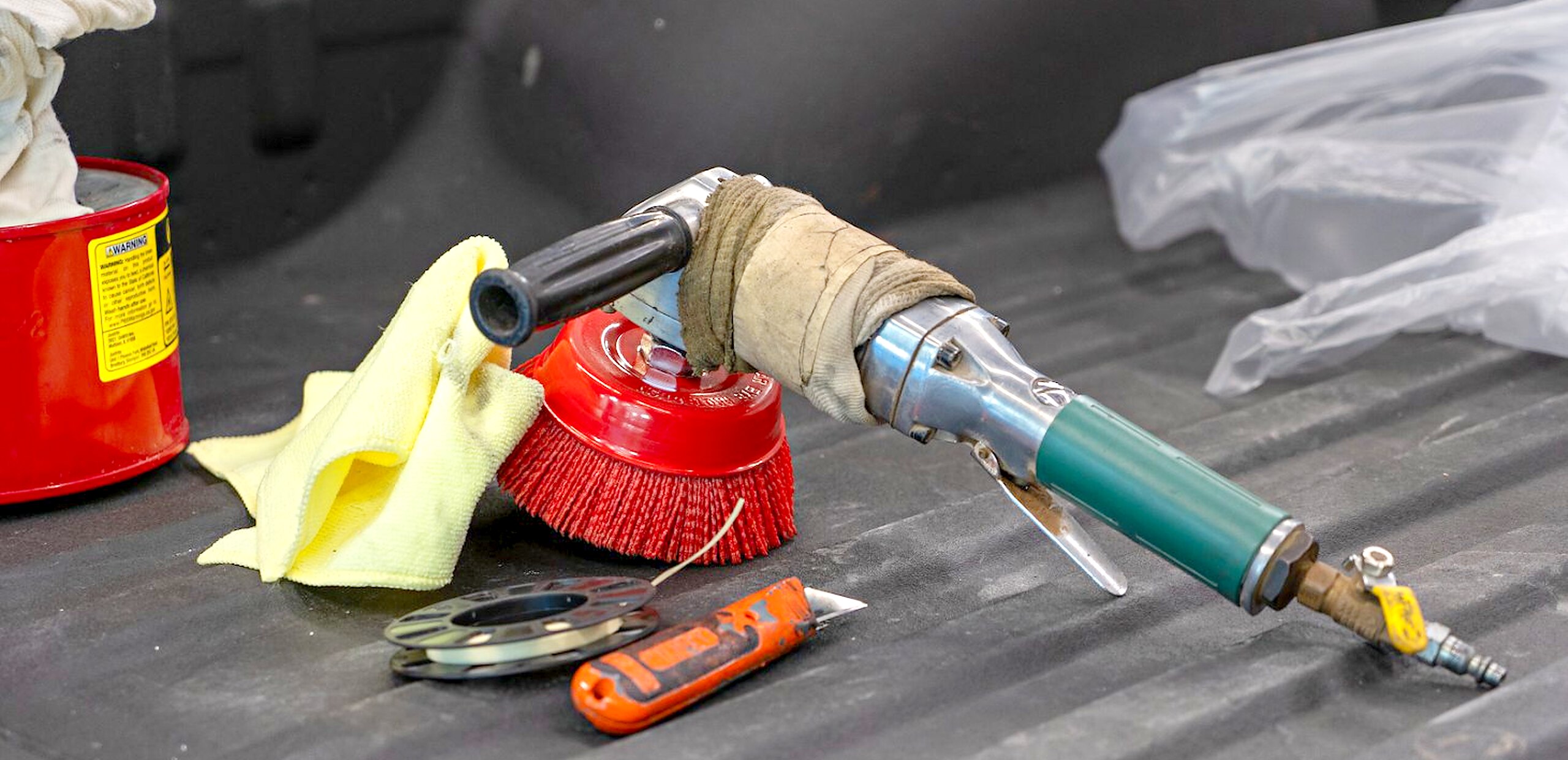
Pressure wash with a degreaser, then let it dry. Probe crossmembers and the tongue for thin or perforated steel and weld in repairs before coating. Coatings do not add strength.
Blast or grind, then prime
For polyurea on bare or painted steel, abrasive blast or grind to clean metal with a profile, then prime the same day with a compatible ArmorPrime primer. On galvanized trailers, follow a galvanized-specific prep instead of blasting through the zinc.
Mask the moving and hot parts
Axles, hubs, bearings, brakes, spring shackle pivots, the coupler, jack, safety chains and lights stay uncoated.
Spray the polyurea
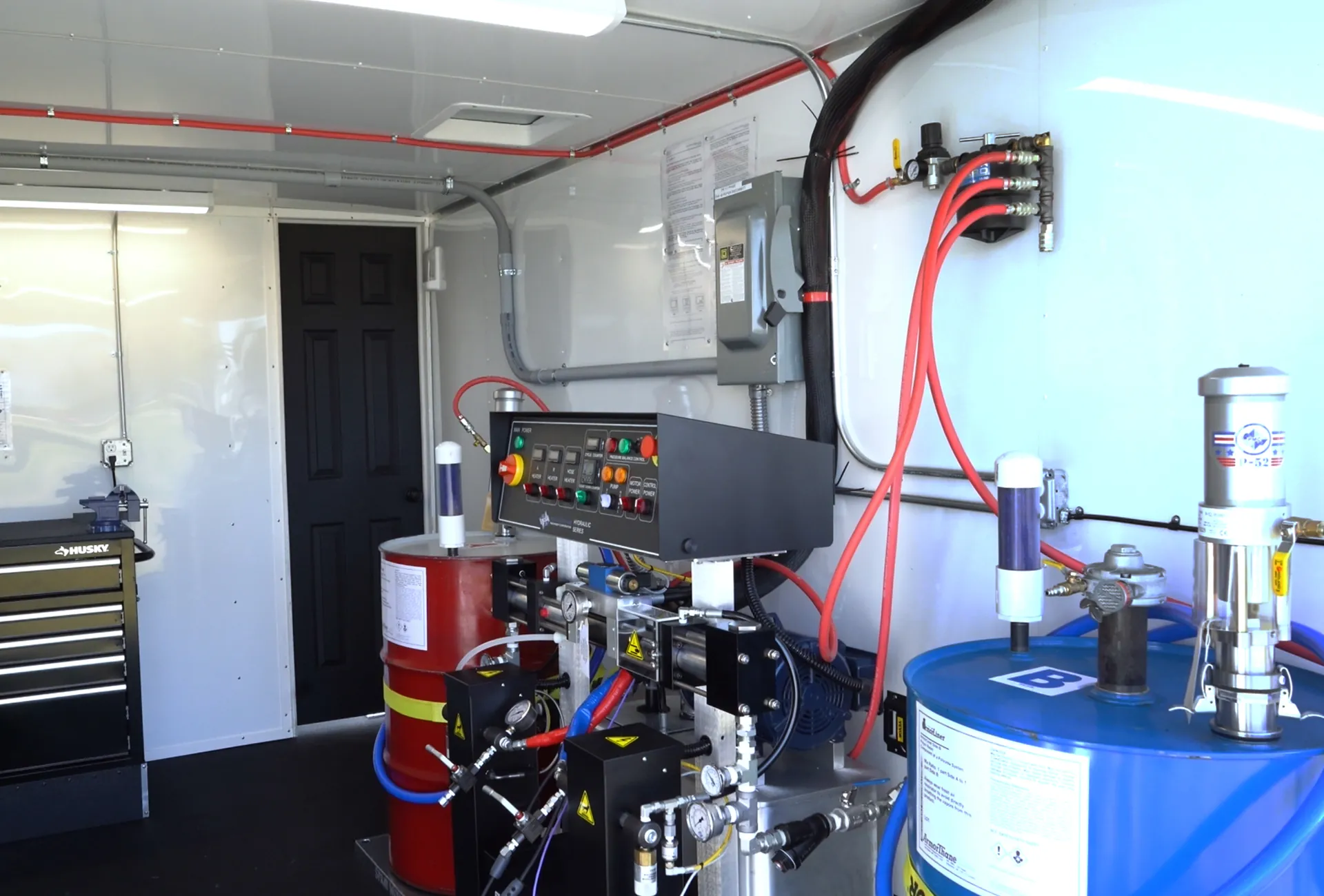
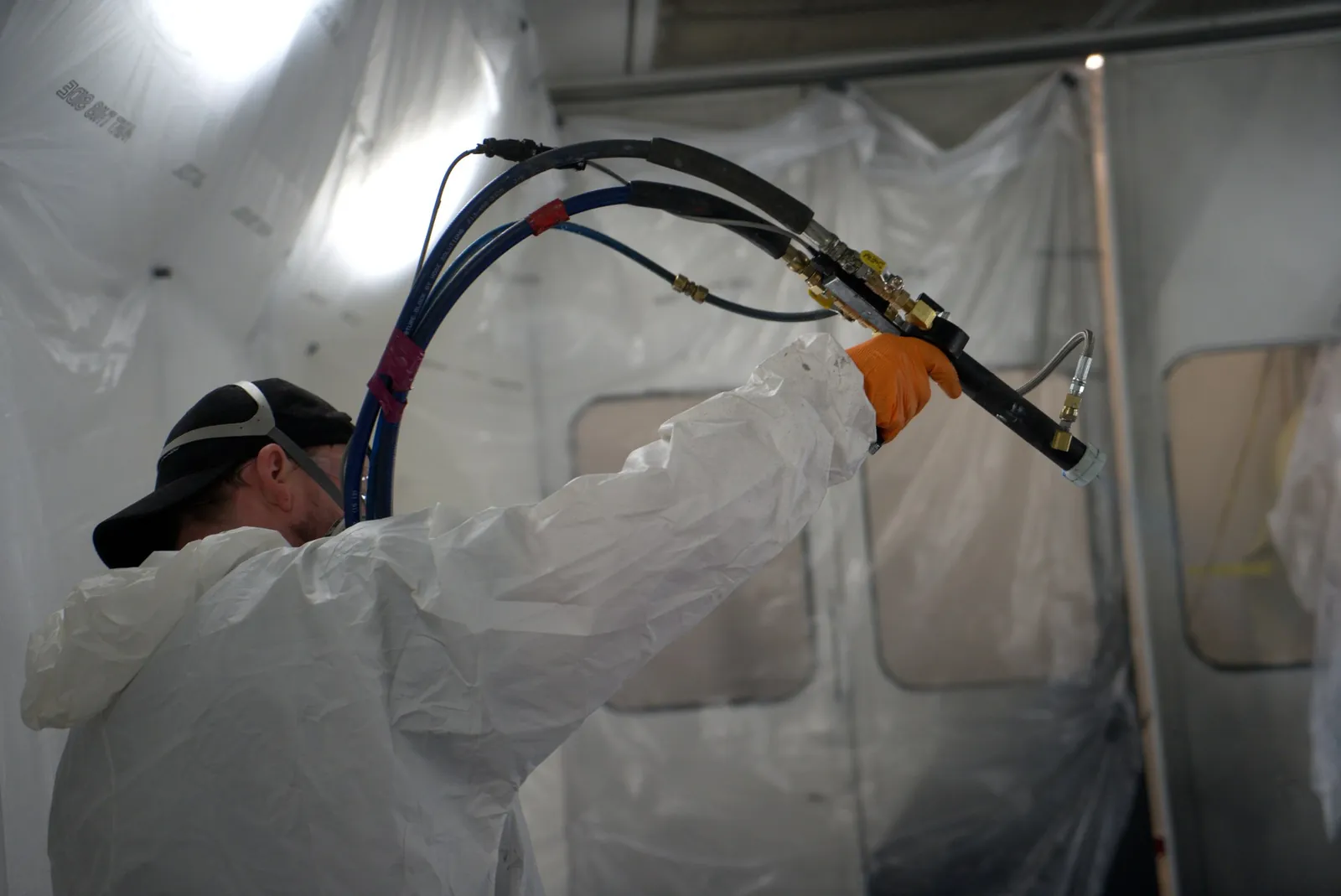
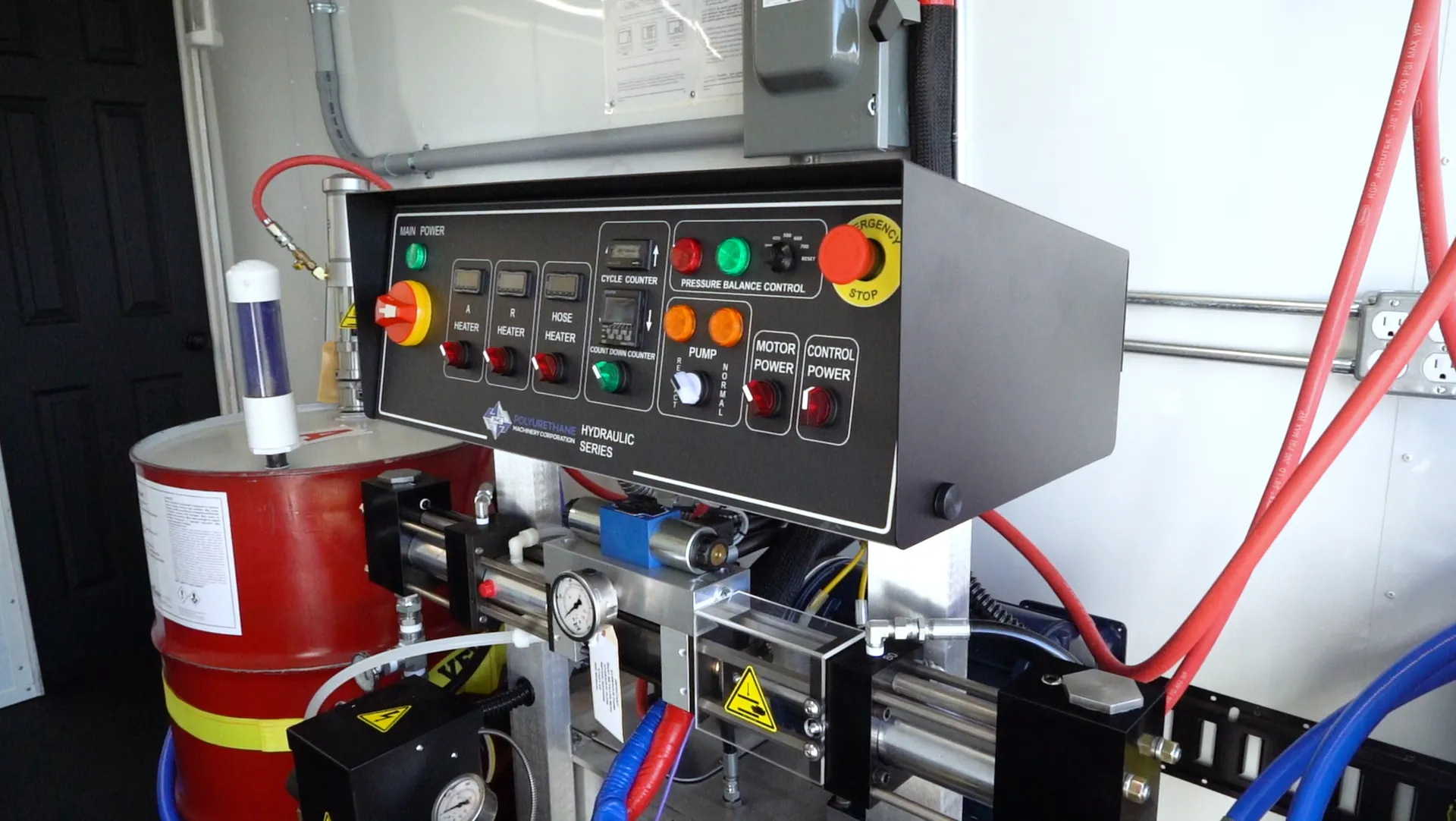
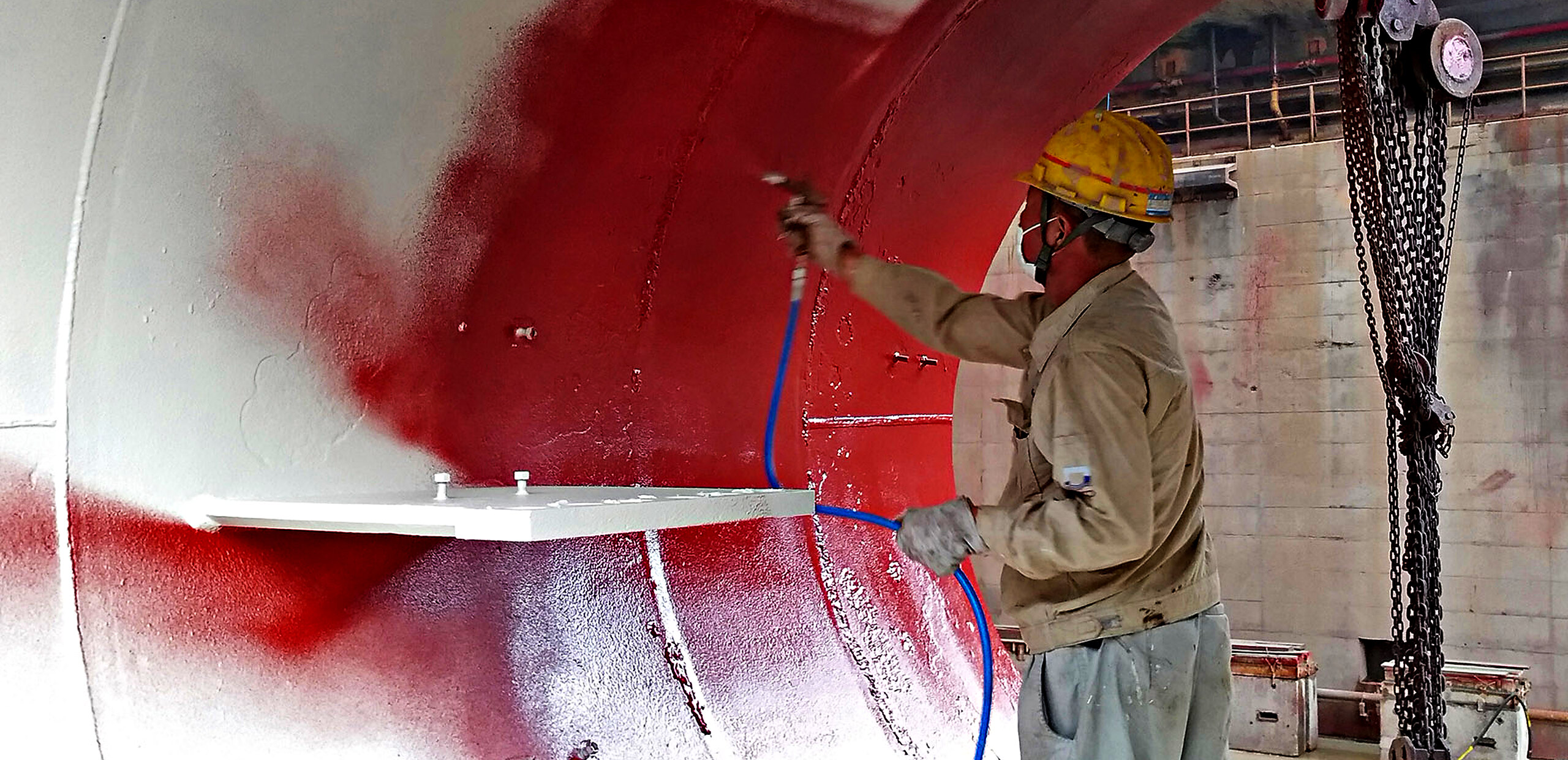
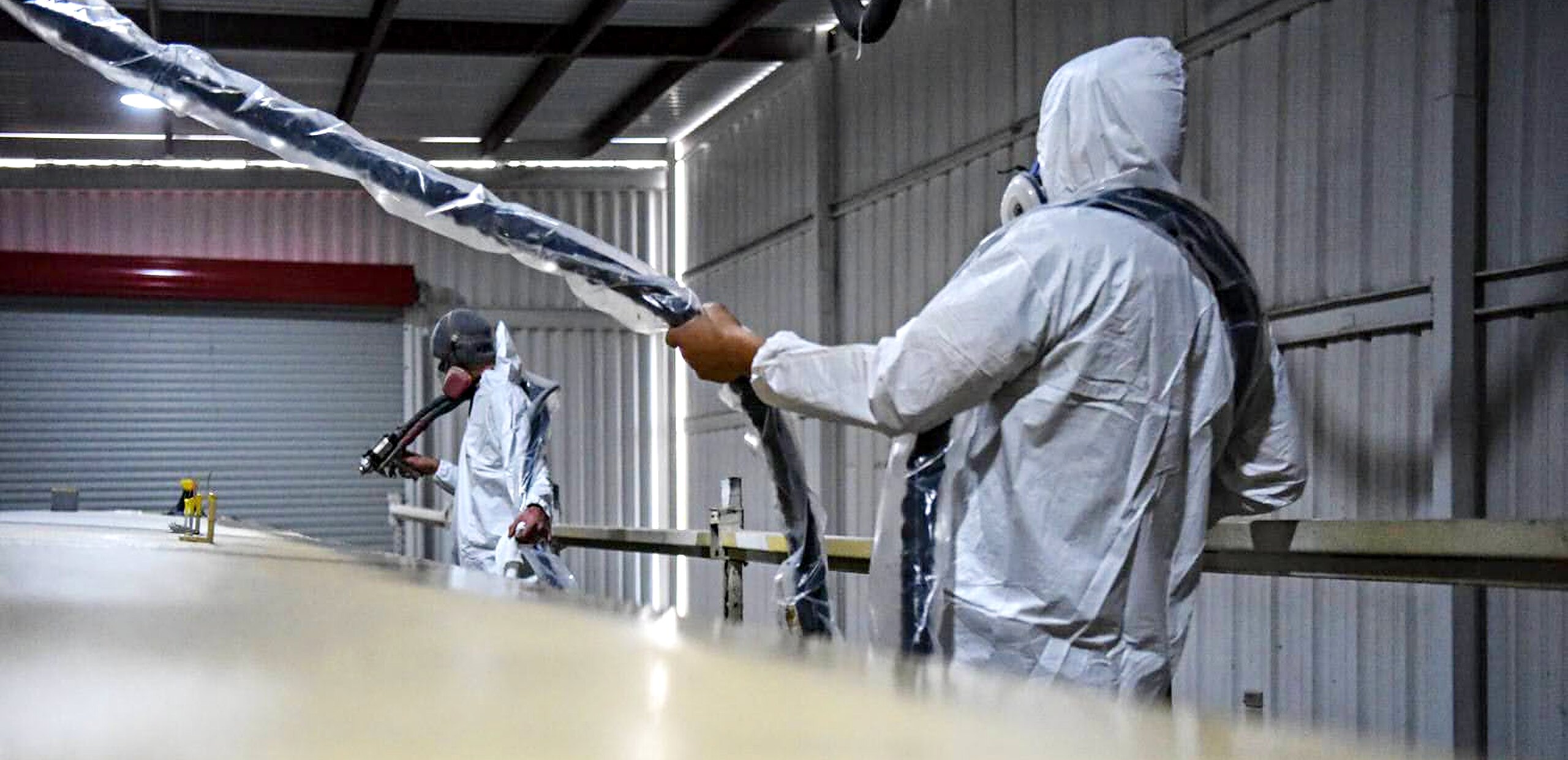
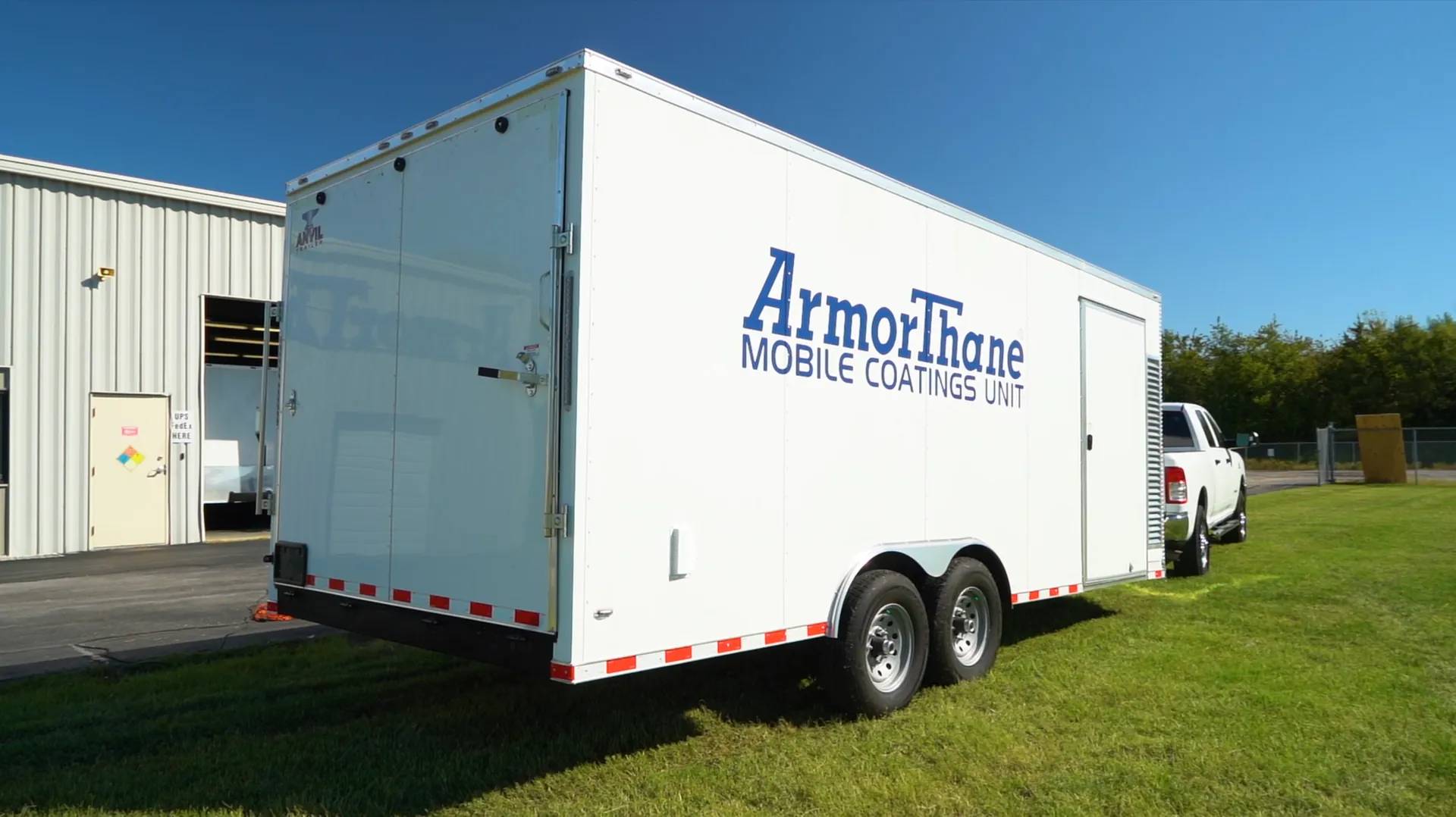
A plural-component rig sprays ArmorLiner polyurea to the specified thickness on the frame, crossmembers, floor underside, fenders and tongue. It sets in seconds, so trailers usually go home the same day.
Oil what the coating cannot reach
Fog the inside of tubes, spring packs and hardware with an oil or lanolin product once the coating has cured. See our oil undercoating guide for products and amounts, and our rust proofing guide for a yearly treatment schedule.
Make this the last time you fight trailer rust.
Certified ArmorThane applicators blast, prime and spray polyurea on trailer frames, floors, fenders and tongues, and can line the bed or floor at the same visit. Tell us the trailer and how you use it, and we will match you with a shop.
Contractors: become an applicator →
Trailer undercoating questions
What is the best undercoating for a trailer?
For a painted steel trailer used in salt or on gravel, a polyurea coating over a blasted, primed frame gives the longest-lasting protection, with oil or lanolin fogged inside tubes and on springs. For light use, a yearly oil or lanolin treatment is cheaper and works well. Galvanized trailers benefit from a coating over the zinc, which the AGA says extends protection to 1.5 to 2.3 times the combined life of the two.
Should I undercoat a new trailer?
Yes, if it will see salt, salt water or gravel. A new trailer needs the least prep, and coating the frame and floor underside before the first winter is far cheaper than repairing crossmembers later. Galvanized trailers are already protected, but a coating still pays off on boat and winter trailers.
Can you undercoat a galvanized trailer?
Yes. New galvanizing is smooth and reactive, so it needs galvanized-specific cleaning and profiling and a compatible primer rather than aggressive blasting. Done properly, a duplex system lasts far longer than either the zinc or the coating alone.
How much weight does polyurea add to a trailer?
Based on one published polyurea data sheet (8.81 lb per gallon, 1,604 square feet per gallon at 1 mil), a 60-mil coat adds roughly 0.33 lb per square foot. Coating 120 square feet of trailer underside at that thickness adds about 40 lb.
How do I keep a boat trailer from rusting?
Rinse the whole trailer with fresh water as soon as possible after every saltwater launch, including inside the frame and the brakes. Use galvanized or stainless hardware, keep bearings greased, and apply an oil or lanolin product to springs, U-bolts and fasteners. Store it out of the weather when you can.
Does undercoating help wood trailer decks?
Yes. The underside of a wood deck sits right over the tires and soaks up road spray. Sealing or coating the underside slows rot and protects the crossmembers the boards sit on. Floor supplier Prolam reports a hot-melt polyurethane undercoat absorbed about one-eighth as much water as a water-based coating in 24 hours.
How much does it cost to undercoat a trailer?
Installed polyurea generally runs $5 to $10 per square foot, so cost depends mostly on how much of the underside you coat; use the estimator above. A DIY oil or lanolin treatment costs a gallon or two of product at about $40 per gallon plus equipment.
Sources
- American Galvanizers Association, HDG corrosion rates for ISO categories C1–CX: galvanizeit.org/knowledgebase/article/hdg-corrosion-rates-for-iso-categories-c1-c5-x
- American Galvanizers Association, overview of ASTM A123: galvanizeit.org/knowledgebase/article/astm-a123-a123m
- American Galvanizers Association, duplex systems synergistic effect: galvanizeit.org/duplex-systems-galvanize-it-seminar/why-duplex/synergistic-effect
- Prolam, P.U.R undercoating for dry van floors: prolamfloors.com/our-products/pur
- MIL-SPEC Liner MS0326 polyurea technical data sheet: milspecliner.com/.../MilSpec-MS0326-TDS-2024-.pdf
- Croc Coatings, polyurea coating cost (2026): croccoatings.com/polyurea-coating-costs-explained
- Fluid Film, spraying Fluid Film (coverage): fluid-film.com/spraying-fluid-film
- The Rust Store, Fluid Film 1 gallon can: theruststore.com/products/fluid-film-1-gallon-can
- Rocket Marine, protecting a new boat trailer from rust: rockettrailers.com/blog/how-to-protect-your-new-boat-trailer-from-rust
- Chemicar, should I undercoat my trailer: chemicar.com/should-i-undercoat-my-trailer
Trailers built to last start underneath.
Trailer owners get a certified ArmorThane applicator who blasts, primes and sprays polyurea on frames, floors and fenders. Contractors can add trailer coating services with no franchise fee and no royalties.
Heavy-Duty Coatings for Vehicles & Equipment
Flip through the whole brochure right here, or open it full screen on Issuu to share it.
Start your coatings business with ArmorThane.
Tell us what you want to spray and where you are. An ArmorThane specialist will walk you through the equipment, chemicals, training and startup cost for the work you want to do.
- Equipment package matched to your applications
- Hands-on training and applicator certification
- Technical support once you are spraying
Trailer frame starting to rust? Coat it before it rots.
Tell us the trailer type, deck size, frame material and how you use it. We will connect you with a certified ArmorThane applicator near you.
- Trailer type and deck size
- Painted, powder coated or galvanized
- Salt, salt water or gravel use
- Underside, floor or bed liner
More to read on vehicles and equipment
Short reads from ArmorThane on Issuu. Tap one to open it right here.
Quick readArmorLiner UnderCoating
Quick readBuild The Ultimate Off-Road Trailer With ArmorThane’s Tough Touch
Product spotlightArmorLiner™ The industry’s most trusted spray-applied polyurea liner system.
Quick readLaunch Your Bedliner Business Title: Launch Your Bedliner Business – Professional Spray Equipment Un
More in Automotive & marine
Automotive & marineCommercial Truck Coatings
Automotive & marineDock Coating
Automotive & marineDump Truck Bed Liner
Automotive & marineEquipment/Commercial Vehicle Coatings
Automotive & marineHow to Start an RV Roof Business
Automotive & marineJeep Bedliners and Off-Road Vehicle Coatings
Automotive & marineJon Boat Floor
Automotive & marineMarine Coatings