
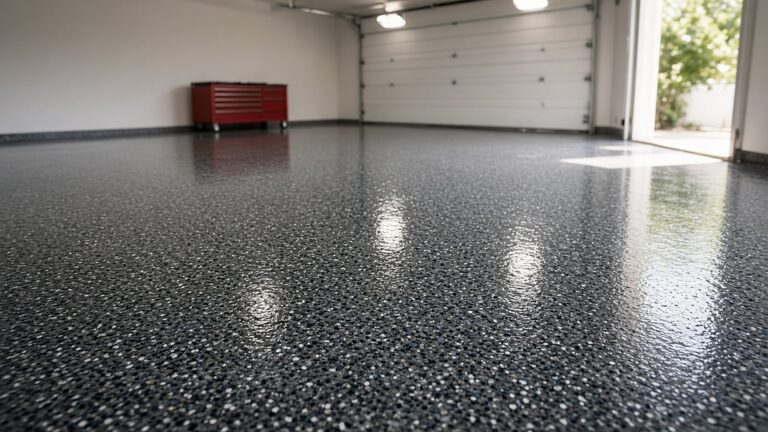


Concrete Floor Grinding: Diamonds, Grits and a Flat Slab
Which grinder, which diamond bond and which grit to start with, how far to go before a coating, and how to keep the dust in the vacuum.
Start a floor coating business
Coat floors for a living.
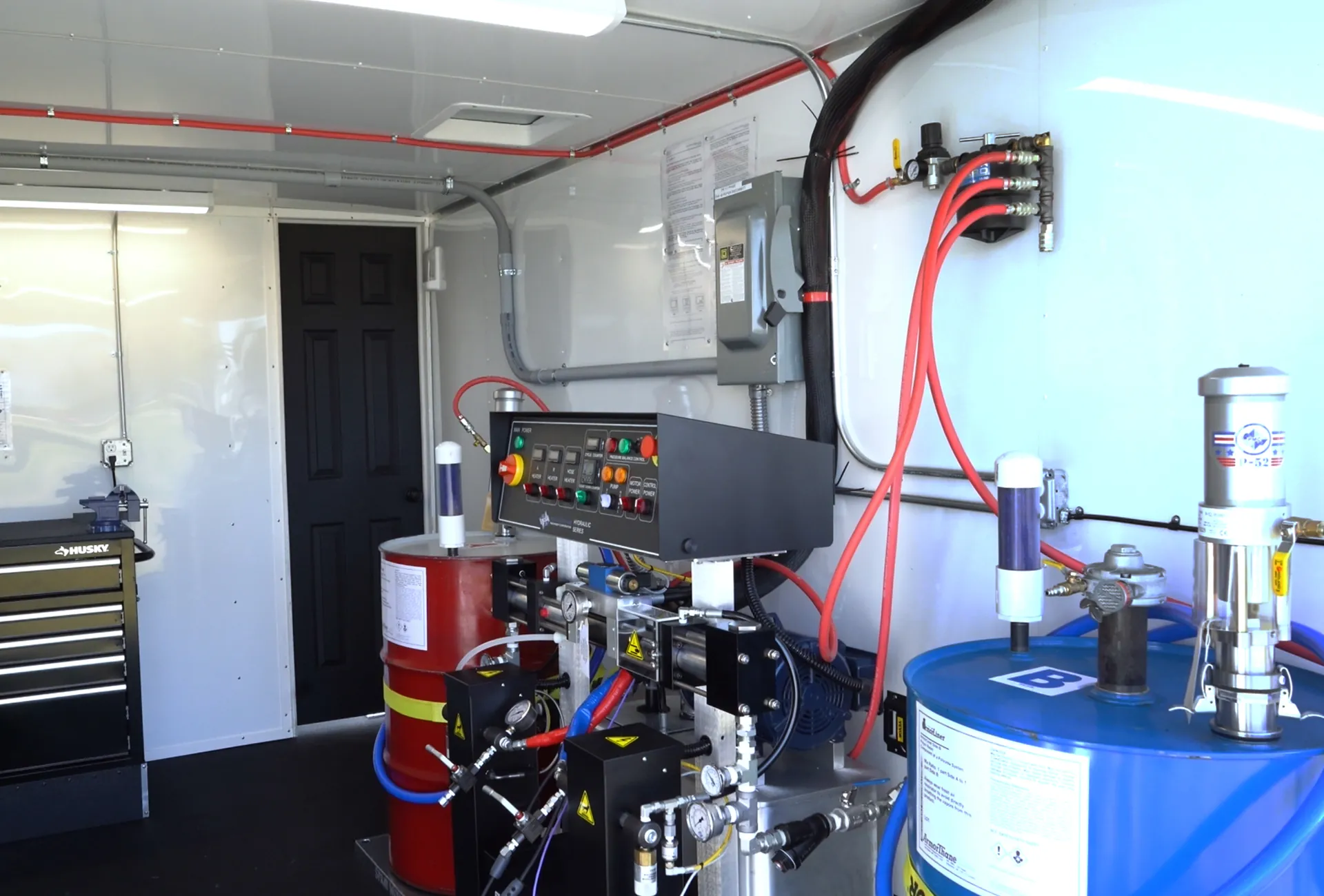
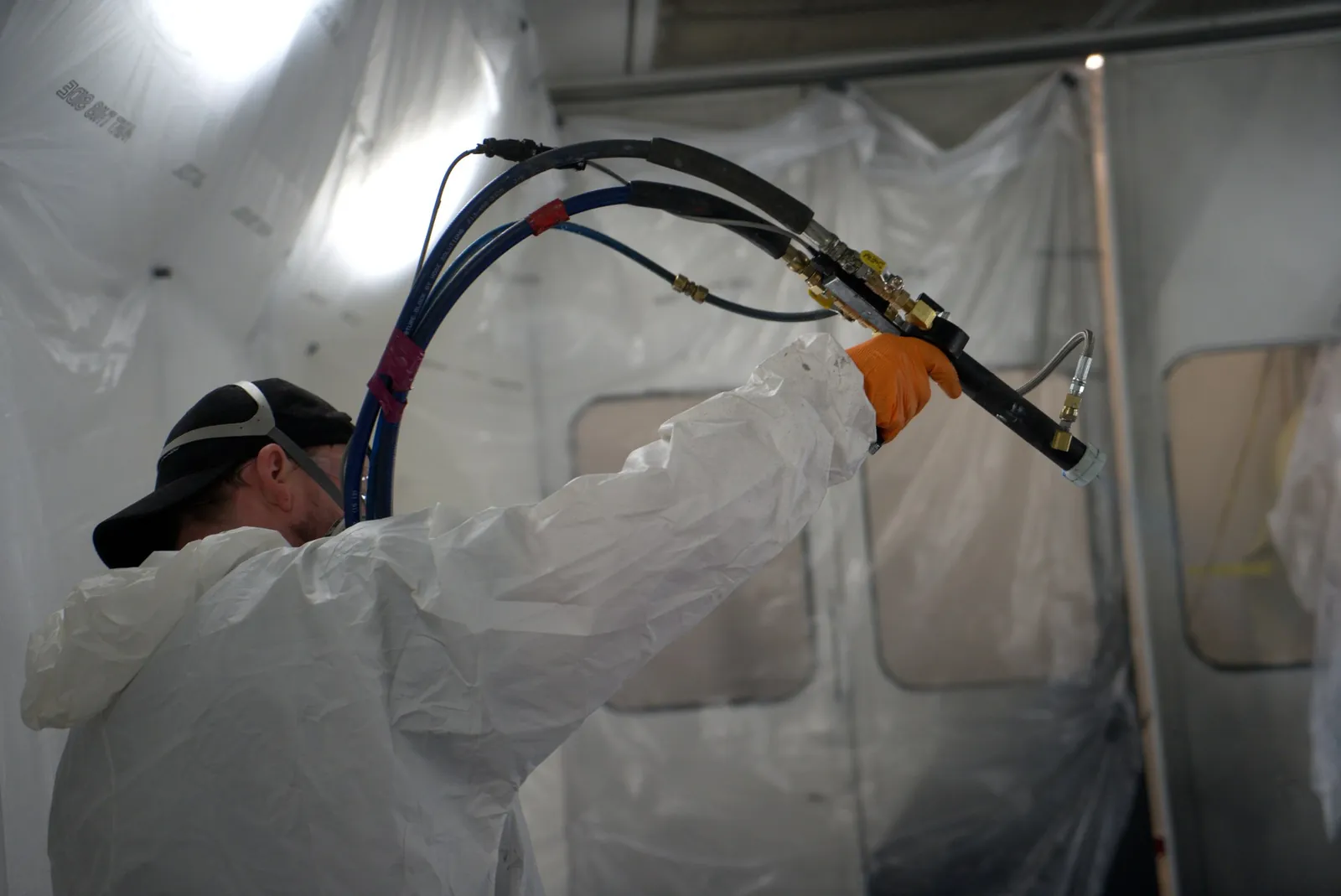
ArmorThane sets you up to do this work, and you own the business. We make the chemistry, build the rigs, train you hands-on and answer the phone when a job gets difficult. You pay no franchise fee and no royalties. It has been that way since 1989.
- $0
- franchise fees or royalties
- 35+
- years in business
- 50+
- countries with applicators
- 24/7
- technical support
Concrete floor grinding is where most coating jobs are won or lost, long before anybody opens a kit. A grinder with metal-bond diamonds cuts off the weak cement skin, knocks down joint lips and strips thin coatings, and it leaves a flat, open surface a primer can soak into. Pick the wrong diamonds and you will either glaze the floor shiny or burn through a set of segments before lunch.
Concrete floor grinding uses a walk-behind machine fitted with metal-bond diamond segments to remove the top skin of a slab, flatten high spots and take off thin coatings. For coating prep, crews usually start at 16 to 40 grit and stop at an ICRI CSP 2 to 3 profile. Match the bond to the slab: soft bond for hard concrete, hard bond for soft concrete, confirmed with a Mohs scratch test.
Concrete floor grinding machines compared
Three kinds of machine do almost all the work. On a garage you might get by with one; on a warehouse you will use all three in a day.
| Machine | Typical width (in) | Best at | Watch for |
|---|---|---|---|
| Hand grinder with cup wheel | 5–7 | Edges, corners, around posts and drains | Gouging; needs a shroud and a vacuum sized for the wheel |
| Edge grinder | 7–10 | Running tight along long walls | Leaves a different scratch than the main machine |
| Single-disc (rotary) grinder | 10–17 | Small rooms, thin coating removal on a budget | Swirl marks; it wants to pull sideways |
| Planetary grinder | 16–32 | Flat, even prep on open floors; polishing | Needs 220 V or 3-phase power and a matched dust collector |
| Ride-on or remote planetary | 32+ | Large warehouses and distribution floors | Power supply, weight on suspended slabs, transport |
Planetary heads are the reason grinding took over thin-coating prep. Several small heads spin one way while the whole deck turns the other, so the scratch pattern crosses itself and comes out even. A single-disc machine cuts in one direction and leaves arcs you can see through a clear coat.
Mohs scratch test and diamond bond
Diamonds cut. The metal matrix around them, the bond, decides how fast fresh diamonds get exposed. Hard concrete barely wears the bond, so you need a soft bond that sheds and keeps sharp diamonds on the surface. Soft concrete is abrasive and eats a soft bond alive, so it needs a hard one. Guessing wrong costs real money in segments and hours.
Pick three spots
Test the middle of the floor, near a wall and along a heavy traffic lane. Troweled skins and repaired areas can read very differently.
Scratch from soft to hard
Drag each Mohs pick across the surface with firm, even pressure, starting at 2 and moving up.
Wipe and look closely
A real scratch is a groove you can feel with a fingernail. A gray line that wipes off is pick metal, not a scratch.
Record the first pick that cuts
That number is your hardness reading. Re-test after the first pass, because the surface under a hard troweled skin is often softer.
Soft concrete
Low-strength, dusty or weathered slabs. Use a hard bond, or the segments will wear down fast.
Medium concrete
The most common reading on garage and shop floors. A medium bond does the work.
Hard concrete
Hard aggregate or a heavy power trowel finish. Use a soft bond so diamonds keep exposing.
Very hard concrete
Burnished industrial floors. Extra-soft bond, fewer segments for more head pressure, and patience.
Which diamonds should you start with?
Enter your scratch test result and the job. The selector suggests a bond class, a starting grit, the tool style and the profile to stop at. Use it as a starting point for the first test pass, then let the floor tell you.
Concrete grinding tooling selector
Bond class follows the Mohs bands published with Lavina's scratch kit (soft 2–3, medium 3–5, hard 5–7, very hard 7–9) and the inverse rule: harder concrete, softer bond. A hard troweled skin bumps the reading one step for the first pass, which is our field rule, not a published one. Grit starts follow common tooling-maker guidance (16/20 for fast removal, 30/40 as the general start, 60/80 for cleanup). Profile targets follow the ICRI chart: sealers CSP 1, thin films CSP 1–2, high-build systems CSP 2–3.
Need a deeper profile than a grinder gives? Our guide to shot blasting concrete covers CSP 3 to 5 prep. Coming off old paint first? See how to remove paint from concrete.
How far to grind for each finish
Lower grit numbers mean bigger diamonds and deeper scratches. For a coating you want the scratch, so you stop early. For polished concrete you keep refining until the scratch is gone. Mixing those two goals is how floors end up too smooth for the coating that goes on them.
Epoxy, polyaspartic, polyurea
One or two passes at 16/20 or 30/40 metal bond, crossing directions. Vacuum, then check the profile against the CSP chips. A floor taken to 80 or 100 grit can be too closed for a thick system, even though it looks great. See our polyaspartic floor coating guide for the system side.
Grind, hone, polish
Metal bond to open the slab, then transitional or resin pads through progressively finer grits, with a densifier in the sequence. It is a different trade with different targets; our polished concrete vs epoxy page compares the two.
Thin paint and sealers
Aggressive single-segment metal bond at 16/20 opens the film fast. If the coating melts and smears instead of powdering, the segments are loading up; switch to PCD.
Thick epoxy, mastic, glue
PCD tooling first. It scrapes the film instead of sanding it. Then follow with 30/40 metal bond to clean up and set the profile for the new coating.
Dust, edges and flatness
Concrete floor grinding makes fine silica dust faster than any shop vac can handle. OSHA's construction silica standard lists walk-behind floor grinders in Table 1: run them wet, or with a dust collector providing the manufacturer's recommended airflow and a filter of 99% or better efficiency with a filter-cleaning mechanism. Hand grinders need 25 cfm of airflow per inch of wheel.
- Edges match the field: grind edges with a similar grit so the profile at the wall matches the middle. A smooth edge band is where peeling starts.
- Lips first: knock down joint lips and high spots before the profile passes, or the coating will show every one.
- Fill after grinding: grinding opens pinholes, bugholes and cracks. Fill them once the slab is clean; see our spalled concrete repair guide for deeper damage.
- Vacuum twice: once after grinding and once just before priming. Grinding dust left in the pores becomes a bond breaker.
- Check moisture: a freshly ground slab is open and will show moisture problems fast. Test before any coating goes down.
For DIY or small shops, a 20 inch rental planetary will prep a two-car garage in a day. On large or hard slabs, hire it out. Certified applicators who grind and coat with ArmorThane systems, from garage floor coatings to industrial flooring, own the tooling and the dust collectors to do it right.
One crew for the grind and the coating.
A certified ArmorThane applicator can quote the floor grinding and the coating system together, so the profile matches what the product needs.
Contractors: become an ArmorThane applicator
Concrete grinding questions
What grit should I use for concrete floor grinding before epoxy?
Most crews prep for epoxy with 30/40 grit metal-bond diamonds, dropping to 16/20 if there is a sealer, paint or uneven surface to cut through. Stop there. Going to 80 grit or finer can leave the floor too smooth for a high-build coating.
Is grinding better than acid etching?
Yes, for any coating that has to last. Grinding removes the weak top layer and leaves a measurable, even profile. Acid etching reaches CSP 1 at best, leaves salts that have to be neutralized and rinsed, and soaks the slab right before it needs to be dry.
How do I know which diamond bond to use?
Do a Mohs scratch test. Readings of about 2 to 3 call for a hard bond, 3 to 5 for medium and 5 and up for a soft bond. If segments glaze, go softer; if they wear down in minutes, go harder.
Can you grind concrete without making dust?
Not without control. Grind wet, or connect the shroud to a dust collector with the airflow the grinder maker recommends and a filter rated 99% or better. That setup keeps most dust in the bag, but silica exposure still needs to be managed under OSHA rules.
Can I grind my own garage floor?
Many owners do, with a rental planetary grinder, an edge grinder and a proper dust collector. Expect a full day on a two-car garage. The hard part is reading the slab and matching tooling, which is where a professional crew saves time.
Does grinding level a concrete floor?
It flattens joint lips and small high spots, usually a fraction of an inch. It will not fix a slab that is out of level by inches or badly sloped; that takes a self-leveling underlayment or a concrete overlay.
Sources
- OSHA, 29 CFR 1926.1153 Respirable Crystalline Silica, Table 1. osha.gov/laws-regs/regulations/standardnumber/1926/1926.1153
- Lavina, Mohs hardness tool guide (concrete hardness bands and bonds). s3.amazonaws.com/Niagara-Library/.../mohs-tool-guide-pds.pdf
- Bartell Global, What makes concrete hard, medium or soft. blog.bartellglobal.com/what-makes-concrete-hard-medium-or-soft
- Grand Diamond Tools, Diamond grinding segments for concrete: bond, grit and style. granddiamondtools.ca/blogs/.../choose-diamond-grinding-segments-for-concrete
- TCC Materials, Concrete Surface Preparation Profiles (after ICRI 310.2R). tccmaterials.com/ConcreteSurfaceProfiles.pdf
Flat, open and ready to coat.
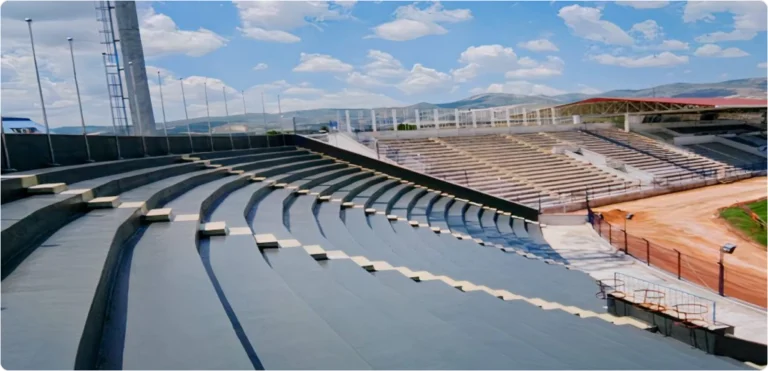
A certified ArmorThane applicator grinds to the profile your coating needs and sprays the system the same project. Contractors can add floor coatings with our equipment and training, with no franchise fee and no royalties.
Commercial & Industrial Floor Coatings
Flip through the whole brochure right here, or open it full screen on Issuu to share it.
Grinding before a coating? Get it quoted as one job.
Tell us what is on the slab now and what you want on it next. We will connect you with a certified ArmorThane applicator who preps and coats the floor under one scope.
- Floor size and layout
- Current surface: bare, sealed, painted or coated
- Joint lips, cracks or spalls
- Planned coating or finish
More to read on floors and decks
Short reads from ArmorThane on Issuu. Tap one to open it right here.