










Concrete Resurfacing: Cost, Options & When to Replace
How to tell if your slab can be resurfaced, what each overlay system costs in 2026, and the prep that keeps a new surface bonded.
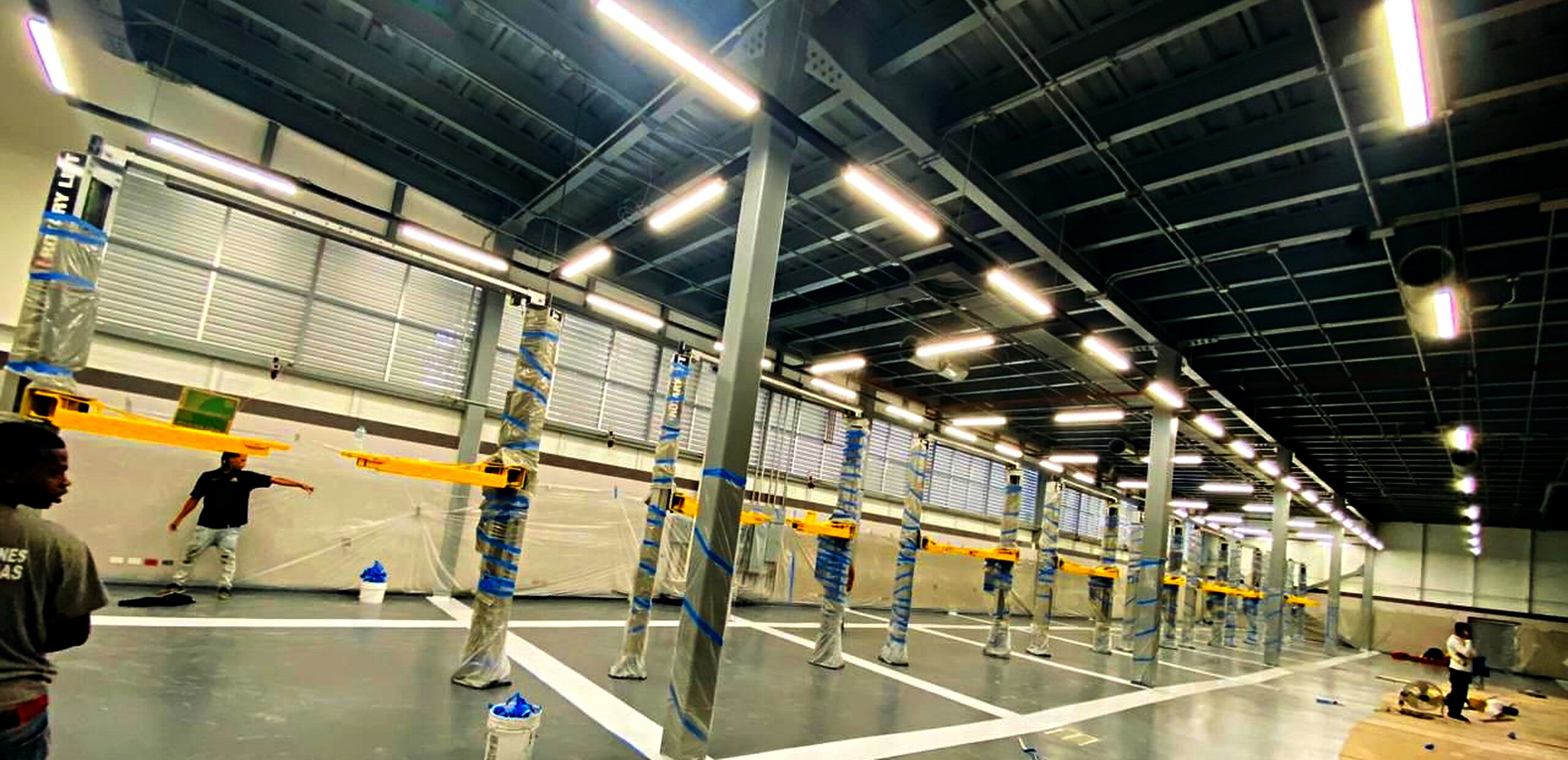
Start a floor coating business
Coat floors for a living.
ArmorThane sets you up to do this work, and you own the business. We make the chemistry, build the rigs, train you hands-on and answer the phone when a job gets difficult. You pay no franchise fee and no royalties. It has been that way since 1989.




- $0
- franchise fees or royalties
- 35+
- years in business
- 50+
- countries with applicators
- 24/7
- technical support
Concrete resurfacing means bonding a thin new wearing layer over a slab that is still structurally sound but ugly, scaled, pitted or worn. Done right, it costs a fraction of a tear-out and gives you a new surface in a weekend. Done over the wrong slab, it peels, cracks along every old crack and wastes the money. This guide covers how to tell which slab you have, what each resurfacing system really is, what it costs in 2026, and how we prep concrete so the new layer stays put.
Resurface when the slab is solid, flat and not moving, and the damage is cosmetic or shallow: scaling, pop-outs, stains, hairline cracks under about 1/4 in wide. Replace when the slab has sunk, heaved, has wide or offset cracks, or needs repairs deeper than about 2 in. Expect $3 to $7 per sq ft for a basic overlay and $6 to $10 for a decorative one, versus $6 to $15 for new concrete. The new layer is only as good as the prep: mechanically profile the surface, honor the joints, and test for moisture before any coating.
What concrete resurfacing actually is
Resurfacing is a bonded overlay. You are not pouring a new slab on top of the old one; you are gluing a thin layer of polymer-modified cement, or a resin coating, to concrete that already carries the load. The old slab does the structural work. The new layer only has to stick, resist wear and look good.
That distinction drives everything else. A bagged cement resurfacer such as Quikrete Re-Cap is rated from a feather edge of 1/16 in up to 1/2 in thick, and SikaQuick Concrete Resurfacer runs from feather edge to 1/2 in as well. Those are thin layers. They cannot bridge a void under the slab, lift a sunken panel or stop a crack that is still moving. Quikrete's own data sheet warns that old cracks can reappear because of movement in the base concrete.
What resurfacing does well:
- Covers surface scaling, the flaking you see on driveways after a few winters of salt.
- Hides pop-outs, pitting, trowel marks, old patch lines and stains that will not clean.
- Restores a level-looking, uniform color on a patio, walkway, pool deck or garage floor.
- Gives a coating system (polyaspartic, polyurea, epoxy) a smooth, sound base when the slab is too rough to coat directly.
Resurface or replace: check your slab first
We walk a slab before we quote it. Four things decide whether concrete resurfacing makes sense: how wide the cracks are, whether the two sides of a crack sit at different heights, how deep the damage goes, and whether the slab is still moving. HomeGuide's 2026 cost guide puts the line at cracks under about 1/4 in wide for repair or resurfacing, and says replacement starts to make more sense once repairs would exceed 2 in deep. Our field experience lines up with that.
Resurface-or-replace checker
Answer for the worst area of the slab. The checker scores structural red flags (movement, offset, depth) far heavier than cosmetic ones, because cosmetic damage is what resurfacing is for.
A score in the green does not guarantee anything; it tells you the slab is a reasonable candidate and is worth a closer look. If the checker flags movement, the best money you can spend is on fixing the base. Our guide to concrete leveling cost covers lifting sunken panels, and our foundation crack repair guide covers cracks in walls rather than flatwork.
Concrete resurfacing options compared
"Resurfacing" covers several different products. They differ in thickness, in how rough the old concrete has to be before they will bond, and in price. The surface profile column uses the ICRI concrete surface profile scale (CSP 1 is nearly flat, CSP 10 is very rough). The general rule from ICRI's guidance is simple: the thicker the system, the more tooth it needs.
| System | Typical thickness | Profile needed | Installed cost / sq ft | Best for | Watch out for |
|---|---|---|---|---|---|
| Microtopping / skim coat | Feather edge to about 1/8 in | CSP 3+ (cement resurfacer) | $3–$7 | Pitted, stained, lightly scaled walks and patios | Shows every crack that moves |
| Spray-down / knockdown texture | Thin textured layer | CSP 3+ | $3–$7 | Pool decks, patios that need grip and heat comfort | Texture holds dirt; needs a sealer |
| Self-leveling underlayment | 50 mils to 1/8 in and up | CSP 3–9 | $3–$7 | Interior floors before a coating or flooring | Flows downhill; edges must be dammed |
| Polymer overlay (trowel) | 1/8 to 1/4 in | CSP 5–10 | $6–$10 decorative | Heavier wear, decorative finishes, scoring | Needs aggressive grinding or blasting |
| Stamped overlay | Product-specific, thicker build | Per manufacturer | $7–$20 | Stone or slate look without new concrete | Most expensive; crack-sensitive |
| Resin coating (polyaspartic, polyurea, epoxy) | High-build: 10–40 mils | CSP 2–8 | $4–$10 (garage coating) | Garages, shops, sealed patios, chemical exposure | Will not fill deep damage alone |
| Tear-out and replace | Full-depth new slab | n/a | $6–$15 | Sunken, heaved, badly broken slabs | Fixes the base, not just the surface |
Two practical notes from the field. First, a "spray-down" or "knockdown" finish is still a cement overlay underneath; the texture is applied over a base coat, so it has the same crack sensitivity. Second, a resin coating is not a resurfacer on its own. A polyaspartic or polyurea floor system is built in mils, not inches, so deep scaling has to be filled with a patching mortar or a resurfacer first. That combination, a resurfacer to rebuild the plane and a coating to protect it, is common in garages and on pool decks.
Concrete resurfacing cost in 2026
HomeGuide's 2026 numbers put basic overlays (skim coat, spray-down, self-leveling) at $3 to $7 per sq ft installed, decorative overlays at $6 to $10, and stamped overlays at $7 to $20. For whole projects, they list a 10 x 10 ft patio at $300 to $700, a 20 x 20 ft two-car driveway at $1,200 to $2,000 and a two-car garage at $1,600 to $5,800. New concrete runs $6 to $15 per sq ft. HomeAdvisor reports a national average of about $2,000 per project, with most jobs between $1,000 and $5,000.
The calculator below gives you both numbers we get asked for: how many 40 lb bags of cement resurfacer a DIY job needs, and how a contractor price compares with replacement. Bag coverage is based on Quikrete's published figures of about 16 sq ft per bag at 1/4 in and about 65 sq ft at 1/16 in, which works out to roughly 4 sq ft per bag at 1 in.
Resurfacing material and cost calculator
Bags = area x thickness (in) / 4, plus waste. Installed cost uses the 2026 HomeGuide range for the system you pick; replacement uses $6–$15 per sq ft.
Prices swing with access, the amount of crack and spall repair before the overlay, and whether the old surface has paint or sealer that has to come off. Removing an old coating is often the single biggest line item we see on resurfacing bids; our guide on removing paint from concrete explains why.
Not sure your slab is a candidate? Have it looked at.
A certified ArmorThane applicator can check cracks, moisture and soundness, then tell you whether an overlay, a coating system or replacement is the honest answer.
Contractors: become an applicator →
How we prep and apply a concrete resurfacing overlay
Every resurfacer data sheet we have read says the same thing in different words: the surface must be clean, sound and profiled. SikaQuick Concrete Resurfacer calls for a minimum ICRI CSP 3. Quikrete specifies pressure washing at 2,500 psi and removing all loose concrete, paint and grease. Here is the sequence our applicators follow.
Sound the slab
Drag a chain or tap with a hammer and mark every hollow-sounding area. Delaminated concrete has to come out; an overlay bonded to a loose layer fails with it.
Strip what will not bond
Paint, sealers, curing compounds and acrylic or polyurethane crack fillers all block bond. Quikrete specifically says not to apply Re-Cap over painted or sealed surfaces or those fillers.
Profile mechanically
Pressure washing is the minimum for a cement skim coat. For trowel overlays and coatings we diamond-grind or shot-blast to the profile the product calls for. Acid etching does not give a consistent profile and leaves residue.
Repair cracks and spalls first
Fill spalls deeper than the overlay with a repair mortar. Route and fill static cracks; leave moving cracks and joints as joints. W. R. Meadows notes that active and exterior cracks may telegraph through its resurfacer.
Honor the joints
Tape off or tool the existing control and expansion joints and carry them through the new layer. A resurfacer bridged over a joint will crack right on top of it, usually within the first season.
Pre-dampen and place
Cement resurfacers go on a saturated, surface-dry slab with no standing water. Working time is short; Quikrete and Sika both list about 20 minutes, so we mix in batches and work in sections.
Cure it
Moist cure for 24 to 48 hours per Quikrete, or use wet burlap, misting or a curing compound per Sika. Quikrete rates Re-Cap for foot traffic in 8 hours and vehicles in 24 hours at normal temperatures.
Seal or coat
Exterior overlays need a breathable concrete sealer; garages and shops usually get a full coating system. Primers such as ArmorPrime are matched to the coating, not to the overlay.
When a coating beats a cement overlay
We manufacture polyurea, polyaspartic and polyurethane coatings, so we get asked whether a coating can replace resurfacing. Sometimes. Here is how we split it.
Deep scaling, pop-outs, uneven planes
A coating 10 to 40 mils thick follows every dip. Rebuild the plane with a resurfacer or patching mortar, then coat. Skipping the overlay just gives you a shiny version of the damage.
Sound slab, light wear, stains
Garages and shops with a sound, flat slab can go straight to a ground surface and a coating such as ArmorFloor aliphatic polyaspartic. See our garage floor coating guide.
Patios and pool decks
Cement overlays are porous. A UV-stable topcoat keeps out water, salt and stains. Our patio coating guide compares options for outdoor slabs.
Moving or sunken slabs
No overlay or coating will hold a slab together. Lift or replace it, then decide on a finish. We would rather tell you that than sell you a coating that cracks.
One more check before any resin coating: moisture. Neither ASTM F2170 (in-slab relative humidity) nor ASTM F1869 (calcium chloride) sets a pass or fail number; the coating manufacturer does. Typical RH acceptance for floor products runs roughly 75 to 80 percent. Test before you coat, especially on slabs on grade without a vapor retarder. Our broader concrete coatings page covers which ArmorThane systems suit which slabs.
Why concrete resurfacing fails
When we are called to look at a failed overlay, the cause is almost always one of the following. None of them is the product's fault.
Sheets lifting off the slab
Bonded to dust, laitance, sealer or a weak scaled layer that was never removed. The fix is removal and proper profiling, not another layer.
Old cracks back in a straight line
The base slab moved and the overlay followed. Joints that were not carried through are the most common version of this.
Flaking after the first winter
Deicers on a fresh overlay, or a surface that dried too fast. The Concrete in Practice sheet on scaling says to keep deicing salts off new concrete in its first year and never use ammonium sulfate or ammonium nitrate.
Bubbles under a coating
Moisture vapor or outgassing from the slab under a resin topcoat. Test moisture, coat on a falling temperature, and prime correctly.
Surface powders under a fingernail
Too much water in the mix, or no curing. Measure the water, mix to the data sheet, and keep it damp.
Puddles in the same spots
The overlay followed the old slope. If drainage was the problem before resurfacing, it still is.
Resurfacing in freeze-thaw country
Scaling is the reason most driveways get resurfaced in the first place. Per the industry's Concrete in Practice guidance, the root causes are concrete without enough entrained air, deicing salts on concrete that lacks strength, air or curing, finishing while bleed water is on the surface, and poor curing. A resurfacer fixes the look, but it will scale too if it gets the same abuse. Seal it, use plain sand or a gentle deicer the first winter, and shovel instead of salting where you can.
Related concrete repairs
Most resurfacing jobs start with repairs. Narrow and moving cracks are covered in our concrete crack repair guide, and holes over rusty steel need the saw-cut-and-patch method in spalled concrete repair before any overlay goes down. White, crusty deposits on the slab mean moisture is moving through it; read up on efflorescence before you coat. And if the foundation wall beside the patio or steps needs the same treatment, that is parging, the vertical cousin of a resurfacer.
Concrete resurfacing questions
How long does concrete resurfacing last?
HomeGuide puts a typical resurfacing job at 8 to 15 years before repairs are needed. The range depends almost entirely on prep, whether the base slab is stable, and whether the surface is sealed and kept free of harsh deicers.
Is resurfacing cheaper than replacing concrete?
Usually. Basic overlays run about $3 to $7 per sq ft installed versus $6 to $15 for new concrete, according to HomeGuide's 2026 guide. Decorative and stamped overlays can approach or exceed replacement cost, so compare quotes for both on high-end finishes.
Can you resurface concrete with cracks?
Yes, if the cracks are narrow and not moving. Cracks under about 1/4 in wide can generally be repaired and resurfaced. Wide cracks, cracks with a height offset, or cracks that keep growing point to a base problem, and the overlay will crack over them again.
How thick is a concrete resurfacer?
Bagged cement resurfacers such as Quikrete Re-Cap and SikaQuick Concrete Resurfacer are applied from a feather edge up to 1/2 in. Polymer trowel overlays usually run 1/8 to 1/4 in. Resin coatings are measured in mils, typically 10 to 40 mils for high-build systems.
How soon can I drive on a resurfaced driveway?
It depends on the product and temperature. Quikrete rates Re-Cap for foot traffic in 8 hours and vehicle traffic in 24 hours under normal conditions. Cold weather slows that down; follow the data sheet for the exact product used.
Can I resurface over painted or sealed concrete?
Not directly. Paint and sealers block the bond. Quikrete states Re-Cap should not go over painted or sealed surfaces. The coating has to be removed by grinding or blasting first.
Do I need to seal concrete after resurfacing?
Outdoors, yes in most cases. Cement overlays are porous and will absorb water, salt and oil. A penetrating or film-forming sealer, or a full coating in garages, protects the new surface and extends its life.
Is concrete resurfacing a DIY job?
A small skim coat on a patio or walk is a realistic DIY project if you can pressure wash properly, mix accurately and work fast within the roughly 20 minute working time. Driveways, garages, decorative finishes and anything needing grinding are better left to a crew with the equipment.
Sources
- HomeGuide, Concrete resurfacing cost (2026): homeguide.com/costs/concrete-resurfacing-cost
- HomeAdvisor, Concrete resurfacing and overlays cost: homeadvisor.com/cost/outdoor-living/concrete-resurfacing-overlays
- Quikrete, Re-Cap Concrete Resurfacer data sheet 1131-47: quikrete.com/pdfs/datasheet-concrete-resurfacer_1131-47.pdf
- Sika USA, SikaQuick Concrete Resurfacer product data sheet: usa.sika.com/.../sikaquick_concreteresurfacer.pdf
- W. R. Meadows, Spectrum Re-Kote TF: wrmeadows.com/spectrum-re-kote-tf-concrete-repair-mortar-resurfacer
- TCC Materials, Concrete surface profiles (ICRI method selector): tccmaterials.com/.../ConcreteSurfaceProfiles.pdf
- Concrete in Practice 2, Scaling concrete surfaces: concreteanswers.org/CIPs/CIP2.htm
- IFTI, ASTM F2170 vs F1869 moisture testing: ifti.com/concrete-moisture-testing-astm-f2170-vs-f1869-guide
Give tired concrete a second life.
Homeowners get a certified ArmorThane applicator who preps and coats concrete properly. Contractors can add resurfacing and coatings with no franchise fee and no royalties.
Start your coatings business with ArmorThane.
Tell us what you want to spray and where you are. An ArmorThane specialist will walk you through the equipment, chemicals, training and startup cost for the work you want to do.
- Equipment package matched to your applications
- Hands-on training and applicator certification
- Technical support once you are spraying
Worn, scaled or stained slab? Get it assessed by a pro.
Tell us what the surface is (driveway, patio, garage, pool deck), its rough size, and what is wrong with it. A certified applicator near you will follow up.
- Driveways, patios, walks and pool decks
- Garage and shop floor systems
- Crack and spall repair before overlays
- Honest resurface-or-replace advice
More in Floors & concrete
 Floors & concreteShot Blasting Concrete
 Floors & concreteSpalled Concrete Repair: Causes, Methods & Cost
 Floors & concreteStart a Concrete Business
 Floors & concreteStart a Floor Coating Business
 Floors & concreteUrethane Cement Flooring
 Floors & concreteVeterinary FlooringFloors & concreteWarehouse Floor Marking
 Floors & concreteBarn Floor Coating